Florida WDO Reports: Read the Details Before Closing
A report that says no visible activity can feel reassuring, but the details around it matter just as much. A Florida WDO inspection report records what a licensed pest-control professional could see at the property on one inspection date.
Before a purchase, sale, or refinance, read the whole document instead of relying on a summary, email, or clearance statement. The report can point to evidence, visible damage, moisture issues, and areas that weren't accessible.
How to Read a Florida WDO Inspection Report
WDO means wood-destroying organisms . In Florida, that category commonly includes termites, wood-boring beetles, and wood-decaying fungi. Depending on the inspection scope and report, it may also address other organisms that affect wood.
Florida's report is a disclosure document, not a promise that a home has no hidden problems. Under Florida Statutes Section 482.226, the report must disclose visible findings and inspection limits when it is completed for a real-estate transaction under the conditions set by law.
Know what the inspection covers
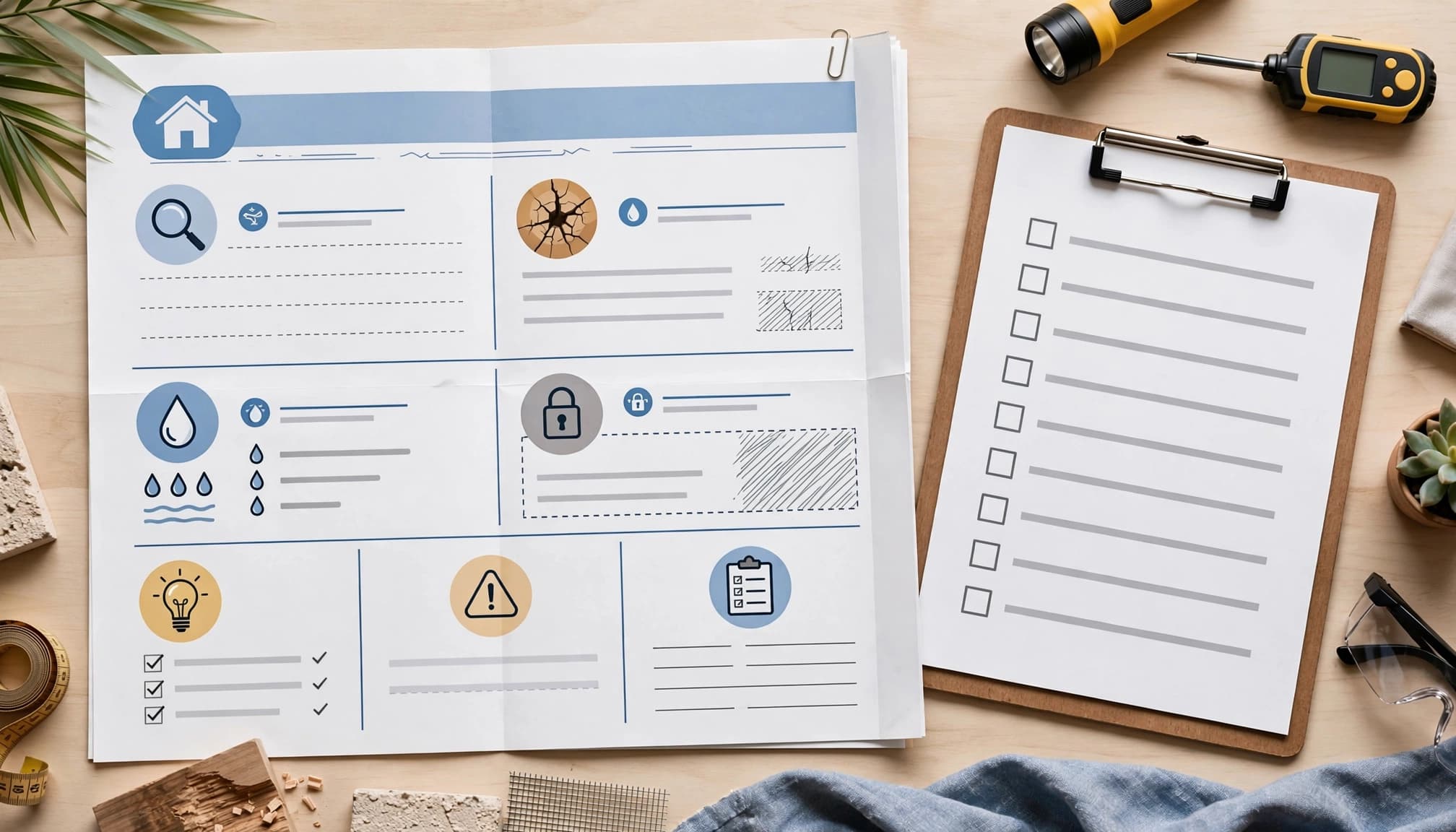
A WDO inspection is usually a visual inspection of accessible areas. The inspector looks for signs of organisms that damage wood, related damage, past treatment evidence, and conditions that could support future activity.
That scope differs from a general home inspection. A home inspector may report roof, plumbing, electrical, structural, and appliance concerns. A WDO inspector focuses on wood-destroying organisms and the visible signs tied to them. Review the difference between a WDO inspection versus a home inspection before assuming one report replaces the other.
Look for the Florida form and basic details
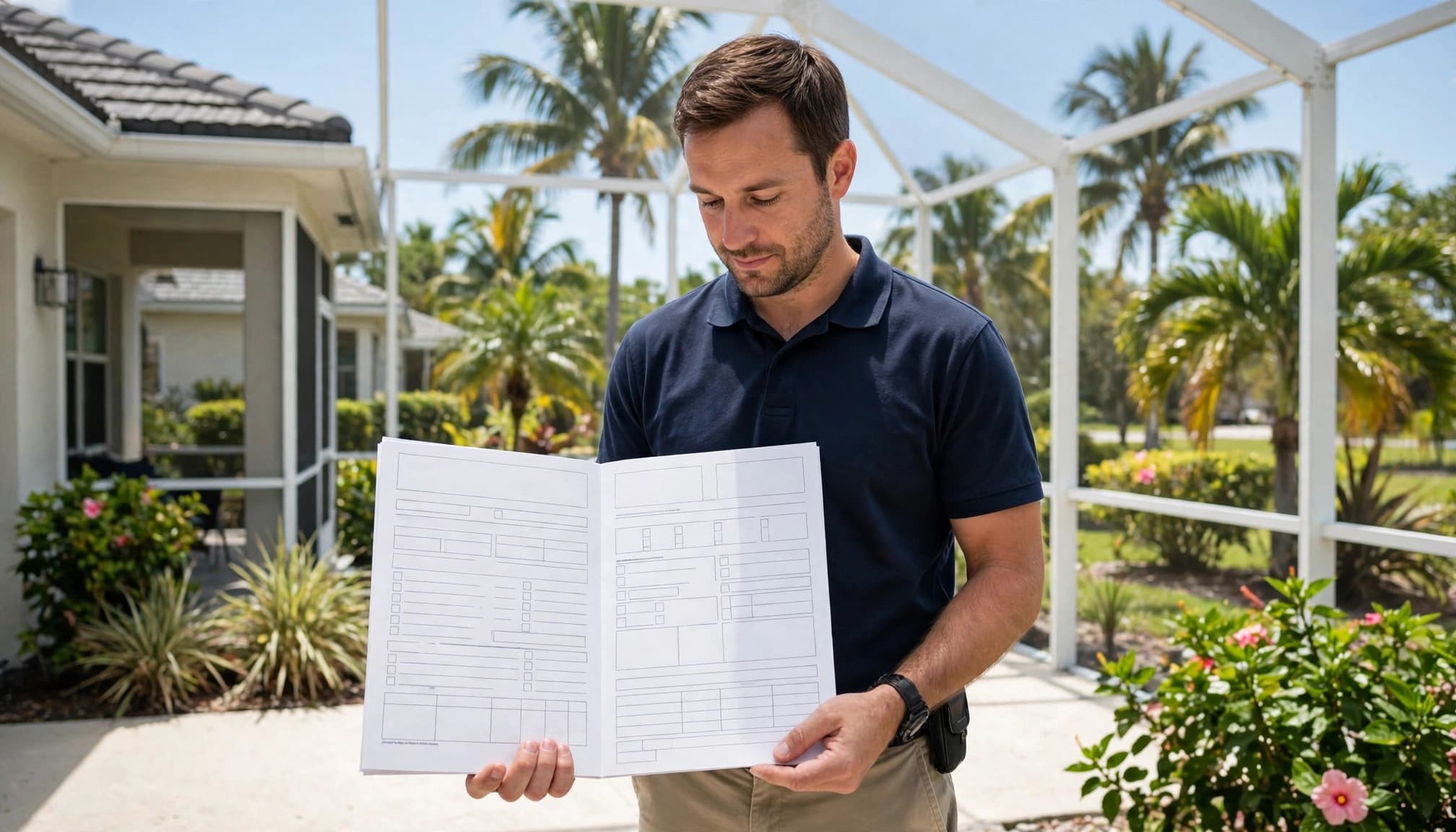
Florida WDO reports are commonly completed on FDACS Form 13645, the Wood-Destroying Organisms Inspection Report. Check the property address, inspection date, company name, inspector information, and license details first.
Those basics confirm what structure the report covers. A report for the main house might not automatically include a detached shed, dock, guest suite, or other structure unless it appears in the scope.
Confirm who inspected the property and when
The first page often contains facts that seem routine. During a transaction, however, those details can affect whether the report meets the buyer's, seller's, lender's, or insurer's request.
Match the address to every structure
Compare the report address with the contract and listing. Then look for notes about garages, lanais, attic spaces, crawl spaces, additions, fences, or waterfront structures.
For example, a Florida home with a screened pool enclosure and detached workshop has more exterior wood and access points than a simple slab home. If a structure matters to your purchase decision, ask whether the inspector included it.
Check the inspection date and credentials
A report only describes conditions observed on its inspection date. If closing moves weeks later, ask your lender or real-estate professional whether the report remains acceptable or whether a new inspection is required.
Florida law also requires the inspector and licensee to certify they don't have a financial interest in the property or an improper association with the transaction. The report should identify the pest-control business and the qualified person connected to the inspection.
Separate evidence from visible damage
A Florida WDO inspection report may identify current evidence, old evidence, visible damage, prior treatment signs, or some combination. These descriptions are related, but they don't mean the same thing.
Evidence points to what the inspector saw
Evidence may include shelter tubes associated with subterranean termites, drywood termite pellets, discarded wings, exit holes, insect parts, frass, or fungal decay. The report should identify the organism when the inspector can do so and state where the evidence appeared.
Location matters. Evidence at a garage baseboard, attic truss, window frame, or exterior door trim carries different follow-up questions. Read the comments, not only the box marked positive or negative.
A finding of evidence doesn't tell you the full history of the issue by itself. Ask the licensed pest-control professional whether the signs appear current, old, or unclear based on the visible conditions.
Damage and activity are different findings
Visible damage may include hollowed wood, weakened trim, galleries, soft framing, or decayed components. Yet an inspection report does not replace a structural assessment.
A WDO report can document visible damage, but a contractor or qualified building professional should assess repairs and structural concerns.
Likewise, old damage doesn't prove that organisms remain active. A past treatment sticker, drill marks, repaired wood, or an old bait station may show prior work. Request available treatment records, warranties, and invoices if prior protection affects your decision.
For concerns around wet or deteriorated wood, compare visible clues carefully. Termite damage versus water damage can look similar at first glance, especially near windows, roofs, plumbing, and exterior trim.
Read conducive conditions and moisture notes closely
A report may list conditions that encourage WDO activity even when the inspector finds no visible organism evidence. These observations are practical maintenance concerns, not a diagnosis.
Moisture can change the risk picture
Wood-decaying fungi need moisture. Therefore, notes about leaks, poor drainage, damaged flashing, wet soffits, plumbing drips, clogged gutters, or damp crawl spaces deserve attention.
In Southwest Florida, frequent rain, irrigation, humid air, and storm exposure can keep wood damp longer than expected. Moisture doesn't automatically mean there is an infestation. Still, it can create conditions that support decay or make inspections harder later.
Wood touching soil is another common concern. Mulch piled against siding, landscape timbers near walls, low exterior trim, and stored lumber can reduce the clear inspection zone around the home.
Conducive conditions are recommendations, not proof
When an inspector notes a condition, read the exact location and suggested correction. You may need a roofer for a leak, a plumber for a supply-line issue, or a contractor for damaged wood.
Don't treat a report note as a treatment plan. A pest professional can explain the WDO concern, while a trade contractor can identify and repair the building condition that caused it.
Take inaccessible areas and limitations seriously
Many readers scan past the limitations section. That is a mistake. This section tells you where the inspection could not provide a full visual answer.
An inaccessible area is not a clean area
Attics may have limited entry, low clearance, unsafe framing, insulation that blocks visibility, or stored belongings. Crawl spaces can have standing water, debris, limited clearance, or locked access. Cabinets, wall voids, flooring, and concealed framing also limit what anyone can see.
The report should identify visible, accessible areas that weren't inspected and explain why. It should also list inaccessible areas. Read both categories because each one limits what the inspector could observe.
A report with no visible evidence still has limits if the inspector could not see key areas.
Ask what practical access could change
Before closing, ask whether clearing storage, unlocking a room, trimming vegetation, moving attic items, or providing safe access would allow a more complete inspection. Don't create unsafe conditions or disturb possible evidence yourself.
A reinspection may be appropriate when a major area was blocked and the transaction depends on a clearer answer. Your lender, real-estate agent, or attorney can help determine whether access limits affect a contract deadline or contingency.
Understand recommendations, treatments, and clearance language
Recommendations tell you what the inspector believes should happen next based on visible findings. They may call for further evaluation, correction of moisture conditions, removal of wood-to-soil contact, treatment discussion, repair assessment, or reinspection.
A recommendation is not an automatic treatment decision
Don't select a treatment based only on a checked box. First, discuss the findings with the licensed company that issued the report. Ask where evidence was seen, whether it appears active, what portions of the home were accessible, and what follow-up inspection may clarify.
Termite treatment choices depend on the organism, construction type, evidence location, and site conditions. Comparing termite treatment options can help you understand why one approach doesn't fit every Florida property.
If treatment occurred at the time of inspection, the report should disclose the organism treated, pesticide used, and treatment terms. Keep those records with the report.
Don't rely on a short clearance statement
A lender, agent, seller, or pest company may use the word "clear" informally. However, read the actual Florida WDO inspection report and all attachments before relying on that word.
Florida's statutory language makes clear that the report is not a guarantee that WDOs or damage are absent unless it expressly says otherwise. A clean visual inspection result is useful, but it does not reveal hidden activity behind walls, beneath flooring, or inside blocked areas.
Use a simple checklist before you sign
A clear review helps you ask focused questions while you still have time to act.
- Confirm the property address, inspection date, company name, and inspector credentials match your transaction.
- Read every finding related to organisms, visible evidence, damage, prior treatment, and conducive conditions.
- Highlight each inaccessible or uninspected area and the reason access was limited.
- Request clarification on whether evidence appears current, old, or uncertain based on visible observations.
- Send visible damage or moisture repair questions to the right professional, such as a contractor, roofer, plumber, or home inspector.
- Give the report to your lender or real-estate attorney if their approval or contract terms depend on it.
- Keep the report, treatment documents, warranties, photos, and repair receipts together after closing.
For rodent concerns, use a separate inspection. A WDO report is not designed to confirm or rule out rats, mice, raccoons, or other wildlife. Attic droppings, chewed wiring, and entry gaps call for a Florida attic rodent inspection and an exclusion plan.
Keep current rules and contract terms in view
FDACS forms, Florida regulations, inspection practices, lender overlays, and real-estate contract requirements can change. Verify the current form version and any transaction-specific requirements instead of relying on an old report or general advice.
A lender may request a report within a certain timeframe. A purchase contract may set separate deadlines for inspections, repairs, credits, or reinspection. Those terms aren't replaced by the report itself.
When a finding affects your decision, speak with the licensed pest-control professional who completed the inspection. Then bring repair, legal, financing, or contract questions to the contractor, inspector, lender, or Florida real-estate attorney best suited to answer them.
Final Thoughts
A Florida WDO inspection report is most useful when you read it as a record of visible conditions and stated limits on a particular day. Evidence, damage, moisture, and inaccessible areas each tell a different part of the property's story.
Read beyond any summary statement, save the supporting documents, and ask for clear explanations before a deadline passes. Careful review gives you a stronger basis for the next decision.
Frequently Asked Questions
Does a WDO report only look for termites?
No. WDO means wood-destroying organisms. A Florida report may cover termites, wood-boring beetles, and wood-decaying fungi, depending on the inspection scope and the conditions present.
Does "no visible evidence" mean the home is free of termites?
No. It means the inspector did not observe visible evidence in the accessible areas inspected at that time. Hidden or inaccessible areas remain outside the limits of a visual inspection.
Who should review a report that lists wood damage?
Start with the licensed pest-control professional who issued the report. For repair scope or structural questions, consult a qualified contractor or home inspector. A lender or real-estate attorney can address transaction requirements.
Schedule a Free Inspection: