How to Sanitize Hard Surfaces After Rodent Droppings
Rodent droppings on tile, sealed counters, or other hard surfaces can usually be cleaned at home if the area is small and accessible. The safe method is to wet the waste before wiping it , then disinfect the surface according to the product label.
Dry sweeping or vacuuming can put contaminated particles into the air. With a few simple precautions, you can limit dust and contact while cleaning, and recognize when the problem needs professional attention.
Why dry cleanup puts you at risk
Droppings may carry germs, and disturbing them can spread contaminated particles through indoor air. That's why the CDC advises against sweeping or vacuuming rodent urine and droppings before disinfection. Scraping dried waste can also create dust, so avoid that approach too.
A single, small deposit on a hard floor is different from a nest or widespread contamination. However, even a small amount should be treated carefully, especially in a kitchen, pantry, or other area where people prepare food.
If you aren't sure the pellets came from a rodent, compare their appearance with other common animal droppings before cleaning. This guide can help you identify rodent droppings in Florida homes.
Prepare the area before cleaning
Keep children and pets away until the area is clean and dry. Move food, dishes, and utensils away from the work area. If droppings are on a food-contact surface, plan to disinfect it and follow the disinfectant label's directions for that surface before using it again.
Open doors or windows if conditions allow, especially in a small or closed room. Don't use a fan to blow air across the contaminated spot, since that can spread dust. If you've just discovered the mess, avoid touching it or moving nearby items until you're ready to clean.
Gather gloves, paper towels, a suitable disinfectant, and a sealable plastic bag. Choose a disinfecting product labeled for the surface you need to clean. A product suitable for tile may not be suitable for every countertop finish, painted surface, or metal.
Wear protection suited to a small cleanup
For a small amount of droppings on an accessible hard surface, wear rubber or plastic gloves, as the CDC recommends. Closed-toe shoes help keep you from stepping directly on the waste, and eye protection is a sensible precaution if cleaner could splash.
Avoid touching your face, phone, door handles, or clean supplies while wearing contaminated gloves. Keep the spray bottle and paper towels within reach before you begin, so you won't need to cross clean areas with used gloves.
A routine cleanup of a few droppings is not the same as entering a heavily contaminated attic or crawl space. Don't rely on a simple dust mask as protection for a large infestation. If the amount is extensive, leave the area and arrange professional help rather than trying to handle specialized respiratory protection on your own.
Sanitize hard, nonporous surfaces step by step
Hard, nonporous surfaces such as tile, sealed countertops, and many cabinet interiors can generally be disinfected and wiped clean. Follow this sequence, and use a product whose label allows use on the surface.
Ventilate and put on gloves
Open windows or doors when practical, then put on your gloves. If the droppings are dry, don't sweep, vacuum, brush, or scrape them. Keep your face back from the material as you work.
Wet the droppings and wait
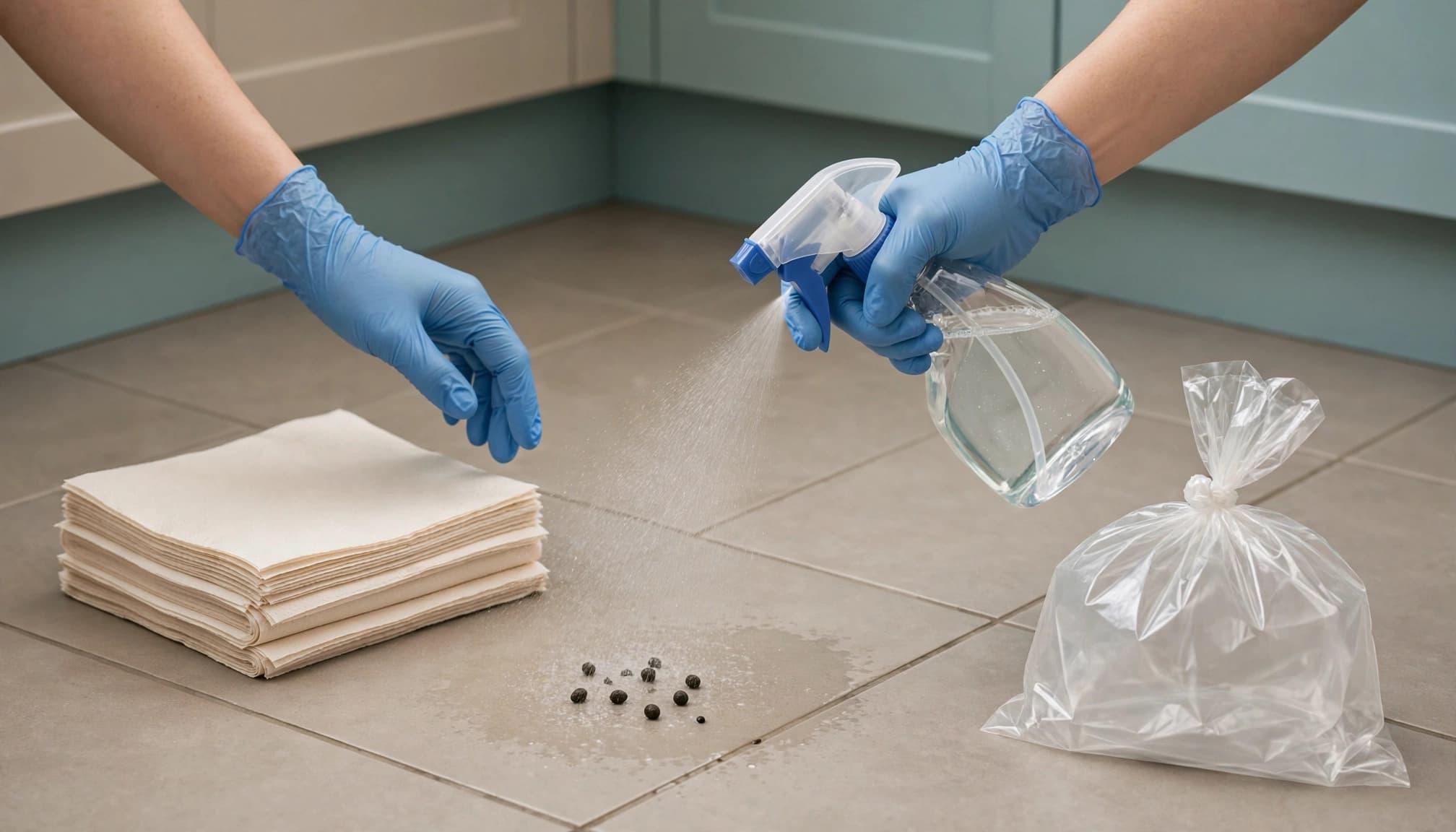
Spray the droppings and nearby affected area until they're thoroughly wet. Don't use a forceful spray that splashes waste onto surrounding surfaces. Leave the disinfectant on for the contact time on its label, keeping the surface visibly wet for that full period.
The CDC's cleanup guidance specifies five minutes or the time stated on the product label. The EPA explains that contact time means how long the surface must remain wet for the product to work. Reapply if the area begins to dry before the label's time is complete. Never mix bleach with ammonia, acids, or other cleaners. Bleach isn't appropriate for every material, so use it only when its instructions and the surface allow it.
Wipe up and disinfect again
Use paper towels or disposable cloths to pick up the softened droppings. Wipe gently rather than scrubbing dry residue into the air. Then apply disinfectant to the surrounding hard surface and clean it again, following the label directions.
For more detail on the wet-and-wipe approach, see our guide to safe rodent droppings cleanup.
Remove and dispose of waste safely
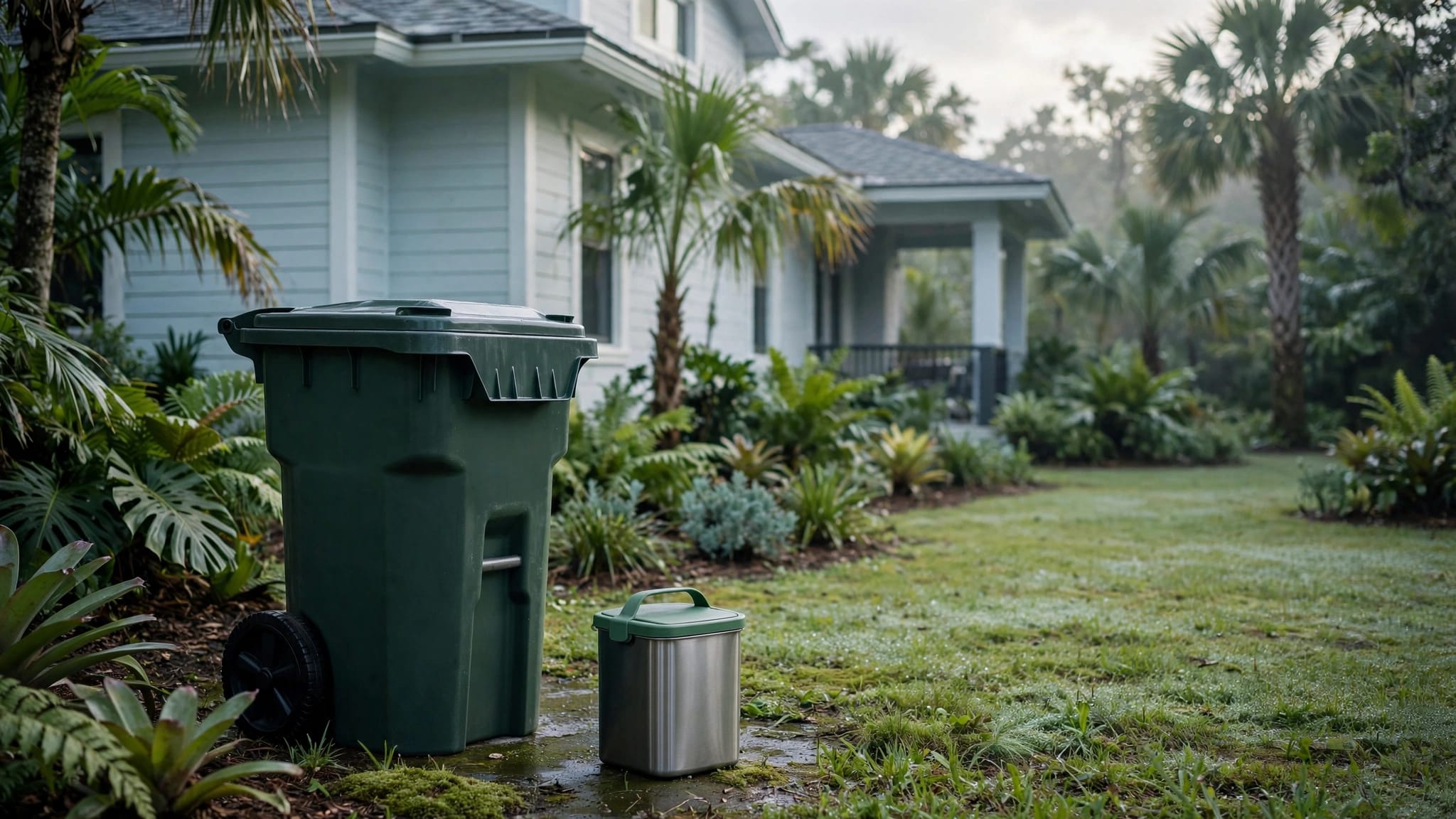
Put used paper towels, disposable cloths, and other contaminated cleanup materials into a plastic bag. Seal it before placing it in a covered household garbage container, following local disposal rules.
If you used a reusable tool, disinfect it according to its material and the cleaner's label. Don't carry contaminated items through the home uncovered or place them on a clean counter. Remove gloves carefully so the outside doesn't touch your bare hands. Wash your gloved hands with soap and water or disinfectant before taking the gloves off, then wash your bare hands with soap and water.
Keep the area out of use until it has dried as directed by the product label. If you cleaned a food-contact surface, follow the label's instructions for rinsing or other steps before putting food or utensils back.
Hard surfaces and porous materials need different care
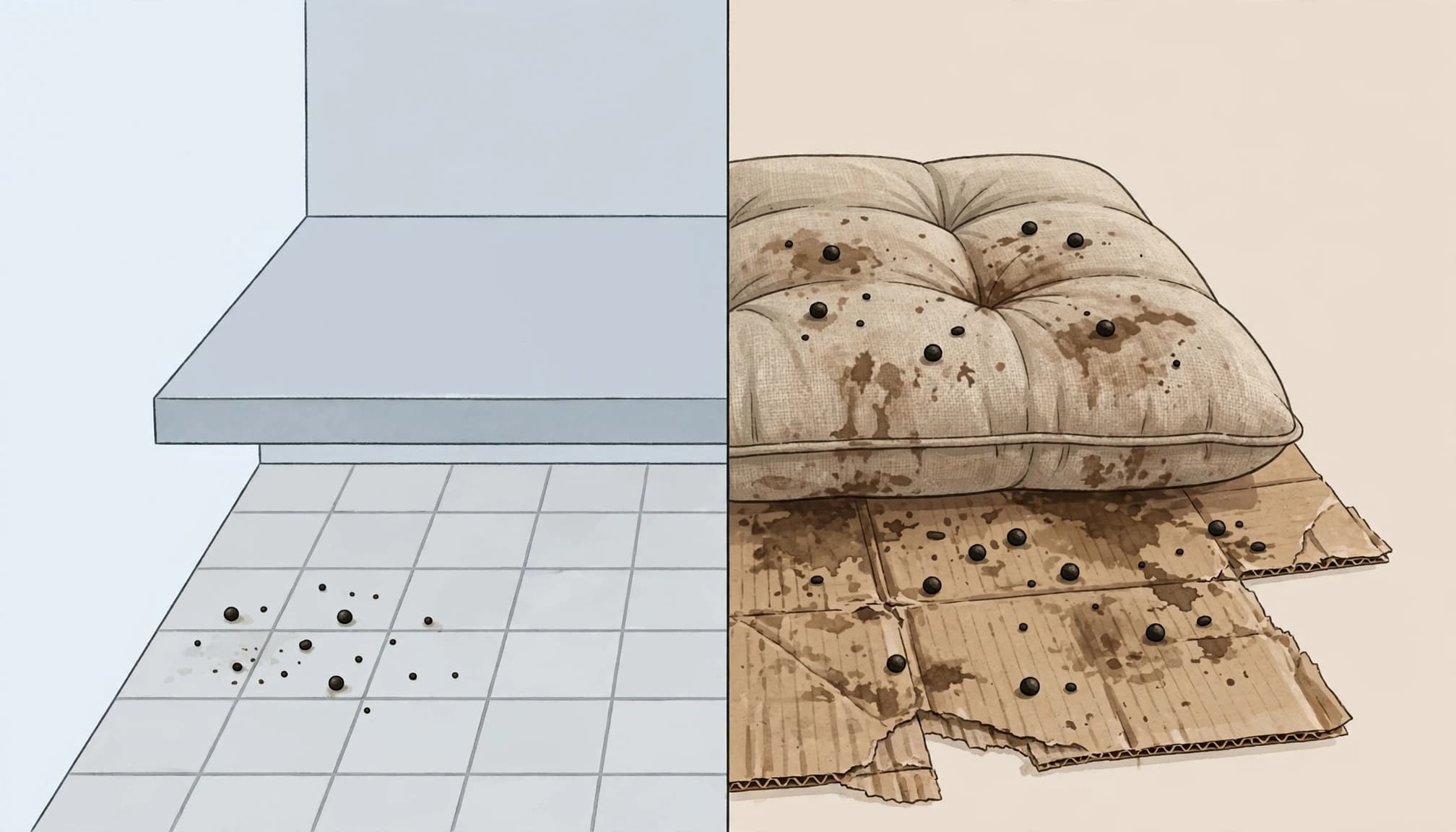
A sealed, wipeable surface can usually be cleaned with an appropriate disinfectant. Porous materials absorb liquid, so wiping the visible area may not remove contamination that has reached inside.
Upholstery, rugs, and washable items
For rugs or upholstered furniture, the CDC recommends a suitable commercial disinfectant or commercial-grade steam cleaning or shampooing. Follow the item and product instructions, and don't apply a household cleaner that could damage the fabric or leave unsafe residue.
Potentially contaminated clothing, bedding, and stuffed animals can be laundered with detergent in hot water, then dried on high heat or in sunlight, as appropriate for the item. Handle soiled textiles carefully and avoid shaking them, which can spread dust.
Cardboard, insulation, and other absorbent materials
Cardboard can't be disinfected like tile. If it's visibly soiled, avoid shaking or brushing it. Bag and discard it if that can be done without spreading contamination. For insulation, drywall, or materials inside a wall or ceiling, don't try to treat the cavity by spraying disinfectant through a small opening. The liquid may not reach the contamination and can create other damage.
When contamination has soaked into a material or you can't safely remove it, stop and get an assessment. The correct response depends on how much material is affected and where it is.
Know when to stop and call a professional
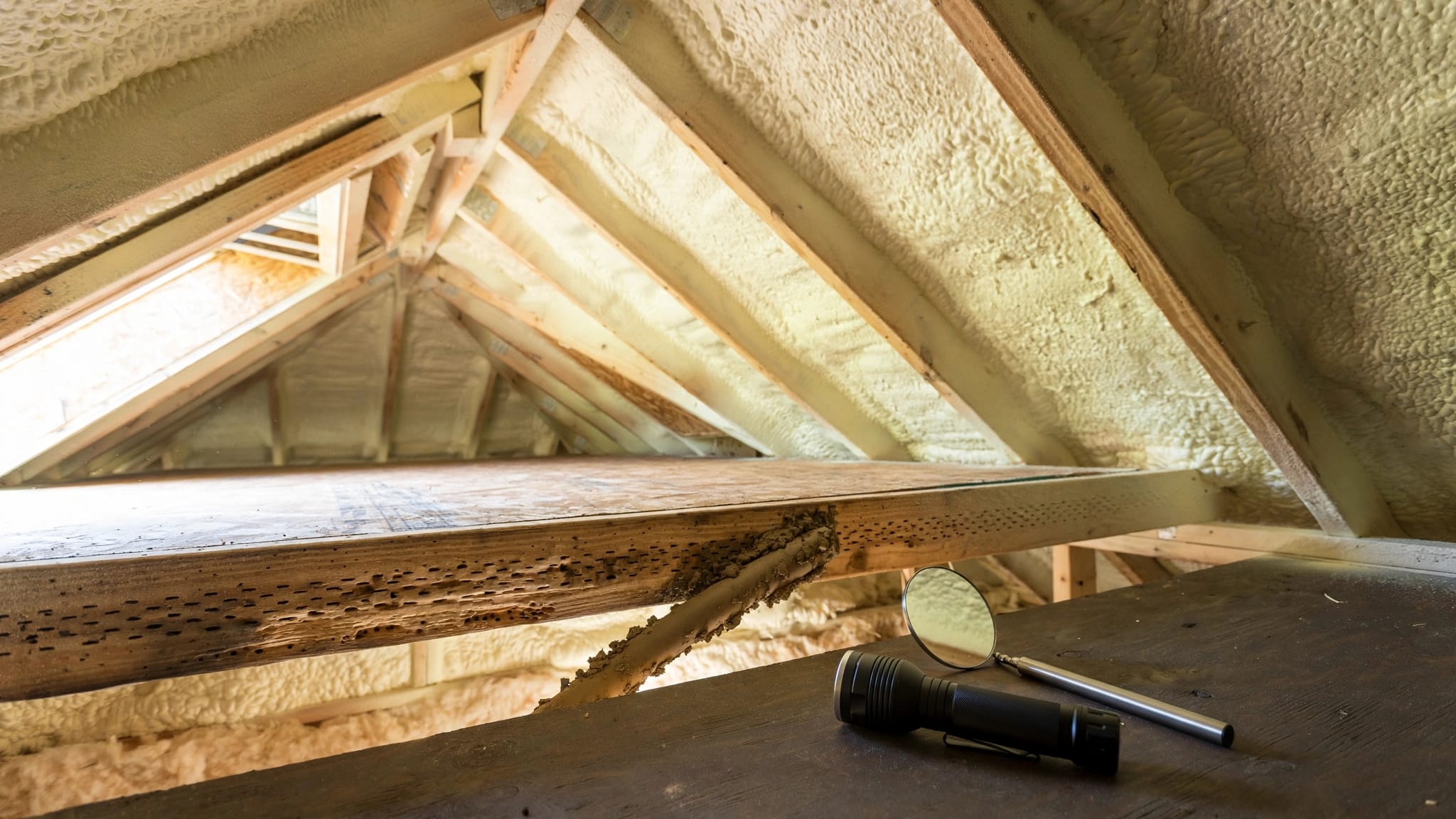
Professional help is appropriate when droppings cover a large area, appear in insulation, recur after cleaning, or are mixed with urine, nesting material, or a strong odor. Contamination in an attic, HVAC equipment, air return, ductwork, crawl space, wall void, or another inaccessible location is also beyond a routine surface cleanup.
Stop if you see gnaw marks, shredded nesting material, damaged wiring, or fresh droppings appearing repeatedly. Those signs can point to active rodent activity, so cleaning one spot won't resolve the cause. People with asthma, chronic lung disease, or a weakened immune system should stay away from contaminated areas and avoid cleanup.
For contamination in an attic, our guide to safe attic rodent cleanup covers signs and situations that call for additional care. We provide rodent control for homes and businesses in Cape Coral and nearby Southwest Florida communities when the problem extends beyond a small, accessible mess.
Cleaning the spot won't stop repeat activity
If new droppings appear in the same location, treat that pattern as a warning that rodents may still be active. Check nearby cabinets and storage areas for gnawed packaging, nesting material, or other fresh signs. Don't keep wiping the same place without addressing how rodents are getting inside or what is attracting them.
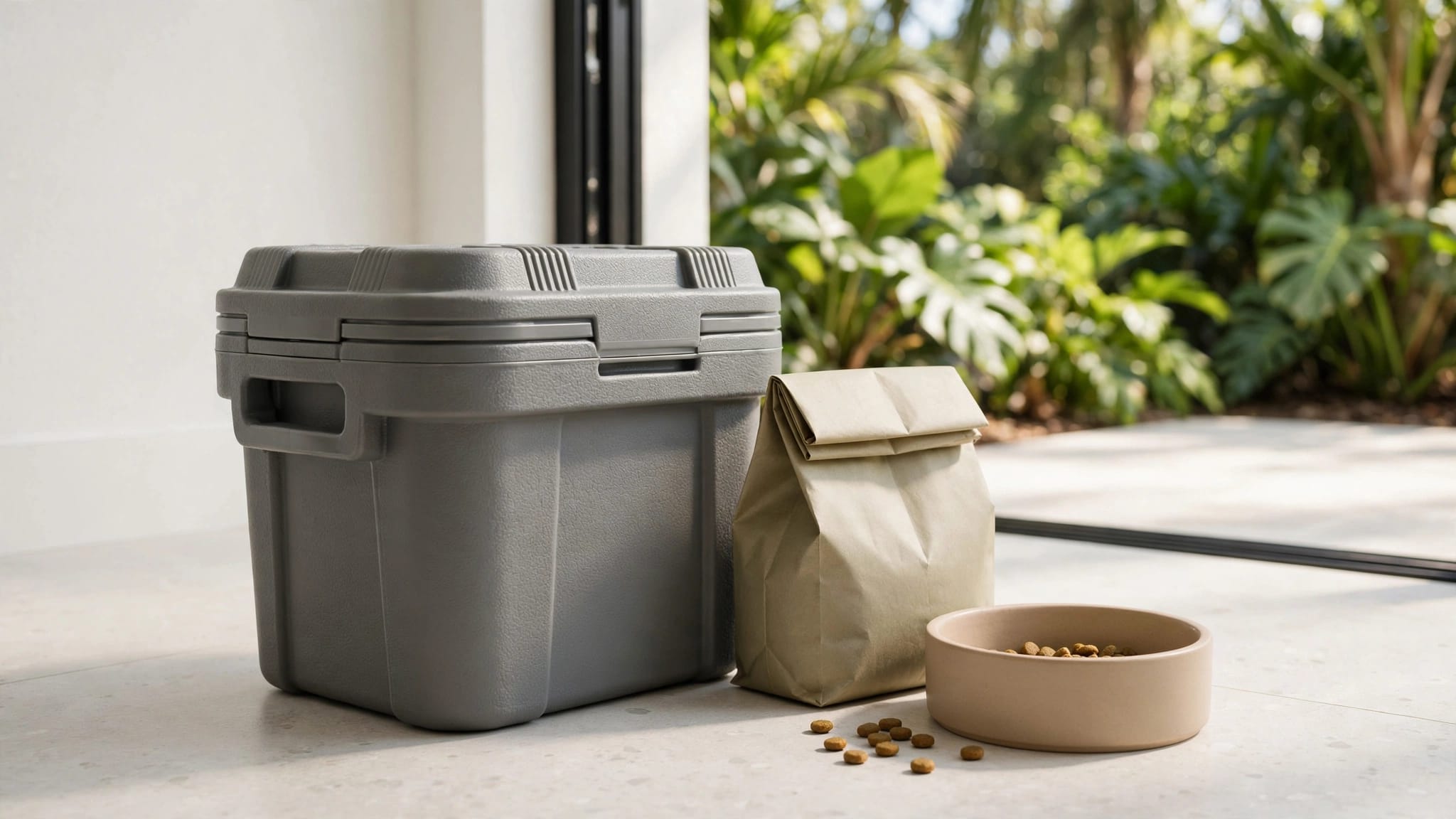
Store food and pet food in closed containers, secure garbage, and clear clutter that can provide shelter. Around the building, look for gaps near doors, vents, pipes, and utility lines. Repairs and pest control may be needed alongside cleaning, especially if activity appears in several areas.
A single cleanup can restore a small surface, but it won't remove an active rodent or close an entry point. If evidence keeps returning, arrange an inspection rather than repeating the same surface treatment.
Key takeaways
- Don't dry-sweep, scrape, or vacuum rodent droppings.
- Wear gloves, wet the waste thoroughly, and follow the disinfectant label's contact time.
- Wipe up with disposable materials, seal the waste in a bag, and wash your hands after removing gloves.
- Use a different approach for porous materials, extensive contamination, and hidden areas.
- Recurring droppings call for an inspection to find the source.
Frequently asked questions
How long should disinfectant stay on rodent droppings?
Follow the contact time on the product label and keep the surface visibly wet for that full period. CDC guidance specifies five minutes or the label's instructions. If the cleaner dries too soon, apply more as directed.
Can I use bleach on every hard surface?
No. Bleach can damage or discolor some surfaces, and it isn't the right choice for every cleanup. Use bleach only when its label and the surface instructions allow it. Never mix it with ammonia, acids, or other cleaning products.
Can I vacuum after wiping up the droppings?
Don't use a household or shop vacuum on dry droppings or contaminated residue. For a small hard-surface cleanup, use the wet method and wipe with disposable materials. Extensive contamination or residue in porous materials needs a different plan and may require professional help.
Leave the surface clean and address the source
For small amounts of rodent waste on a hard, accessible surface, the safest routine is clear: ventilate when possible, wear gloves, wet the waste, wait for the required contact time, then wipe and disinfect. Avoiding dry cleanup limits the chance of spreading contaminated particles.
If droppings return, or the contamination reaches porous or hidden areas, don't treat it as a simple cleaning task. A clean surface matters, but stopping repeat activity matters too.
Schedule a Free Inspection: