Rodent-Proof Trash Carts: Care Between Florida Pickups
A trash cart that stays partly open can feed rodents every night between collections. For Florida homeowners, rodent-proof trash carts work best as part of a routine: contain food waste, keep the lid closed, and remove spills before they become a regular food source.
No cart offers complete protection , especially when damage or overflowing bags leave food accessible. Start with the cart itself, then address the warm, wet conditions that make trash storage harder in Southwest Florida.
What rodent-proof trash carts can and can't do
A cart reduces access only when its condition and your daily habits support that goal. Its name alone doesn't establish protection.
Keep the lid fully closed
Look at the cart after adding each bag. Food packaging, bulky waste, and bags caught along the rim can prevent the lid from resting closed. Rearrange the contents rather than pressing the lid onto an overfilled load.
Inspect the lid, hinges, rim, and body for damage that creates an opening. A broken hinge or distorted lid can leave waste exposed even when the cart looks closed at a glance. Arrange repair or replacement when damage prevents normal closure.
Also, wipe food residue from the rim. A closed lid doesn't remove scraps stuck outside the container.
Treat bags as containment, not a barrier
Trash bags help contain scraps and liquids, but rodents can chew through them. Keep every food-waste bag inside the cart, rather than beside it while waiting for collection.
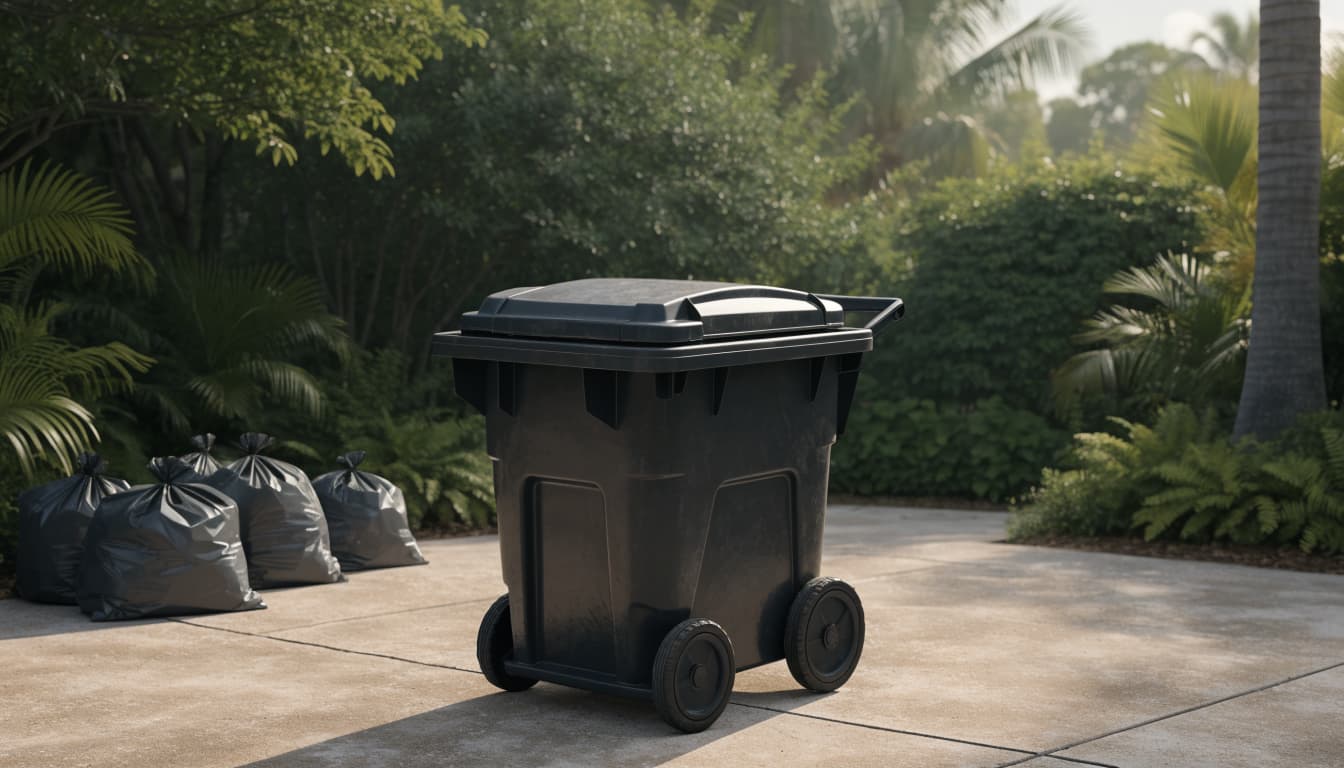
Food-waste bags belong inside the closed cart, not alongside it.
When the cart is full, adding bags around its base creates another accessible food source. Reduce bulky packaging before disposal and keep food-containing waste enclosed. Don't compact trash with your hands or feet because sharp objects may be hidden inside.
Contain food waste before it reaches the cart
Florida heat makes leaking food waste unpleasant quickly. Better handling starts in the kitchen, before a bag reaches the outdoor cart.
Separate the messiest scraps
Drain liquids before putting food packaging in the trash. Place wet scraps in a smaller tied bag, then put that bag inside your main kitchen trash bag. This helps contain leaks; it doesn't make the waste inaccessible by itself.
For especially odorous meat or fish scraps, freezing them in a clearly designated, closed container until collection day can limit outdoor odor. Keep that container separate from food intended for eating.
Don't pour cooking grease into the cart or onto the ground. Let it cool, contain it for disposal, and keep the container inside bagged waste.
Remove food residue from recycling
Empty beverage containers and rinse away food residue before placing accepted items in recycling. Let containers drain so liquid doesn't collect at the bottom of the bin.
Recycling with leftover food can attract pests even when the main trash cart stays clean. Pizza boxes, takeout containers, and pet-food cans deserve attention because residue often remains around corners and openings.
Meanwhile, keep bird seed and pet food in closed storage containers. Leaving either beside the cart gives rodents another reason to visit. Bring outdoor pet bowls in after meals, including bowls on a screened lanai or back patio.
Keep rainwater and food spills out of the storage area
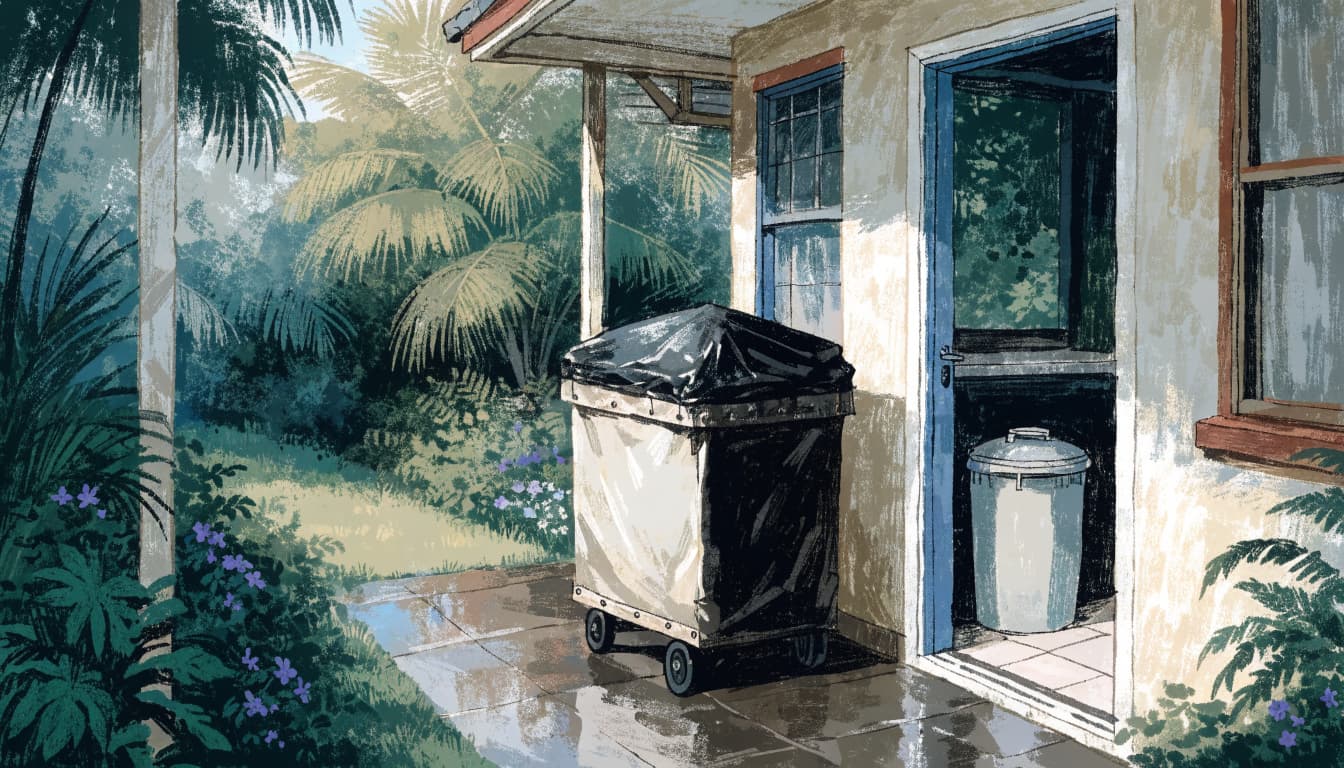
A closed lid helps keep rain out, but Florida showers can still leave the surrounding pad wet and littered with displaced waste.
Clean ordinary spills promptly
Remove spilled food when you notice it, rather than waiting for the cart to empty. For ordinary food residue, scrub the affected area with detergent and water. Collect solid waste first so cleaning doesn't spread scraps across the yard.
After collection, look inside the empty cart for torn bags, pooled liquid, and residue beneath the lid. Wash dirty surfaces, then let the cart drain and dry before adding fresh waste.
Keep wash water out of storm drains, canals, and other waterways. Also, don't mix cleaning products. If you find rodent droppings, use the separate cleanup precautions below.
Respond to rain without leaving the lid open
After a storm, close a displaced lid and collect scattered waste when conditions are safe. Empty standing water from nearby containers, including buckets and unused planters.
A sheltered location can reduce direct rainfall, but it shouldn't hide the cart in dense vegetation or block access. Avoid placing it where roof runoff repeatedly floods the storage pad.
Dry the empty cart after washing. Leaving a loaded cart open to "air out" also exposes its food waste.
Even beneath an overhang, inspect the area after wind-driven rain. Water can collect where bags have leaked or debris blocks drainage.
Choose a storage spot you can inspect and clean
Keep the cart on a firm surface where you can see its base and retrieve spilled waste. A narrow space behind shrubs may conceal droppings, gnawing, or torn packaging until activity becomes established.
Leave enough room to open the lid and move the cart without dragging it through vegetation. Remove loose cardboard, unused pots, and other clutter from the immediate storage area.
Placement alone won't stop rodents. Roof rats climb, so raising trash above ground level doesn't remove the need for closed storage. Ground-level cover and nearby food sources also deserve attention.
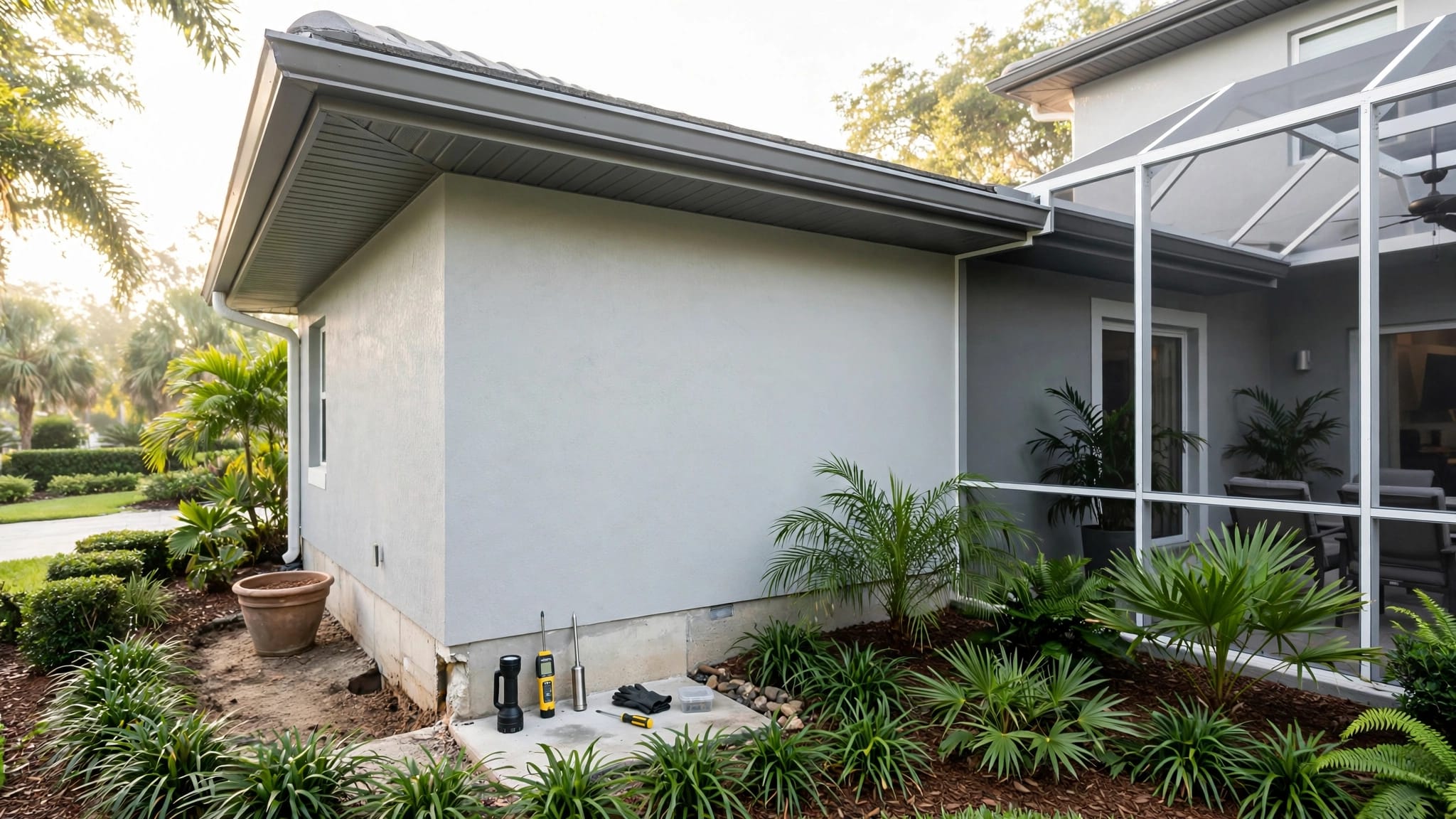
For canal-side properties, the waste area may be only one part of a larger access problem. Our guidance on rat prevention around seawalls covers sanitation and building-entry concerns near those routes.
Look at the nearest garage door, utility penetrations, and exterior doors while inspecting the cart area. Our dry-season home pest checklist also addresses food storage and sheltered spaces that homeowners overlook.
If your community uses a shared dumpster, our commercial trash-storage guidance addresses that larger waste area. Household cart care won't resolve an overflowing shared enclosure.
Build a routine around each collection
Rodent-resistant trash storage depends on repeated actions, especially after a missed pickup or a week with extra food waste.
Use this sequence to keep the work manageable:
- After collection, inspect the empty cart for residue, damage, and pooled liquid. Clean it when needed and let it dry.
- Before adding each bag, tie it closed and look for leaks. Keep food waste inside the cart.
- Each evening, make sure the lid rests closed. Remove ordinary food spills from the surrounding area.
- Before collection, move the cart into its collection position without leaving loose food-waste bags around it.
If collection is delayed, keep using closed storage. An extra night outside makes containment more important, rather than providing a reason to leave the lid open.
For vacation homes and rentals, include cart care in the departure instructions. Guests should know where trash belongs and who handles the next collection. A full cart left unattended can remain a food source after everyone leaves.
Following a storm, deal with scattered waste when it's safe to go outside. Don't handle trash near downed electrical lines or unstable debris.
Recognize when sanitation needs professional support
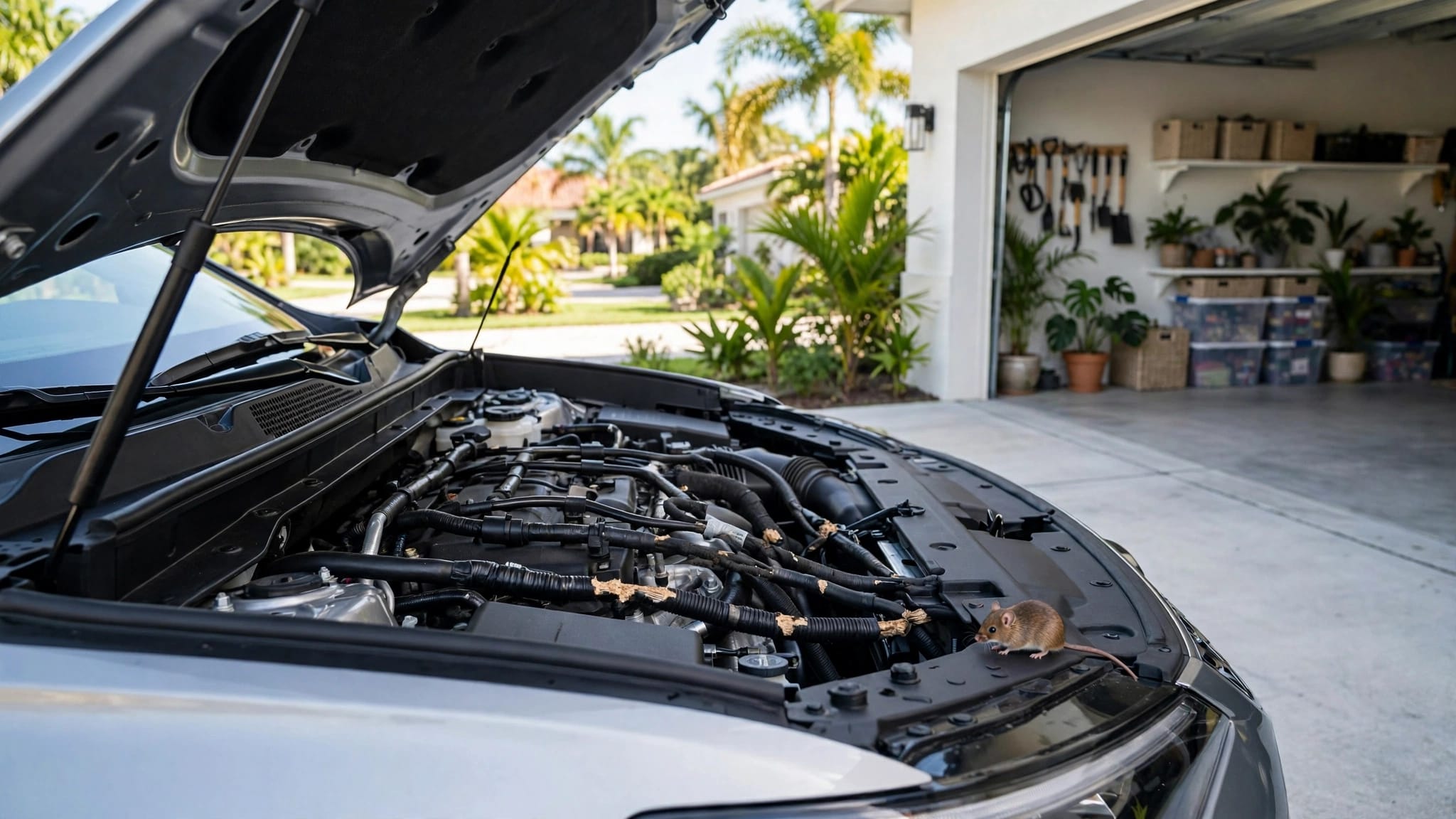
Fresh droppings, repeated gnawing, or bags torn inside a closed cart suggest an active rodent problem. Cleaning removes food residue, but it doesn't identify a nearby nest or an opening into your home.
Inspect without reaching into hidden spaces or handling droppings bare-handed. Don't dry-sweep, vacuum, or pressure-wash rodent waste. Those actions can spread contaminated particles.
The Centers for Disease Control and Prevention recommends wetting rodent waste with disinfectant before wiping it up. Wear gloves and follow the disinfectant's required contact time. Heavy contamination, enclosed spaces, and suspected nesting areas call for professional cleanup guidance.
Avoid scattering rodent poison around the cart. Children, pets, and wildlife can encounter unsecured products, and treatment needs to address the actual activity.
If you also hear attic scratching or find indoor droppings, arrange an inspection before sealing suspected entry points. Rodents may already be inside.
We offer free inspections through our residential pest control in Cape Coral. An inspection can identify activity around the cart and nearby home-entry concerns.
Key takeaways for the days between pickups
The most useful protection comes from maintaining closed, clean storage throughout the collection cycle.
- Keep food-waste bags inside the cart, with nothing holding the lid open.
- Remove leaks and ordinary food spills promptly, then dry the empty cart after washing.
- Treat repeated droppings or chewing as a reason for inspection, rather than another routine cleaning task.
Frequently asked questions
Are rodent-proof trash carts completely rodent-proof?
No cart guarantees that rodents can't reach its contents. Open lids, damage, exposed bags, and exterior food residue can defeat otherwise careful storage. Treat rodent-proof trash carts as one part of prevention, supported by sanitation and attention to nearby entry points.
Should I keep the cart in the garage?
A garage can shelter the cart from rain, but leaking waste or an open lid still provides food. Keep the cart closed and the floor clean. If rodents already enter the garage, moving food-containing trash inside won't solve that access problem.
Will bleach or peppermint oil keep rats away?
Neither replaces food containment or entry-point repairs. Bleach is a cleaning chemical, and any disinfecting use must follow its label. Don't rely on strong smells to protect accessible waste. Focus on removing food residue, keeping bags enclosed, and addressing repeated rodent activity.
Keep the cart closed throughout the week
The goal between pickups is to keep food contained and the storage area clean, even through Florida heat and rain. A sound cart helps, but consistent care keeps small problems from becoming nightly feeding opportunities.
Start with the lid and the waste inside it. If chewing or droppings keep returning, a professional inspection can address the rodent activity that cart cleaning alone can't resolve.
Schedule a Free Inspection: