Can Pest Treatments Harm Aquarium Fish in Florida?
Yes, some pest-control products can harm aquarium fish if spray, residue, or contaminated equipment reaches the water. The risk depends on the product and how it's applied, so a general rule like "cover the tank and wait two hours" can't guarantee safety.
Tell your pest-control provider about the aquarium before treatment begins. In Florida homes, where indoor pest services may involve targeted sprays, baits, foggers, or separate termite work, the precautions need to match the product label and application method.
Key Takeaways
- Pesticide spray can drift into an aquarium, while residue on hands or equipment can contaminate tank water.
- Tell the technician about every aquarium, including tanks in rooms outside the treatment area.
- Don't assume a towel or plastic cover is enough, or switch off tank equipment without product-specific instructions.
- If you suspect pesticide reached the water, contact an aquatic veterinarian urgently and share the product name and label.
- Human pesticide exposure is a separate emergency. Florida Poison Control is available at 1-800-222-1222.
How pesticide exposure can reach aquarium water
Fish can be sensitive to chemicals that are used to control insects around a home. EPA product labels may warn of toxicity to fish or other aquatic organisms, but products and application methods differ. A 2025 laboratory study found adverse effects in Nile tilapia exposed to fipronil in water. That finding shows a potential aquatic hazard, but it doesn't set a safe exposure level for a home aquarium.
Airborne spray can settle on water
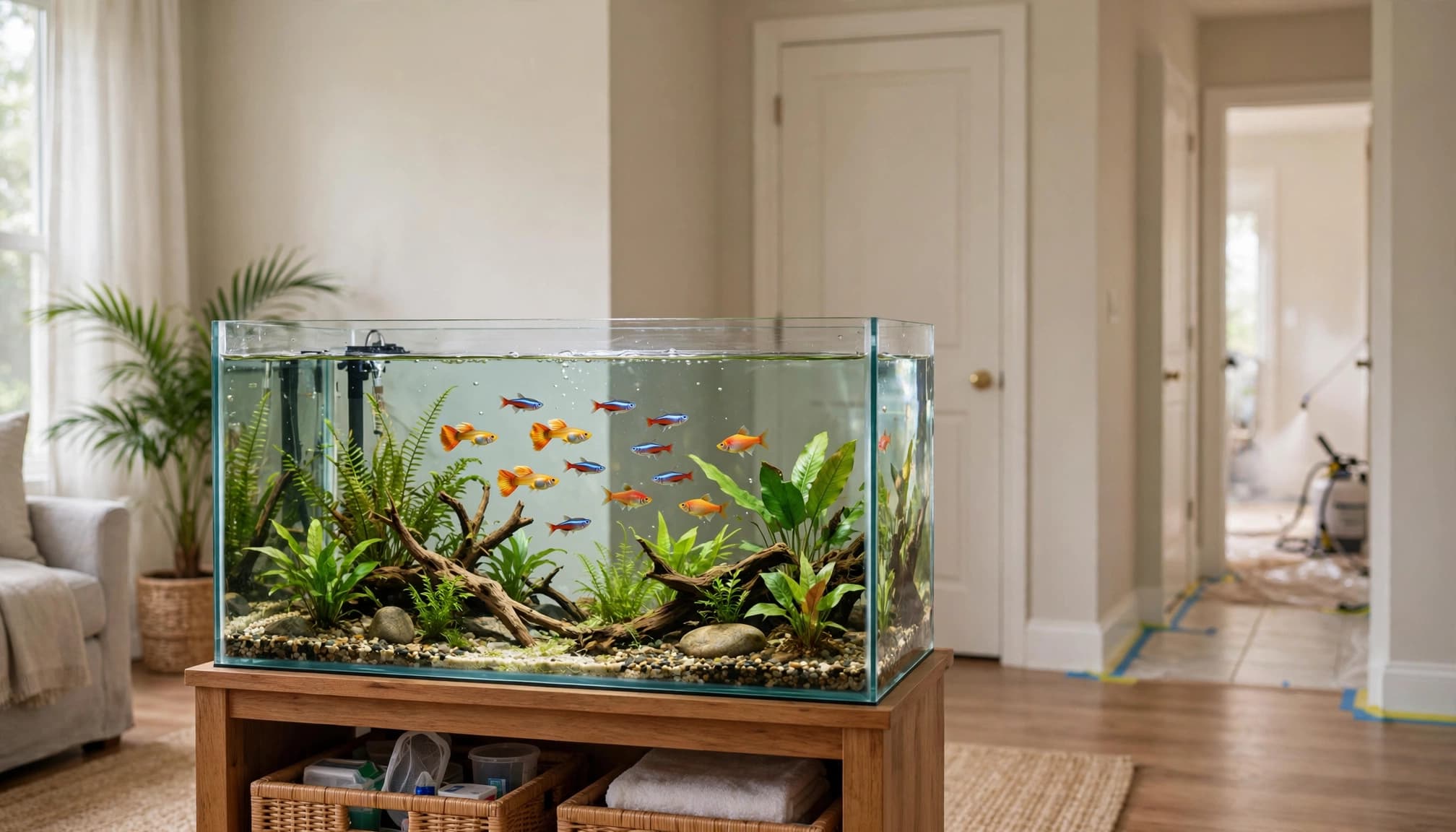
During indoor spraying, fine droplets may drift beyond the intended surface. If they reach an open tank, they can land directly in the water. Droplets may also settle on the aquarium rim, lid, nearby shelves, or other surfaces, then transfer into the tank later.
Residue can travel on hands and equipment
A person who has touched a treated surface may transfer residue while feeding fish or cleaning the tank. Nets, buckets, siphons, and other aquarium tools can also carry contaminants if they've been in a treated area. Keep tank equipment away from treatment zones, and wash your hands before aquarium care, especially after returning to a treated room.
Protect fish before and during indoor treatment
The safest plan starts before the technician arrives. Share the tank's location and ask which product and application method are planned. Then follow the product label and the technician's directions for the aquarium, nearby surfaces, ventilation, and re-entry.
Make a tank-specific plan
Tell the technician about aquariums, terrariums, bird cages, and other animal habitats. Ask whether treatment can avoid the room or use a targeted method that doesn't create airborne spray near the tank. Remove food, bowls, and other pet items from treatment areas as instructed.
Don't rely on an improvised towel or plastic cover. A cover may not seal the tank or protect its air intake, and some products require special steps for aquarium equipment. Ask for clear directions before treatment starts. These questions to ask a Florida pest control company can help you discuss the product and precautions.
Follow the exact label and re-entry instructions
Instructions vary by product. The Raid Indoor Fogger label, for example, directs users to cover aquariums and turn off the aquarium and its airflow system. Evercide's total-release product label calls for covering aquariums, vacating the building, and following specific ventilation steps after application. Those instructions apply to those products, not every indoor treatment.
For indoor sprays, baits, or spot treatments, drying time and re-entry directions also vary. Follow the applicator's product-specific guidance, not a generic wait time or the absence of an odor. Read more about Florida home pest treatment re-entry instructions.
Florida treatments call for different precautions
Florida homeowners may arrange indoor service for ants, roaches, fleas, or other pests. A targeted crack-and-crevice application, gel bait, and total-release fogger don't create the same exposure conditions. A technician should know about the aquarium before choosing where and how to treat.
Routine indoor applications
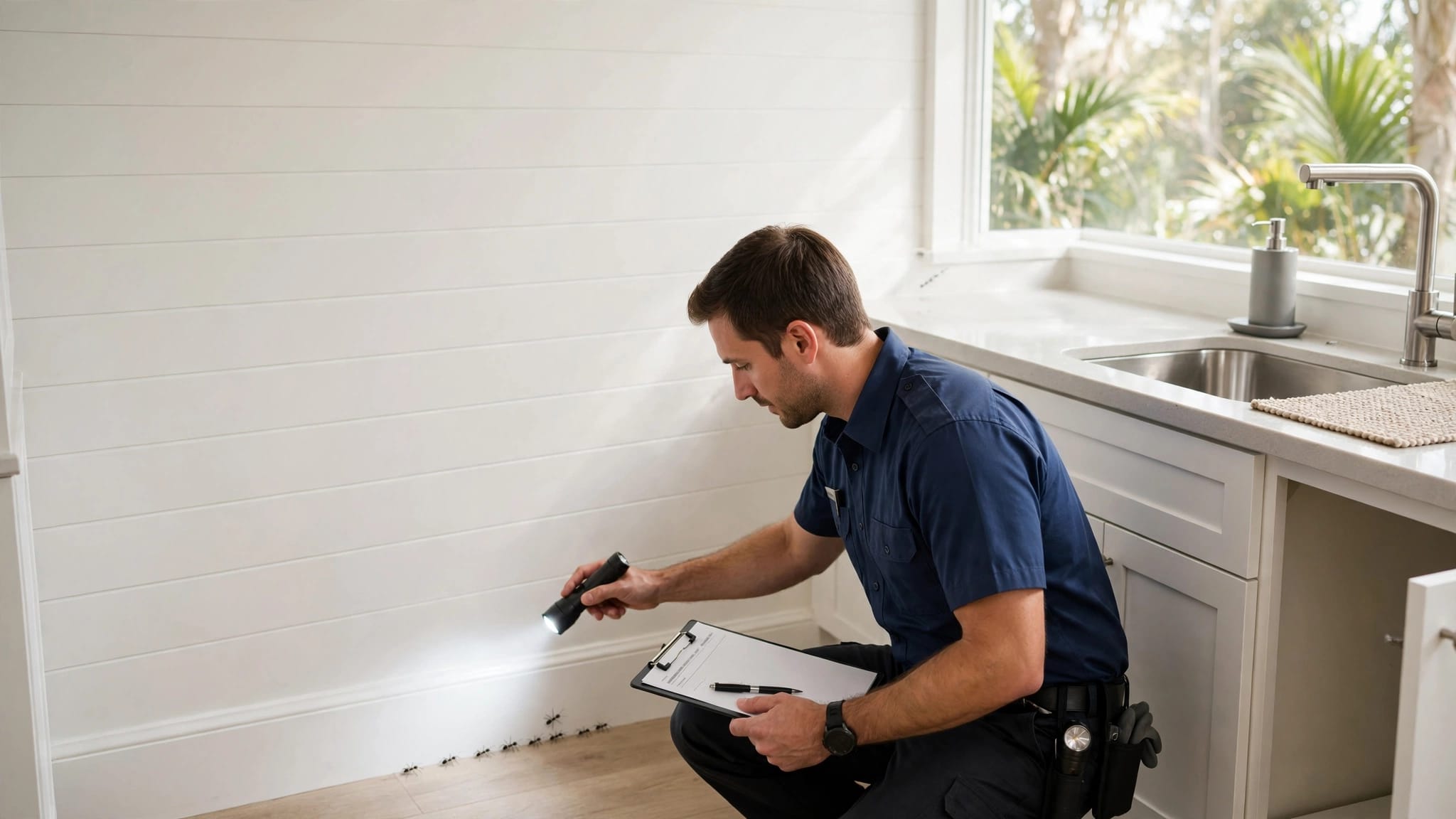
For a localized spray or spot treatment, ask whether the aquarium room can remain untreated and whether nearby surfaces need protection. Keep fish-care tools out of treated areas. In Southwest Florida, homeowners arranging residential pest control in Cape Coral can mention the aquarium when discussing the treatment plan.
Foggers and termite fumigation are different
Foggers disperse pesticide through indoor air, so aquarium and ventilation directions matter. Termite tenting and structural fumigation are separate services with their own preparation and clearance procedures. Don't apply routine indoor-spray instructions to fumigation. Follow the licensed fumigator's directions and clearance process before returning.
What to do if you suspect exposure
If spray visibly entered the water or residue may have contaminated the tank, treat it as urgent. Move people and pets away from the active treatment area, and don't add household cleaners, medications, or other chemicals to the aquarium. There isn't a universal fish-safe water-change amount or antidote for every pesticide.
Contact an aquatic veterinarian promptly
Call a veterinarian experienced with fish and provide the product name, label, application method, and approximate time of exposure. Note any unusual fish behavior, such as rapid gill movement, gasping at the surface, erratic swimming, or loss of balance. Don't wait for symptoms if you saw pesticide enter the tank.
Get separate help for human exposure
Florida Poison Control provides free, confidential help 24 hours a day at 1-800-222-1222 . It handles human exposure, not fish treatment. For pesticide on a person's skin or in their eyes, the Florida Department of Health advises rinsing with running water for 15 minutes, then contacting Poison Control or a medical professional.
FAQ
Is a covered aquarium automatically safe during spraying?
No. The correct steps depend on the product and application. A cover may not protect the tank's air intake or prevent contamination when removed. Follow the label and the technician's aquarium-specific directions.
Should I turn off the aquarium filter or air pump?
Only if the product label or pest-control professional specifically directs you to do so. Some labels include aquarium airflow instructions, but they aren't universal. Ask before treatment begins.
Protect the aquarium with a clear plan
Pest treatments can harm fish if chemicals reach the tank, but the risk depends on the product and method. Tell the provider about the aquarium, follow label-specific precautions, and contact an aquatic veterinarian quickly if exposure is suspected.
Schedule a Free Inspection: