How Long Should You Stay Out After Indoor Pest Control in Florida?
The right answer depends on the product, treatment area, drying time, ventilation, and label instructions. There is no single wait time for every indoor pest control Florida service.
Before leaving, ask the applicator for the exact re-entry time. Return only after the stated period has passed, treated surfaces are dry, and the home has received any ventilation the label requires. A fading odor is not proof that the home is ready.
Key Takeaways
- Follow the pesticide label and the pest control company's written instructions.
- Keep children and pets away until treated areas are dry or the label allows re-entry.
- Ask about food, dishes, pet bowls, toys, bedding, aquariums, and ventilation.
- Give extra consideration to pregnancy, asthma, chemical sensitivities, and young children.
- Leave again and seek help if anyone develops symptoms after returning.
- Treat fumigation and termite tenting as separate services with separate clearance procedures.
Indoor pest control Florida: when can you go back inside?
The label controls the timing
Indoor applications vary widely. A technician may use targeted crack-and-crevice treatment, gel bait, spot treatment, or a broader liquid application. Each product has its own directions for drying, ventilation, treated areas, and re-entry.
The U.S. Environmental Protection Agency and the National Pesticide Information Center support a label-specific approach. Florida's pesticide rules also require professionals to use products according to their registered labels.
That means a general online estimate, such as two hours or four hours, can't replace the instructions for your home. Ask the technician to provide the product name, treated rooms, re-entry time, and any required cleaning steps.
Drying and ventilation both matter
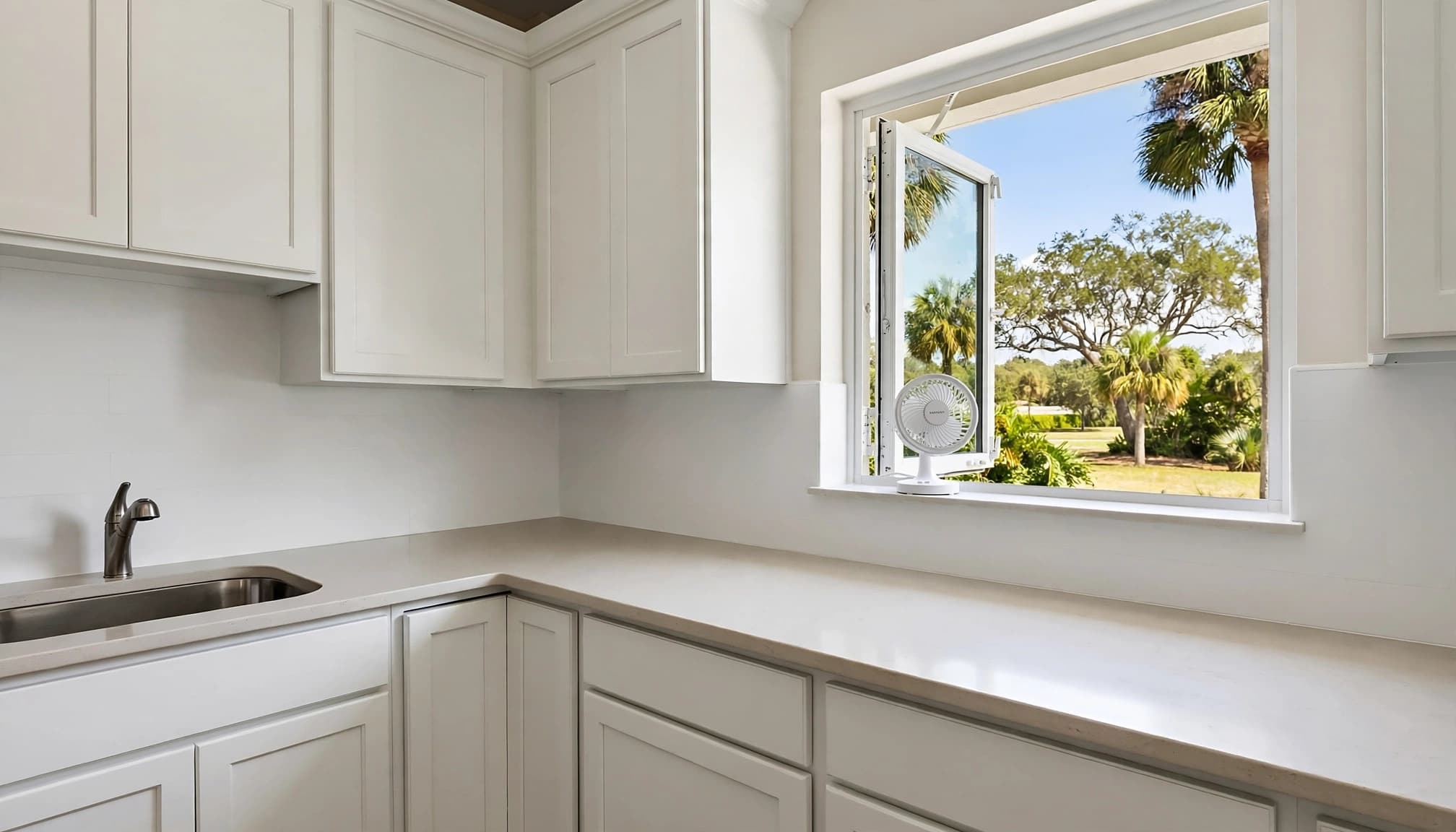
Stay out until treated surfaces are completely dry unless the label gives stricter instructions. When permitted, open windows and use fans to move fresh air through the home. Do not remain in a sealed room during or after an application that requires ventilation.
Never return early because the chemical smell has faded. Some products have little odor, while odor can linger after a treatment is otherwise ready. Smell is not a reliable safety test.
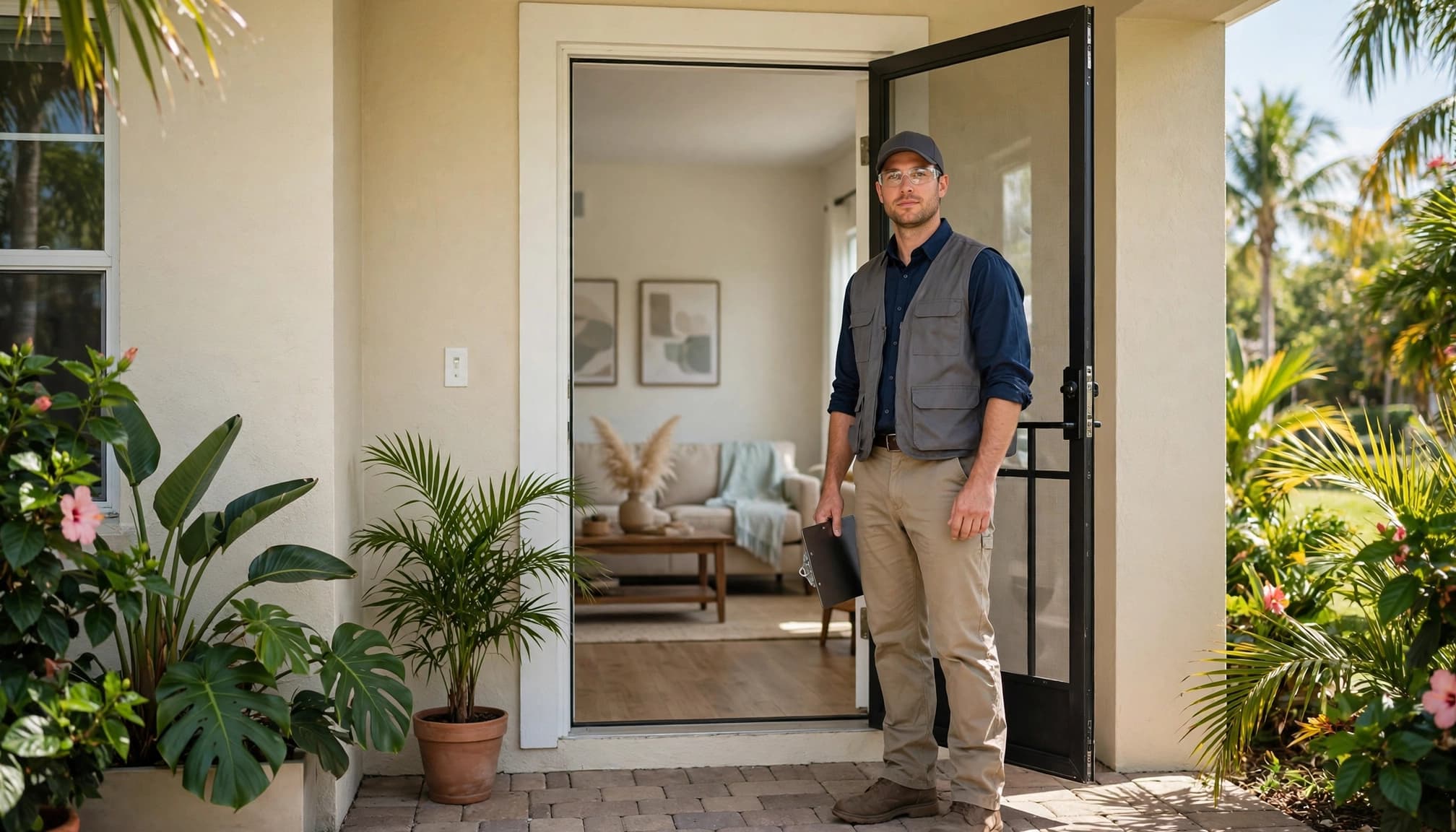
When is it safe to go back inside?
Check the home before re-entry
Before bringing everyone back, confirm that:
- The required waiting period has passed.
- Sprayed surfaces and floors are dry.
- The technician has approved re-entry.
- Windows or doors have been opened if ventilation is required.
- Wet spots, equipment, and marked treatment areas are inaccessible.
- Food-contact surfaces have been cleaned if the label or technician requires it.
If you still have questions, contact the company before entering. These questions to ask a Florida pest control company can help you confirm product details, preparation, and re-entry instructions before service.
Use extra caution with sensitive household members
Children and pets should stay away during treatment and until treated areas are dry or the label permits their return. Keep birds, reptiles, fish tanks, and other animals in mind because their exposure risks and care requirements may differ.
Pregnant people, adults with asthma, and anyone with chemical sensitivities may want to stay away longer than the minimum stated period. Ask the provider whether additional ventilation or precautions make sense for the specific product. If the home still feels irritating after ventilation, do not treat the absence of a strong odor as permission to remain inside.
Prepare food, pets, and living spaces
Remove household items before treatment
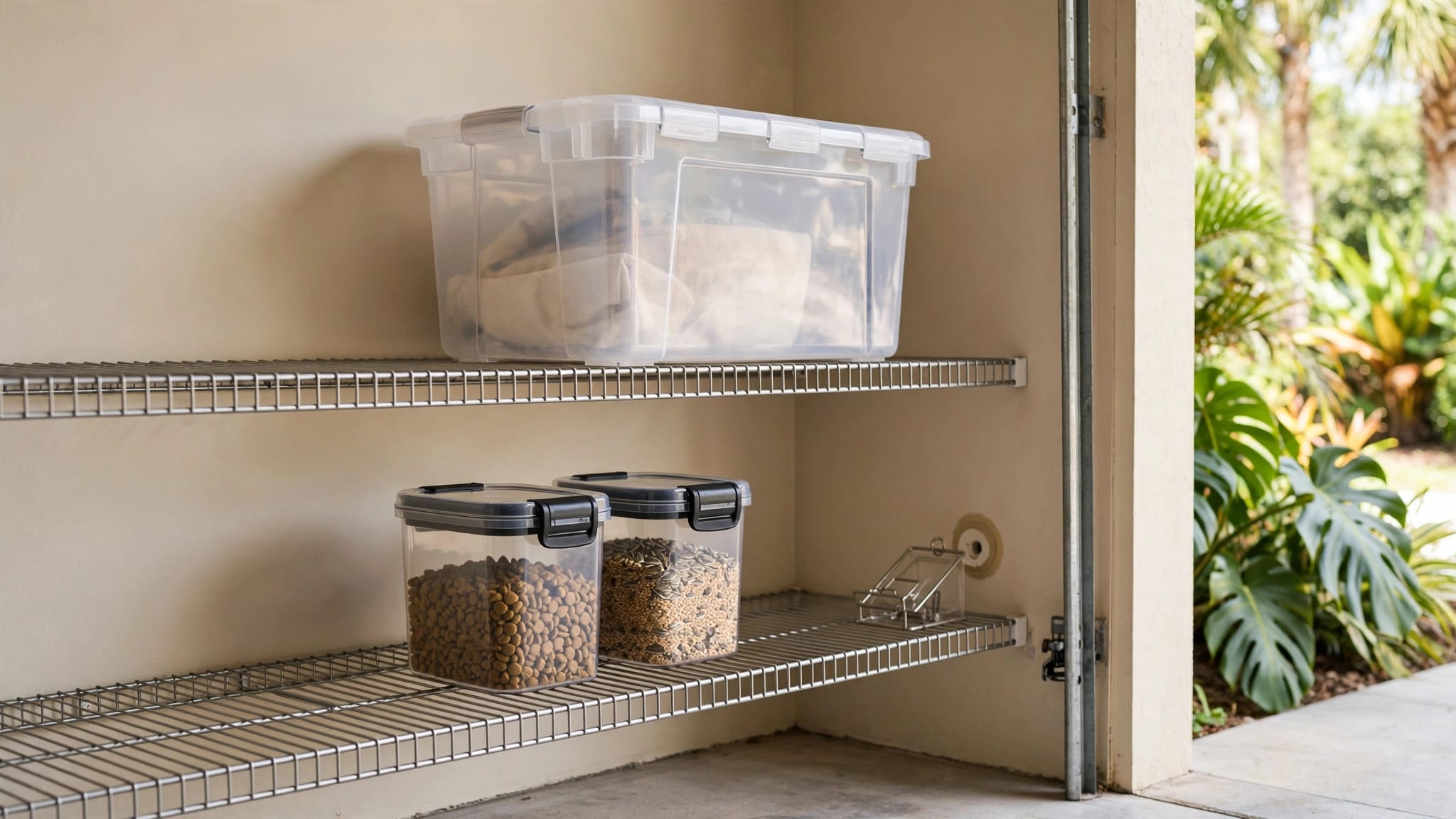
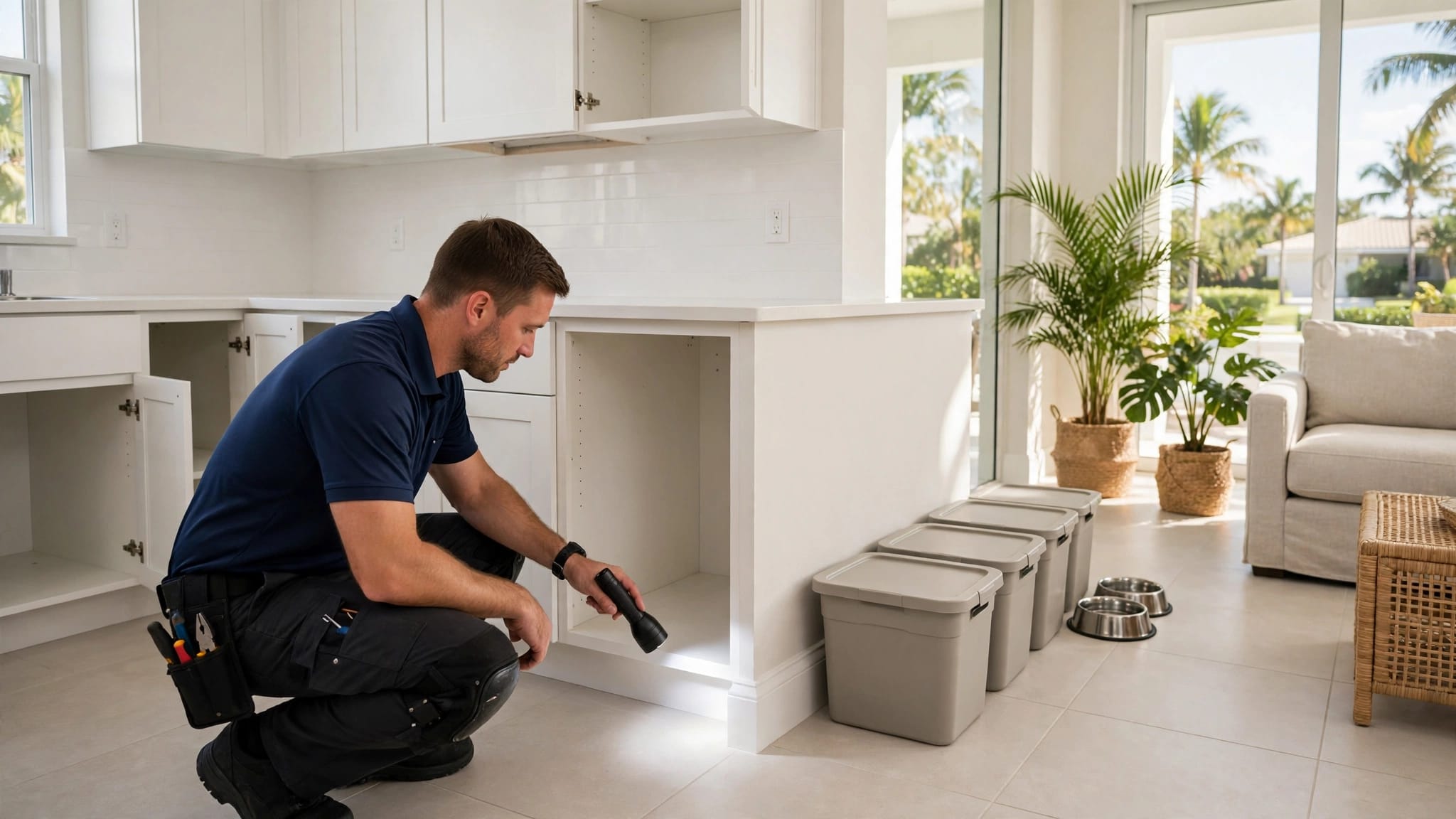
Food, pet food, water dishes, toys, bedding, and personal items should leave the application area unless the technician gives different written instructions. Store exposed food in sealed containers, and keep children and pets away from treated zones.
Preparation depends on the pest and method. A routine indoor service differs from flea, bed bug, rodent, or termite work. Shield's guide to what to remove before interior pest control covers common items and questions to ask before the visit.
Never mix household cleaners with pesticides. The combination can create dangerous fumes. Also avoid spraying into outlets, electrical panels, or utility boxes.
Handle kitchens and food-contact surfaces carefully
After treatment, ask whether counters, tables, high chairs, floors, or other food-contact surfaces need washing. NPIC recommends considering a washdown when pesticide is applied near food-preparation areas.
Do not place food, dishes, pet bowls, or toys back until the surfaces are dry and the provider says they can return. If a product was applied inside a pantry or cabinet, follow the label and technician's instructions before restocking.
What if you notice symptoms?
Leave if you feel unwell
Possible pesticide exposure symptoms include headache, dizziness, nausea, and muscular weakness. Some pyrethrin exposures may also cause coughing, wheezing, breathing difficulty, vomiting, diarrhea, runny nose, or eye irritation.
If anyone develops symptoms after re-entry, move outside or to another source of fresh air and contact a medical professional or poison-help service for guidance. Tell them the product name and active ingredient if you have that information.
Do not try to cover the problem
Avoid masking an irritating odor with air fresheners or applying another chemical. Leave the treated area and call the pest control company. Ask whether the home needs more ventilation, additional cleaning, or an inspection of the treated surfaces.
A responsible company should explain what was applied, where it was applied, and what to do next. The preparation guidance for hiring an exterminator can help you plan questions before a service visit.
Florida treatments require clear instructions
Routine service is different from fumigation
Most indoor pest control appointments involve targeted applications, bait, or localized treatment. Termite tenting and structural fumigation follow a different process. You may need to remove food, medicine, plants, pets, and other listed items, then arrange a longer vacancy period.
After fumigation, the tent coming down does not automatically make the home safe. A licensed fumigation professional must aerate and test the property before clearing it for re-entry. Follow the company's clearance documentation and never rely on a generic indoor pest control Florida wait time.
Ask for written re-entry directions
Before the technician leaves, confirm the product, treatment areas, required vacancy period, drying instructions, ventilation steps, and cleaning requirements. Ask when children, pets, plants, aquariums, and food items can return.
For homeowners in Cape Coral, Fort Myers, Punta Gorda, Bonita Springs, and Sanibel, a local company should explain these details in plain language. Reliable Cape Coral residential pest control starts with identifying the pest and treating the correct areas.
FAQ
Is two hours long enough after indoor pest control?
Not necessarily. Two hours may appear in some product or company instructions, but it is not a Florida-wide rule. Follow the label and the applicator's exact direction, then wait for treated areas to dry and the home to ventilate as required.
Can I return when the smell is gone?
No. Odor fading does not confirm that the label's re-entry period has passed or that treated surfaces are dry. Use the written instructions and the technician's clearance instead.
Should pets leave during pest control?
Yes. Keep pets away while products are applied and until the label or technician permits their return. Remove bowls, food, bedding, toys, and cages from treatment areas, and ask about special precautions for birds, reptiles, and aquariums.
Conclusion
The safest answer to how long you should stay out after indoor pest control in Florida is the time stated by the product label and applicator. Wait for the required period, confirm that surfaces are dry, ventilate as directed, and keep sensitive household members away until the provider clears the space.
When in doubt, call the pest control company before re-entering. Clear instructions are more reliable than a clock or a fading odor.
Schedule a Free Inspection: