Keep Bed Bugs Out of Luggage After a Florida Hotel Stay
To reduce the chance of bringing bed bugs home, contain your luggage, inspect it, and unpack directly into sealed bags. Then handle clothing with appropriate laundering and drying, and clean the suitcase before storing it.
Finding bed bugs in luggage is possible after any hotel stay, including at a clean property. Containment helps keep a travel concern from spreading through your home, but an inspection alone can't guarantee a bag is clear.
Start with where you put your suitcase when you arrive.
Key Takeaways
- Keep travel bags off beds, couches, and bedroom floors while inspecting and unpacking.
- Separate untreated belongings from cleaned items, and use the dryer appropriately for fabrics that tolerate heat.
- Florida sunshine and parked cars aren't dependable treatments. If you find physical evidence, keep it contained and arrange a professional inspection.
1. Contain Your Luggage Before Unpacking
Choose a well-lit area with a smooth, easy-to-clean floor, away from sleeping areas and upholstered furniture. A clear utility area works better than spreading belongings across your bed.
If the hotel stay raised a specific concern, enclose the suitcase in a large, intact plastic bag before carrying it through your home. Keep it closed until you're ready to inspect and unpack. Don't leave a questionable suitcase open in a garage beside stored furniture or boxes.
Gather a flashlight, sturdy bags that close securely, and a clean container for processed clothing. Having everything nearby reduces unnecessary movement between rooms.
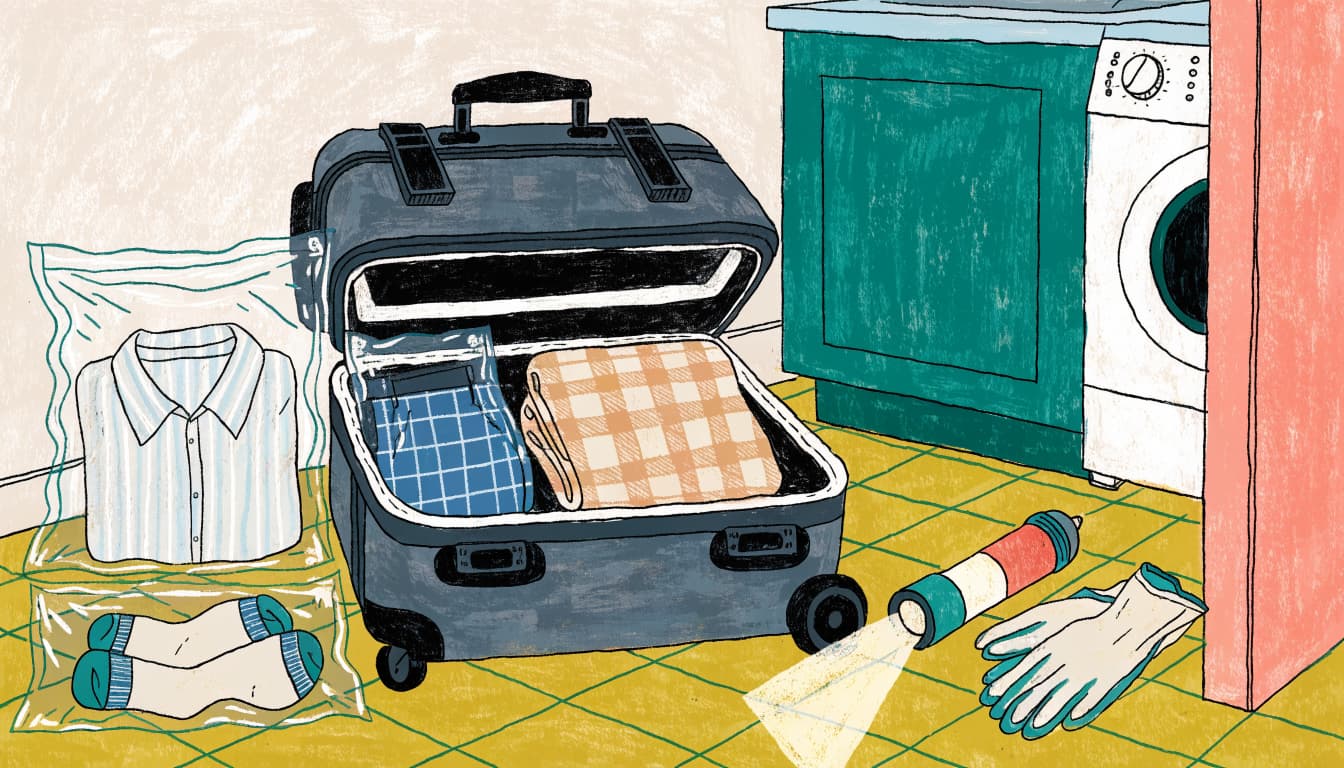
Bed bugs travel with belongings and don't indicate poor housekeeping. Our advice on vacation rental bed bug prevention applies to travelers, too: keep luggage away from beds and upholstered furniture.
2. Inspect for Bed Bugs in Luggage
Inspect the bag before removing everything. Then examine newly exposed areas as you unpack. Work slowly enough to see folds and corners without shaking belongings around the room.
Follow the seams and hidden edges
Use a flashlight along zipper tracks, piping, handles, straps, pocket corners, and the edges of the lining. Inspect around wheels, feet, and recessed hardware as well.
Next, open each compartment and examine its folds. Pay attention to packing cubes, toiletry bags, backpacks, and laundry sacks. These smaller items need attention alongside the main suitcase.
Don't tear out sewn-in linings or force apart hardware. If an inaccessible area contains suspicious evidence, keep the bag contained for professional assessment.
Recognize evidence without jumping to conclusions
Look for live insects, pale shed skins, tiny whitish eggs, and dark, ink-like spotting. Adult bed bugs are flat and reddish-brown, although younger insects can be smaller and lighter.
Lint, crumbs, and ordinary scuffs can resemble pest evidence. Also, bites alone don't identify bed bugs because reactions vary and other insects cause similar irritation.
Our guide to common bedroom bed bug signs shows where to look if concerns extend beyond your suitcase.
3. Unpack Directly Into Sealed Bags
Remove belongings in small groups, placing washable clothing straight into bags rather than onto the floor. Include unworn clothing that shared the suitcase. Looking clean doesn't establish that an item had no contact with insects.
Keep shoes, books, electronics, and delicate accessories separate from laundry. Inspect their accessible seams and cases, then contain questionable items individually. Don't put heat-sensitive belongings into a dryer simply because they traveled beside clothing.
Avoid shaking garments, emptying pockets across furniture, or carrying loose laundry through the house. Instead, take closed laundry bags directly to the machines and open them only when loading.
Once you empty a disposable bag that held potentially affected clothing, seal and discard it. Put processed items into a new, clean bag or container , never back into the same untreated suitcase.
Finally, inspect the empty packing cubes and laundry sacks. Treat each according to its material and care instructions.
4. Launder and Dry Travel Clothing Carefully
Washing and drying have different roles. Washing removes soil, while appropriate dryer heat is an important part of handling potentially exposed textiles. Washing alone isn't a dependable bed bug treatment.
Use heat only when the fabric permits it
Read garment care labels before processing clothes. For dryer-safe items that tolerate it, use high heat. Keep loads loose enough to tumble rather than packing the drum tightly.
For dry, heat-tolerant clothing with suspected exposure, a dryer-first approach can help address the concern before routine washing. Then wash and dry according to the fabric's care requirements.
Wet clothing needs adequate drying time. Don't assume a brief tumble or a still-damp load has received sufficient heat throughout.

Keep processed clothing separate
Move finished clothing into clean containers immediately. Don't fold it on the unpacking surface or return it to an untreated hamper.
If you use shared laundry facilities, transport clothing in closed bags. Keep untreated items off communal tables and carts, and bring a fresh container for the return trip.
For dry-clean-only garments or items that can't tolerate heat, keep them contained and discuss suitable handling with a pest professional. Heat damage can ruin clothing without resolving the pest concern.
5. Clean the Suitcase Without Risky Shortcuts
Once the luggage is empty, inspect it again. Cleaning can remove insects and debris, but it doesn't prove that every hidden insect or egg is gone.
Vacuum seams, folds, and compartments
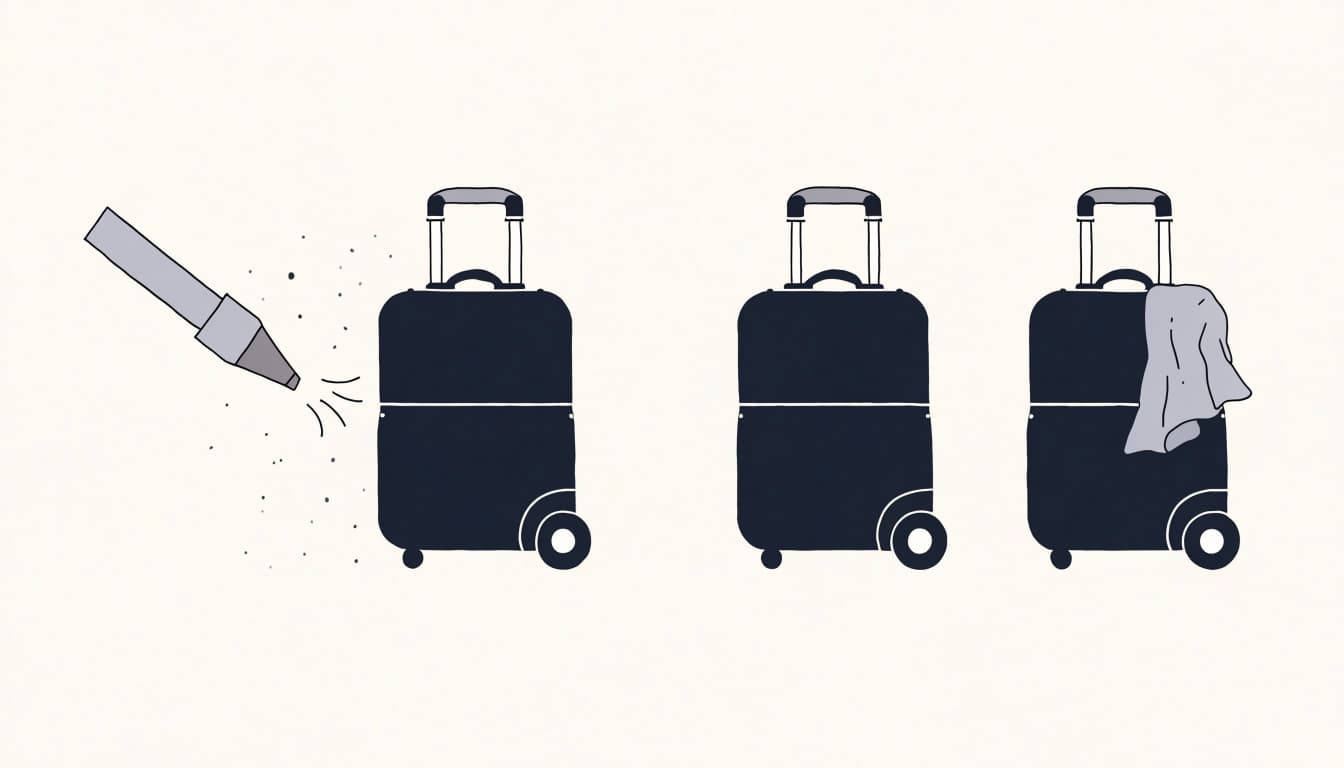
Use a vacuum crevice attachment along seams, zipper edges, pocket interiors, wheel recesses, and accessible lining folds. Work methodically around each compartment.
If you see a suspected bed bug, save evidence before vacuuming. A specimen in a sealed container or captured with clear tape can help with identification.
Afterward, seal vacuum debris and discard it in an outdoor trash container. For bagless machines, empty the canister outdoors into a sealable bag and clean the canister according to its instructions.
Wipe suitable surfaces and avoid sprays
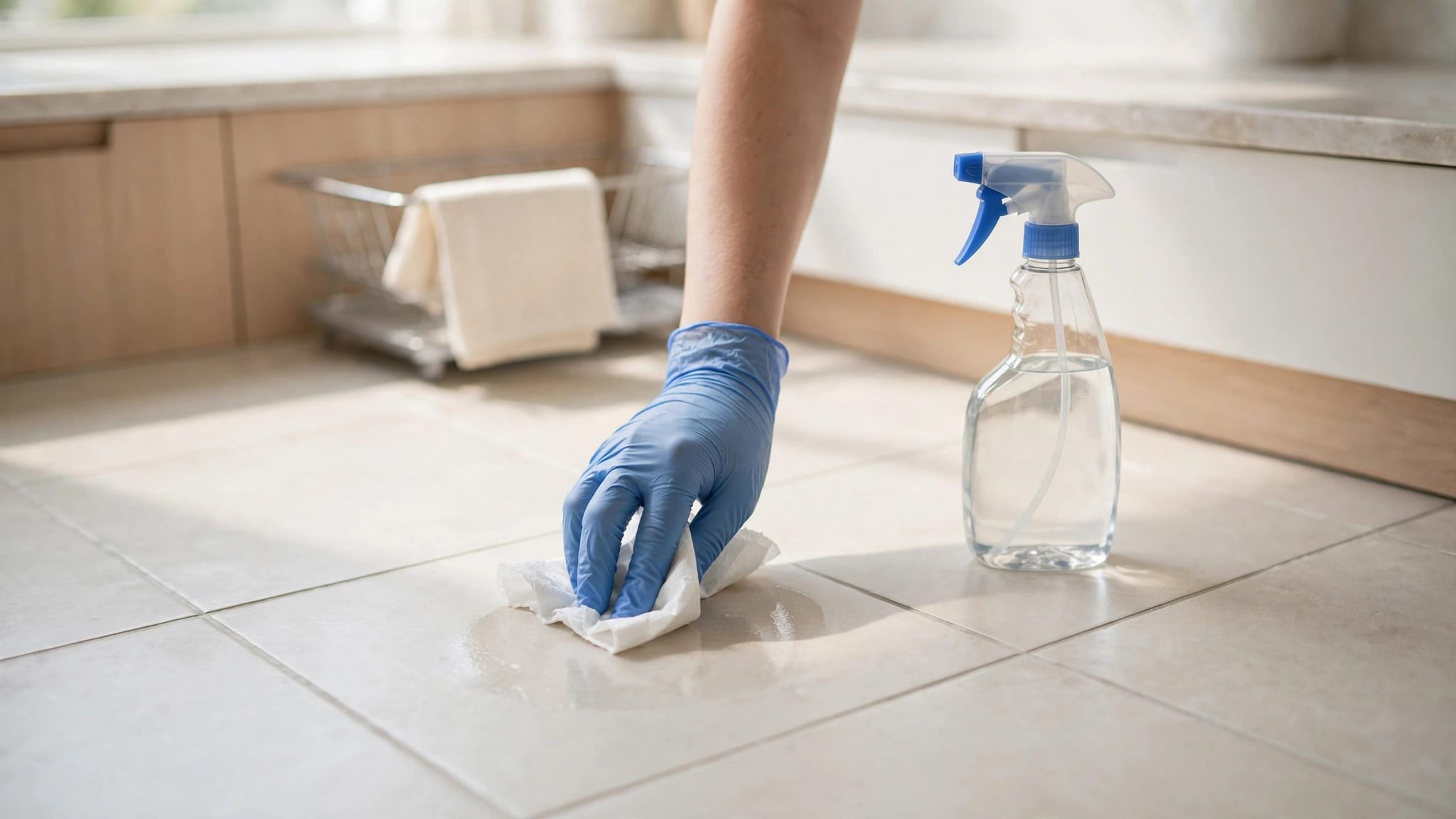
Wipe compatible hard surfaces with a damp cloth, following the suitcase's care instructions. Allow the bag to dry before closing it. Wiping removes grime; it isn't a complete bed bug treatment.
Skip improvised chemical treatments, foggers, and bug bombs. Pesticide labels define permitted uses, and a product intended for bedroom surfaces isn't automatically suitable for clothing or luggage.
If you found direct evidence, keep the cleaned suitcase contained until a professional recommends the next step. Don't store it in a bedroom closet simply because the visible debris is gone.
Why Florida Heat and a Hot Car Aren't Treatments
Leaving luggage in a sunny driveway, on a balcony, or inside a parked car isn't a reliable way to treat bed bugs. Florida's hot weather doesn't provide controlled heating throughout a packed suitcase.
A hot dashboard or outer shell tells you little about temperatures inside folded clothing, insulated pockets, or lining seams. Sunlight, shade, weather, and the bag's contents also change how heat reaches those spaces.
The hottest surface of a suitcase doesn't tell you whether its coolest hiding places received adequate treatment.
Professional heat treatment controls both temperature and exposure across the affected area or items. A parked vehicle doesn't provide that control. Use your car for transportation, not as a treatment chamber.
What to Do if You Find Physical Evidence
Keep the suitcase and associated belongings contained. Save the suspected insect or shed skin, take clear photographs, and note where you found it. Avoid carrying questionable items between rooms.
Finding a bed bug in a bag doesn't automatically mean your home has an established infestation. However, direct evidence warrants an inspection rather than repeated cleaning and guesswork.
If you've already unpacked in a bedroom, inspect mattress seams, the bed frame, headboard joints, and nearby furniture. Don't move bedding into another bedroom as a precaution because that can transfer insects.
Our bed bug treatment options explain why effective control combines inspection, cleaning, targeted treatment, and follow-up. We offer free inspections, so you can get help identifying the concern before deciding what treatment is needed.
Frequently Asked Questions
Does hard-shell luggage prevent bed bugs?
Hard-shell luggage still has zipper tracks, handles, linings, and other places where insects can hide. It may have fewer exterior fabric folds than some soft-sided bags, but it still needs inspection.
Focus on construction and accessible hiding places rather than assuming one suitcase material provides protection. Backpacks and carry-on bags deserve the same routine, even if they never touched the hotel bed.
How long should I keep a suspicious suitcase bagged?
A sealed bag is containment, not proof that bed bugs have died. Don't choose an arbitrary waiting period and then return suspicious luggage to storage.
Keep it contained while arranging identification and an appropriate treatment plan. Likewise, a quick inspection with no visible insects can't rule out hidden activity when you have credible evidence of exposure.
Bring Home Your Belongings With a Consistent Routine
A controlled unpacking routine reduces opportunities for bed bugs to move beyond your luggage. Keep bags away from sleeping areas, process clothing carefully, and separate cleaned belongings from untreated items.
The strongest next step is evidence-based action . If you find suspicious insects or signs, keep them contained and arrange an inspection rather than relying on sunshine, a parked car, or improvised sprays.
Schedule a Free Inspection: