Bed Bug Prevention for Southwest Florida Vacation Rentals
Bed bug prevention starts with a repeatable routine, not a last-minute response after a guest reports bites. In Southwest Florida, frequent turnovers, shared laundry rooms, luggage, and coastal humidity can make small oversights harder to manage.
Bed bugs aren't a reflection of cleanliness. A guest can carry them into a spotless Cape Coral condo, Fort Myers home, or Sanibel rental without knowing. The strongest protection combines careful inspections, controlled linen handling, clear communication, and professional help when signs appear.
Why vacation rentals need a consistent prevention plan
Short-term rentals change occupants often. Each guest brings personal luggage, clothing, and travel items into bedrooms and living areas. That steady movement increases the number of opportunities for bed bugs to enter, especially when housekeeping teams have only a few hours between checkout and check-in.
A single visual inspection at the end of the month isn't enough. Housekeepers should inspect the property during every turnover, even when the last guest left no complaint. Early signs are easier to manage before a problem spreads to upholstered furniture, adjoining rooms, or nearby units.
Bed bugs also hide well. They can remain in mattress seams, bed frames, headboards, nightstands, couches, and cracks near sleeping areas. Bites alone don't confirm an infestation because skin reactions vary and other pests can cause similar irritation.
Guests may bring bed bugs without realizing it
Travelers often don't know they have encountered bed bugs. The insects can hide in luggage seams, folded clothing, backpacks, and other belongings. A guest doesn't need to behave carelessly for a bed bug to enter a rental.
Hosts can reduce exposure by placing luggage racks away from beds and upholstered furniture. A short, friendly guest note can also encourage travelers to keep suitcases off beds and inspect luggage before bringing it home.
Cleanliness doesn't determine whether bed bugs appear
Regular cleaning remains important, but it doesn't prevent every bed bug introduction. Bed bugs feed on blood, not dirt, and a clean property can still experience an introduction.
That distinction matters when a guest reports a concern. Avoid blaming the guest or housekeeping team. A calm response protects the relationship and makes it more likely that everyone will share useful information.
Inspect every turnover, especially the sleeping areas
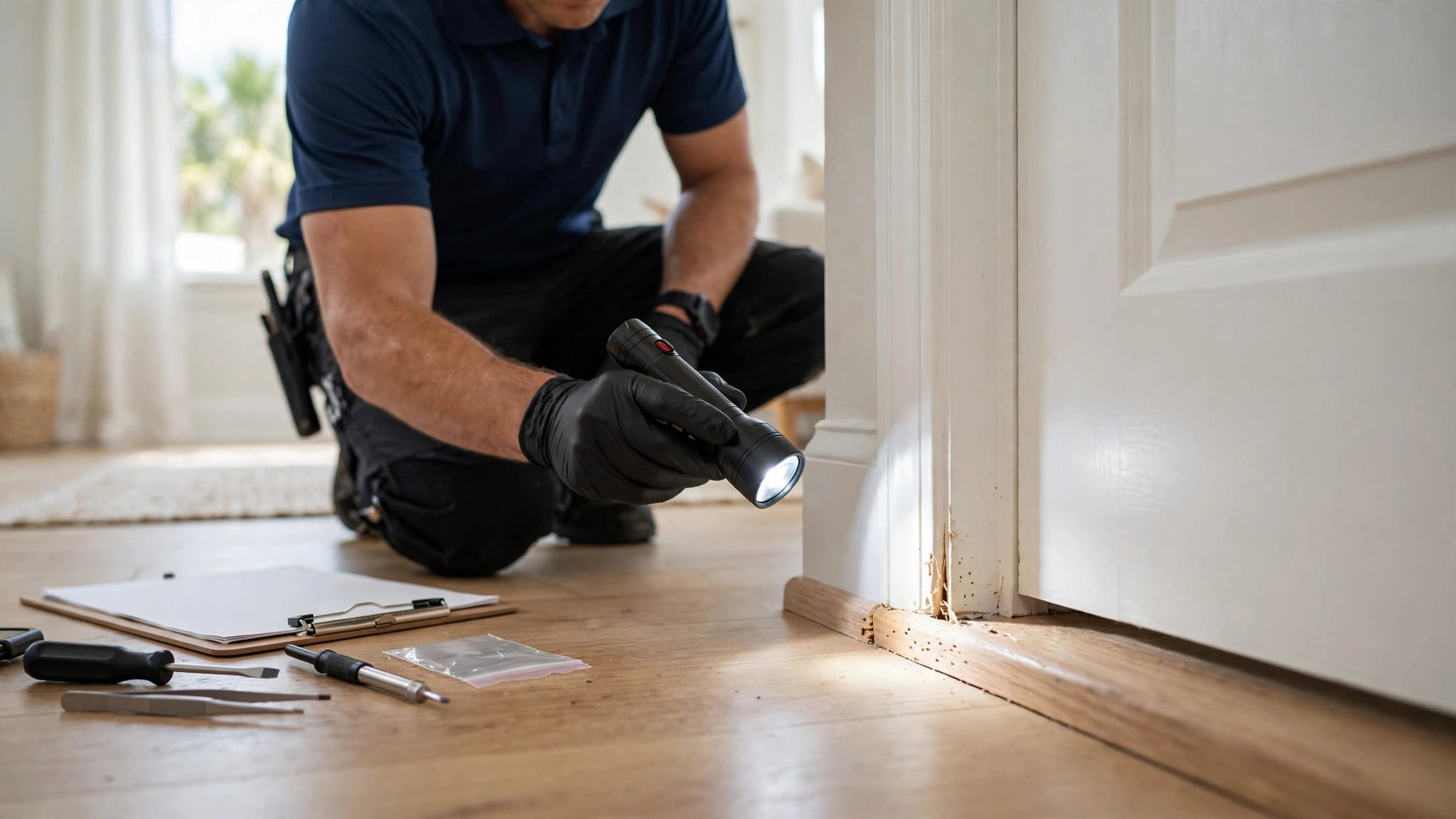
A turnover inspection should happen after the previous guest leaves and before fresh linens cover the bed. Housekeepers don't need to dismantle furniture each time, but they should use a flashlight and follow the same inspection path.
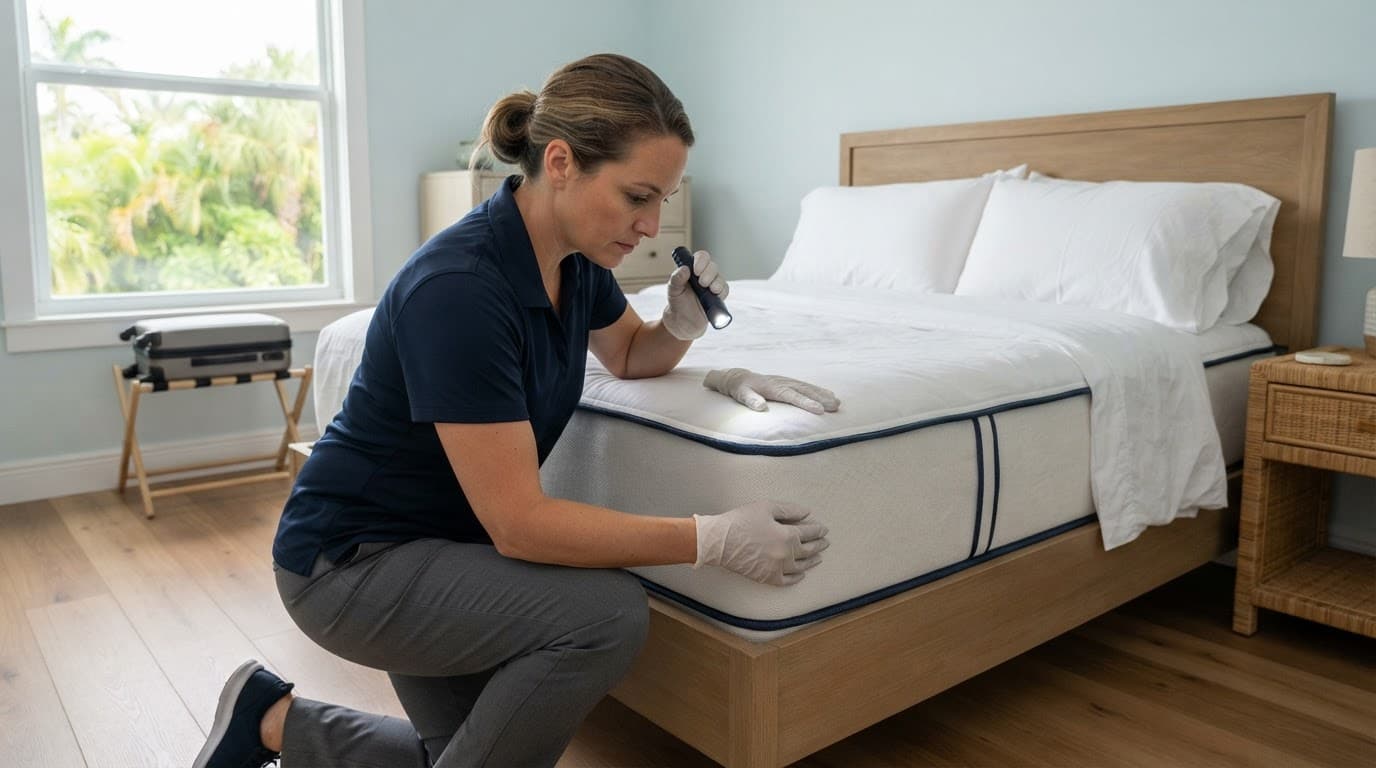
Look for live or dead insects, shed skins, eggs, dark spotting, or rusty stains around:
- Mattress seams, labels, piping, and corners
- Box spring edges and the underside of the mattress
- Bed-frame joints, screw holes, and headboard connections
- Nightstands, drawer joints, and the wall behind the bed
- Sofas, recliners, luggage racks, and other upholstered furniture
- Baseboards and cracks near sleeping or resting areas
Use a consistent order so rushed turnovers don't create missed areas. Check the bed first, then nearby furniture, then the floor and wall edges. If the property has several bedrooms, inspect each room rather than assuming the issue is limited to one bed.
Document what the team finds
Written records help property managers spot patterns. Each turnover record should include the date, unit, room inspected, name of the person who checked it, and any unusual findings.
If a housekeeper sees possible evidence, they should take clear photos without disturbing the area. Record the exact location, such as "dark spotting on the underside seam near the headboard," rather than writing only "bug found." Good documentation helps a pest professional identify the next step.
Bites should also be reported, but they shouldn't be treated as proof. A guest complaint can trigger an inspection while the team continues to look for physical evidence.
A bite report can start an inspection, but it can't identify bed bugs by itself.
Control linens and shared laundry carefully
Shared laundry practices deserve written rules. Dirty sheets and towels can contact floors, carts, doorways, or clean supplies during a busy turnover. If bed bugs are present, careless handling can move them to another room or property.
Place used linens directly into sturdy, sealed bags inside the room. Don't shake sheets, blankets, or mattress pads before bagging them. Keep dirty and clean textiles separate, and don't place folded linens on bedroom floors, upholstered furniture, or unclean laundry carts.

When several rentals share a laundry area, use a one-way process:
- Seal and label each property's dirty laundry before leaving the unit.
- Move bags directly to the washer or a designated holding area.
- Keep clean items in closed containers until they return to the correct property.
- Clean carts and folding surfaces according to the property's housekeeping policy.
- Store fresh linens in closed cabinets or containers, away from used textiles.
Use laundering methods that suit the fabric
Follow the care label for every textile. Wash items with the hottest water the fabric allows, then dry them completely. A dryer cycle that uses appropriate heat can be more useful than washing alone, but delicate materials may need a different plan.
Don't return damp towels, sheets, mattress pads, or blankets to storage. Southwest Florida's coastal humidity can slow drying, especially in a closed laundry room. Use ventilation or air conditioning, and allow items to dry fully before folding.
Items that can't go through the washer and dryer should remain sealed until a pest professional provides handling instructions. Avoid moving them between rental homes while a bed bug concern is under review.
Reduce hiding places and manage coastal humidity
Humidity doesn't create bed bugs, but it can complicate housekeeping. Damp fabrics take longer to dry, and poorly ventilated storage areas can develop odors or mildew that distract from routine inspection.
Keep air conditioning and dehumidification systems operating according to the property's management plan. Check that linen closets stay dry, and don't pack bedding tightly while it still holds moisture. Good airflow also helps housekeepers see and reach storage surfaces.
Protect beds and monitor high-risk areas
Use intact, bed-bug-rated mattress and box spring encasements where appropriate. Inspect the covers during turnovers for tears, open zippers, or gaps. A damaged encasement can't provide reliable protection.
Keep beds slightly away from walls when the room layout allows. Luggage racks should stay off the bed and away from upholstered furniture. Bed leg interceptors can support monitoring when installed correctly, but they don't replace inspections or treatment.
Limit clutter beneath beds and around nightstands. Fewer stored items give insects fewer hiding places and make a flashlight inspection faster.
Respond quickly when someone reports possible signs
A guest complaint needs a calm, organized response. Thank the guest for reporting it, ask where they noticed the concern, and record the timing. Don't accuse the guest, promise that the issue is impossible, or tell them to inspect every room themselves.
The property manager should pause use of the suspected bedroom until a qualified inspection occurs. Housekeeping should avoid vacuuming up evidence, moving furniture to another room, or carrying loose linens through the property. Keep potentially affected items contained and follow the instructions provided by the pest professional.
If the rental shares walls, ceilings, or laundry facilities with other units, notify the appropriate property manager or building contact. Bed bug assessments may need to consider nearby areas, especially in condos and multi-unit buildings.
Use clear language with guests
A short response can show concern without making an unconfirmed diagnosis:
"Thank you for letting us know. We've paused use of the room and are arranging a professional inspection. Please keep luggage and personal items contained while we coordinate the next steps."
If an inspection confirms bed bugs, communicate the treatment plan and any preparation requirements promptly. Keep records of messages, inspection dates, photos, invoices, and follow-up visits. Documentation supports consistent decisions and helps the team avoid repeating preventable mistakes.
Train housekeeping teams before a problem occurs
Every cleaner should know who to contact, what to photograph, and which items to isolate. Include the process in the turnover guide, not only in a text message sent during an emergency.
Training should cover flashlight inspections, sealed laundry bags, clean-linen storage, guest reporting, and the rule against applying unapproved products. A housekeeper's job is to identify and report possible signs, not to diagnose an infestation or treat it with a retail pesticide.
Call a professional when an infestation is suspected
Bed bugs can hide in places that routine cleaning won't reach. Misidentifying a stain, shed skin, or another insect can also lead to the wrong response. A licensed pest professional can inspect the suspected room, check nearby areas, identify the pest, and recommend a treatment plan based on the property.
Treatment may require preparation, temporary vacancy, follow-up inspections, or more than one visit. The right approach depends on the building, furnishings, severity, and confirmed locations. Hosts should follow the provider's preparation and re-entry instructions instead of combining products or attempting unapproved pesticide applications.
For owners managing a Cape Coral short-term rental, bed bug inspections for vacation rentals can fit into a broader turnover and monitoring plan. Shield Home & Pest Control also works with properties in Fort Myers, Punta Gorda, Bonita Springs, and Sanibel.
A complete prevention guarantee isn't realistic because guests and their belongings change constantly. Still, consistent inspections and prompt professional treatment can limit confusion, reduce unnecessary room closures, and help protect the next reservation.
Keep every turnover ready for the next guest
Effective bed bug prevention depends on routine actions that staff can repeat under pressure. Inspect sleeping areas, document unusual findings, seal dirty linens, dry textiles fully, and keep suspected items isolated.
Most importantly, treat reports with respect. Bed bugs don't indicate a dirty property or an irresponsible guest. A clear process gives everyone a practical way to respond before a small concern becomes a larger interruption.
Schedule a Free Inspection: