Florida Pest Prevention for Auto Repair Shops
Florida pest prevention for an auto repair shop starts with a practical fact: service bays need to stay open for vehicles. You can still reduce pest activity by maintaining the building, removing food and water sources, and inspecting the areas pests use for shelter.
Florida's heat, humidity, and heavy rain can make those jobs harder. A consistent routine helps your team spot problems while keeping the bays working.
Key Takeaways
- Keep bay doors and seals in good condition, and close unused doors when the shop's operations allow.
- Store food and trash in closed containers, and remove standing water from tires and other outdoor items.
- Record pest sightings and damage so a pest-control professional can identify patterns.
- Plan any treatment around vehicles, employees, customers, and the product's label directions.
Common Pests Around Florida Auto Shops
An open bay can give pests access to a shop, but the conditions inside and around the building also matter. Food scraps in a break room, pooled rainwater, and cluttered storage areas can give pests reasons to remain nearby.
Rats and mice may shelter in stored materials or vehicles that sit for long periods. Look for droppings, gnaw marks, and shredded nesting material along walls or near storage areas. Rodents can also damage vehicle wiring, making a mechanical assessment important when you find evidence under a hood.
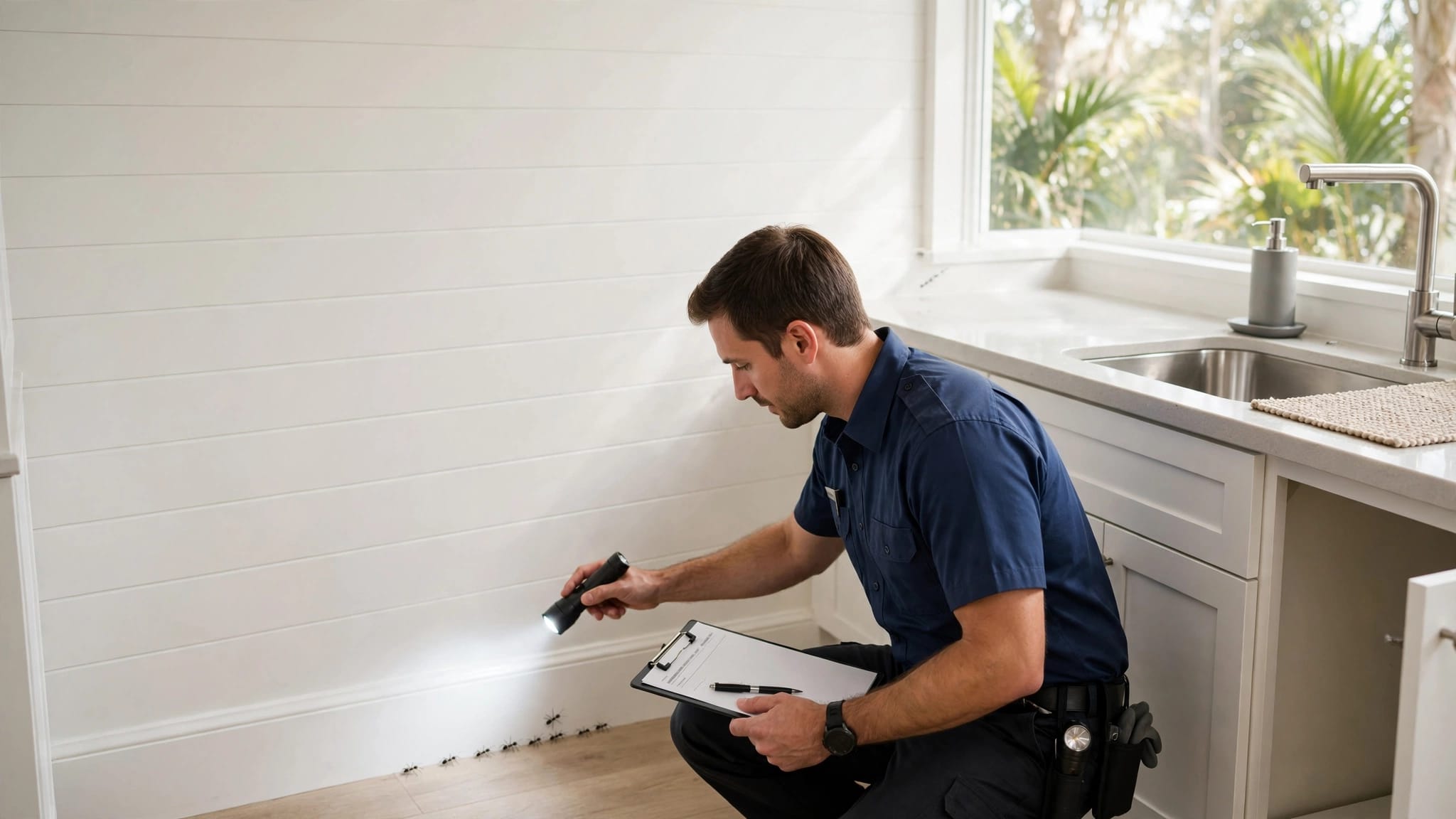
Cockroaches may gather near moisture and food waste. Ants can follow food residue into offices or break rooms, while spiders may settle in undisturbed corners. Outdoors, water collected in tires or containers can provide places for mosquitoes to breed.
A single sighting doesn't always show the full extent of a problem. Record where it happened and whether you saw the same pest elsewhere. That information helps distinguish an occasional visitor from activity that needs closer attention.
Maintain Bay Doors Without Blocking Vehicle Access
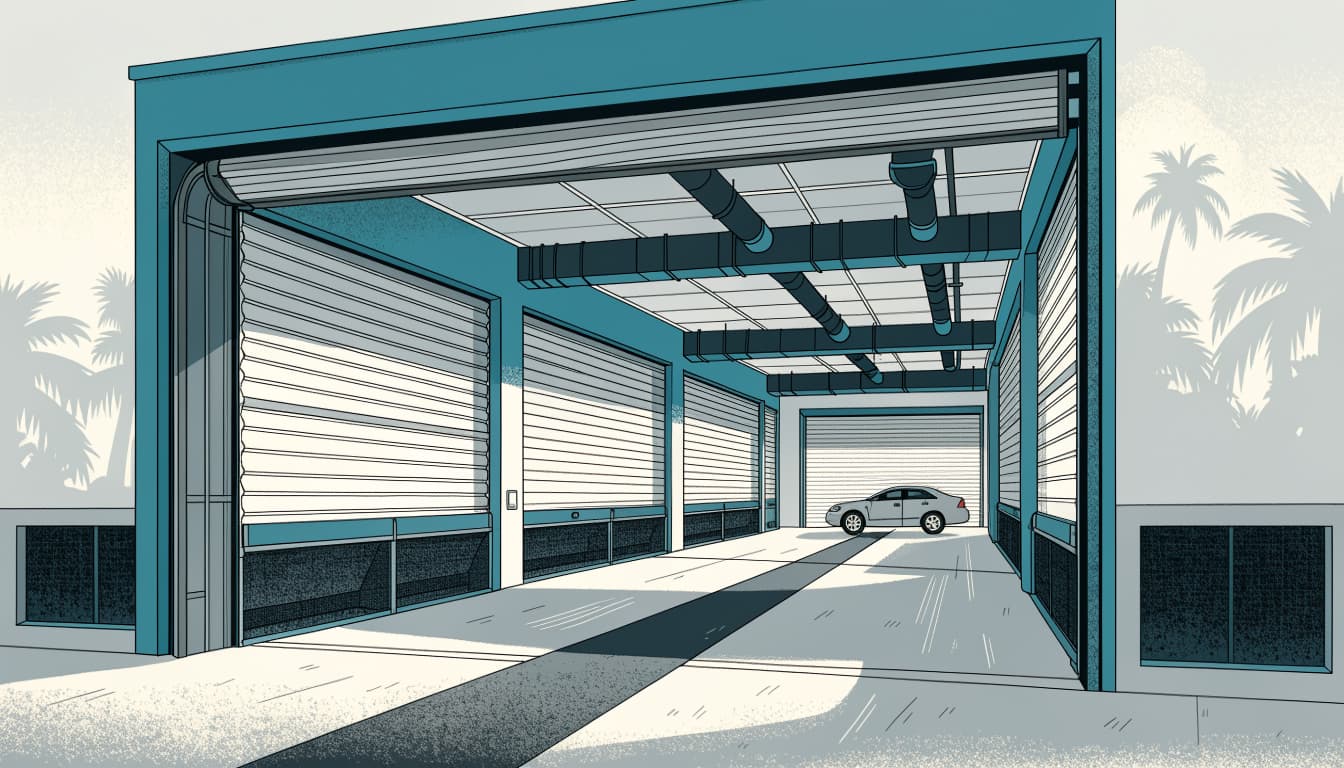
Your shop doesn't need to stop using its service bays to improve pest prevention. Focus on the condition of each door and the gaps that remain when it closes.
Inspect seals and door edges
With the door closed, look for daylight along the bottom and sides. Inspect the bottom seal and side brush seals for worn, missing, or displaced sections. Replace damaged components with materials suited to the door and the shop's operating conditions.
A threshold repair needs to account for vehicle traffic and drainage. Don't install a raised barrier that creates a trip hazard, interferes with a lift approach, or holds rainwater against the building.
Adjust doors to the workday
Close bays that aren't in use when ventilation and shop operations allow. At the end of the day, make sure each door closes properly rather than stopping above the floor or leaving a gap at one edge.
High-speed doors may suit some busy openings because they can be closed between vehicle movements. Any change to a bay door should preserve safe access and the shop's ventilation needs.
Address Other Building Openings
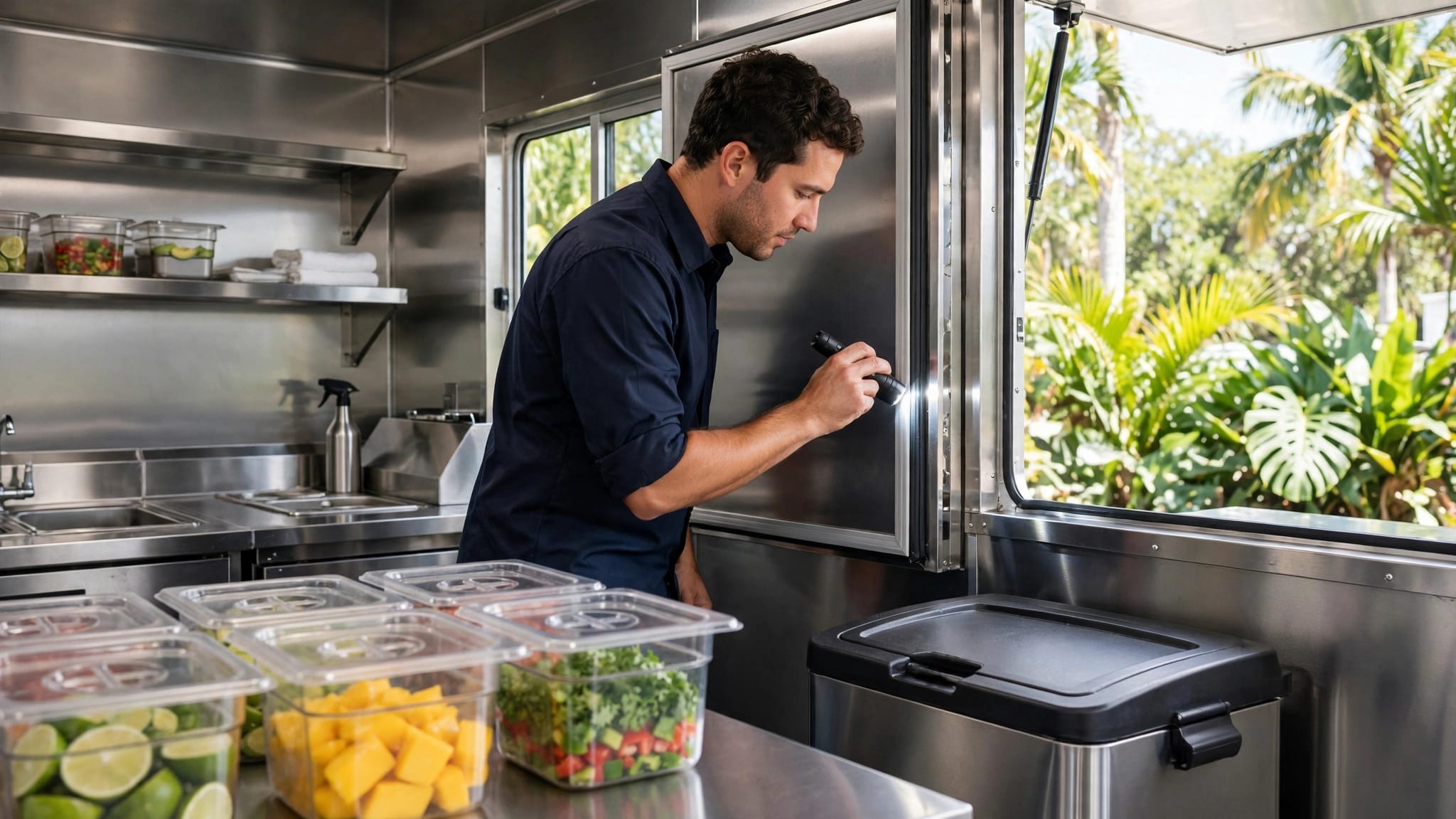
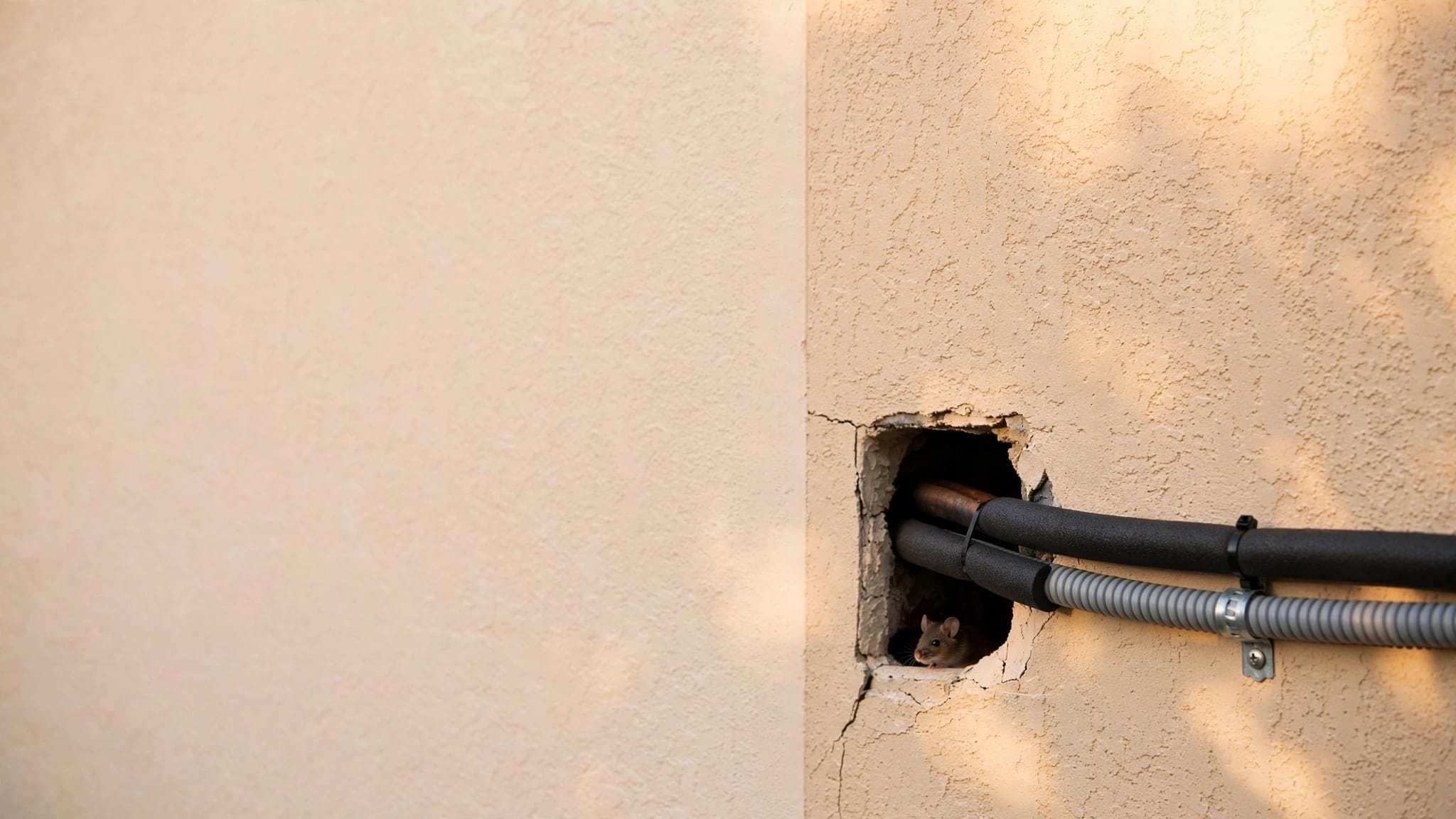
Bay doors aren't the only places to look. Walk the exterior and inspect personnel doors, utility penetrations, damaged wall panels, and openings around pipes or conduits.
Repair damaged door sweeps and fit appropriate materials around gaps. For openings that may involve rodents, use durable materials suited to the surface rather than relying on foam alone. Keep access available where equipment needs servicing.
Also inspect screens and covers on vents. Repairs must preserve the airflow the building and its equipment require. Avoid covering drainage openings or changing fire-rated assemblies without qualified help.
Pay attention to the transition between the shop and office. A closed office door with a maintained sweep can help separate work areas, but break-room food and plumbing leaks still need attention on their own.
Manage Food Waste, Trash, and Storage
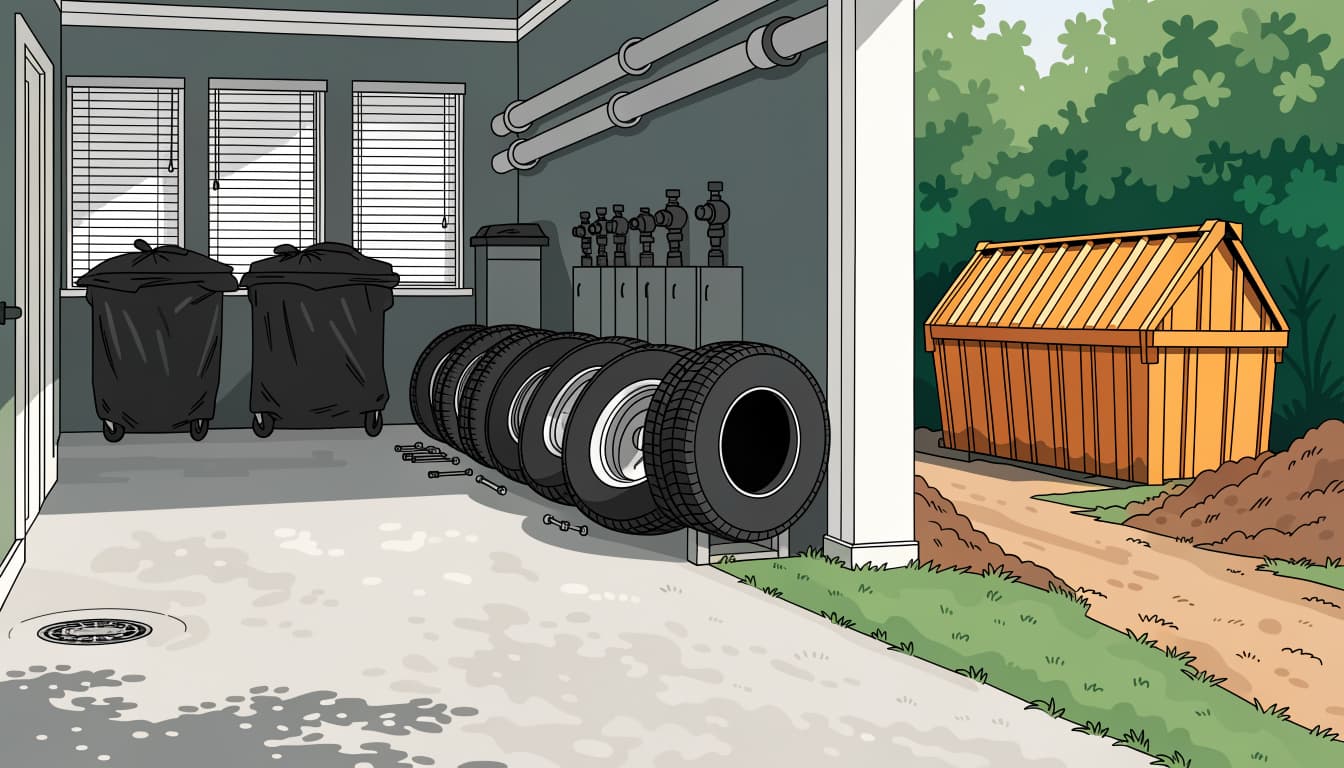
A repair shop may not prepare meals, but employee lunches and customer snacks can still feed pests. Waste areas and storage rooms deserve the same attention as the service floor.
Keep food and trash contained
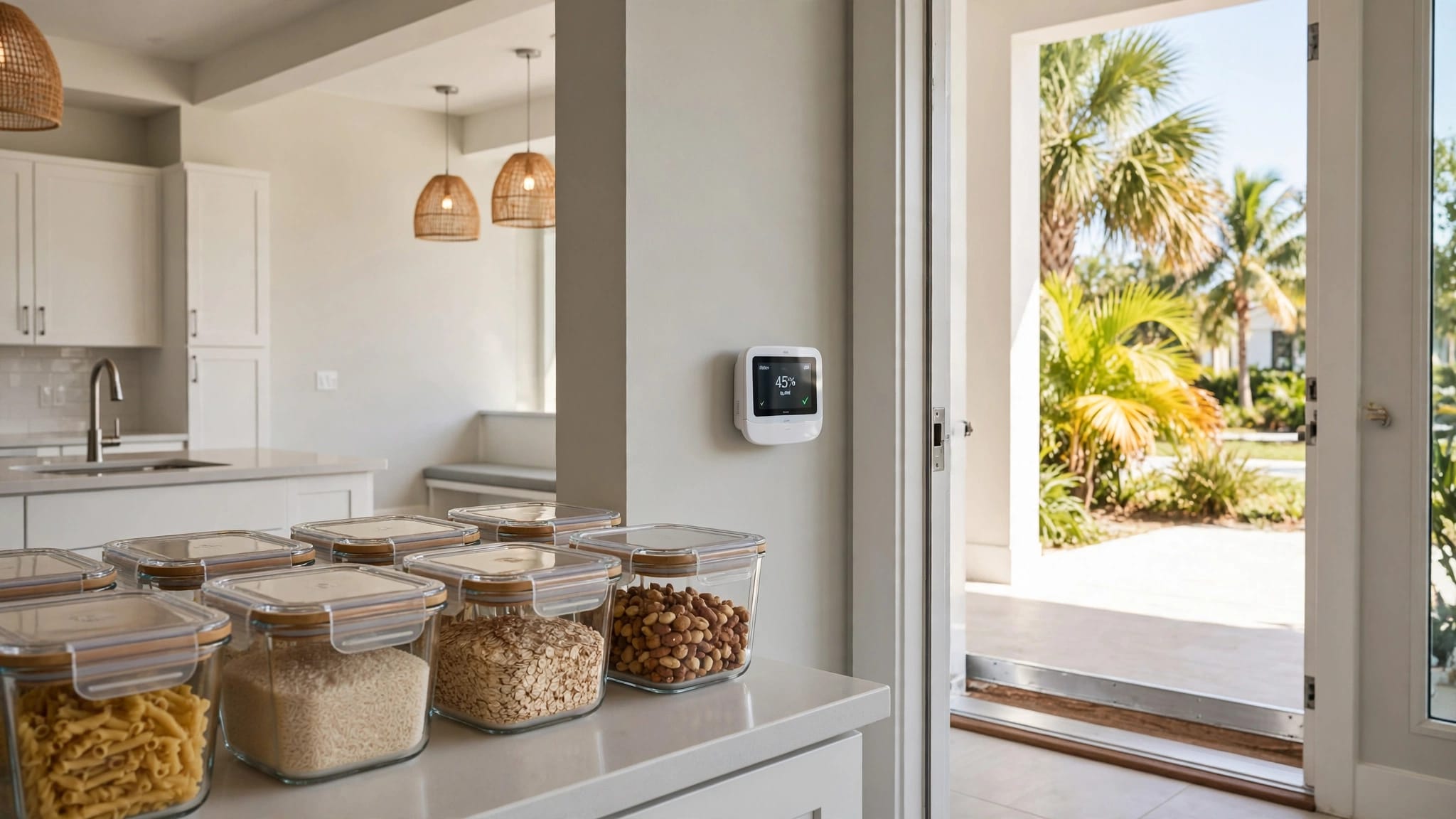
Ask employees to keep food in designated areas and store it in closed containers. Wipe up spills, clean under the break-room refrigerator, and empty food waste regularly. Don't leave unfinished drinks or takeout containers in the bays overnight.
Use trash cans with lids that close fully. Outside, keep dumpster lids shut and clean up spilled waste around the container. If a dumpster repeatedly overflows between pickups, arrange for more frequent collection or enough capacity to keep it closed.
Reduce clutter near walls
Cardboard, unused parts, and old supplies can make inspections difficult and offer shelter. Break down unneeded boxes and organize remaining stock so staff can see and clean the floor beneath it.
Keep tires and other stored items orderly, including those outside. Leave enough access around shelving and equipment to inspect wall-floor junctions. Handle used oil, oily rags, and other shop waste according to the requirements for those materials, separate from ordinary food trash.
Control Moisture Inside and Outside
Florida rain can leave water in places that are easy to overlook during a busy workday. After a storm, inspect outdoor tires, buckets, parts containers, and low spots near the building. Empty water where safe to do so, and store items so they don't refill.
Inside, repair dripping faucets, leaking supply lines, and air-conditioning condensate problems. Look beneath sinks and around equipment for dampness, particularly where materials are stored against a wall.
Keep floor drains clear and maintain them according to the shop's procedures. Standing water near a drain can point to a blockage or drainage problem that needs repair. Use the appropriate shop cleanup process for contaminated water rather than washing automotive fluids into a drain.
Landscaping and irrigation matter, too. Trim vegetation back enough to provide access to the exterior wall, and adjust sprinklers that repeatedly wet the building. These steps also make it easier to see gaps and signs of pest activity.
Watch Vehicles and Stored Parts for Rodent Activity
Vehicles waiting for parts or customer pickup can remain in one spot long enough for a rodent to investigate. Ask staff to note droppings, nesting material, or gnaw marks around parked vehicles and stored components.
If you find signs under a hood, document the location and inform the customer. A technician should assess any suspected wiring damage before the vehicle goes back into service. Avoid promising that a vehicle is free of rodents based on a quick visual check.
For rodent droppings on accessible hard surfaces, don't dry sweep or vacuum the waste. Restrict access, use appropriate protective equipment, and wet and disinfect the material according to the disinfectant's label before wiping it up. For extensive contamination or an inaccessible nest, seek professional help.
Build an Inspection Routine Your Staff Can Use
A useful inspection routine fits the shop's workload and gives employees a clear way to report problems. It should cover both the busy service area and the quieter spaces where damage may go unnoticed.
Make observations part of closing
During the closing routine, look at bay-door edges, trash areas, the break room, and visible sections of the floor. Note fresh droppings, insects, damaged packaging, or water that wasn't there before. After heavy rain, add a quick walk around outdoor storage.
Staff don't need to identify every species. A clear photo, the location, and the date can help a pest-control professional assess what comes next. Keep people away from an active nest or damaged electrical equipment.
Record repairs and follow-up
Give one person responsibility for receiving reports and assigning repairs. Keep a simple log of sightings, leaks, door damage, and completed work alongside pest-control service reports.
Review the log with your technician to see whether activity repeats in one area. Our pest prevention guidance for property managers offers additional ideas for organizing reports and repairs across a commercial property.
Coordinate Pest Control Around Daily Operations
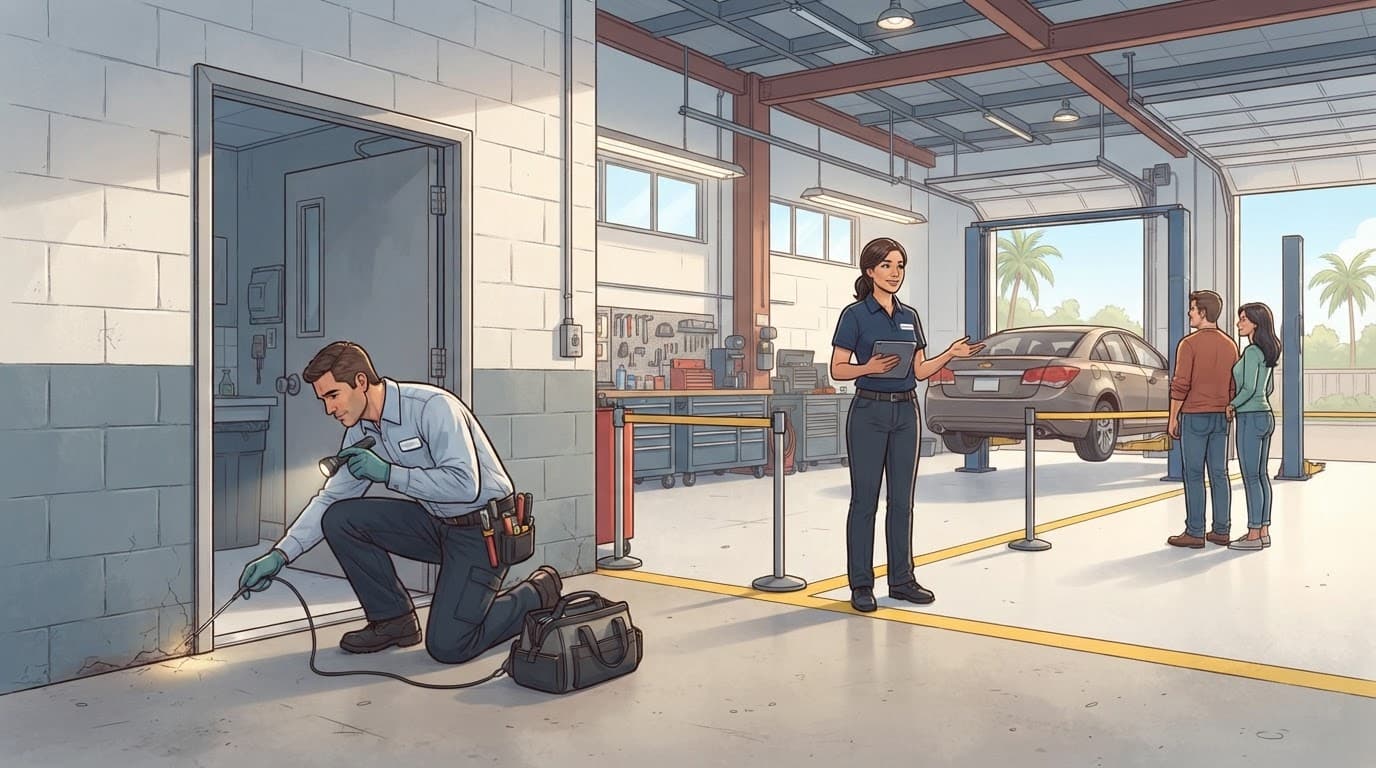
Pest-control service should fit the shop's operations and address the evidence found during inspection. Tell your technician where staff have seen pests and which areas must remain accessible for vehicle movement.
Prepare the work area
Before a visit, identify parked customer vehicles, exposed parts, food areas, and spaces customers use. Provide access to the affected walls and storage areas without moving items into unsafe locations. Tell the technician about sensitive equipment and any planned work that could affect the visit.
Agree on who will notify employees and direct customers away from a work area. If a vehicle needs to be moved for access, have an authorized shop employee handle it.
Follow treatment instructions
If treatment is needed, discuss the proposed products, locations, preparation, and any required time away from the area before work begins. Follow the product label and the technician's instructions for ventilation and re-entry. Keep staff and customers out of any area the technician identifies as restricted.
Don't apply an unlabeled product around the shop or add your own treatment on top of professional work. Keep the service report with your inspection records so your team knows what was done and what follow-up is needed.
Our commercial pest control services are available to businesses in Southwest Florida. We can assess the property and discuss a plan suited to the conditions we find.
Frequently Asked Questions
Can an auto shop control pests with open bays?
Yes. Open bays make prevention an ongoing job, but maintaining doors, removing food and water sources, and monitoring pest activity can reduce conditions that attract pests. Professional service can address activity that staff find.
What should employees do after finding a rodent?
Keep people away from the animal and report its location to the shop manager. Don't handle it with bare hands. A pest-control professional can assess the area, while shop staff document any apparent damage to a customer's vehicle.
Keep Prevention Part of the Workday
Open service bays are part of running an auto repair shop. Florida pest prevention works best when the rest of the property receives regular attention, especially trash areas, water sources, and damaged openings.
Start with a walk around your shop and record what needs repair. A clear record helps your team and pest-control provider address problems without disrupting vehicle access.
Schedule a Free Inspection: