Ants Around Outdoor Lights: Why They Gather in Florida
Ants around outdoor lights are often searching for food, water, or shelter nearby. The fixture may attract flying insects that become food for ants, or it may sit along an established route between a nest and another food source.
Seeing ants on a porch light doesn't automatically mean they're nesting inside it. Follow the trail to find out what is bringing them to that part of your Florida home.
Key Takeaways
- Dead insects near a light can provide food for foraging ants, even when the ants aren't attracted to the light itself.
- Damp mulch, plant pests, outdoor food residue, and sheltered gaps can support ant activity near a fixture.
- Recurring trails, indoor sightings, or ants entering electrical openings call for a closer look.
Why Ants Gather Around Outdoor Lights
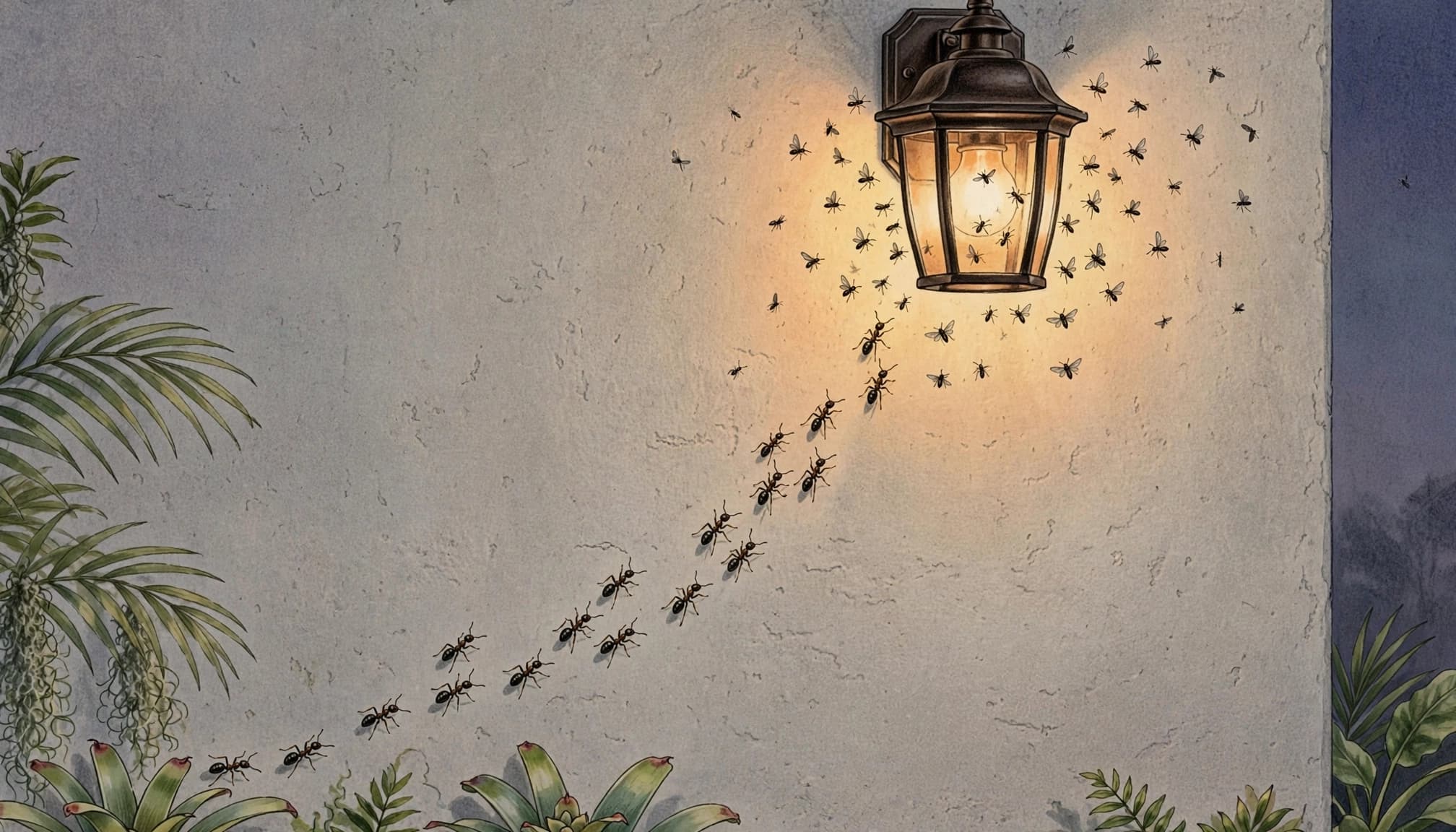
An outdoor fixture sits where several ant routes can meet: on a wall, near a door or window, and sometimes above a landscaped bed. The ants may be interested in something around the light rather than the fixture itself.
Flying Insects Can Become Ant Food
Many flying insects gather around outdoor lights. Some die or become trapped near the fixture, leaving a food source for ants that feed on insects.
Look for ants carrying insect fragments away or concentrating around dead insects on the wall, ledge, or ground. Those clues suggest they're collecting food. If ants simply walk past the light, their destination may be somewhere else.
A Scent Trail Can Keep Workers Returning
Ants often send workers out to find food. When a worker discovers a useful source, it can leave a chemical trail that helps other ants follow the route.
That explains why a few ants can become a steady line along siding or trim. The light may make that traffic easier for you to see, even if the ants are traveling toward a shrub, a window gap, or food on the patio.
Food Sources Around a Porch or Lanai
The insect remains beneath a light are only one possible food source. Ants may also travel past a fixture on their way to plants or outdoor dining areas.
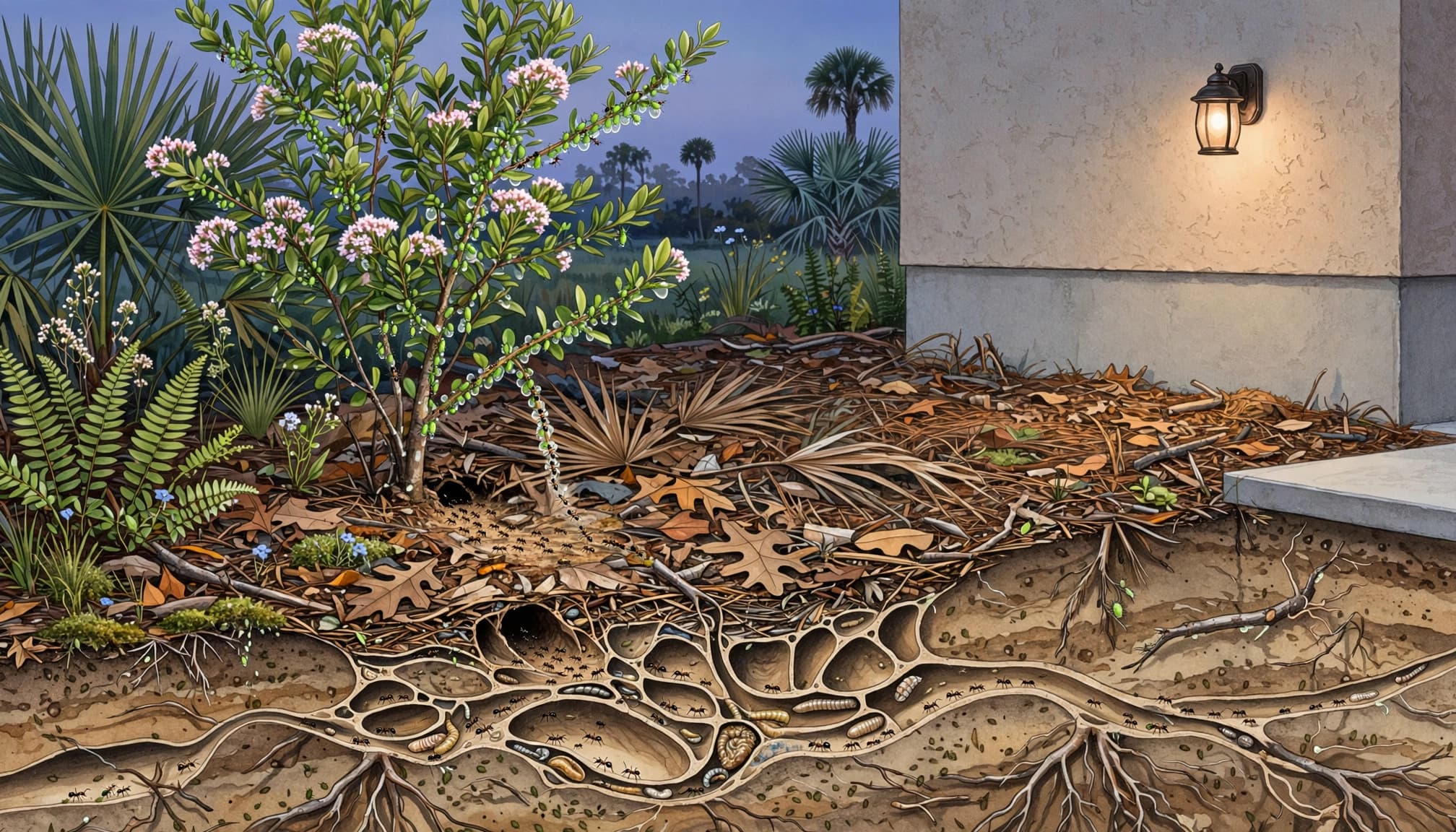
Sticky Residue on Plants
Aphids, scale insects, and some other plant pests produce a sugary liquid called honeydew. Ants feed on it and may travel between an infested plant and their nest.
Look for sticky leaves or branches near the wall. A shrub touching the house can give ants a direct route to siding and soffits. If you see a trail running between the plant and the fixture, the plant may be the destination.
Our guide to white-footed ants in Cape Coral covers vegetation and other conditions that can support recurring trails.
Crumbs, Pet Food, and Trash
A small spill on a patio table or crumbs beside a grill can keep ants returning. Pet food, sweet drinks, grease, and residue inside trash or recycling bins can also attract foragers.
The source doesn't have to be directly beneath the fixture. Ants may follow a wall edge or doorframe to reach food several feet away. Clean the feeding or dining area as well as the surface where you see the ants.
Where Ants May Nest Near a Fixture
A trail near a light doesn't prove the colony is inside the wall. Ants can nest outdoors and travel up the building to forage. Still, protected gaps near a fixture may be worth examining when ants repeatedly disappear into them.
Mulch, Pavers, and Stored Items
Mulch and leaf litter can shelter ants near a foundation. Pavers, landscape edging, stacked pots, and stored boards can also create shaded spaces where some species nest.
When mulch touches the wall, it can give ants an easy route onto the house. Our guide to crazy ant nesting sites describes common hiding places around Southwest Florida properties.
Moisture and Protected Gaps
A dripping hose bib, irrigation leak, or sprinkler that repeatedly wets a wall can keep nearby soil damp. Some ants nest in or travel through these moist areas.
Florida rain can also shift activity. After heavy rain, you may notice ants using a different route or moving toward a sheltered area. That change is a reason to look around the property, but it doesn't establish where the nest is.
How to Read an Ant Trail Safely
Watch the ants before disturbing the area. A trail can tell you more about the problem than the number of ants gathered at the fixture.
Start at the light and follow the visible line in both directions. Notice whether the ants move toward a plant, down the foundation, across a window frame, or into a gap. You may see some carrying insect pieces, while others travel without anything visible.
A photo of the trail can help you compare activity later or show a pest control professional what you've found. Note whether the ants appear in the same place after cleanup or after rain. Avoid opening wall cavities or electrical equipment to look for a nest.
Also pay attention to activity indoors. Ants on the inside of a nearby window or door may be using an exterior gap to reach food or moisture. Our guide to little black ants around window frames covers common entry routes and signs of a recurring problem.
How to Reduce Ant Activity Around Outdoor Lights
A useful approach starts with the trail and the conditions around it. Removing dead insects may help when ants are feeding on them, but a route to a sticky plant or damp nest site needs attention too.
Clean the Area Around the Fixture
Remove dead insects and debris from accessible surfaces near the light. Keep patio tables clean, pick up pet food after feeding, and use tightly closed trash bins. Indoors, wipe up spills and store food in sealed containers.
For the fixture itself, turn off the power before any cleaning you can safely perform. Don't put water or cleaning spray into electrical openings, and don't dismantle the fixture. If cleaning requires access to wiring or a damaged housing, call an electrician.
Reduce Access, Moisture, and Shelter
Trim branches and shrubs away from the wall so ants have fewer direct routes onto the home. Pull excess mulch and leaf litter back from the foundation, and move stored items away from damp exterior walls.
Repair leaking hose bibs and adjust sprinklers that soak siding or window frames. You can also seal suitable small gaps around doors, windows, and utility penetrations with exterior-grade caulk.
Leave electrical repairs and openings to a qualified professional. A light fixture needs proper mounting, ventilation, and water protection, so don't pack caulk into the fixture or its electrical box.
Using Ant Bait Without Spraying the Fixture
Bait can be useful for some ant problems because workers may carry it back to the colony. However, species differ in their food preferences, and ants may ignore a bait when another food source is available.
Place Bait Away From Electrical Parts
If you use an ant bait, choose a product labeled for the intended location and follow its directions. Place it near an active trail where the label permits, not inside the light fixture or an electrical opening.
Keep bait away from children and pets. An enclosed station can help limit access, but placement still matters. Rain and irrigation can also affect outdoor bait, so use it only as the label directs.
Avoid Spraying Ant Trails
Spraying the visible ants may remove workers without reaching the nest. Some repellent sprays can also disrupt a trail and make bait less effective.
Never spray, dust, or pour liquid into a light fixture, outlet, switch, or electrical box. If ants are entering an electrical opening, treat it as an electrical safety issue. Contact an electrician for the fixture and a pest control professional for the ant activity.
When the Ants Point to a Larger Problem
A few ants collecting dead insects outside may be a limited foraging issue. Repeated or widespread activity deserves a closer inspection, especially when the trail continues after you remove nearby food and debris.
Look for ants returning to the same gap, appearing in several rooms, or traveling along multiple exterior walls. Activity around windows and indoor food areas can indicate that an outdoor trail has found a way inside. Ants disappearing into siding or a wall opening may also warrant inspection, although the opening alone doesn't prove a nest is inside.
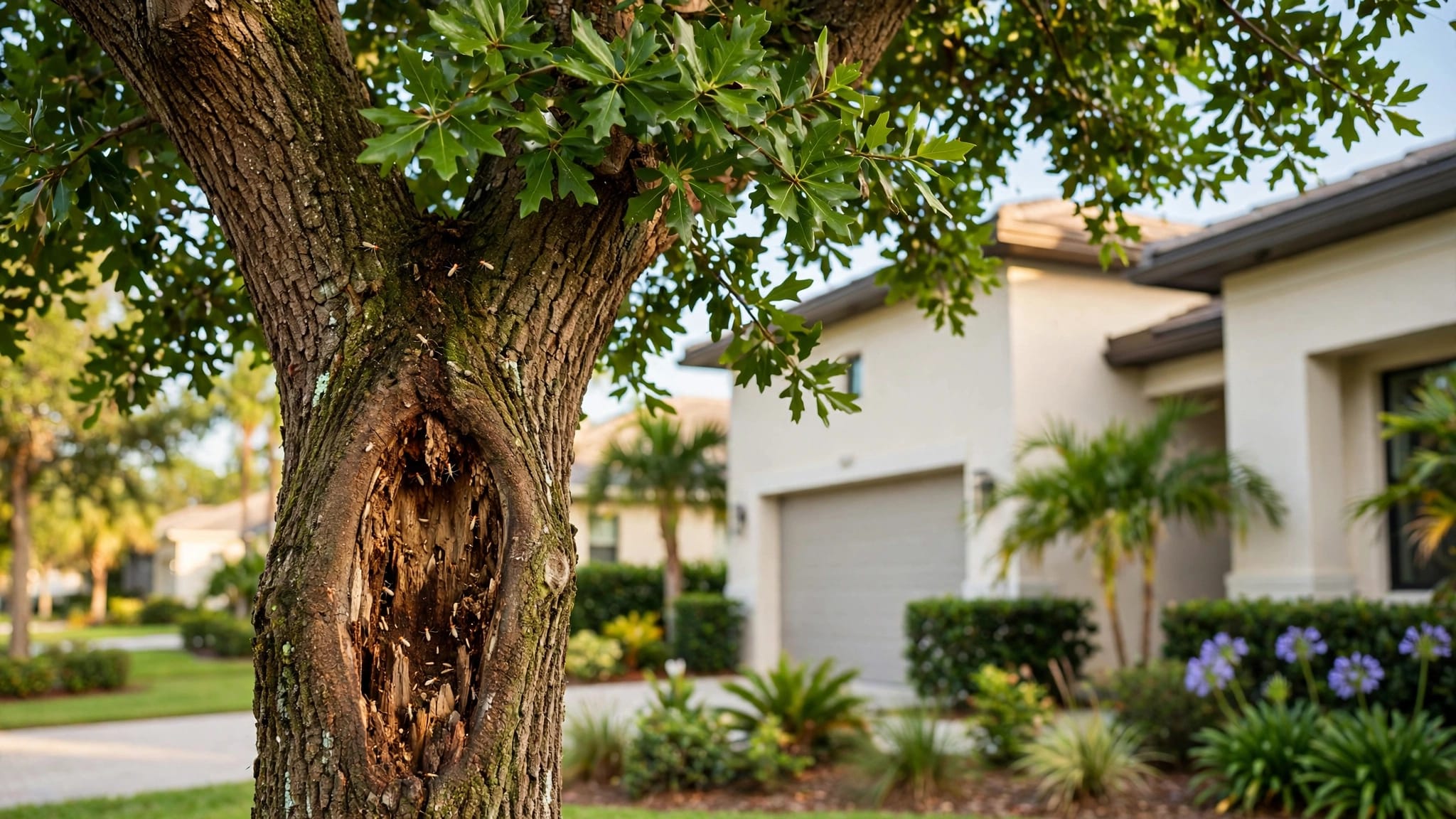
Winged insects around a light need a closer look too. Winged ants and termites can both gather near lights, but the two require different responses. Ants have elbowed antennae and a narrow waist; termites have straight antennae and a broader waist. If you can't identify the insects, save a specimen for a professional rather than relying on color alone.
For recurring activity, our residential pest control services in Cape Coral can help address ants around the home. An inspection can identify likely routes and conditions so treatment focuses on the problem rather than the light alone.
Frequently Asked Questions
Are Ants Attracted to Outdoor Lights?
The ants you see may be following a trail or collecting insects near the light. Their presence doesn't prove the light itself drew them there. Watch where they travel and whether they carry food away from the fixture.
Can Ants Nest Inside an Outdoor Light?
Ants may use protected gaps near electrical areas, but a trail across a fixture doesn't confirm a nest inside it. If ants disappear into an electrical opening, don't remove the cover or apply pesticide there. Contact an electrician and a pest control professional.
Will Cleaning the Light Get Rid of the Ants?
Cleaning accessible dead insects may remove a food source. If ants keep returning, look for another attractant or route, such as a sticky shrub, pet food, damp mulch, or a gap in the wall. A recurring trail can lead you toward the next place to inspect.
Find the Source Behind the Trail
Ants around an outdoor light may be collecting insects, passing through on a foraging route, or traveling from a nearby sheltered area. The fixture is a useful starting point, but the trail offers better clues.
Remove accessible food and address moisture and vegetation near the wall. If activity keeps returning or reaches an electrical opening, an inspection can help you take the next step safely.
Schedule a Free Inspection: