Can Termites Infest Live Trees Near Florida Homes?
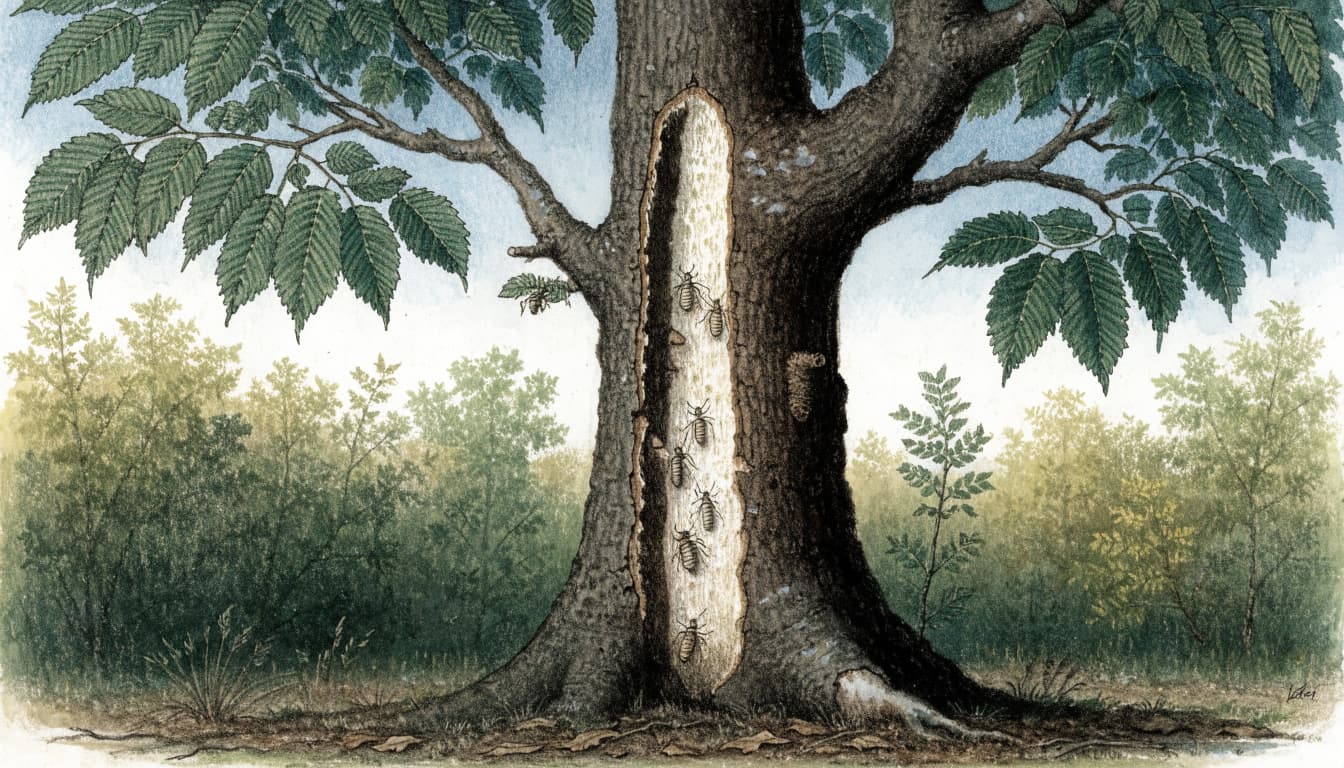
Yes, termites in trees can occupy dead wood inside a tree that's still alive. A green canopy doesn't rule out termite activity, but finding termites outdoors doesn't prove they're inside your home.
For Southwest Florida homeowners, the next step is to look for evidence in both places and arrange an inspection when you find suspicious signs. Knowing what to look for can help you describe the problem and avoid disturbing useful clues.
Key Takeaways
- A living tree can contain dead wood where termites are present.
- Mud tubes, discarded wings, and termite-like insects are clues worth documenting.
- Subterranean and drywood termites enter homes in different ways, so identification matters.
- A tree with termite activity doesn't establish that a house is infested.
- A termite inspection can help determine whether signs are active and where treatment may be needed.
How Can a Living Tree Contain Termites?
A tree doesn't have to be dead for parts of its wood to be dead. For example, a tree with living branches and leaves can also have older, decaying wood within its trunk or branches.
That distinction matters when you're looking at a tree near your house. Foliage alone can't tell you whether termites are present. At the same time, an unusual patch of bark or soft wood isn't enough to identify termites. Moisture, decay, and other insects can leave signs that look similar.
Florida Termites That Can Threaten Homes
Southwest Florida has several types of termites, and their habits affect where an inspector looks. The signs around your home can help narrow down the possibilities, although identifying a species requires a closer examination.
Subterranean termites
Eastern subterranean termites and Formosan subterranean termites are among the termites that can damage Florida homes. They generally rely on moisture and protected routes, often traveling through soil or shelter tubes to reach wood.
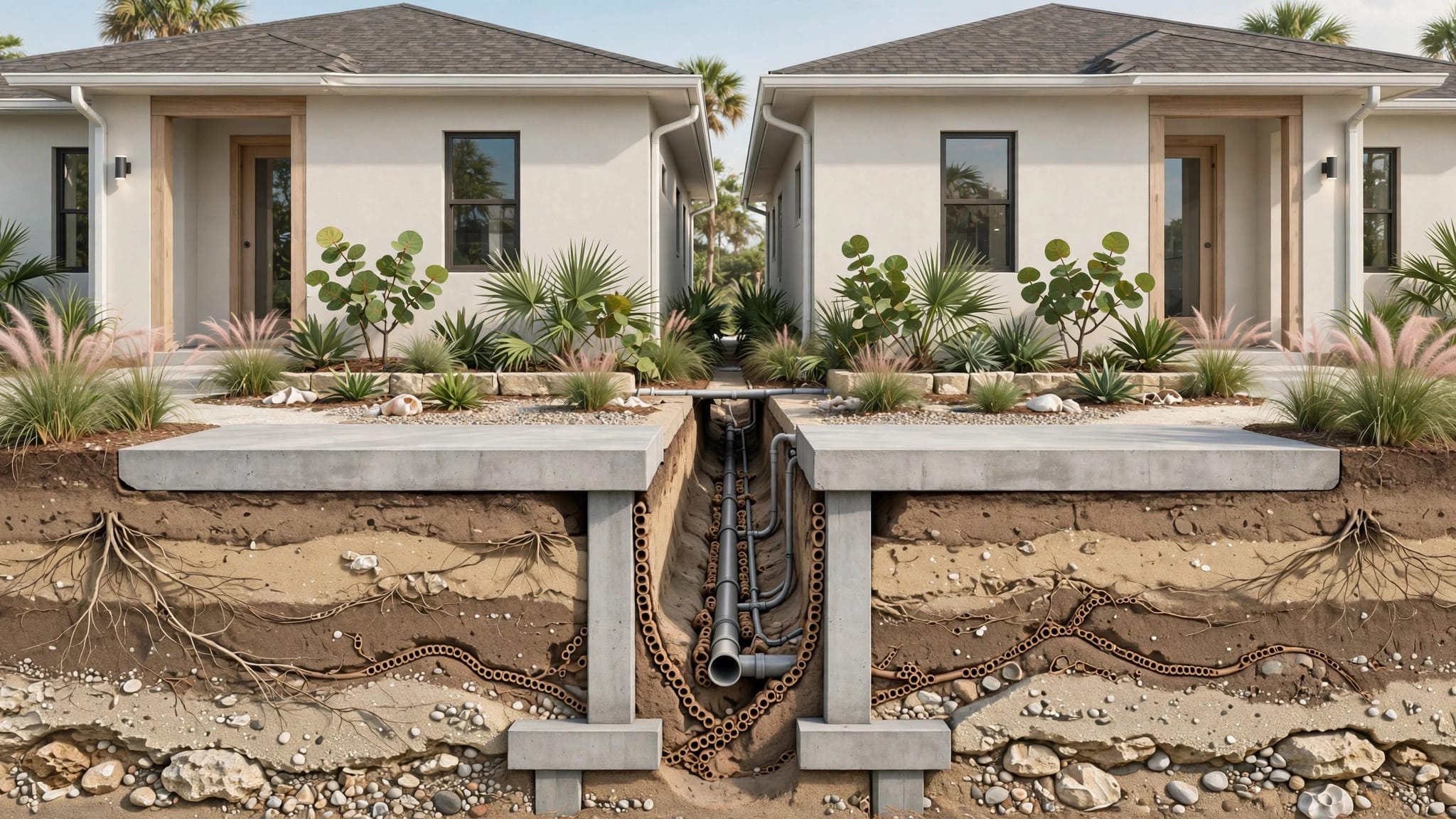
A house doesn't need exposed wood against the ground to be vulnerable. Termites can find concealed routes through foundation cracks, expansion joints, and openings around utility lines. Moisture near the foundation can also make an area more favorable for activity.
Drywood termites
Drywood termites live inside the wood they consume and don't need contact with soil. In a house, they can infest wood in roof framing, trim, furniture, and other above-ground areas.
One common clue is a small pile of hard, sand-like pellets pushed out through tiny openings. Because drywood termites don't rely on mud tubes, their absence doesn't rule out a termite problem.
Signs to Look for Around Trees and Homes
Look at the tree's base and the areas around your home's exterior. You don't need to cut into wood or pull apart material to document a concern.
Mud tubes and damaged wood
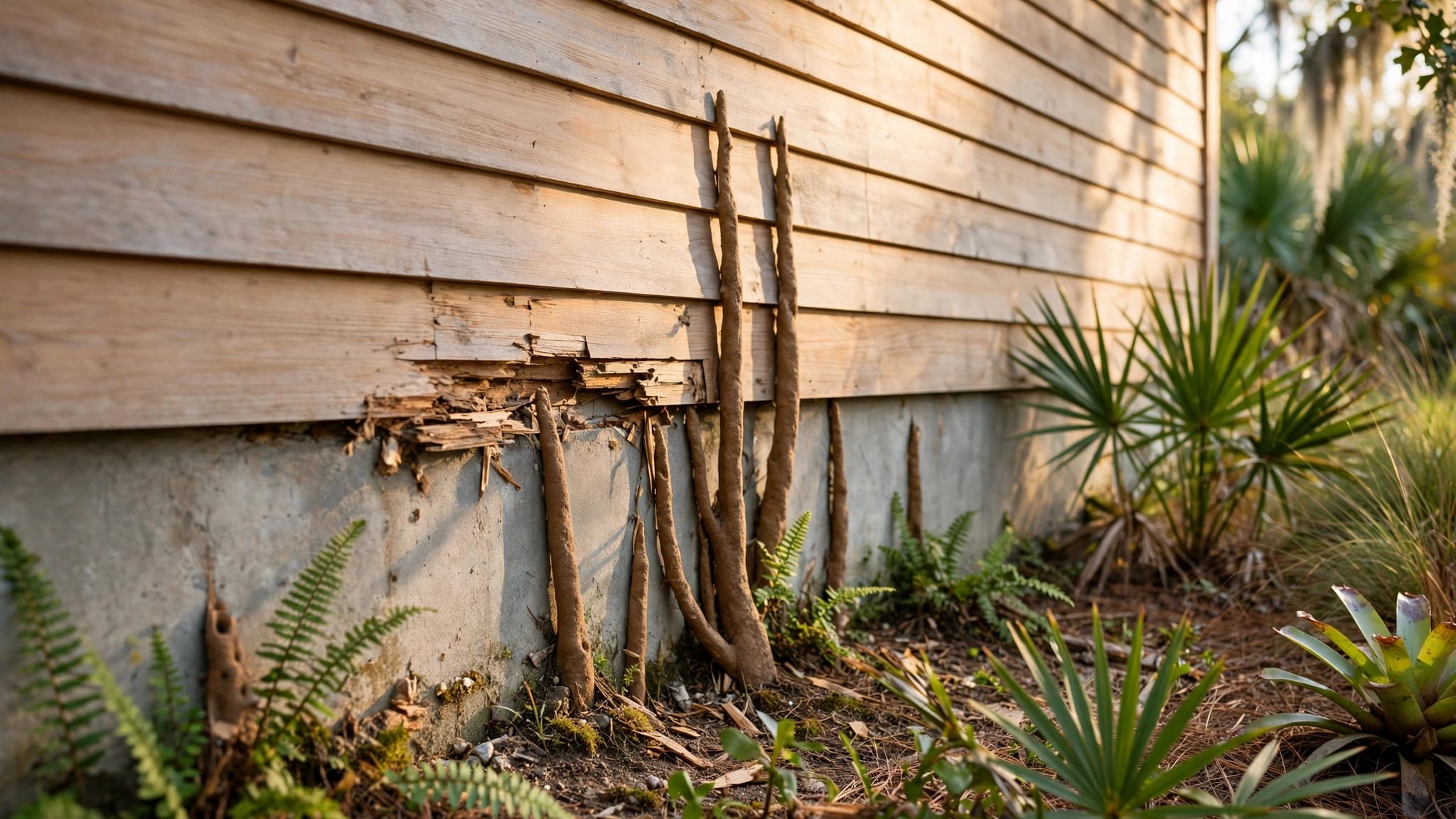
Subterranean termites build narrow shelter tubes that protect them as they travel. Look for raised, earth-colored tubes on foundation edges, garage walls, and other surfaces near the ground.
Wood that sounds hollow or feels soft also deserves attention. However, moisture and decay can produce similar symptoms, so wood condition alone can't establish the cause. Our guide to Cape Coral termite warning signs covers more places to look inside the house.
Wings and small pellets
Termite swarmers shed their wings after a flight. You may find discarded wings near outdoor lights, windows, or doors. Drywood termite pellets, meanwhile, can collect beneath tiny holes in infested wood.
Flying ants can be mistaken for termites. Ants usually have elbowed antennae and a pinched waist, while termite swarmers have a thicker waist and wings of similar length. Our flying ant and termite comparison explains the differences.
Does a Tree With Termites Mean Your Home Is Infested?
No. Termites found in a tree don't establish that they've entered your home. An inspector needs to look for evidence at the building before reaching that conclusion.
Homes can also have termite activity without obvious signs outdoors. Subterranean termites may travel through concealed openings, while drywood termites can remain hidden within framing or trim. That makes a separate assessment of the house useful when you find suspicious insects on your property.
Pay attention to the slab edge, garage walls, areas around plumbing, and accessible exterior wood. Indoors, note any unexplained pellet piles, shed wings, or soft trim. Each clue helps an inspector decide where to look next.
What to Do When You Find Suspected Termites
First, take clear photos and record where you found the evidence. If you can collect an insect or discarded wings without disturbing the area, place the sample in a sealed container for identification.
Leave mud tubes and suspected activity as undisturbed as possible. Their location can help a termite professional understand where insects are traveling. Avoid foggers or improvised chemical applications, which can complicate an inspection without addressing a colony.
Next, look for conditions that make your home harder to inspect. Move stored firewood and loose wood debris away from exterior walls. Repair leaks and adjust sprinklers that repeatedly wet the foundation. Keep the slab edge visible where practical.
A licensed termite professional can assess the evidence and recommend a treatment suited to the termite type and location. For subterranean termites, bait stations and liquid treatments are common approaches. Drywood activity may call for a different plan.
We offer free inspections for homeowners in Cape Coral, Fort Myers, Punta Gorda, Bonita Springs, and Sanibel. If you find suspicious activity, call us at (239) 910-1133 to schedule one.
Frequently Asked Questions
Are discarded wings proof of a home infestation?
No. Wings show that winged insects were present, but they don't establish where a colony is located. An inspector can examine the wings and look for other evidence in the home.
Can a home have termites without mud tubes?
Yes. Drywood termites don't need soil contact or mud tubes. Subterranean tubes can also remain hidden, so a clear view of the foundation doesn't rule out activity.
Get the Tree and Home Assessed
Termites can be present in a living tree, but the tree alone won't tell you whether your house is affected. Document what you see and keep the evidence intact.
A professional inspection can identify the insects and locate signs that need attention. That gives you a sound basis for deciding what to do next.
Schedule a Free Inspection: