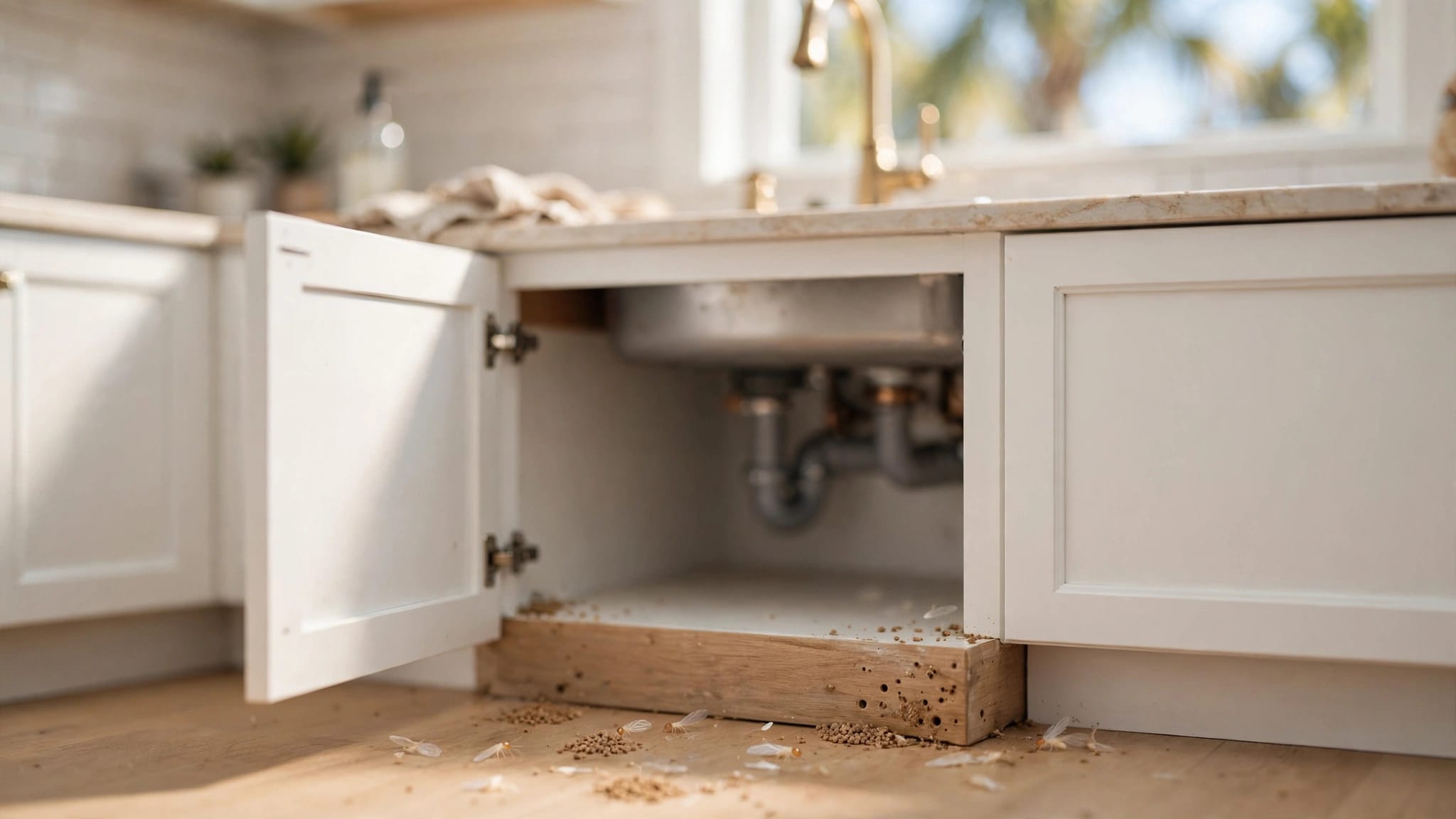
Flying Ants vs Termite Swarmers in Cape Coral, Quick ID Tips, Photos to Compare, and What to Do Next
You walk into the kitchen, flip on a light, and suddenly there are wings on the counter and little flyers bumping the window. It’s a common Cape Coral moment, especially after warm rain or a muggy evening.
The stressful part isn’t the bugs themselves, it’s the question behind them: flying ants vs termite swarmers , which one is it? One is usually a nuisance, the other can point to a much bigger problem.
This guide keeps it simple with quick ID tips, a comparison table, and the safest next steps for Southwest Florida homeowners.
Why you’re seeing swarmers in Cape Coral (and why lights make it worse)
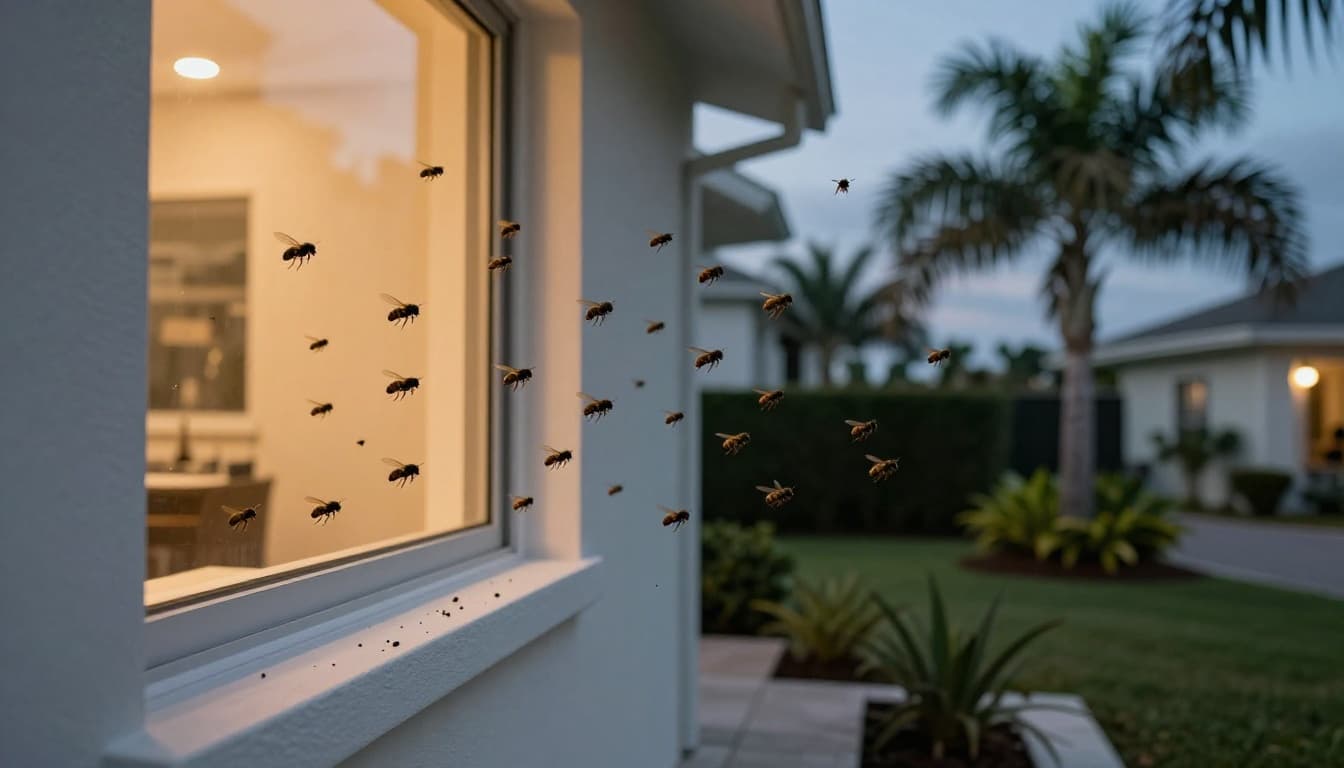 Flying insects often gather at window sills and lanai lights at dusk, a common setup for swarming season in Southwest Florida (created with AI).
In Cape Coral, swarming bugs show up because conditions are just right: warmth, humidity, and steady moisture in soil and landscaping. Both ants and termites send out winged adults (called swarmers, or “alates”) to start new colonies. Think of them like tiny “moving day” crews, they’re trying to leave home and find a new place to settle.
Swarmers are also drawn to lights , which is why they pile up at window sills, sliders, lanai lights, and garage doors. If they’re inside, it doesn’t automatically prove there’s an infestation in the walls. They can slip in through small gaps in screens, weatherstripping, soffit vents, and around door frames.
Still, finding swarmers indoors is a reason to slow down and check details. A few minutes of ID can save you from treating the wrong pest, or missing a termite warning sign.
Quick ID that works: body shape, antennae, and wings (with photos to compare)
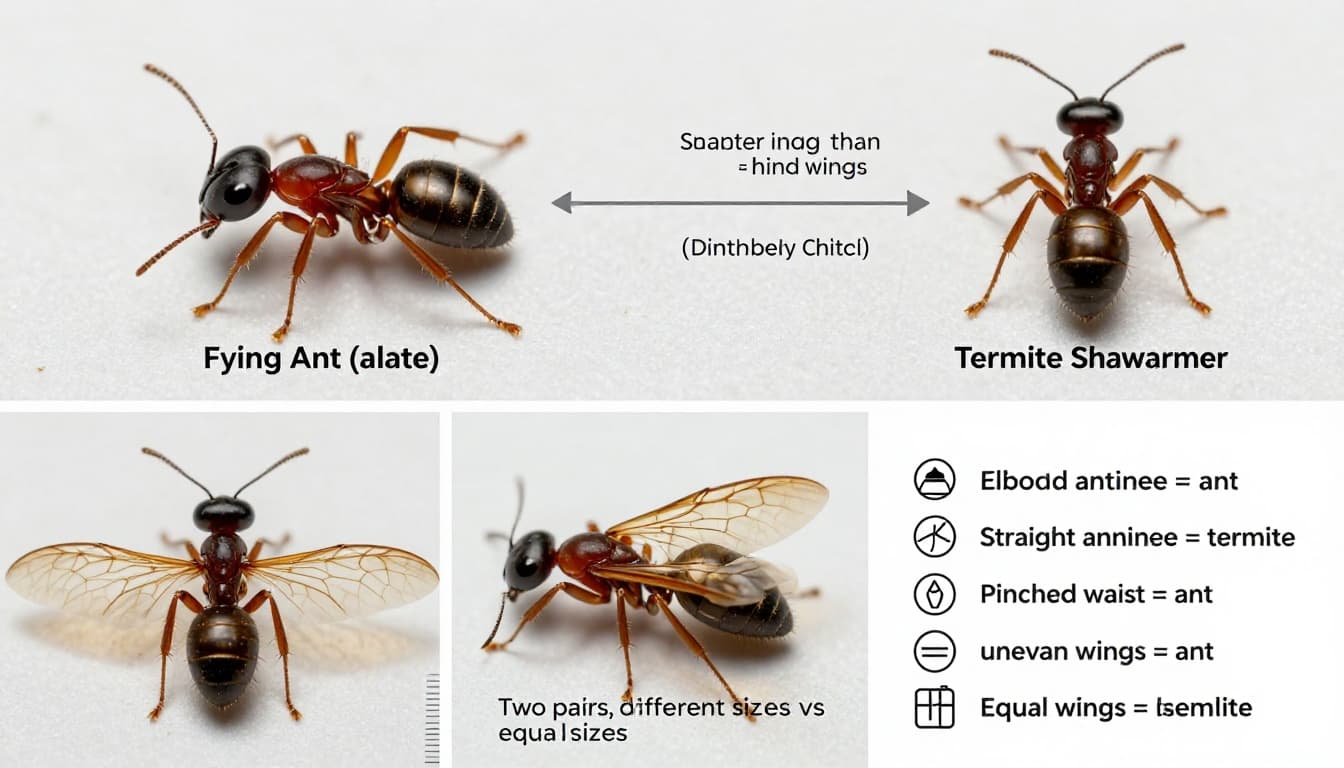 Side-by-side visual cues can make identification fast, especially when you focus on antennae, waist, and wing size (created with AI).
When you’re trying to sort out flying ants vs termite swarmers, don’t rely on color alone. In SWFL, both can look dark, and both can shed wings.
Instead, focus on three features you can often see with the naked eye (or a phone photo zoom).
- Antennae : Ants have elbowed antennae (a clear bend). Termites have straighter, beaded antennae.
- Waist : Ants have a pinched “hourglass” waist. Termites look thick through the middle, more like a tube.
- Wings : Ants usually have two different wing sizes (front wings longer). Termites have four wings about the same length.
Here’s a simple comparison table you can screenshot:
| Feature | Flying ant (alate) | Termite swarmer |
|---|---|---|
| Antennae | Elbowed, bent | Straight-ish, beaded |
| Waist | Pinched, narrow | Thick, no pinch |
| Wing length | Front wings longer | All wings similar length |
| Body look | Segmented, “ant-like” | More uniform, “cigar-shaped” |
| Wings after swarming | May shed | Often shed in piles |
If you’re unsure, don’t crush them and move on. Collect a few, because a correct ID changes the next steps.
What to do next without making it worse (safe, practical steps)
The goal tonight is simple: confirm what you have, limit spread, and preserve clues . Avoid panic-spraying, it can scatter insects deeper into the home and it can also smear evidence that helps with identification.
A fast, homeowner-friendly plan
- Capture samples for ID : Use a small jar or a sealed zipper bag. Add a few insects and some loose wings. Label it with the date and where you found them (window sill, bathroom, garage).
- Vacuum carefully : Vacuum swarmers and wings, then immediately empty the vacuum into a bag, seal it, and take it outside. This helps reduce numbers without pushing insects into other rooms.
- Don’t spray indoors indiscriminately : Foggers and heavy indoor sprays can make things messy and don’t solve a termite issue. If you use any product, keep it targeted and follow the label.
- Check common entry points : Look at window sills, slider tracks, baseboards, attic access panels, and around lanai lights. Note any gaps, damaged weatherstripping, or ripped screens.
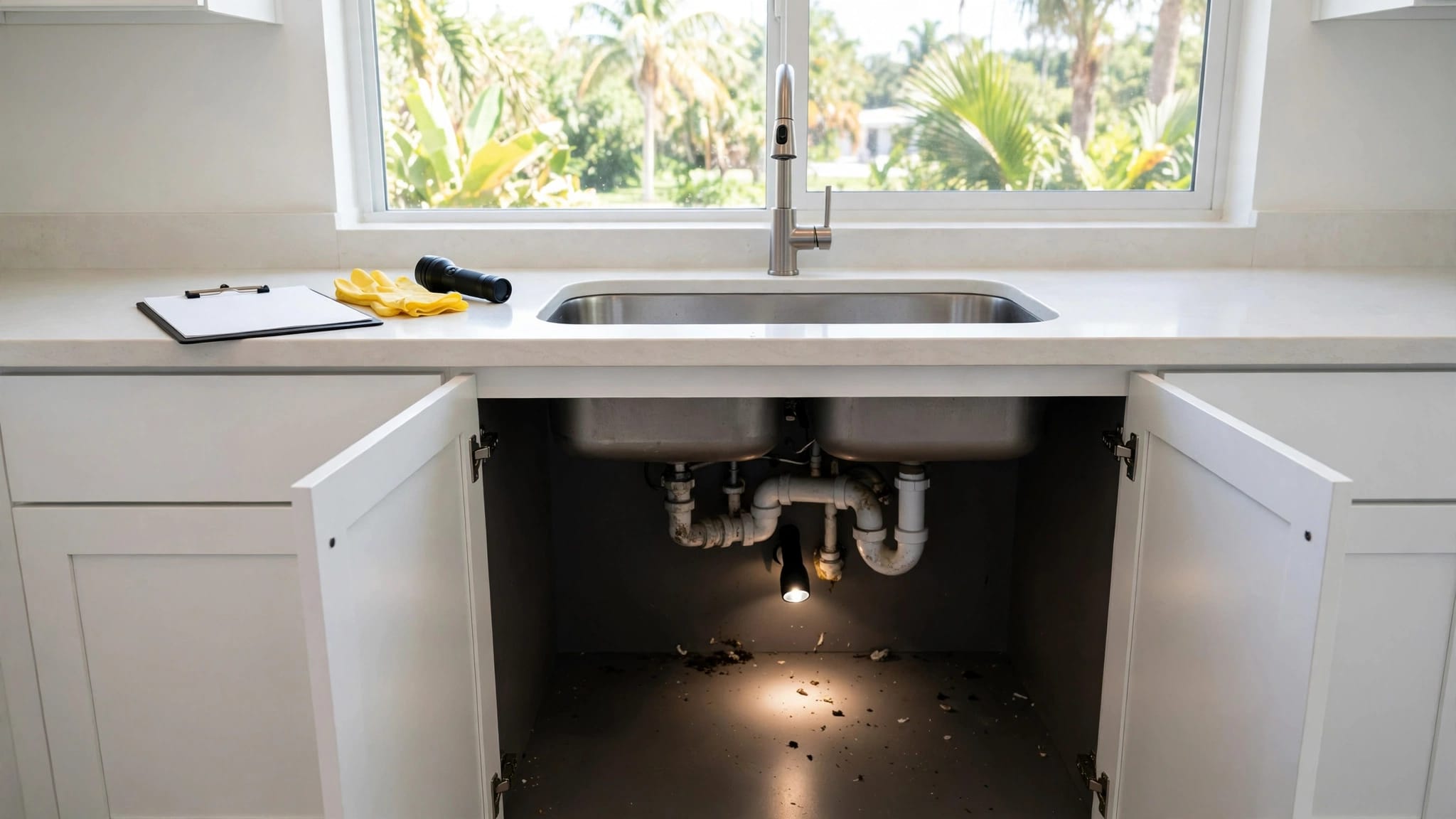
- Look for moisture that invites pests : Check under sinks, around water heaters, AC drain lines, and any spot where irrigation hits the wall. Wet wood and damp drywall are magnets for more than one pest.
If you only remember 3 things
- Elbowed antennae and a pinched waist usually mean flying ants.
- Equal-length wings and a thick waist raise the termite flag.
- Save a sample and get an inspection before you treat aggressively.
If you want a deeper local checklist for reducing termite risk around your property, this Cape Coral termite prevention guide breaks down what to watch for in Southwest Florida homes.
When it’s more likely termites (and how a pro confirms it)
Termite swarmers don’t eat your house, but they can signal that a mature colony is nearby, sometimes in the yard, sometimes in the structure. The tricky part is that swarmers can appear for a short time, then disappear, leaving only wings behind like tiny clear “petals.”
A few signs that deserve a professional look include discarded wings repeatedly showing up in the same area, swarmers emerging from a wall void or ceiling crack, mud-like tubing on foundation areas, or wood that sounds hollow when tapped. None of these alone confirms an infestation, but together they raise the priority.
A proper inspection usually focuses on likely activity zones and conditions that support termites, including wood-to-soil contact, moisture issues, and entry points around penetrations. Treatment options and pricing can vary a lot by home style and what’s actually found, so it helps to start with realistic expectations. This termite treatment cost breakdown in Cape Coral offers a local starting point for budgeting.
If you’re also seeing other pest activity around the same time, a general home protection plan can help reduce the “welcome mat” effect around doors, windows, soffits, and lanais. See residential pest control services in Cape Coral for what ongoing prevention can look like.
Conclusion
Swarmers can feel like a surprise attack, but a quick check of antennae, waist, and wings usually settles the flying ants vs termite swarmers question fast. Keep the scene clean, save a sample , and avoid indoor over-spraying that can hide clues. If you’re seeing repeat swarms, piles of wings, or signs around baseboards and window sills, schedule an inspection and let a trained eye confirm what’s happening before damage has a chance to grow.
Schedule a Free Inspection: