Drain Flies in Cape Coral Bathrooms, How to Find the Slime Source and Stop the Return
You walk into the bathroom, flip on the light, and a few tiny, fuzzy flies pop off the wall near the sink. If you’re dealing with drain flies bathroom problems in Cape Coral, the gross truth is simple: somewhere nearby, there’s wet slime feeding larvae.
The good news is you usually don’t need harsh chemicals to fix it. You need to find the breeding spot, remove the biofilm, and keep the drain “unfriendly” for a few weeks so the cycle breaks.
Why Cape Coral bathrooms are a magnet for drain flies
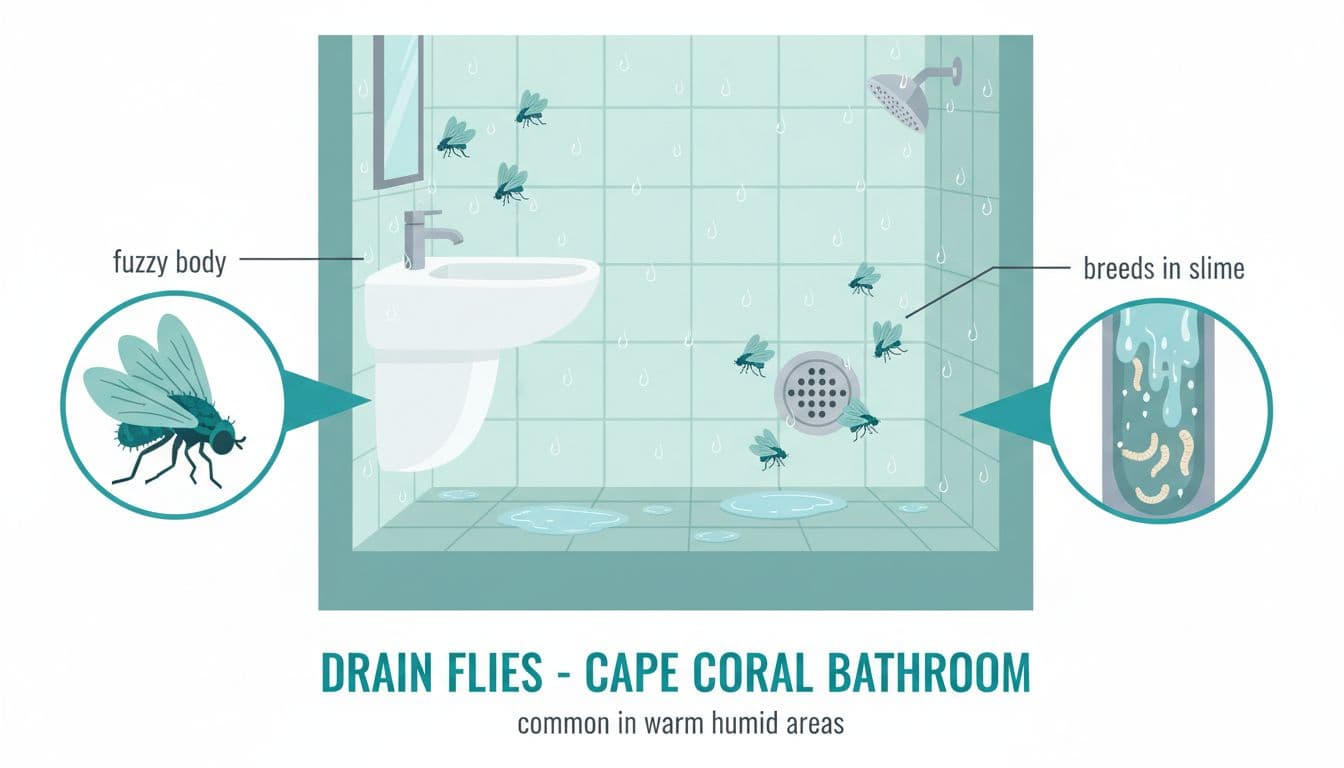 An AI-created infographic showing what drain flies look like and why humid bathrooms help them thrive.
Drain flies (also called moth flies) don’t “live” in the open like gnats do. They come from a damp nursery: the gelatin-like film inside plumbing and other wet spots. University extension guides explain that the larvae feed in that slime, then adults rest on walls near sinks and showers. For a deeper ID check, see Penn State Extension’s overview of moth (drain) flies.
Cape Coral adds a few local multipliers:
- Warm temps and high humidity keep drains and overflows damp longer.
- Hurricane season can mean standing water in garages, lanais, and yard drains, and sometimes stressed sewer and storm systems.
- Vacation homes and seasonal rentals often have unused drains , and a dry P-trap can let odors and insects move more freely.
If you only kill the adults, it’s like swatting mosquitoes while ignoring the pond. The slime source is the pond.
Find the breeding site fast (the tape test and real clues)
Drain flies are small, fuzzy, and a bit moth-like. They’re not the sleek fruit flies that hover around bananas. The key is proving where they’re coming from.
The tape test (simple, cheap, and telling)
At night, place clear tape over the drain opening (sticky side down), leaving a small tab to remove it. Do this for the sink, shower, tub, and any floor drain. In the morning:
- If flies are stuck to tape, that drain is a likely source.
- If none show up, repeat for 2 nights and include overflow openings.
The University of Maryland notes that larvae live in the slime layer in drains and traps , not in the water itself. Their quick facts are helpful in UMD Extension’s drain fly guide.
Clues that point to the “right” drain
You’re usually chasing one of these patterns:
- Flies gather on the wall above a sink or near a shower corner.
- The problem gets worse after a few days away (less water use means more slime stays put).
- You notice a faint musty smell from one drain, even if it isn’t clogged.
Where the slime hides in bathrooms (it’s not just the drain opening)
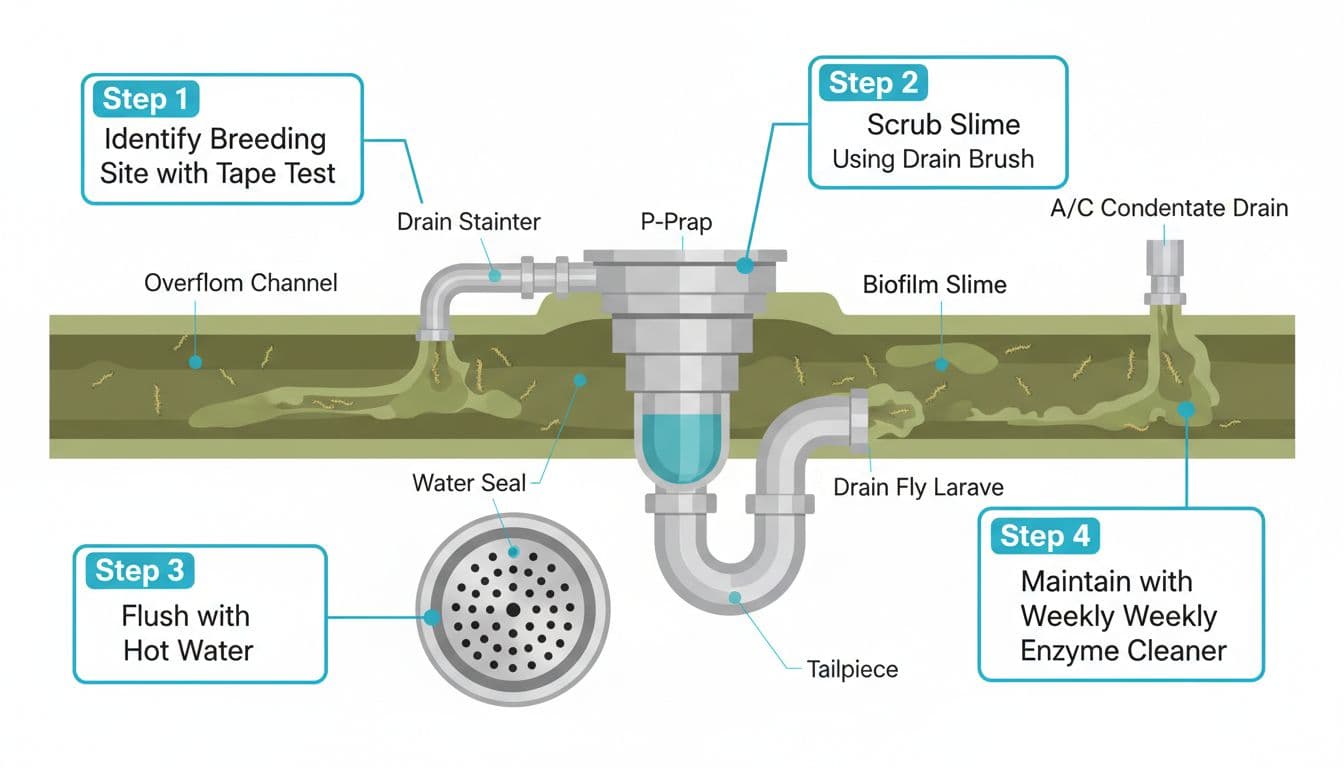 An AI-created cross-section of common breeding spots, including the P-trap, overflow channel, and Florida-style condensate tie-ins.
If you’re cleaning only the top inch of the drain, you’re wiping the doormat while the mess is in the hallway. In Cape Coral bathrooms, the usual slime hiding spots are:
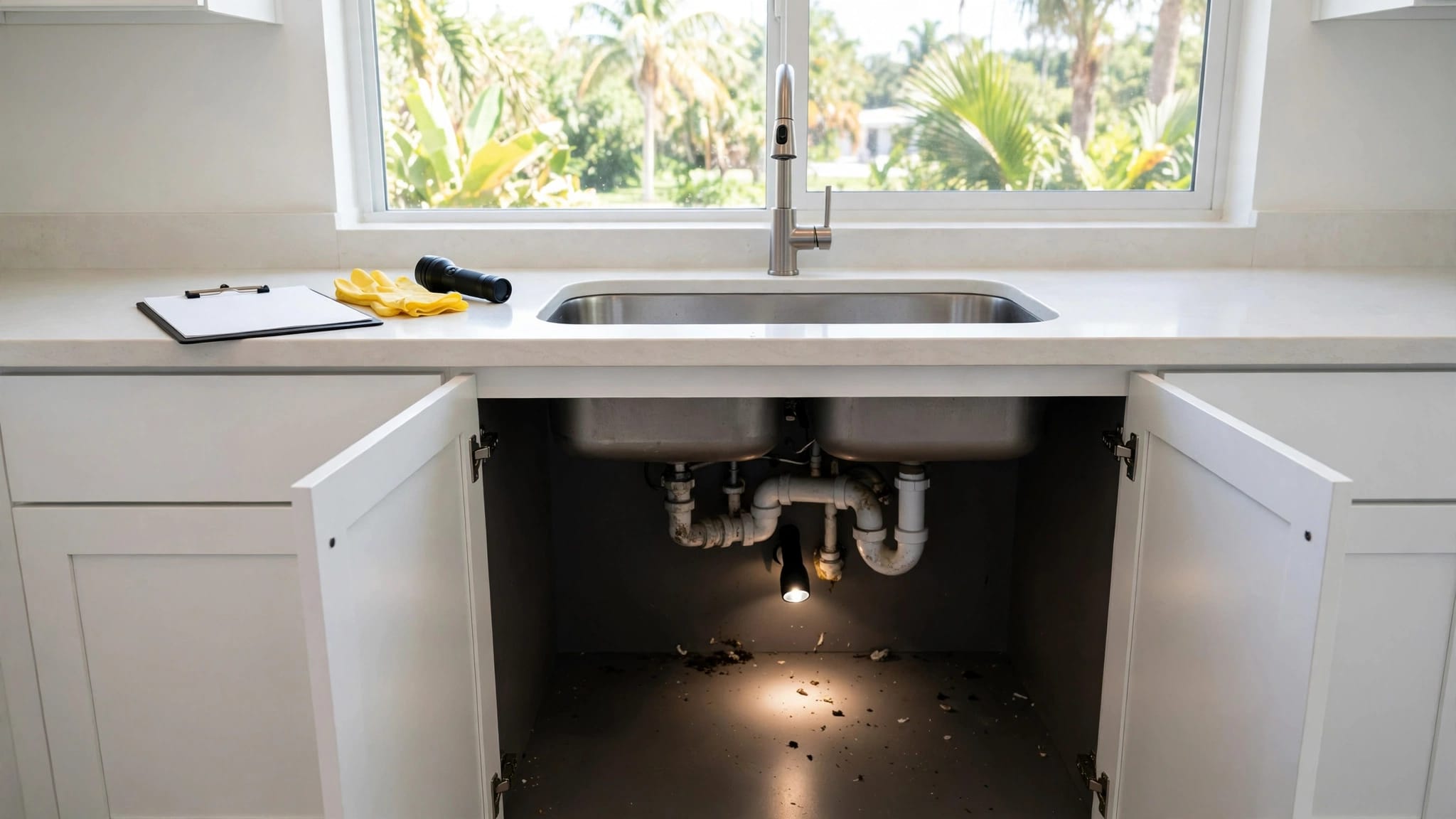
The P-trap and the pipe walls
The P-trap holds a water seal that blocks sewer gas. Drain fly larvae often live in the biofilm above the waterline or in the slow-moving gunk along the curve.
The overflow channel
Many bathroom sinks have an overflow hole near the rim. That channel can collect toothpaste scum and soap film, and it stays damp. It’s a common “mystery source” when the drain looks clean.
Shower and tub drains (especially around hair and soap scum)
Soap, skin oils, and hair make perfect sludge. If the shower is used daily, adults may still appear because the slime keeps rebuilding.
A/C condensate drain tie-ins and nearby floor drains
In Florida homes, condensate lines and utility drains can stay wet and feed slime. Even if flies seem “in the bathroom,” the source can be a nearby drain line they’re traveling from.
Mechanical cleanout that works (and doesn’t rely on harsh chemicals)
The main fix is physical removal of biofilm . Think of it like scrubbing algae off a pool wall. Chemicals alone often slide right over it.
Safe cleanout checklist (do these in order)
- Remove the strainer and visible debris : Pull hair and gunk out first. If water drains slowly, clear the blockage before anything else.
- Brush the drain walls : Use a drain brush, bottle brush, or flexible nylon brush. Scrub several inches down, rotating as you go.
- Clean the overflow channel : Feed a small brush into the overflow hole and scrub. Rinse with warm water.
- Flush with hot tap water : Use hot water from the faucet, not boiling water. Boiling water can stress some plastic plumbing.
- Use an enzyme cleaner (optional, helpful) : Enzyme or bio drain gels can help break down leftover organic film after scrubbing. Follow label directions and give it dwell time.
- Dry and reset the area : Fix drips under the sink, stop shower leaks, and wipe up standing water around the base.
Chemical cautions (important)
Avoid “kitchen sink chemistry.” Never mix bleach with acids or ammonia products. Strong chemicals can also damage older plumbing, harm septic systems, and still fail if the slime isn’t scrubbed out first. If you choose any product, use one at a time and follow the label.
After a thorough scrub, you may still see a few adults for up to two weeks. That doesn’t mean the cleaning failed. It often means the last batch is finishing its life cycle.
For more detail on what drain fly larvae feed on and where they breed, see University of Kentucky Entomology’s drain fly information.
Stop the return, especially in humid, part-time homes
Once you’ve cleaned the slime, prevention is about keeping drains wet enough to maintain the trap seal, but clean enough to avoid buildup.
- Run little-used sinks and showers weekly : 30 to 60 seconds of water helps refresh the P-trap.
- Keep bathroom surfaces dry : Run the exhaust fan, wipe up puddles, and repair grout or caulk gaps that hold moisture.
- Use a weekly enzyme treatment : It’s a maintenance tool, not the main fix. Consistency matters more than strength.
- Cover rarely used floor drains : A proper drain cover helps limit access and slows evaporation.
Vacation rentals in Cape Coral often see drain flies after a vacancy. A simple “arrival routine” (run all faucets, flush toilets, and check for slow drains) can prevent surprise swarms.
Quick troubleshooting table for drain fly problems
| What you’re seeing | Most likely source | What to do next |
|---|---|---|
| Flies on wall above sink, drain looks “fine” | Overflow channel biofilm | Brush overflow, then flush hot water |
| Flies near shower, hair in drain | Shower slime line and hair trap | Remove hair, scrub drain walls and cover |
| Flies keep returning after sprays | Slime not removed, only adults killed | Do brush cleanout, then enzyme maintenance |
| Flies worst after time away | Dry or stagnant traps, unused drains | Run water weekly, cover floor drains |
| Sewer odor plus flies | Possible vent or sewer issue | Stop DIY, get a professional inspection |
When it’s not the drain (and when to call for help)
Sometimes the “drain fly” look is right, but the breeding moisture isn’t inside the drain.
When it’s not the drain:
- A leaky toilet wax ring can keep the subfloor damp.
- Moisture in a wall void (from a small supply line leak) can feed other tiny flies.
- A dirty, wet trash can or mop bucket can breed nuisance flies.
Get professional help if you have sewer odor , repeated backups, gurgling drains, or you suspect a broken vent or cracked pipe. Those are plumbing issues first, and pest issues second.
Disclaimer: This article shares general information for homeowners. If you’re unsure about your plumbing, water damage, or chemical product use, contact a qualified professional.
Conclusion
Drain flies aren’t a mystery infestation, they’re a moisture and slime problem. Find the source with the tape test, remove the biofilm with mechanical scrubbing , and keep drains maintained long enough to break the cycle. If odors or backups show up, don’t wait, get a pro to check for deeper issues and protect your home.
Schedule a Free Inspection: