Paper Wasps Around Cape Coral Lanais, Common Nest Spots, Safe Removal, and How to Keep Them From Rebuilding
If you’ve spent any time on a Cape Coral lanai, you know it’s supposed to feel like a screened-in slice of calm. Then you spot it: a small, gray, papery “umbrella” tucked under a beam, with long-legged wasps cruising around it like they own the place.
For many homeowners, paper wasps lanai problems start the same way, one tiny nest that seems harmless until it grows and someone gets too close. The good news is that most paper wasp issues are fixable with a mix of timing, caution, and a few smart changes that make your pool cage less inviting.
Paper wasps on a lanai: what you’re seeing and why they show up
Paper wasps are common across Southwest Florida. They’re slimmer than yellowjackets, with long legs that dangle in flight. Their nests look like an open honeycomb, usually one layer of exposed cells, and often hang from a single “stem” under a ledge.
They aren’t out to attack people, but they will defend the nest if you get too close. On a lanai, that’s easy to do without realizing it. You lean a pool net against a corner, open a storage box, or reach up to wipe a beam, and suddenly you’re within inches of their front door.
A few reasons Cape Coral lanais attract them:
- Shelter from rain and wind: Pool cages and covered lanais stay drier than open eaves.
- Great anchor points: Aluminum framing, screen tracks, soffit edges, and light fixtures give them solid surfaces to attach a nest.
- Food nearby: Paper wasps hunt caterpillars and other insects, which are plentiful around landscaping and canal-side properties.
They’re also seasonal. Nests often start small in late winter and spring, then build quickly as the warm months roll on. In February, it’s smart to do a quick lanai check now, because early nests are much easier to handle than mid-summer colonies.
One more thing before you remove anything: paper wasps do help by eating plant pests. If a nest is far from foot traffic and not near doors, some homeowners choose to leave it alone. If it’s near people, pets, pool equipment, or seating, removal usually makes sense.
Common paper wasp nest spots around Cape Coral lanais and pool cages
Paper wasps aren’t random builders. They like quiet corners, overhead protection, and spots you don’t touch every day. If you’re dealing with paper wasps on a lanai, these are the places to inspect first.
High-probability nest locations
- Under lanai roof overhangs and fascia boards: The classic spot, shaded and protected.
- Pool cage crossbars and corners: Especially where framing meets at right angles.
- Screen door frames and hinges: Warm, sheltered, and close to openings.
- Outdoor ceiling fans and light fixtures: The base plates and mounting brackets can hide a small starter nest.
- Above storage areas: Behind rolled-up pool toys, stacked chair cushions, or ceiling-mounted racks.
- Inside tucked-away channels: Gaps along screen tracks and trim can protect a tiny nest while it starts.
Here’s a quick way to think about it: if the spot stays dry during a hard summer rain and you rarely bump it, a wasp queen might pick it.
| Lanai spot to check | Why paper wasps like it |
|---|---|
| Inside roof corners | Dry, shaded, low disturbance |
| Above screen doors | Warm, easy flight path in and out |
| Pool cage beams near lights | Bugs gather near lights, sturdy surface |
| Behind shutters or decor | Hidden from people, stable temperature |
| Under outdoor counters | Protected from wind, close to food smells |
If you’re finding new nests in the same area each year, that’s a clue the “site conditions” are right. Removal alone won’t solve it. You’ll want to change what makes that spot appealing, which we’ll cover next.
For homeowners who want ongoing protection beyond wasps, a recurring plan can help reduce the insects that attract stinging pests in the first place. Local help is available through Residential pest control services in Cape Coral.
Safe paper wasp nest removal and how to stop them from rebuilding
Safety first. Paper wasp stings are painful, and for some people they’re dangerous. If anyone in your home has a history of allergic reactions, skip DIY and call a licensed pro.
Also follow Florida and local rules on pesticide use and nesting insects. Use only products labeled for wasps, and always follow the label instructions. When possible, consider relocation or leaving a harmless nest alone if it’s far from people and pets.
When to call a professional right away
Call for help if the nest is:
- Larger than a golf ball (colonies grow fast after that point)
- Inside a wall void, soffit cavity, or roofline where you can’t see the attachment point
- Near a door, seating area, grill, or pool equipment you handle often
- Causing repeated wasp activity indoors (which can point to hidden entry gaps)
- A high-risk situation because of allergy concerns
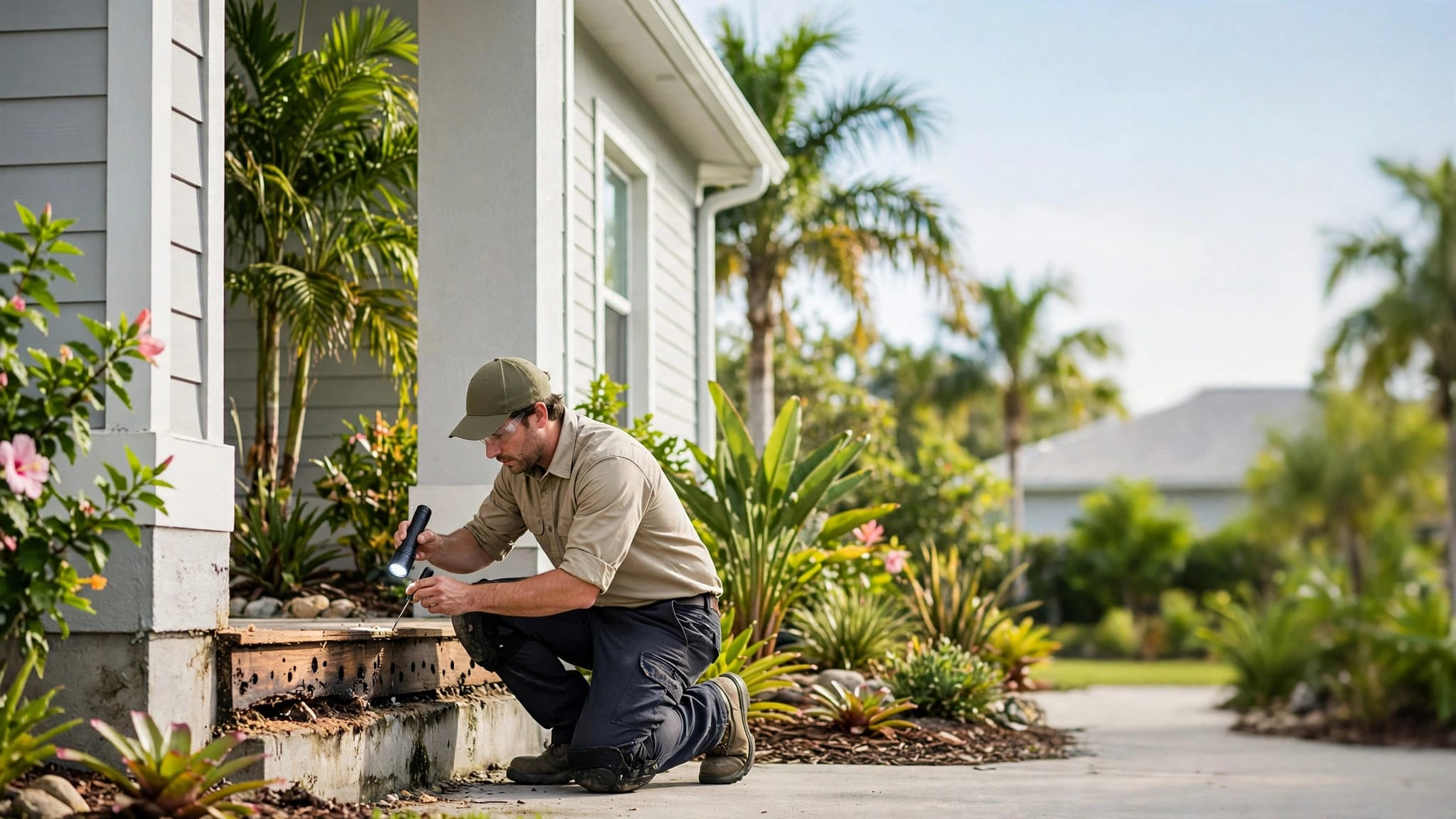
If you’re hiring a company, it helps to know what to ask and what a good inspection looks like. Use Key questions before hiring a Cape Coral exterminator and What to expect from a Cape Coral exterminator as a quick guide.
If you’re removing a very small, exposed nest (basic safety steps)
For a small, early nest that’s easy to reach and clearly visible, homeowners often choose to remove it carefully. Keep it conservative and avoid risky tactics.
- Pick the right time: Late evening or early morning is typically calmer, with more wasps on the nest.
- Dress for the job: Closed-toe shoes, long sleeves, long pants, gloves, and eye protection.
- Keep people and pets inside: Give yourself space and a clear path back indoors.
- Use cautious, label-directed control: If you use a wasp product, use one designed for stinging insects and follow the label exactly.
- Remove the nest only after activity stops: Once you’re confident the wasps are no longer active, knock the nest down into a sealed bag.
- Clean the attachment area: Wipe the spot to remove residue that can encourage rebuilding.
Never use fire, gasoline, or improvised “home hacks.” Those methods cause injuries and house fires, and they often make the wasps more defensive.
How to keep paper wasps from rebuilding on your lanai
After removal, prevention is where you win. Think of it like fixing a leaky roof, you don’t just move the bucket, you stop the drip.
- Seal small gaps and edges: Use appropriate exterior-grade sealant on cracks around trim, soffit edges, and accessory mounts where feasible.
- Reduce “perfect ledges”: If a spot keeps getting nests, adjust or relocate decor, hooks, or stored items that create hidden shelves.
- Keep screens and doors tight: Repair torn screens and make sure screen doors close cleanly. Small openings can create sheltered dead zones.
- Manage lighting: Bugs cluster near bright lights at night, which can draw hunting wasps. Consider softer, warmer outdoor bulbs where practical.
- Trim vegetation near the cage: Overgrown shrubs touching the screen give wasps cover and steady insect traffic.
- Schedule quick checks: A 2-minute look at corners and door frames each week can catch new nests when they’re still tiny.
If paper wasps keep returning to the same lanai zones, that usually means there’s a repeatable reason, shelter, food, or both. A professional inspection can pinpoint those patterns and address them safely.
Conclusion
Paper wasps and Cape Coral lanais often collide because the pool cage offers shade, dry corners, and sturdy places to build. Spotting nests early, removing them safely (or calling a pro when it’s risky), and sealing up repeat nesting areas is the best way to stop the cycle.
If your paper wasps lanai problem keeps coming back, or you suspect hidden nests in soffits or framing, a local inspection can save you a lot of trial and error. Your lanai should feel like a retreat again, not a place you scan for stingers before you sit down.
Schedule a Free Inspection: