Crazy Ants in Cape Coral, how to ID the fast-moving trails, where they nest outside, and why most sprays backfire
If you've seen ants moving like they've had too much coffee, you're not imagining it. Crazy ants in Cape Coral can form fast, messy-looking trails that seem to appear overnight, especially after warm rains and during the long, humid months.
Here's the bottom line: most store-bought "ant sprays" don't solve crazy ant problems, and they can make the infestation spread. The good news is you can identify what you're seeing, locate common outdoor nesting spots, and take steps that actually reduce the colony instead of scattering it.
How to ID crazy ants by their fast-moving trails (and why they look "random")
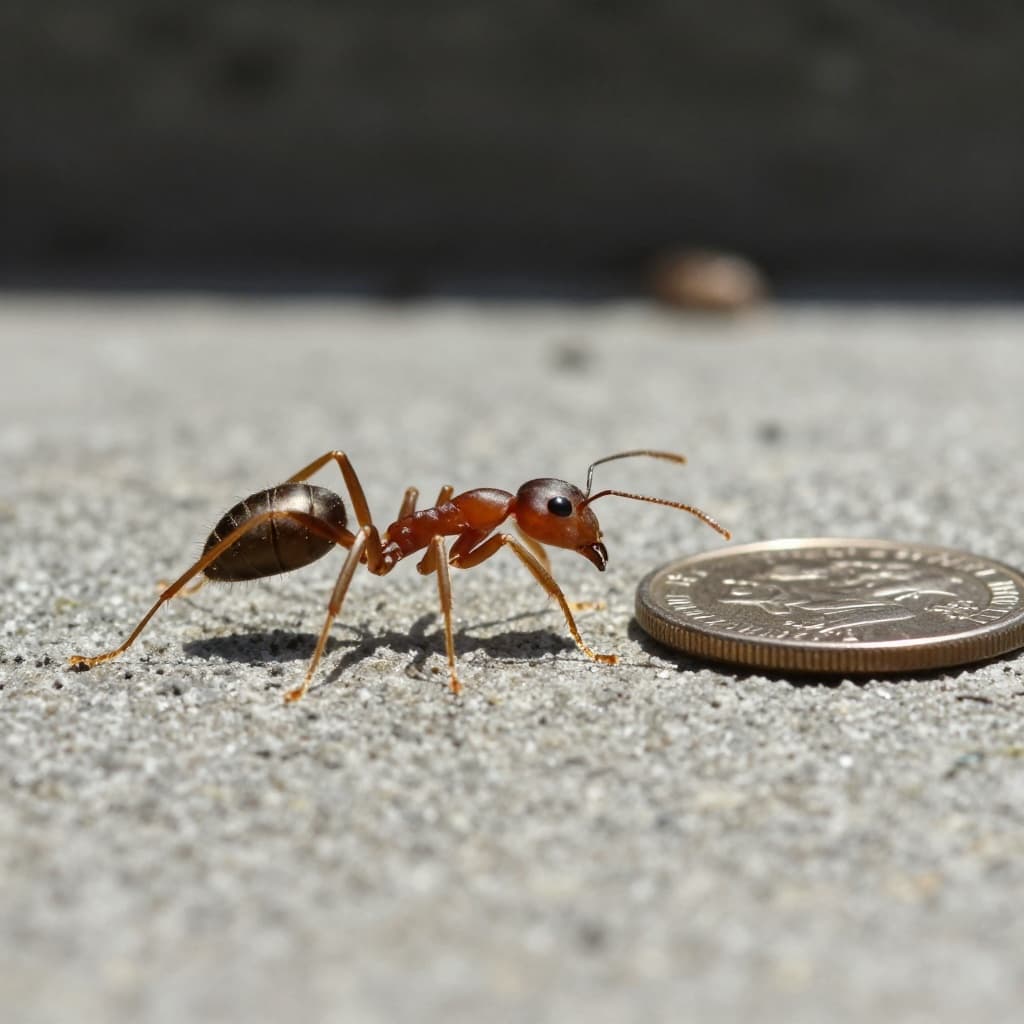 Close-up of a tawny crazy ant on concrete with a penny edge for size reference (created with AI).
Crazy ants (often "tawny crazy ants") don't behave like the neat little ant line you see heading to a crumb. Their foragers move in quick bursts, zig-zag, stop, then take off again. When you look closer, you'll usually notice multiple thin trails that merge, split, and re-merge. It can look like someone spilled pepper and it came to life.
A few homeowner-friendly ID clues:
- Speed and chaos : They move faster than most ants you'll see on a Cape Coral driveway or pool deck.
- Lots of workers : When populations build, you may see what looks like "traffic" across concrete, pavers, and stucco.
- Same general size : Crazy ant workers tend to look fairly uniform compared to mixed-size species.
- Outdoor-first behavior : Many infestations start outside, then spill indoors around doors, windows, and garage edges.
Don't get stuck on perfect identification from one ant. In real life, ants are tiny, lighting is bad, and several nuisance species can overlap. Focus on the pattern: fast trails, heavy numbers, and repeat activity in the same zones.
One more Cape Coral clue: crazy ant activity often ramps up around mulch-heavy landscaping , dense groundcover, and anything that stays damp after the afternoon rain. When the ground gets saturated, colonies shift and foragers roam wider.
Where crazy ants nest outside in Cape Coral yards (common hiding places)
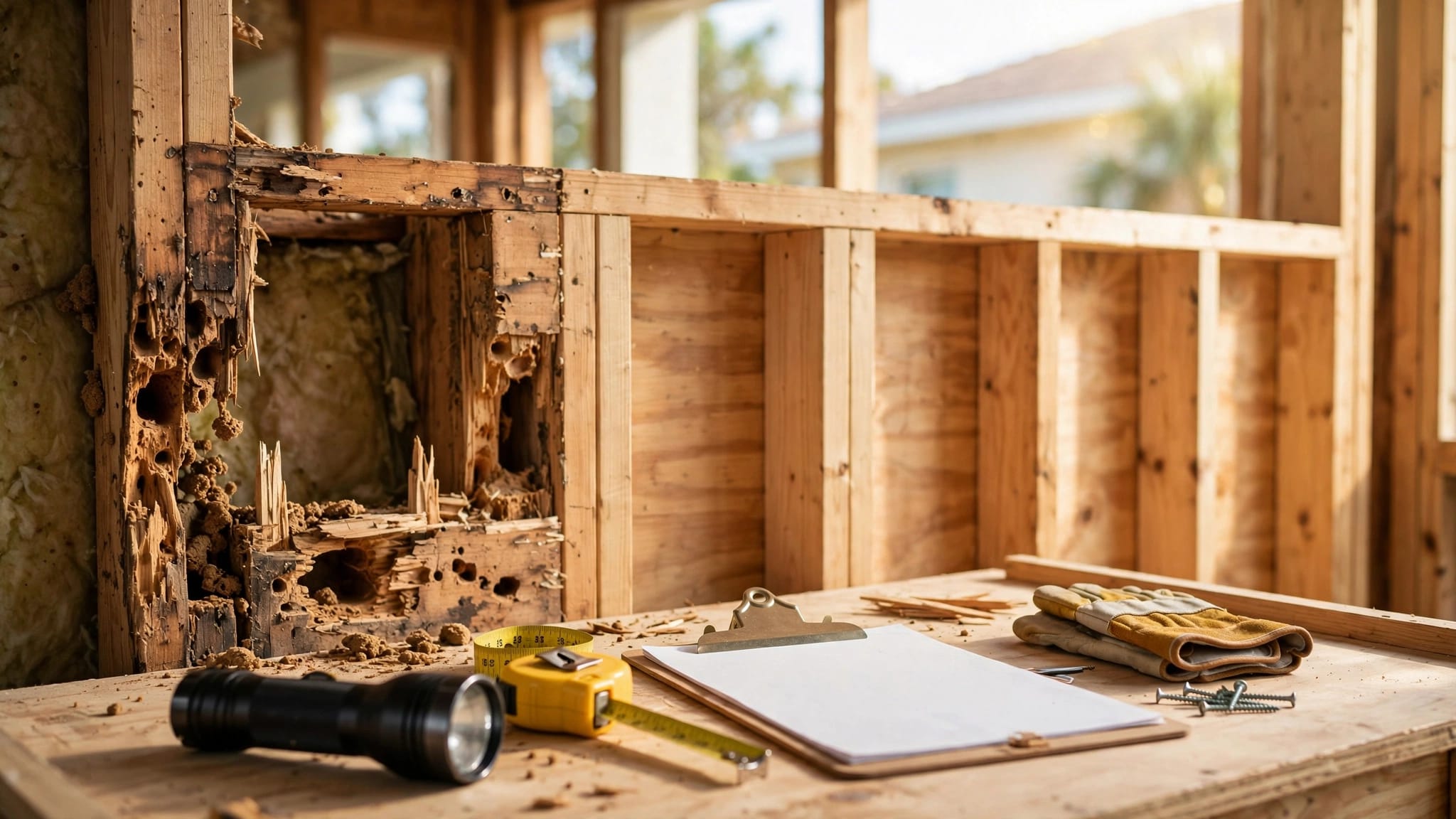
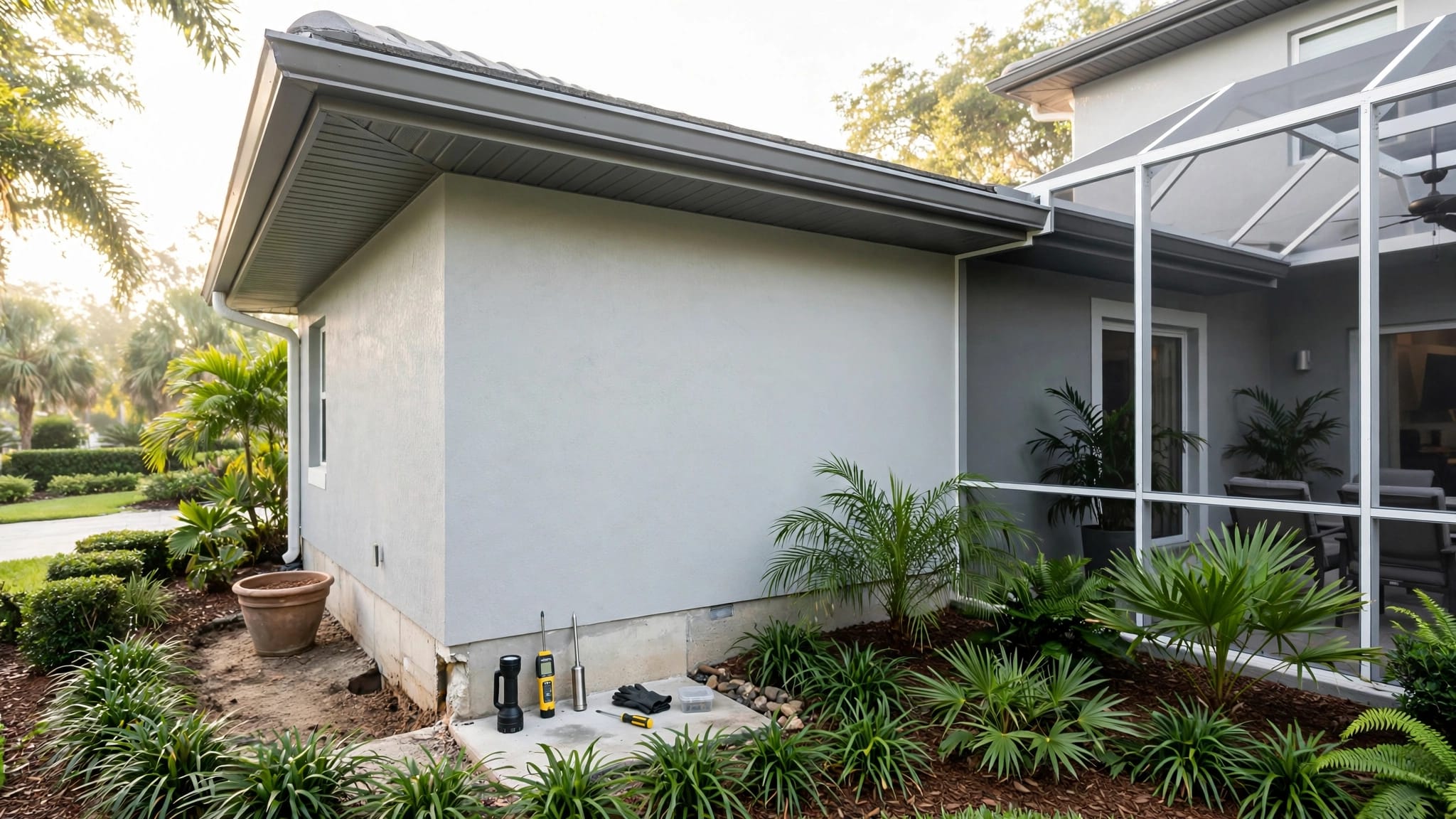
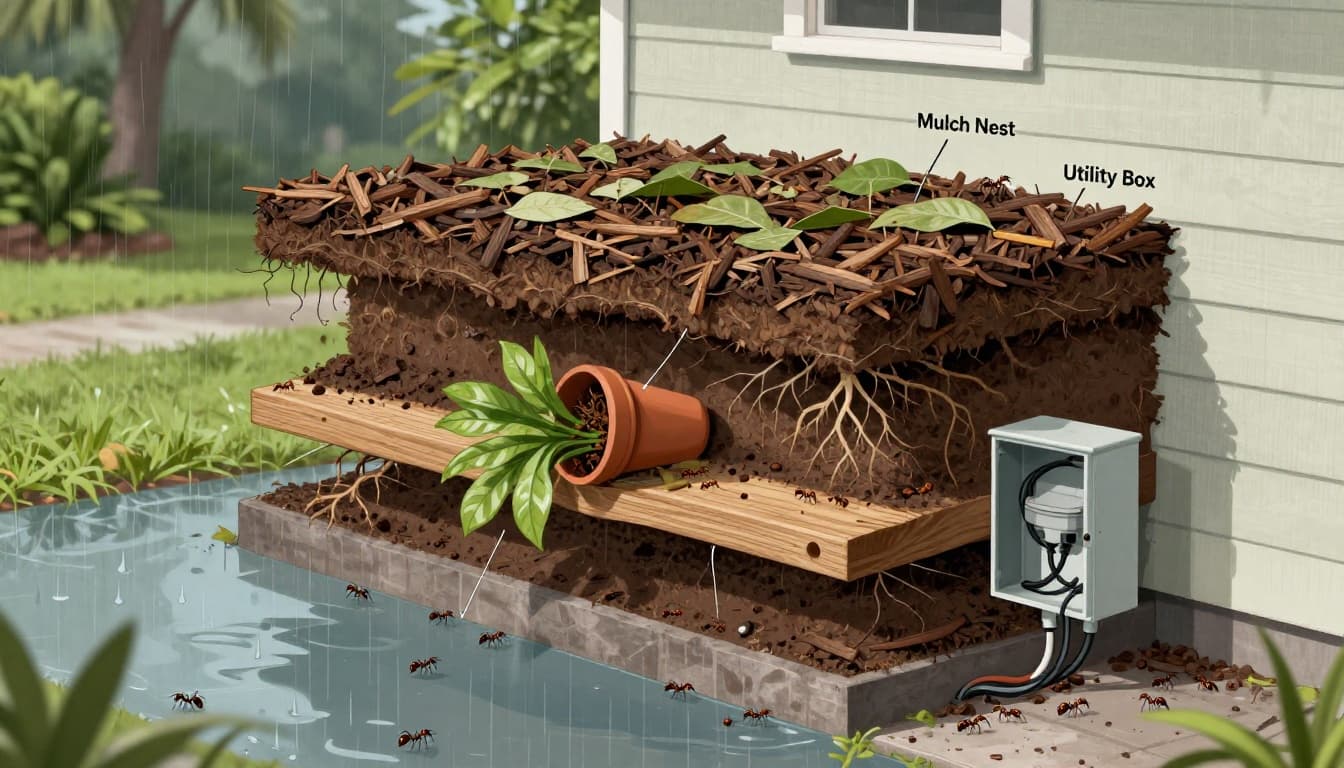 Common outdoor harborage areas that can support crazy ant nesting (created with AI).
Crazy ants don't need a big visible mound. Instead, they use many small, protected pockets . Think of them like squatters who prefer shaded, damp shelter with easy food nearby. In Southwest Florida, that often means landscaping and utility areas.
Check these outdoor spots first:
Mulch and leaf litter: Thick mulch stays humid, especially in the rainy season. That moisture helps ants and the insects they "farm" for honeydew. If mulch touches the foundation, it also becomes a bridge toward the house.
Under and inside objects: Pavers, landscape timbers, stacked pots, edging, and stored items along the side yard create shaded voids. Even a flimsy board can shelter a nest.
Around irrigation and water: Leaky valves, dripping hose bibs, and over-watered beds create reliable moisture. If you run irrigation at night, the soil can stay wet longer, which encourages nesting.
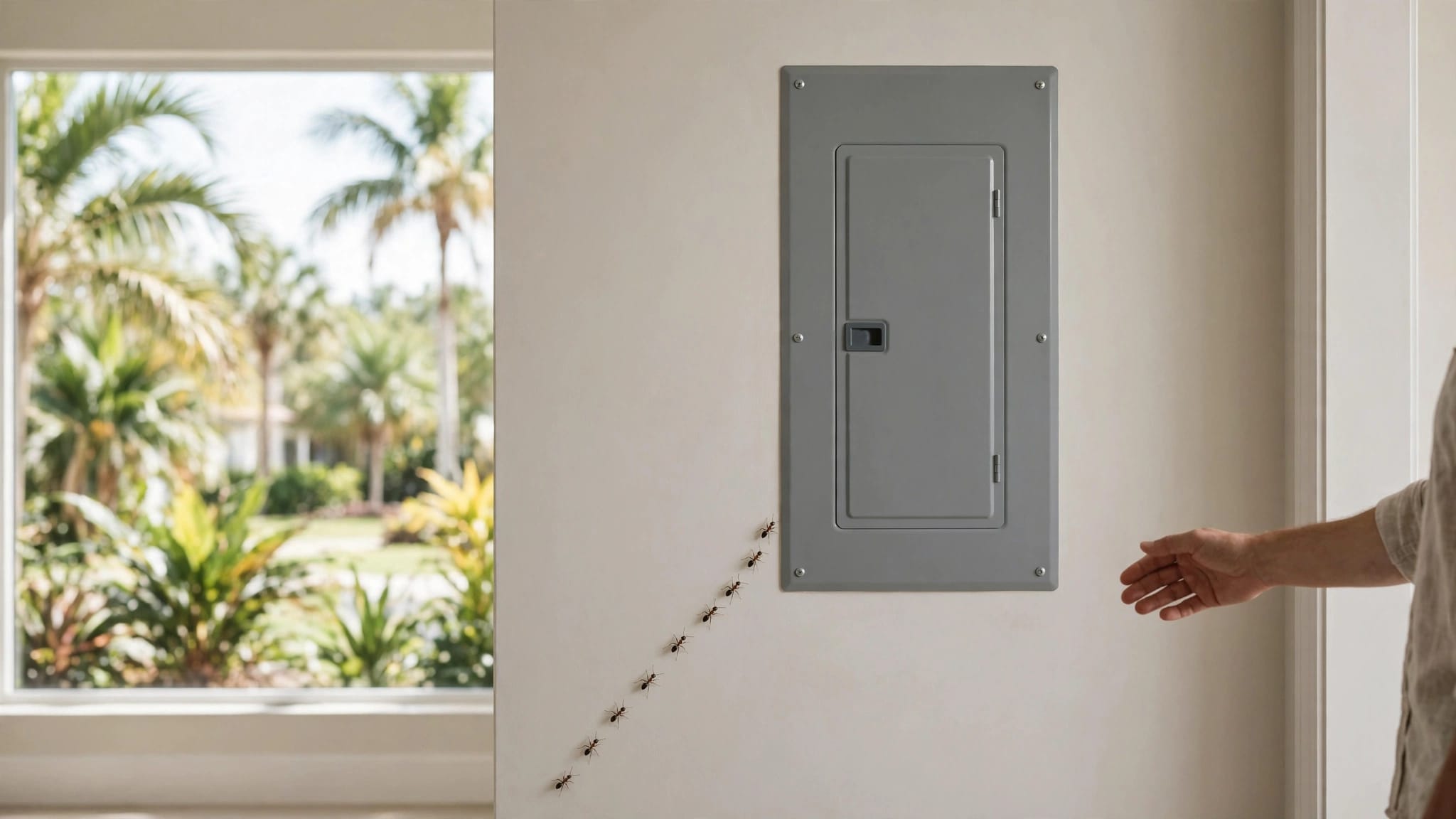
Utility areas (handle carefully): Crazy ants may gather near cable boxes, A/C pads, and exterior electrical areas because these spots provide warm, protected gaps. Never spray into electrical boxes or openings. Besides being unsafe, it rarely fixes the colony.
If ants are coming from an outlet, switch plate, or breaker area, treat it like an electrical safety issue first. Don't spray, dust, or pour liquids into those spaces.
A quick way to "read the yard" is to follow trails backward during peak activity (often late afternoon or early evening). Use a flashlight held low to the ground. Look for traffic disappearing under mulch, under an edge, or into a crack near the slab.
Why most sprays backfire on crazy ants (and what works better)
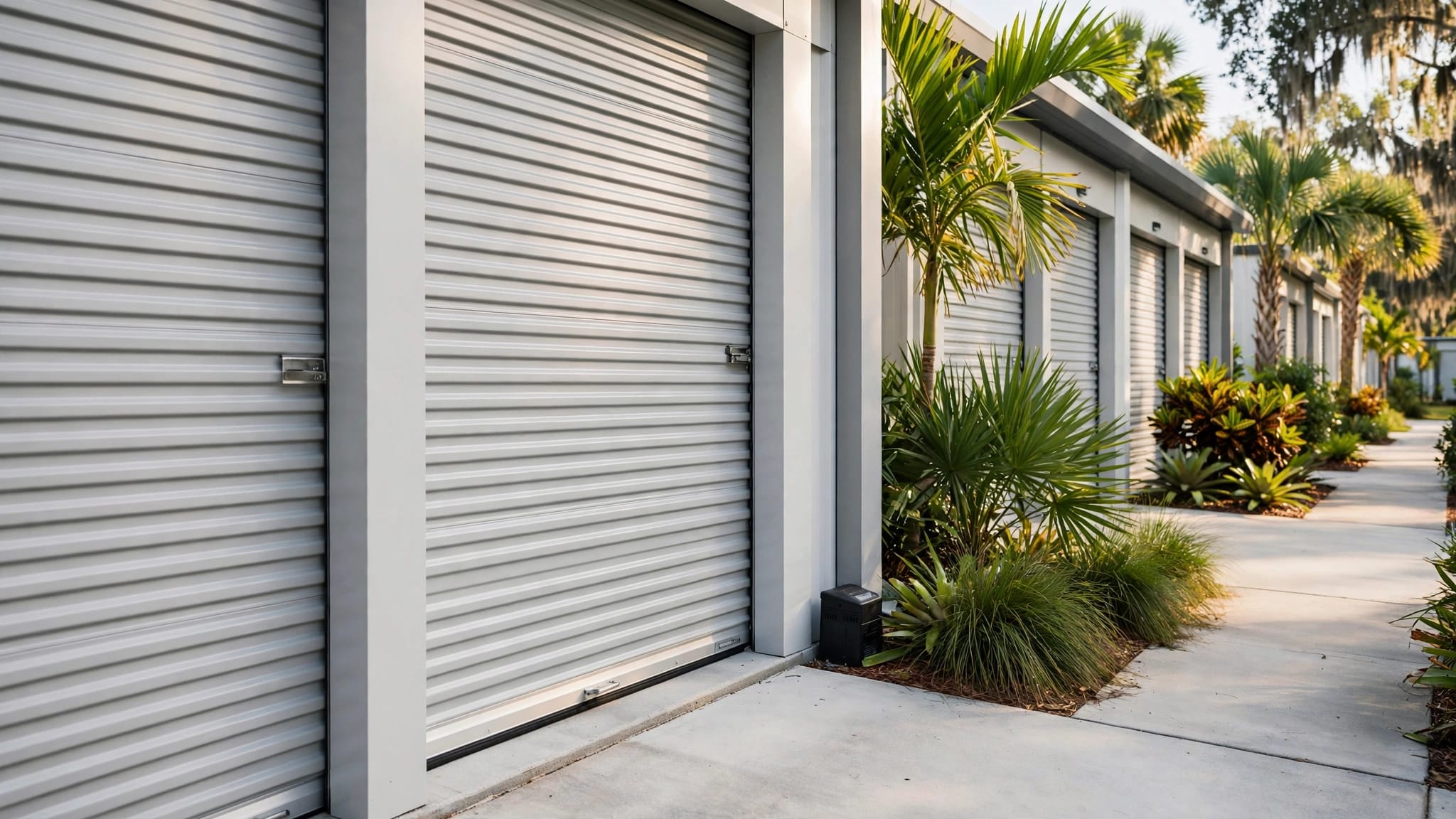
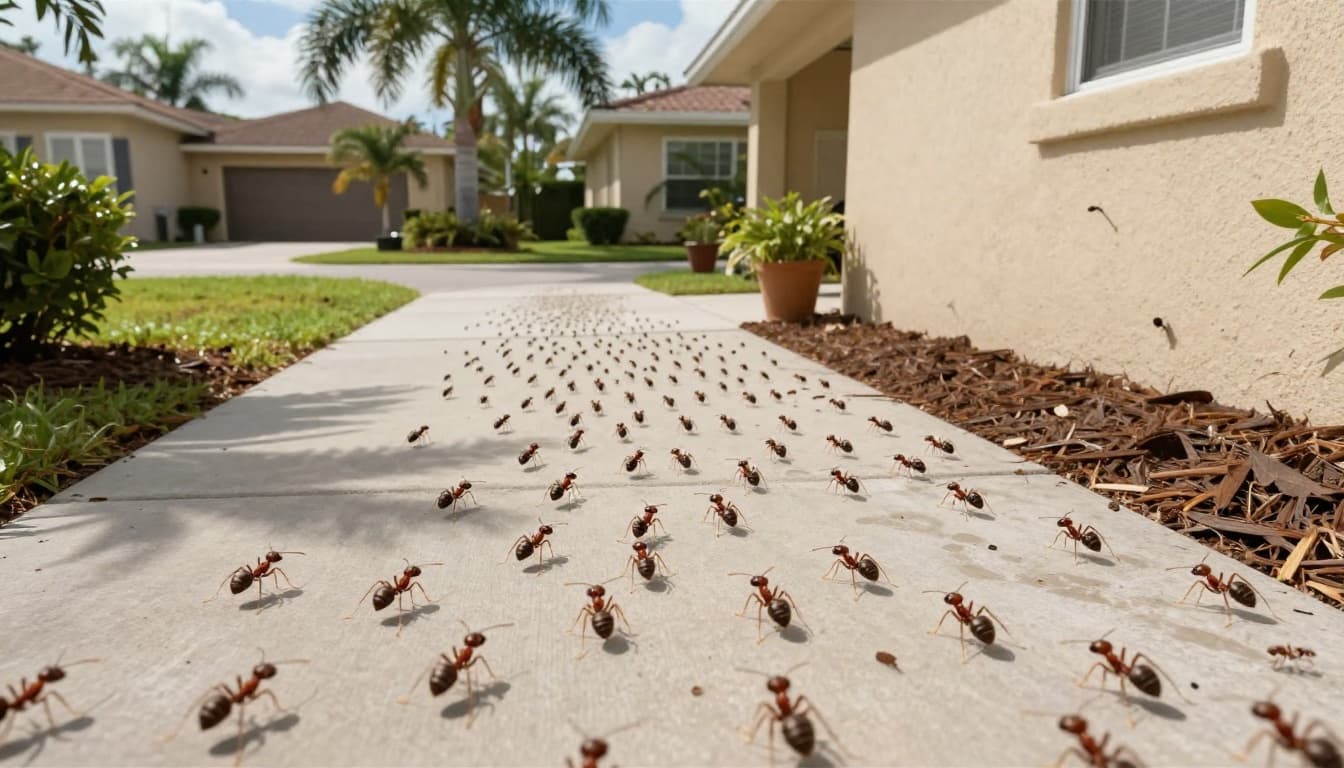 Fast, scattered crazy ant trails across a driveway and stucco wall in a Cape Coral-style setting (created with AI).
Sprays feel satisfying because you see ants die. The problem is what happens next. Crazy ant colonies can have many queens and can expand by "budding," meaning a chunk of the colony breaks off and starts elsewhere. Repellent sprays and perimeter fogging can trigger that kind of scatter.
Here's why quick sprays often fail:
Repellency disrupts control: Many aerosols and strong-smelling sprays push ants away from treated spots. They don't eliminate the colony, they redirect it. A day later, ants show up in a new room.
It kills the wrong ants: Sprays mostly hit foragers , not queens and brood tucked into sheltered pockets outdoors.
It ruins bait acceptance: When you coat trails with repellent residue, ants may avoid nearby baits . Then the method that can spread through the colony stops working.
It creates "phantom relief": Activity drops for a short time, then rebounds once the colony re-routes.
A better approach is slower but stronger, like fixing a leak instead of mopping the floor. Most successful plans combine sanitation, habitat changes, and properly placed baits , sometimes plus a non-repellent treatment applied according to the label.
Step-by-step: a homeowner plan that doesn't make it worse
- Stop the repellent sprays for 7 to 10 days. You want ants to forage normally so baits have a chance.
- Reduce moisture and shelter. Pull mulch back a few inches from the foundation, remove leaf piles, and fix leaks. In addition, avoid over-watering shaded beds.
- Clean indoor "attractors." Wipe counters, rinse recycling, and store pet food sealed. Even small crumbs keep pressure on the house.
- Use bait strategically. Place bait where trails run, but keep it out of sun and rain. Follow the label exactly, and keep kids and pets away.
- Protect entry points. Seal obvious gaps at door thresholds, around plumbing penetrations, and where screens meet frames.
- Call for help when the colony is wide. If trails run across multiple sides of the home, pros can map the activity and treat larger exterior zones safely.
Safety reminders that matter in Florida homes
- Follow the pesticide label every time, it's the law and it's also your safety guide.
- Keep children and pets away until products are dry or as the label directs.
- Don't mix DIY chemicals (for example, cleaners plus pesticides). Mixing can create dangerous fumes.
- Don't spray into outlets, panels, or utility boxes. If ants are impacting electrical equipment, use a licensed pest professional and an electrician when needed.
Troubleshooting: if you see X, do Y
Use this table to decide your next move without guessing.
| If you see this | What it usually means | Do this next |
|---|---|---|
| Fast trails on driveway and up stucco | Outdoor nesting nearby, foraging expands in heat | Pull mulch back, reduce moisture, place bait along shaded trail edges |
| Ants "explode" after you spray | Repellent scattered the foragers, colony re-routed | Stop spraying, clean residues, switch to bait-based control |
| Ants in garage near stored items | Harborage under clutter, plus food residues | Remove cardboard, elevate storage, vacuum ants, place bait near trail lines |
| Activity spikes after heavy rain | Colony shifting to drier pockets | Check under pots, timbers, and mulch clumps, treat the exterior source areas |
| Ants near cable or electrical areas | Warm protected voids attracting ants | Do not spray into boxes, reduce nesting nearby, call a pro for safe treatment |
The takeaway: chasing trails rarely works. Target the shelter and the food pipeline instead.
Myths that make crazy ant problems worse in Cape Coral
A few popular "fixes" tend to add days or weeks to the problem.
Repellent aerosols solve the colony : They don't. They usually push ants into new paths, including deeper inside.
Perimeter fogging keeps them out : Fogging can kill some insects on contact, but crazy ants often nest in protected pockets. You can end up with fewer predators outside and the ants still thriving.
More chemical equals faster results : Over-application can be unsafe, and it can also reduce bait success.
Home mixes are safer : Mixing products or using unlisted ingredients can create hazards. Stick to label directions, or don't apply it.
Quick FAQ: crazy ants in Cape Coral
Are crazy ants dangerous?
They don't typically sting, but they can be a serious nuisance and may affect electrical equipment. Treat heavy activity as a real household issue.
Why are they worse in rainy season?
Warmth plus moisture boosts foraging and helps outdoor harborage stay humid. Mulch and shaded beds hold that moisture longer.
Should I spray the trail to "break the line"?
Usually no. Breaking the line with repellent often causes rerouting. Baiting and habitat changes work better.
When should I call a professional?
Call when trails cover multiple sides of the home, when ants show up daily indoors, or when you suspect activity near utilities or wiring.
Conclusion: Stop the spray cycle and go after the source
Crazy ants in Cape Coral don't act like typical kitchen ants, so the usual spray-and-pray routine turns into a loop. Identify the fast, scattered trails, hunt for outdoor harborage in mulch and clutter, then switch to a plan built around baiting and habitat fixes . If the infestation is widespread or tied to utility areas, professional help can save time and reduce risk. The best win is simple: fewer nesting spots, less moisture, and a control method that reaches the colony instead of chasing symptoms.
Schedule a Free Inspection: