Ensign Wasps in Cape Coral Kitchens: What Roach Activity Means
Small black wasps in a kitchen can make any homeowner stop cold. In Cape Coral, that sight often points to something else hiding nearby.
Ensign wasps are tiny parasites that use cockroach egg cases. So when one shows up in your kitchen, the wasp is usually not the main problem.
If you spotted one near a sink, cabinet, or appliance, the next step is a careful check for roach activity. Start with the places roaches like best, then fix the conditions that help them stay.
What Ensign Wasps Mean in a Cape Coral Kitchen
For ensign wasps in Cape Coral kitchens, the message is usually simple, there may be cockroaches nearby. These wasps do not build nests in your walls like some other wasps. They are small, dark, and easy to miss until they move across a counter or cabinet front.
The key detail is their life cycle. A female ensign wasp lays eggs inside a cockroach egg case, also called an ootheca. Her larvae feed on the roach eggs inside that case. That means the wasp is tied to past or current roach activity.
So if you see one indoors, the kitchen probably had a hiding spot for roach egg cases. The roaches may still be active. They may also be gone, while the wasps are just now emerging. Either way, the wasp is a clue, not the main battle.
The wasp is a messenger. The roach hiding place is the problem.
This is why a quick spray at the flying insect misses the bigger issue. If the home still has food, water, and hiding space, roaches can keep using the kitchen as a base.
Where to Look First for Roach Signs
The fastest way to get answers is to inspect the kitchen where roaches live, feed, and hide. Cape Coral homes often have warm, damp pockets near plumbing and appliances, and those spots matter more than open counters.
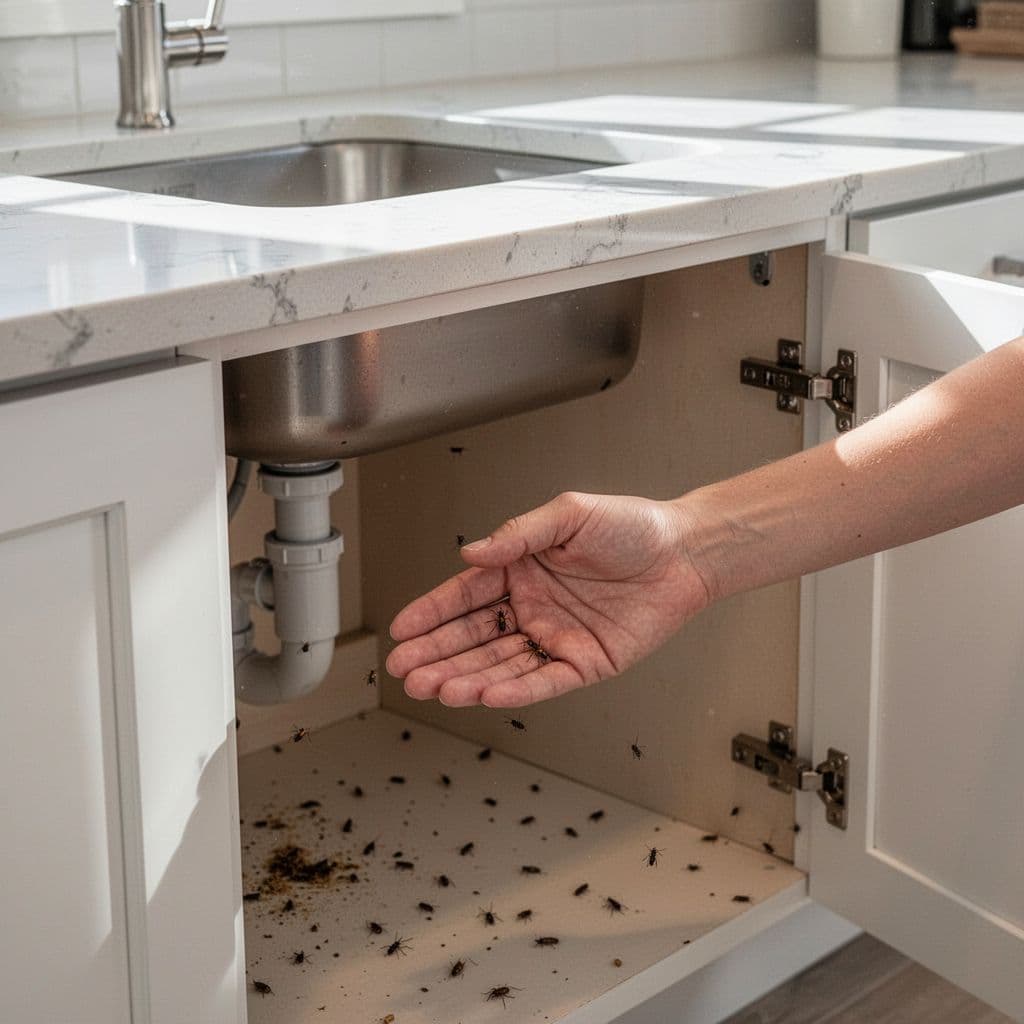
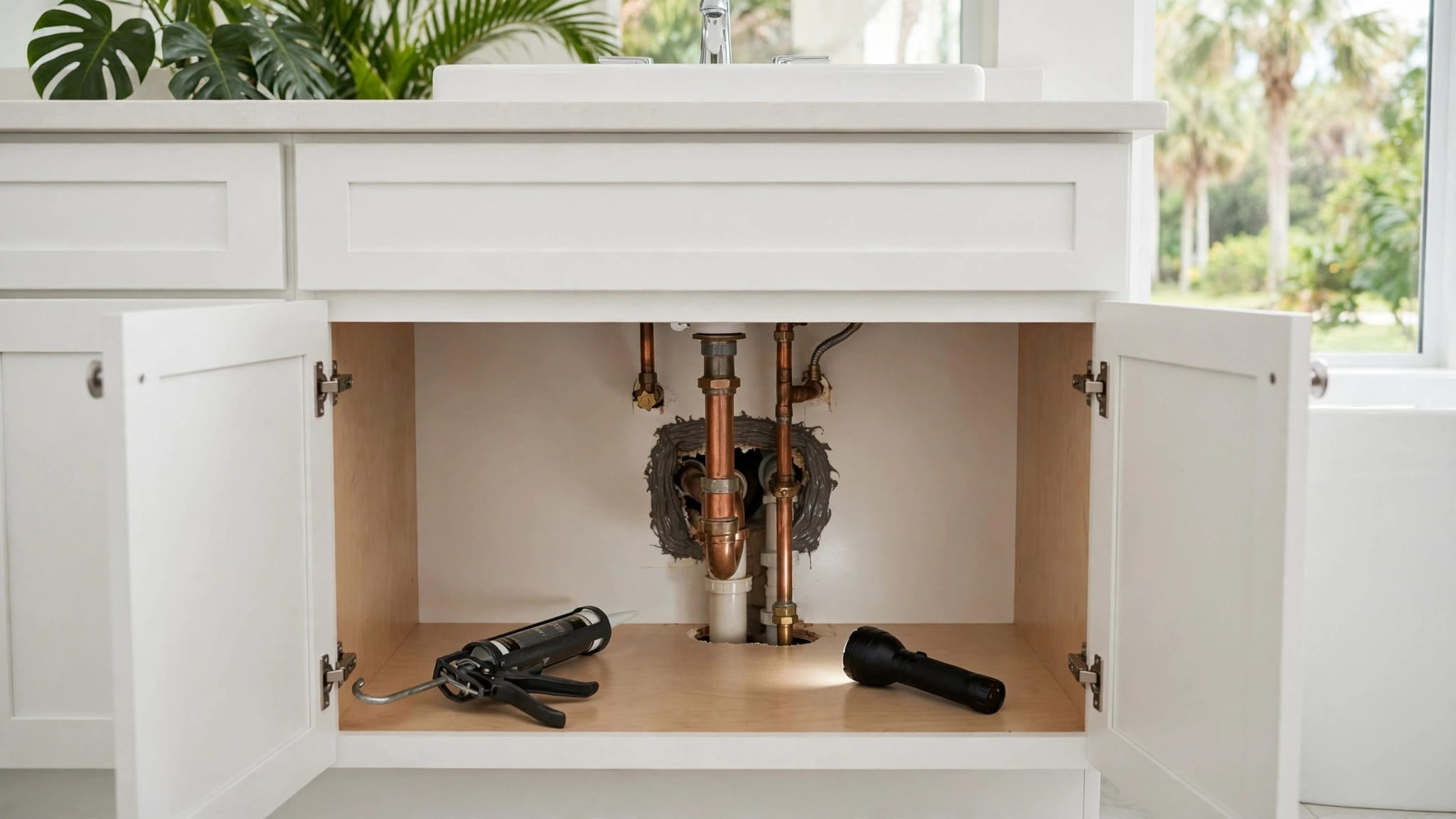
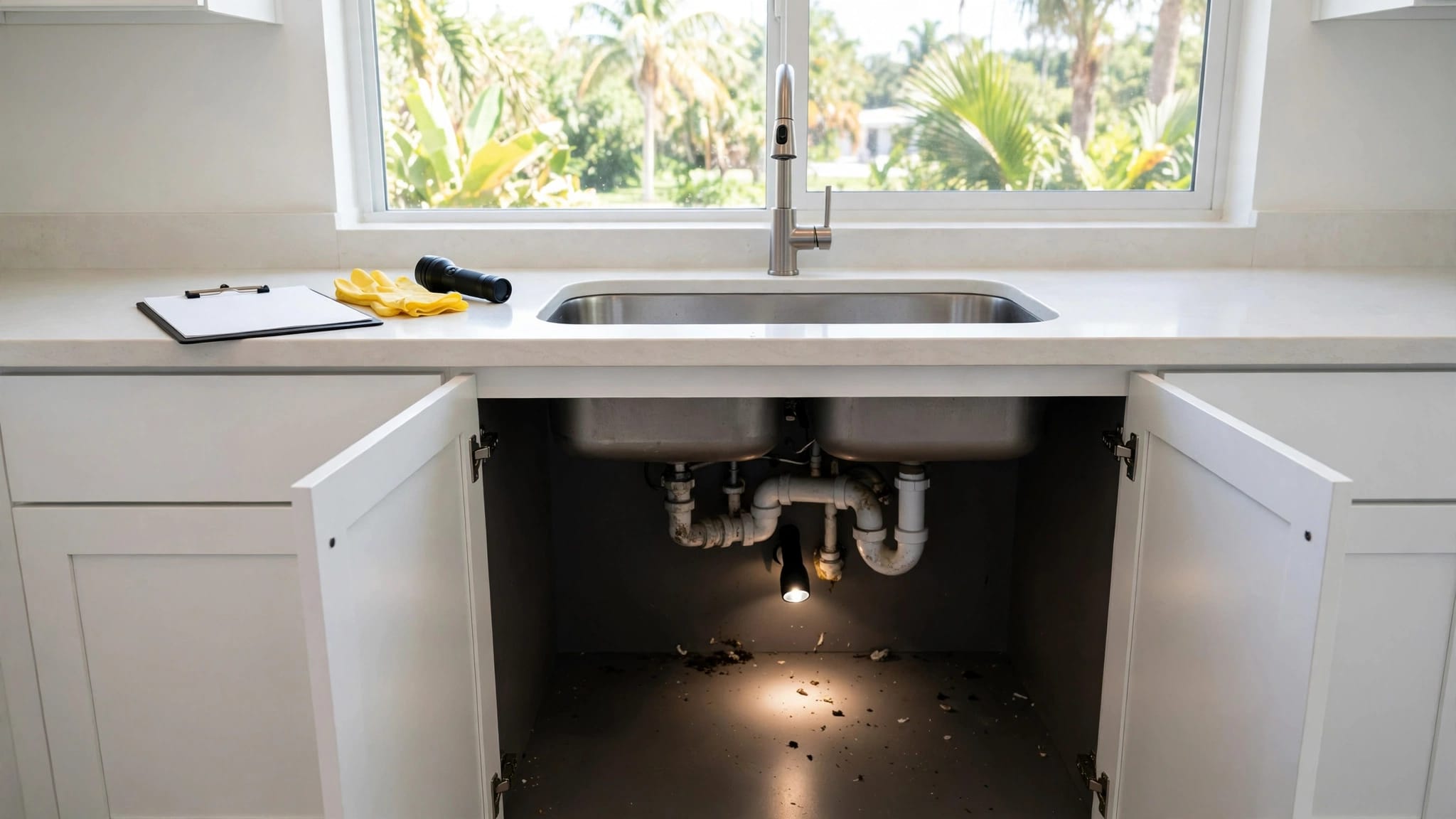
Start with the cabinet under the sink, then move outward. Look for these signs:
- Tiny black droppings that look like pepper or coffee grounds.
- Shed skins near cabinet corners, baseboards, or drawer tracks.
- Tan or brown egg cases tucked into cracks.
- Grease marks or smear lines along cabinet edges.
- A musty smell in dark, undisturbed spots.
- Live roaches at night near the stove, fridge, or dishwasher.
Pay close attention behind appliances. Heat from the refrigerator motor or the stove often gives roaches a protected strip of space. Food crumbs, pet food, and grease also collect there.
Under sinks, check for more than insects. Slow leaks, damp wood, and cluttered storage give roaches exactly what they need. Cardboard boxes, paper bags, and old cleaning rags can hide egg cases well.
Inside cabinets, inspect hinges, shelf holes, and the seams where wood meets the wall. Roach egg cases can sit in those tight spaces where a flashlight barely reaches.
If you find one live roach in daylight, take it seriously. Roaches usually stay hidden. Seeing them out in the open often means the hiding places are crowded.
Cleaning, Sealing, and Moisture Control That Help
Once you know where to look, the next step is to make the kitchen less friendly to pests. Roaches need food, water, and shelter. Remove those three, and the home becomes a harder place for them to stay.
Start with food cleanup. Wipe counters after cooking, sweep crumbs from corners, and store dry food in sealed containers. Empty the trash often, and clean the rim of the can. Pet food should not sit out overnight unless there's a specific reason.
Grease matters too. Stove tops, range hoods, and the space behind the cooktop often collect a thin film that roaches can use. A cleaner surface gives pests less to feed on and less to crawl across.
Moisture control is just as important. In Southwest Florida, even a small drip under the sink can keep a roach pocket active. Fix leaky supply lines, dry the cabinet floor, and don't let sponges or dish towels stay wet in a hidden space.
Sealing also helps. Check for gaps around plumbing pipes, baseboards, cabinet seams, and utility openings. Use caulk or other suitable sealant where needed. If a gap is large, it may need a tighter repair.
A few simple habits make the biggest difference:
- Keep the sink cabinet dry.
- Remove clutter that blocks cleaning.
- Store paper goods off the floor.
- Vacuum behind appliances on a set schedule.
- Watch for water near the dishwasher and fridge lines.
The goal is not perfection. The goal is to remove the easy shelter that roaches count on.
When Professional Roach Treatment Is the Right Call
If you keep seeing wasps, or if you find roach droppings, egg cases, or live roaches, it's time to bring in help. A home can look clean and still have a hidden infestation in a wall void, cabinet crack, or appliance gap.
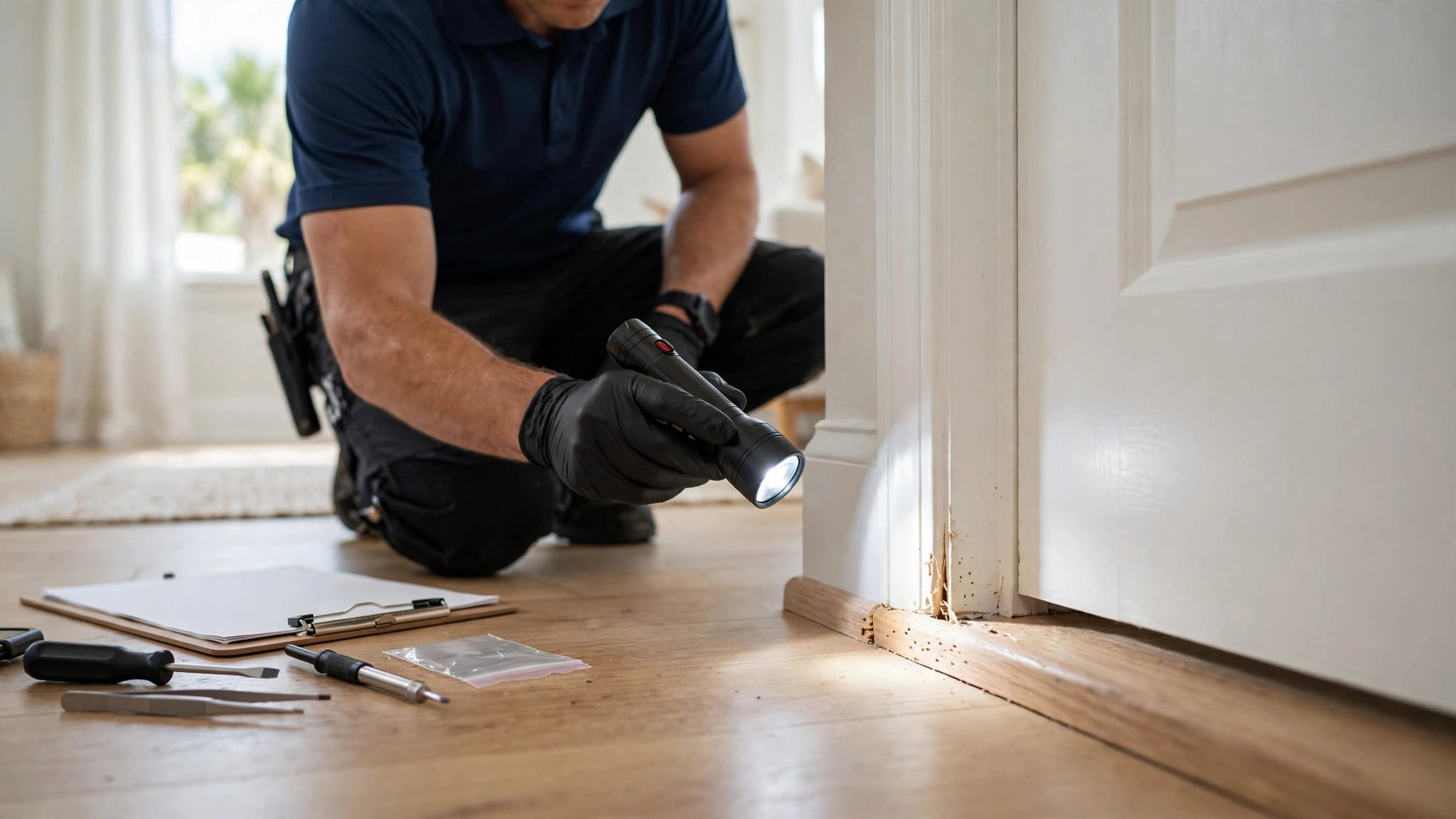
That's where a focused inspection matters. A good technician checks the kitchen, but also looks at entry points, plumbing penetrations, and the spaces behind and under major appliances. That kind of work finds the source, not just the symptom.
For many homeowners, targeted effective cockroach control in Cape Coral is the smartest next step. The best treatment plans use inspection first, then place products where roaches live and travel. That approach helps reduce indoor chemical use while still going after the problem spots.
Professional treatment also matters because roach egg cases are easy to miss. A wasp sighting may point to activity that started weeks earlier. Baits, crack-and-crevice applications, and follow-up visits are harder to do well on your own. They also work better when the source areas are known.
If the kitchen problem keeps coming back, don't wait for it to get louder. Roaches multiply fast when the conditions are right, and the kitchen can turn into a cycle of cleanup without a real fix.
Conclusion
A small black wasp in a Cape Coral kitchen is usually a warning sign, not the main pest problem. Ensign wasps point toward hidden cockroach egg cases, which means the kitchen needs a closer look.
Start with cabinets, sinks, and appliances. Then clean up food, cut moisture, seal gaps, and watch for more signs. If the evidence keeps showing up, professional roach treatment is the step that can break the cycle for good.
Schedule a Free Inspection: