Why Mayflies Swarm Cape Coral Dock Lights and Pool Screens
A sudden cloud of mayflies can turn a calm evening into a mess in minutes. If your dock lights, lanai, and pool screens keep collecting them, the cause usually has more to do with water and light than with a true infestation.
For Cape Coral homeowners, this problem often shows up fast after warm weather and seasonal hatches. The good news is simple: mayflies are nuisance insects , not dangerous pests, and the right changes can make a big difference around your home.
Why mayflies show up around Cape Coral water and lights
Mayflies start life in water, so Cape Coral's canals, ponds, retention areas, and waterfront edges give them plenty of places to emerge. Once the adults hatch, they leave the water in huge numbers and look for a way to mate and die off quickly.
That short life cycle is part of why the swarms feel sudden. One night, your dock and pool area seem fine. The next night, the screens are dotted with wings and the lights look like they are pulling insects out of the air.
Bright exterior lighting makes the problem worse. Mayflies are drawn to light, and in waterfront neighborhoods, dock lights can act like a beacon. Pool cage lights, porch fixtures, and lanai bulbs do the same thing when they spill light onto screens and open water.
Mayflies are messy, but they usually pass through fast. The real issue is the buildup around lights, screens, and entry points.
Why dock lights and pool screens get hit hardest
Dock lights sit close to water, where the insects hatch. That makes them one of the first places mayflies notice. Once they gather around the light, they often keep circling until the area is crowded with dead and dying insects.
Pool screens create another easy target. A lit lanai throws out a wide glow, and the screen mesh gives mayflies a place to land. Because the screen is so visible at night, the insects seem even thicker than they are.
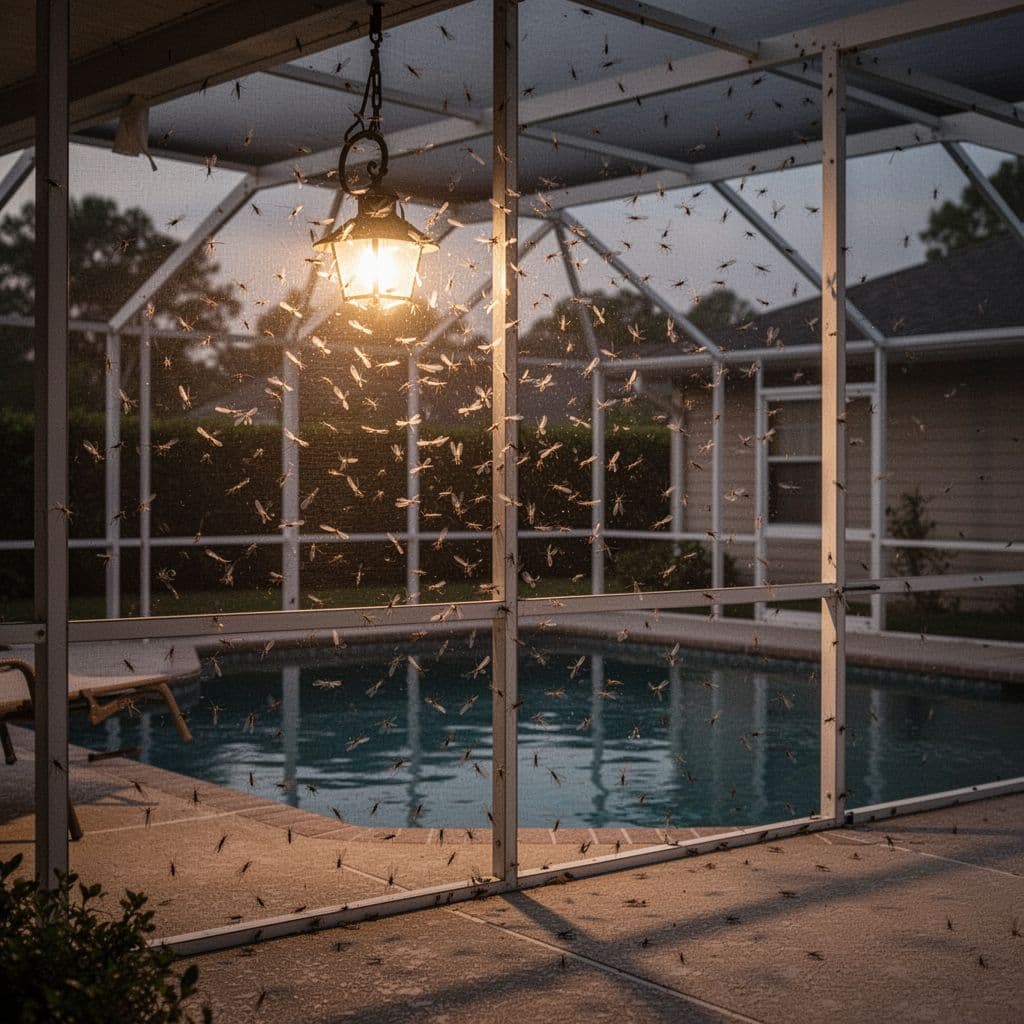
The mess can build up along door frames, under light fixtures, and in the corners of the pool cage. If you leave those spots alone, the dried insects collect with dust and moisture. Then cleanup takes longer, and the screens look worse than they should.
Lighting changes that cut down the swarm
The fastest way to reduce mayflies in Cape Coral is to make your lights less attractive at night. You don't need to sit in the dark. You do need to stop giving the insects such an easy target.
A few lighting changes go a long way:
| Lighting choice | Why it helps | Best use |
|---|---|---|
| Amber or warm LED bulb | Gives off less of the bright white glow that pulls insects | Dock posts, lanai fixtures, porch lights |
| Shielded downward fixture | Keeps light off water and screens | Entryways and pool cages |
| Motion sensor | Keeps lights off until you need them | Side doors, storage areas, service paths |
| Timer or dimmer | Cuts unnecessary late-night light | Patios, docks, outdoor seating areas |
Warm, shielded light is usually better than bright blue-white light. If a bulb makes the pool screen look like a lantern from across the canal, it is probably too much.
Also, reduce nighttime lighting that nobody is using. A light left on all night becomes a magnet after dark. One porch fixture can be enough if you only need light near the door.
For homeowners dealing with mayflies Cape Coral often sees in warm seasons, small changes matter more than big ones. Switch the bulb color, trim the light spill, and turn off anything that does not need to stay on.
Cleanup that works after the hatch slows
Mayfly cleanup goes easier when you time it right. If you start while the swarm is still active, you will keep fighting fresh insects. Wait until the light is off and the main hatch has settled.
Here is a simple cleanup routine that works well on docks, lanais, and pool cages:
- Turn off exterior lights first, then give the insects time to stop gathering.
- Sweep or vacuum dry piles from the deck, screens, and door tracks.
- Rinse screens with a gentle hose spray, or use a soft brush if the insects stick.
- Empty skimmer baskets and clean around pool edges before debris sinks or clogs the system.
Use care with pressure. A strong blast can damage screen mesh and push debris deeper into corners. A soft rinse is usually enough for dead insects that have not baked onto the surface.
After cleanup, check the places mayflies love to hide. Door sweeps, screen corners, and light fixtures often collect the most debris. If you keep those areas clear, the next hatch is easier to manage.
Protecting pool enclosures and entry points
Pool cages do a good job of keeping people comfortable, but they also need a little attention during mayfly season. Small gaps give insects a place to gather, and any opening near a bright light invites more of them in.
Focus on the spots around the enclosure where light and air escape. Tighten or replace worn screen spline, seal gaps around fixture bases, and make sure door sweeps sit flush. Keep lanai doors closed when the lights are on, especially near dusk.
A few more habits help too:
- Replace torn screen sections before the next warm spell.
- Use darker or lower-output bulbs near the cage when you can.
- Keep lights away from direct water views if the fixture allows it.
- Close the gap under doors that open to the pool area.
If your home has a dock, check the path from the water to the lanai. Mayflies often follow the brightest line they can find. Breaking up that path with shielded lighting makes the whole area less inviting.
When the swarms keep coming back
Some years bring heavier hatches than others. If the same lights keep drawing mayflies night after night, the issue may be more than a seasonal burst. Water nearby, fixture placement, and hidden gaps can all work together.
That is when a local inspection helps. A team that understands waterfront homes can look at the whole setup, from the dock to the pool cage. They can point out where light spill, moisture, and entry points are making the problem worse. If you're already dealing with other pests too, professional pest control services can help you sort out what is seasonal and what needs a broader fix.
For Cape Coral homeowners who want a closer look at the home itself, residential pest control in Cape Coral is useful when the problem keeps showing up in the same spots. The goal is not to spray your way out of a hatch. The goal is to reduce what draws insects in and keep them from piling up where you live.
Conclusion
Mayflies around Cape Coral dock lights and pool screens are a seasonal nuisance tied to water, warm evenings, and bright exterior lighting. Once you understand that pattern, the problem becomes easier to control.
The best results come from smarter lighting , regular cleanup after the hatch slows, and tighter protection around screens and entry points. When your home gives off less glow, the swarms have fewer reasons to settle in.
Schedule a Free Inspection: