Yellow Jackets in Cape Coral: Ground Nests and Mulch Beds
Yellow jackets can turn a calm Cape Coral yard into a hazard fast, especially when the nest is hidden in mulch or under soft soil. A few insects near a flower bed may not look like much, but a hidden colony can react fast when disturbed.
The biggest problem is location. These nests often sit where people walk, mow, water, or let kids play. If you know the warning signs, you can keep your distance and avoid a painful surprise.
Why mulch beds and soil pockets attract yellow jackets
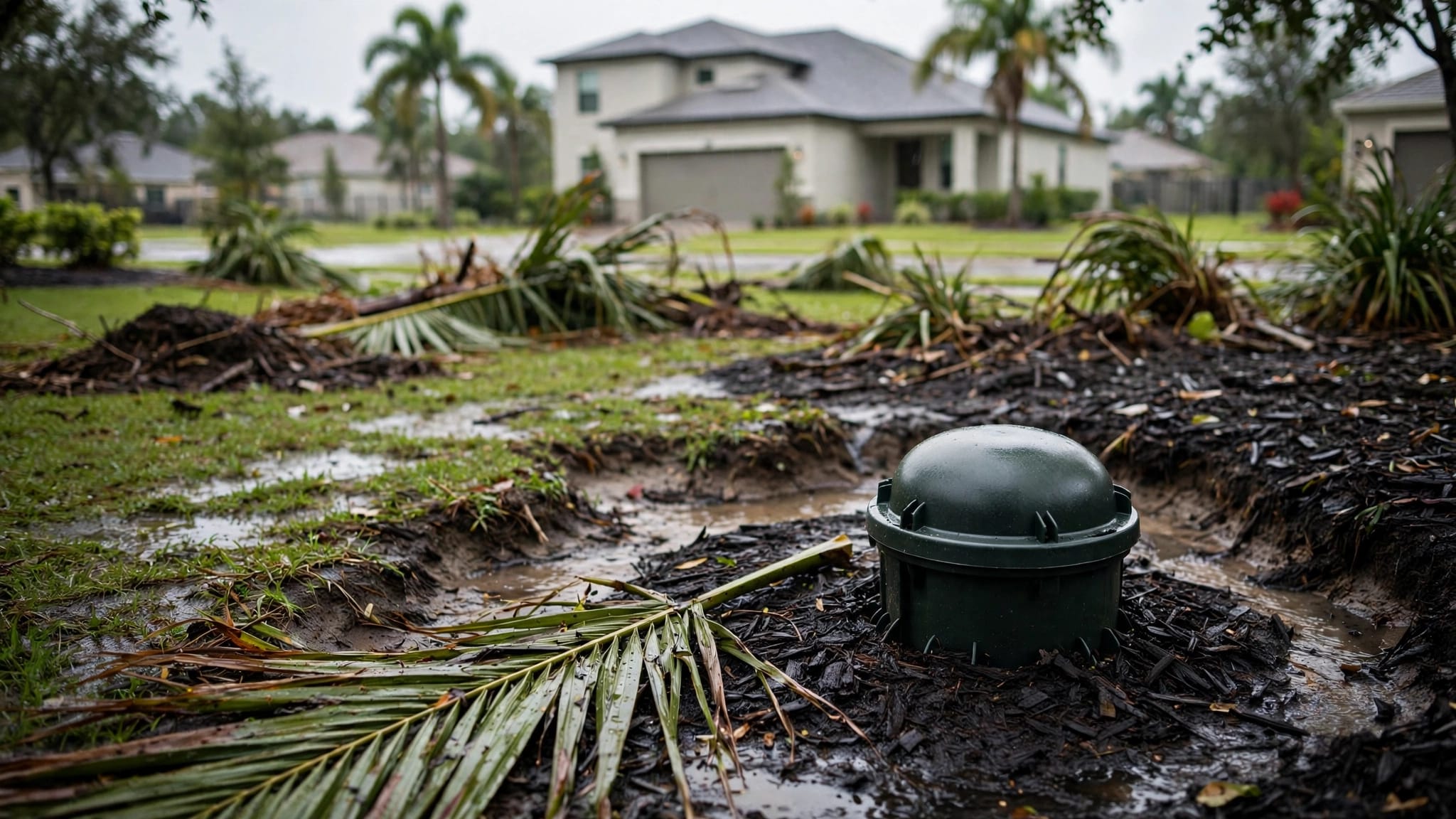
Mulch beds give yellow jackets two things they want most, cover and easy access. The top layer hides the entrance, while the soil underneath can stay cooler and protected from traffic. That makes a landscaped bed, irrigation edge, or tree ring a good place for a nest to stay out of sight.
In Cape Coral, that matters because many yards have thick mulch around shrubs, palms, and walkways. A nest may start in a small cavity, then spread into a bigger underground space. Old rodent burrows, gaps beside roots, loose soil near stones, and openings under edging can all become nesting spots.
The University of Florida's yellow jacket guide notes that colonies often start underground and are easy to disturb with a mower. That fits what homeowners usually see. A yard looks normal until a wheel, footstep, or string trimmer hits the wrong spot.
In other words, a neat landscape can hide a serious problem. Fresh mulch may look clean, but it can also cover a nest entrance the size of a coin. Once traffic starts, the colony can defend that spot hard.
Signs of yellow jacket ground nests in your yard
The clearest warning sign is repeated traffic to one small spot. Yellow jackets fly low, then dip into the same hole again and again. If you see that pattern near mulch, grass edges, or a patio border, stay back.
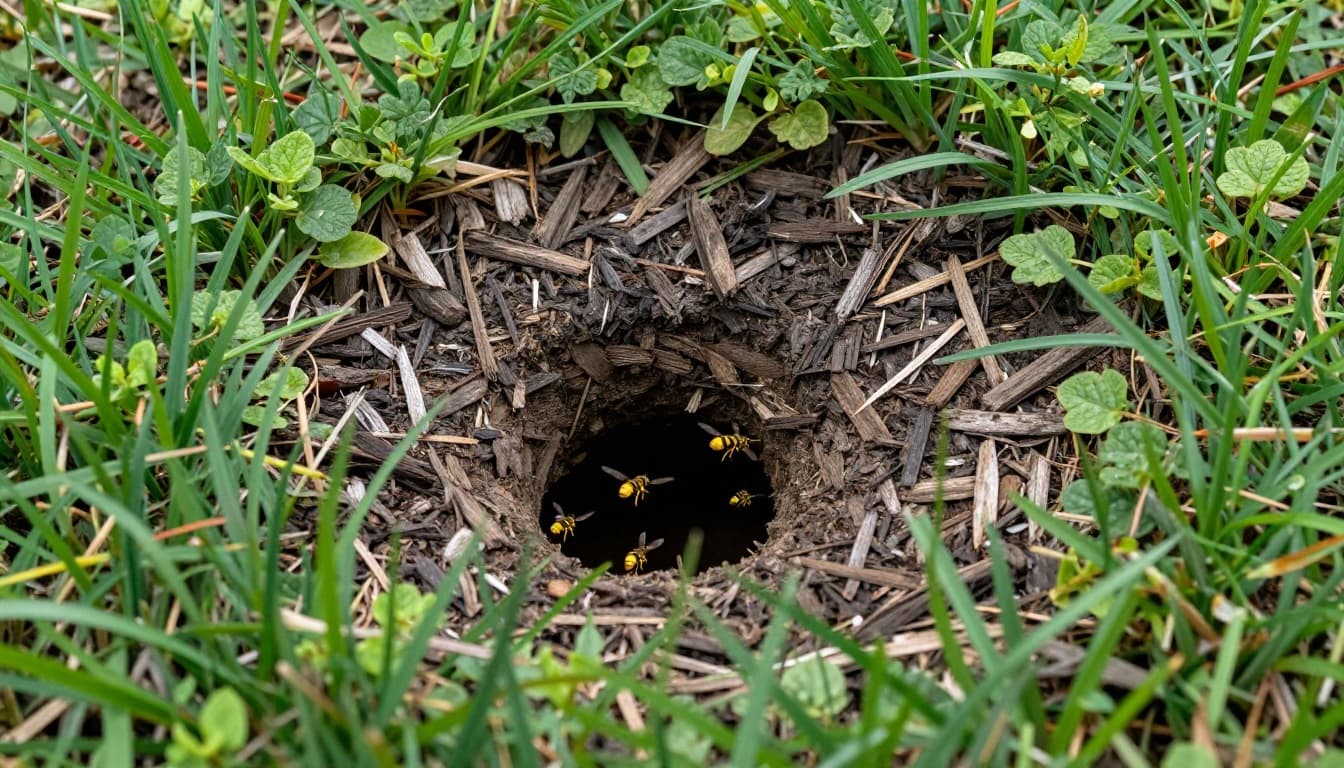
Other signs are easier to miss at first:
- A thin stream of wasps entering one hole in the ground
- Sudden buzzing when mulch is moved or blown
- Aggressive activity after mowing, edging, or watering
- Pets sniffing, pawing, or backing away from one bed
- Swarming from a small opening near roots, rocks, or borders
A nest hidden in mulch can look harmless until you disturb it.
That is why you should not test the area with a stick, shovel, or spray. Even if the hole looks small, the colony may be deeper than it appears. Ground nests are often hidden by the same mulch that makes a yard look polished.
If the activity is near a play area or a path to the pool, treat it as urgent. Keep people and pets away, then watch from a safe distance so you can describe the spot later.
How to tell yellow jackets from paper wasps and mud daubers
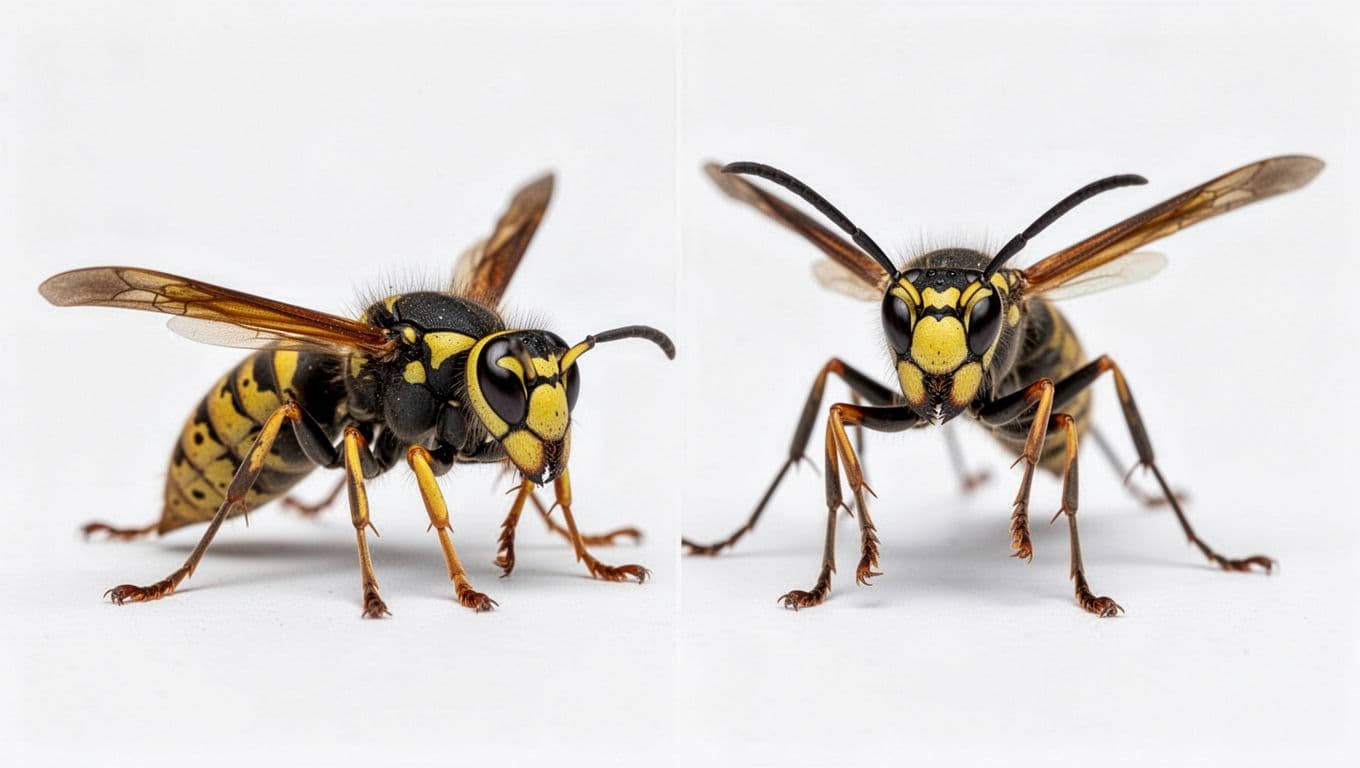
A lot of homeowners call every stinging insect a yellow jacket. That leads to bad guesses and the wrong response. The body shape, nest style, and location tell the story faster than the color alone.
| Pest | Nest location | Nest look | Best clue |
|---|---|---|---|
| Yellow jacket | Underground, mulch beds, wall voids | Hidden entrance, cavity below the surface | Repeated low flight to one hole |
| Paper wasp | Under eaves, lanai edges, ledges | Open comb nest on a stem | Hanging nest with visible cells |
| Mud dauber | Walls, soffits, covered spots | Mud tubes or small mud cells | Solitary mud tubes, little swarm behavior |
If the nest hangs under an eave instead of sitting in the ground, compare it with paper wasp nest locations. If you see mud tubes on a wall or ceiling, check mud dauber nest identification.
Yellow jackets are usually stockier and more defensive around hidden nests. Paper wasps are slimmer and often build exposed nests. Mud daubers are less likely to act like a swarm and usually stick to their mud cells.
That distinction matters because the safest response changes with the insect and nest type. A hidden underground nest calls for more caution than a lone wasp on a wall.
Why active nests near patios and play areas are a real sting risk
A yellow jacket nest near a patio can turn everyday yard time into a problem. One mower pass, one sprinkler repair, or one child stepping into the wrong bed can set off a swarm. Yellow jackets defend quickly, and they can sting more than once.
Children and pets are often the first to run into trouble. Kids move fast and don't always notice a nest entrance tucked into mulch. Dogs sniff close to the ground, which puts them right in the danger zone.
Stings can also become a medical issue fast for anyone with an allergy. Trouble breathing, swelling beyond the sting site, dizziness, or hives need emergency care. Even without an allergy, multiple stings can leave a person in a lot of pain.
The safest move after a sting is simple. Get away from the area, wash the sting site with soap and water, and keep an eye on symptoms. Then keep everyone out of that part of the yard until the nest is handled.
Cape Coral irrigation zones can make this worse. Water can stir movement near a nest entrance, and repeated wet-dry cycles can shift soil around the hole. That means the danger may return after the first warning sign fades.
How to lower nesting risk in mulch beds and landscape edges
You can't make a yard pest-proof, but you can make it less appealing. Small changes around mulch, irrigation, and lawn edges often help more than people expect.
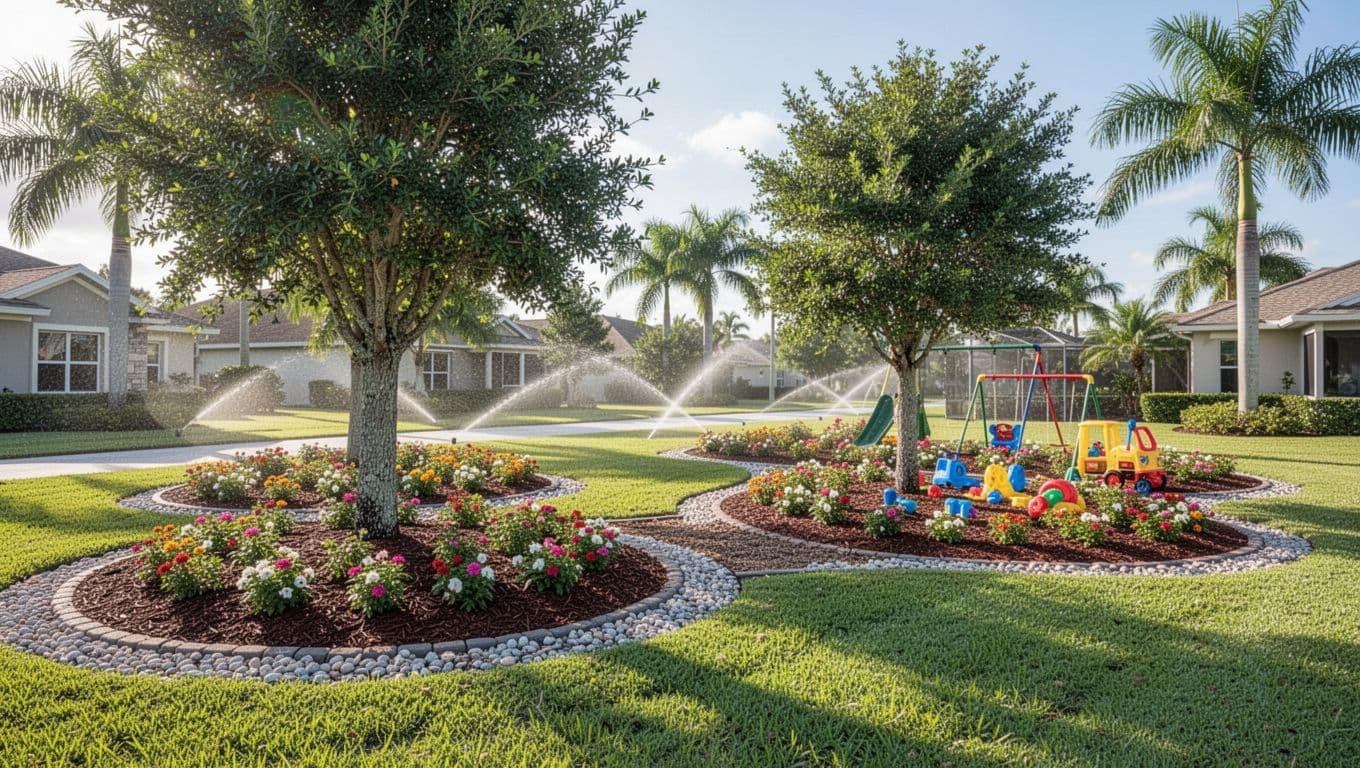
Start with the places yellow jackets like most:
- Keep mulch layers reasonable, especially near patios and play spaces.
- Trim grass and weeds along bed edges so entrances are easier to spot.
- Fix leaking irrigation heads, because damp soil and hidden gaps invite pests.
- Clear food spills, pet food, and fallen fruit near outdoor seating.
- Check fresh mulch and tree rings after rain, mowing, or bed work.
A thinner, cleaner edge is easier to inspect than a deep mound of mulch. Gravel borders and open space around frequently used paths can also help you spot new activity sooner. Just as important, don't let a planting bed grow so dense that no one can see the soil line.
If you keep finding holes in the same area, don't assume they are empty. Hidden nests often show up first as one or two wasps, then build into a bigger problem. A calm inspection from a distance is safer than trying to uncover the spot yourself.
What Cape Coral homeowners should do next
Yellow jacket ground nests are a yard problem that can turn into a sting problem fast. Mulch beds, irrigation zones, and soft soil give them cover, which is why the warning signs are easy to miss at first.
The best response is simple, stay back, watch the traffic, and keep kids and pets away from the area. If the nest is active, professional inspection and removal is the safest next step, especially when the entrance sits near a patio, walkway, or play space.
A hidden nest doesn't need to be large to cause trouble. It only needs one person to step too close.
Schedule a Free Inspection: