Cuban Treefrogs Around Cape Coral Pool Cages and Entry Lights
Cuban treefrogs in Cape Coral often show up where the bugs are brightest, which is why pool cages and front entry lights become problem spots. A frog on a screen enclosure may look minor, but these invasive frogs can outcompete native frogs and keep returning if the setup stays the same.
The good news is that you can make your home far less attractive without turning it into a project. Start with the lights, the screens, and the small gaps that let frogs slip in.
Why pool cages and entry lights pull them in
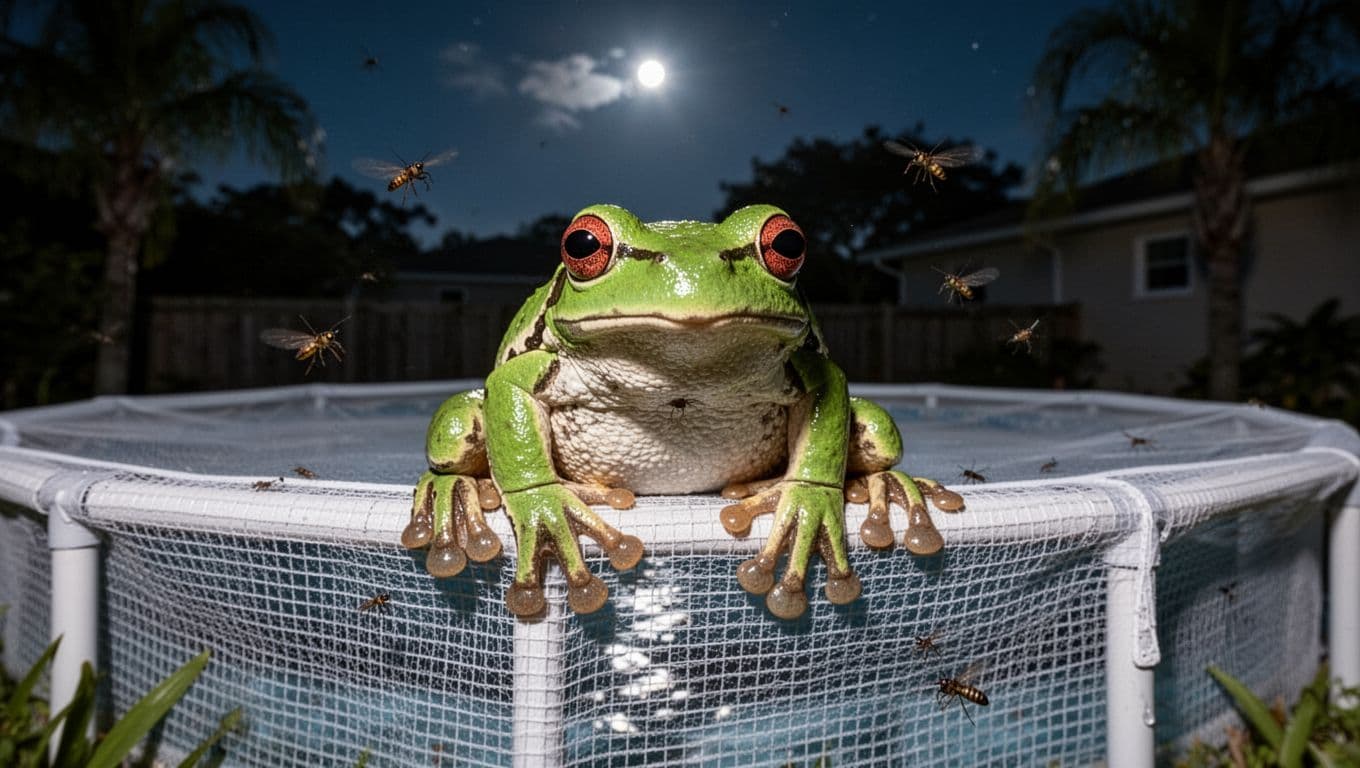
Cuban treefrogs are night hunters. When porch lights, garage lights, and cage lights pull in moths, gnats, beetles, and other insects, the frogs follow the buffet.
Pool cages add even more appeal. Screens give them a place to climb, hide, and wait. Moist corners, damp equipment pads, and nearby shrubs make the area feel safe. In Cape Coral, that often means the same frog can show up night after night.
They are also a problem for native wildlife. Cuban treefrogs eat small frogs and other small animals, so repeated sightings are more than a nuisance. Over time, they can crowd out native species that belong in local yards.
If mosquitoes are part of the problem too, these pool cage mosquito prevention tips can help lower the insect count around your enclosure. Fewer bugs usually means fewer frogs waiting near the light.
How to tell a Cuban treefrog from a native frog
Identification matters before you remove anything. Cuban treefrogs can look different from one another, and color alone is not a safe way to tell them apart. They may be white, gray, brown, or green, and some change color.
Look for these signs instead:
- Large toe pads that help them climb walls and screens
- Rough, warty skin
- A bulky body compared with many native treefrogs
- A habit of sticking to walls, light fixtures, or screens
- A loud, harsh call at night
Color alone won't tell the full story. Size, toe pads, and skin texture matter more.
For Florida-specific identification help, the UF/IFAS Cuban treefrog guide has photos and clear traits to compare. If you are still unsure, verify the frog first. That step matters before any removal.
Simple changes that make lights less attractive
The easiest fix is often the best one. If you cut down the insects, you cut down the frogs that come to feed.
Start with your lights. Warm, yellow-toned bulbs usually draw fewer insects than bright white lights. Motion sensors and timers also help because they limit how long the area stays lit.
Then check the structure around the light. Small gaps around fixtures, loose trim, torn screens, and worn door sweeps all give frogs a path in. Seal those openings, repair screen damage, and make sure the garage and entry doors close tightly.
A few more habits help too:
- Turn off unneeded outdoor lights after dark.
- Keep shrubs trimmed back from the cage and walls.
- Remove standing water near planters, drain lines, and low spots.
- Clean up leaf litter and clutter around the pool area.
- Check the top and bottom edges of the screen enclosure for gaps.
If your enclosure has repeated insect pressure, pair these steps with stronger outdoor pest control. That lowers the food source the frogs are following in the first place.
Safe cleanup and removal basics
Frog droppings, skin mucus, and wet surfaces around lights can leave a mess. Clean it carefully. Wear gloves, use paper towels, and wash the area with soap and water. After that, rinse your hands well and avoid touching your face.
Do not handle any frog with bare hands. Cuban treefrogs can release skin secretions that may irritate your eyes, nose, or skin. Pets should also be kept away from dead or trapped frogs.
If you are positive the frog is a Cuban treefrog and local guidance supports removal, follow Florida-specific instructions. The UF/IFAS guidance on living with frogs explains capture and control steps for homeowners. If you aren't sure about the species, stop there and confirm the ID first.
For recurring sightings near entry lights, a pest pro can inspect the fixtures, screens, and nearby hiding spots. That helps when the problem is bigger than one frog on one wall.
Conclusion
Cuban treefrogs near Cape Coral pool cages and entry lights are usually a sign of two things, insects and easy access. Cut back the bugs, fix screen gaps, and use safer lighting, and the area becomes much less inviting.
The most important step is simple, though. Verify the frog before you touch it , then use safe cleanup and prevention habits that fit your home. A few small changes around the cage, garage, and front door can make a big difference.
Schedule a Free Inspection: