Thief Ants in Cape Coral Pantries and Counter Seams
A few tiny ants on the counter can turn into a steady kitchen problem fast. Thief ants in Cape Coral homes often slip into pantries, cabinet joints, and countertop seams before anyone notices.
They are small enough to miss at first, and they don't need much food to stay active. Crumbs, grease, protein residue, and pet food can keep them coming back.
The good news is that these ants follow patterns. Once you know where to look, you can catch the problem early and avoid the cleanup cycle that so many homeowners get stuck in.
How thief ants use pantry edges and counter seams
Thief ants are drawn to the mess most people don't see. A few crumbs under the toaster, a smear of oil near the stove, or a little pet food dust around a bowl can be enough.
They also exploit hidden spots. Cabinet joints, the seam where the countertop meets the backsplash, gaps under trim, and spaces around sink cutouts all give them cover. In warm kitchens, those tight areas can hold food residue longer than you expect.
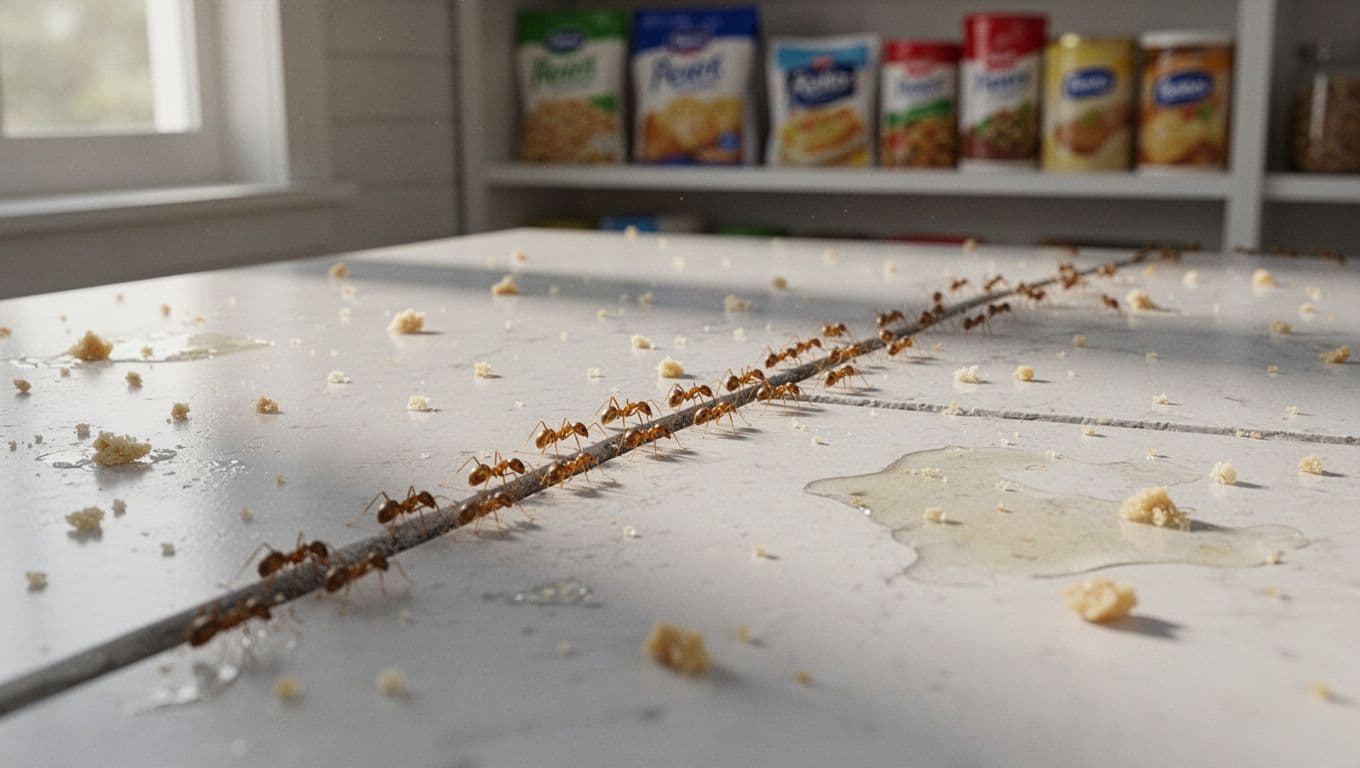
A pantry can look clean and still feed ants. Open snack bags, pasta dust, cereal bits, and sticky residue on shelf edges all matter. So do spills on can tops and the bottoms of storage bins.
Thief ants also look for protein, not only sweets. That means pet food, meat drips, cooking grease, and even a forgotten dish in the sink can pull them in. If you want a broader reference for what you might be seeing, start with this Cape Coral ant identification guide.
Inspect the spots ants use most
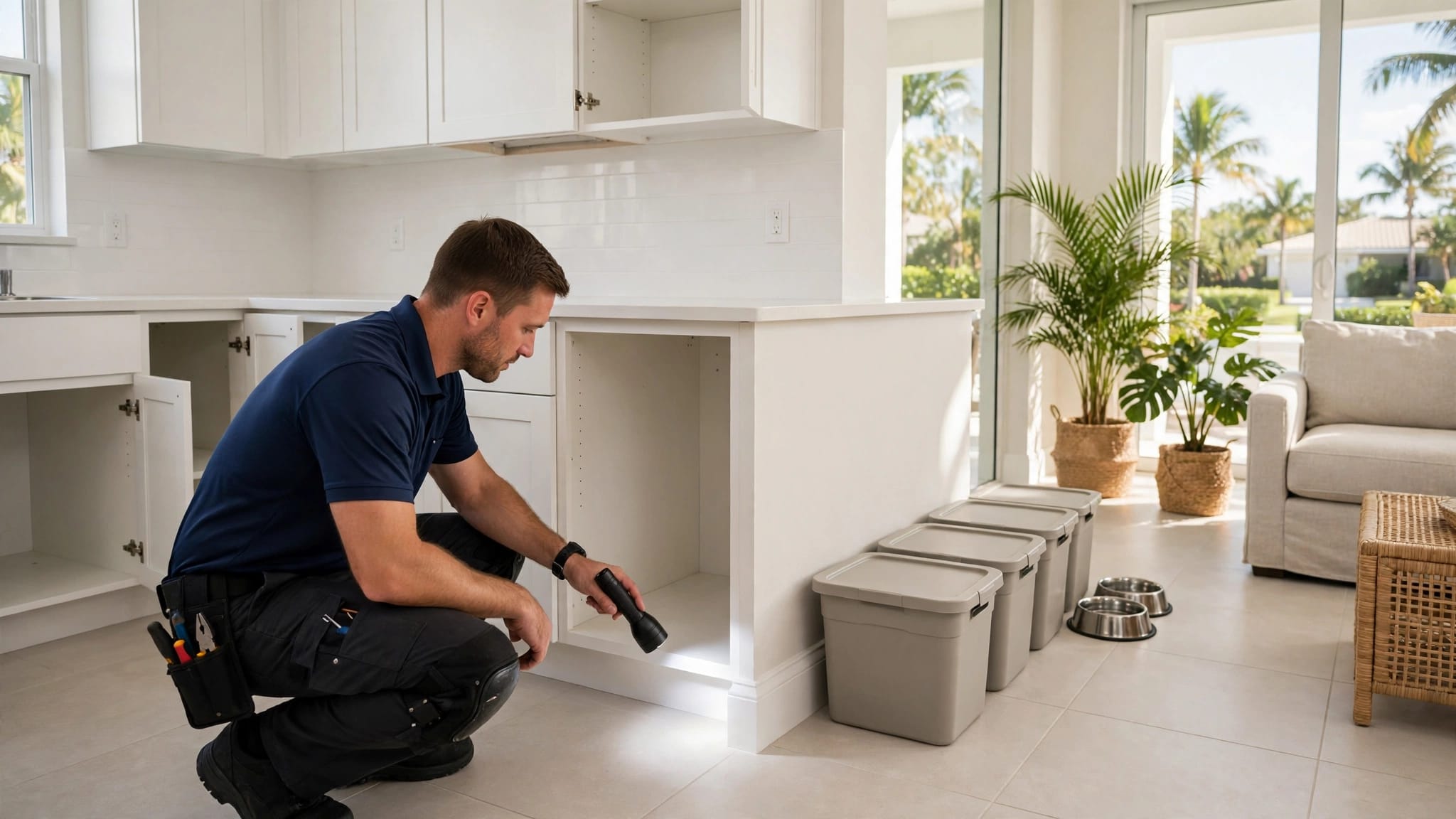
A careful inspection does not take long, but it needs to be focused. Move slowly and check the places that hide residue.
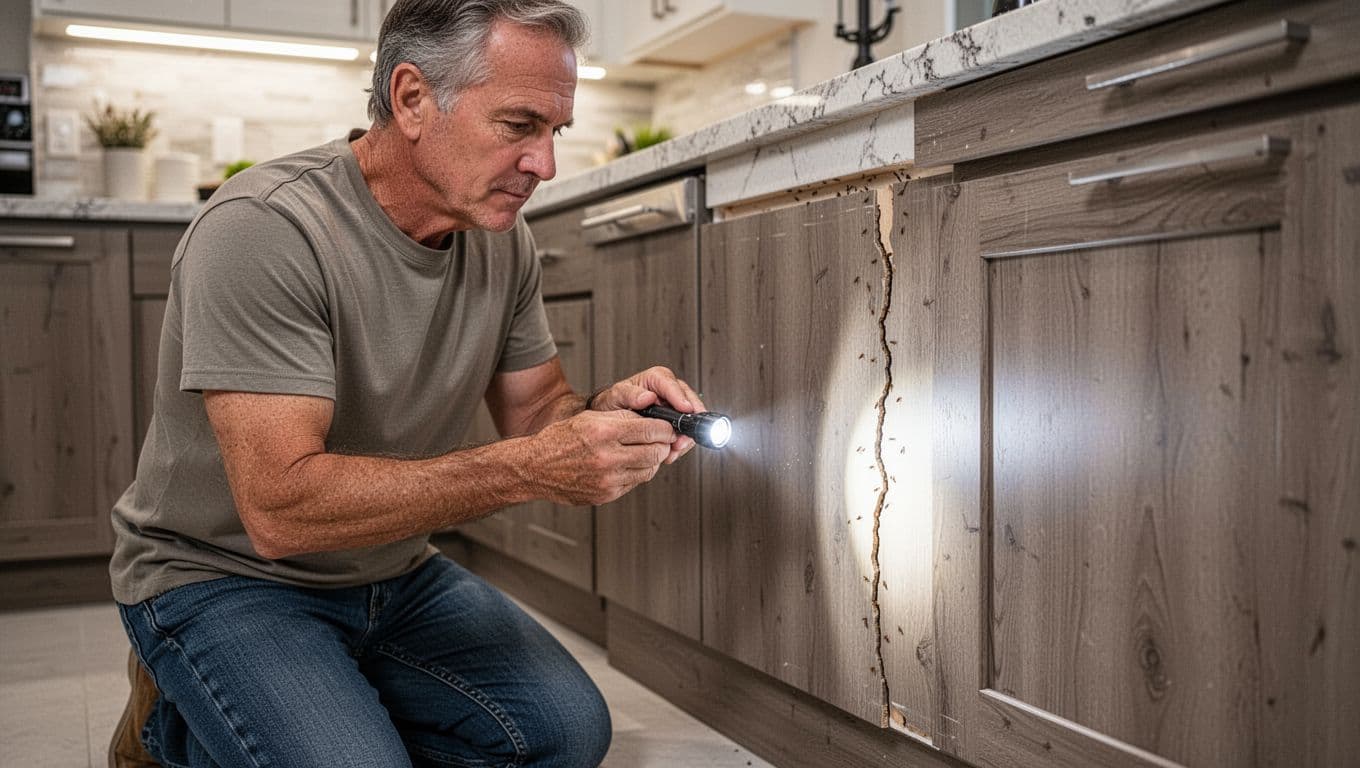
Start with these areas:
- Pantry shelves : Look at corners, shelf lips, and the backs of bins.
- Countertop seams : Check where two surfaces meet, especially near sinks and appliances.
- Cabinet joints : Open doors and inspect hinges, seams, and screw holes.
- Baseboards and trim : Tiny ants often travel along edges instead of across open floors.
- Pet feeding areas : Check under bowls, around mats, and along nearby walls.
- Under appliances : Toasters, microwaves, and coffee makers leave crumbs and grease.
- Sink zones : Look for leaks, damp wood, and residue around the faucet base.
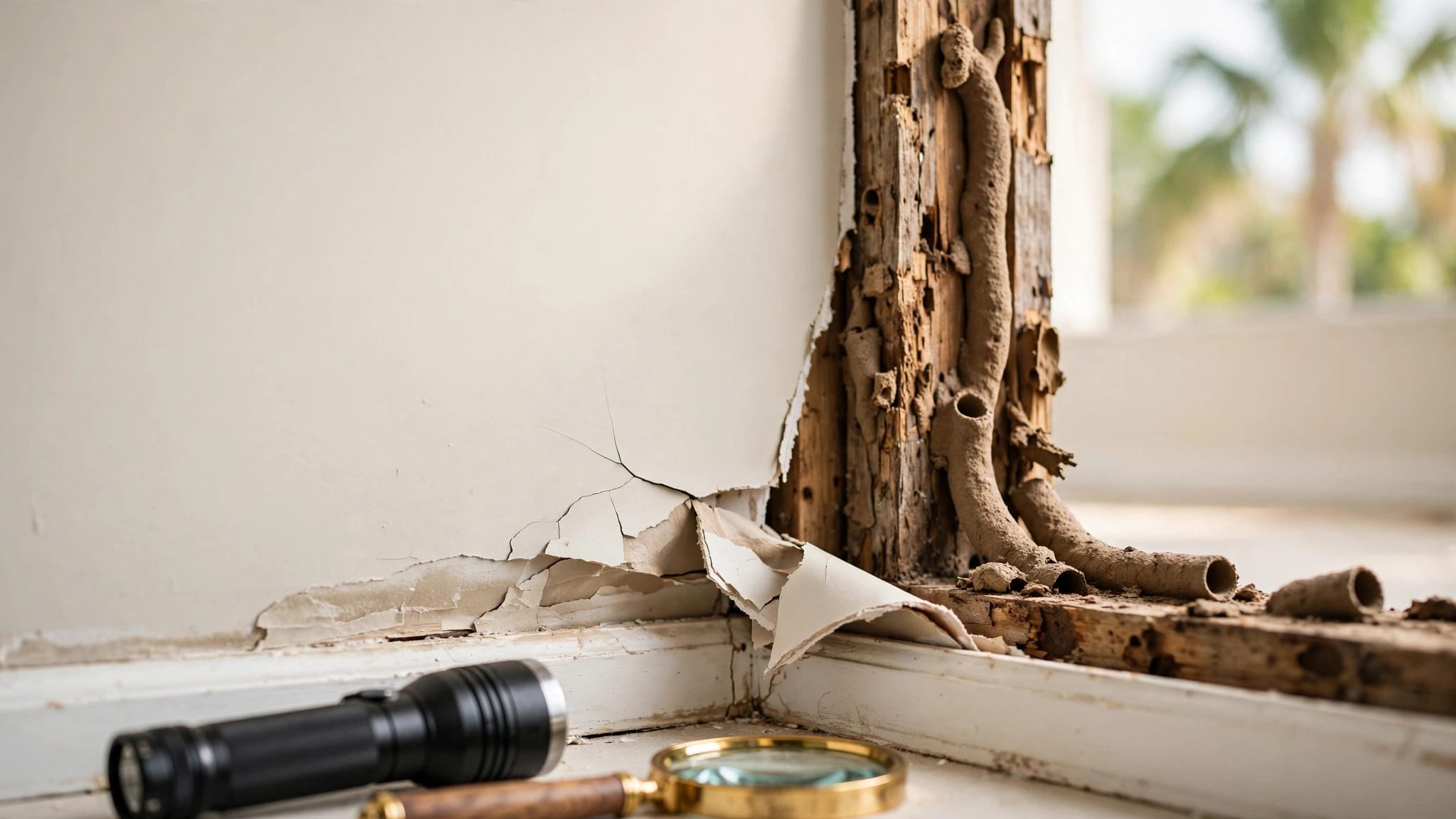
Use a flashlight at night or early morning. Ant trails are easier to spot then. If you see a few ants, watch where they enter and exit. That trail tells you more than the scattered ants on the counter.
Thief ants are sometimes confused with other tiny kitchen ants. They can also be mistaken for pharaoh ants in Cape Coral homes, which matters because treatment choices are not the same.
Why Cape Coral heat and humidity make ant problems worse
Florida weather gives ants a long season to stay active. Warm temperatures keep colonies moving, and humidity helps food smells linger longer.
Moisture also creates better conditions for nesting. Ants like protected, damp spots near plumbing, under sinks, behind cabinets, and around wall voids. In Cape Coral kitchens, that can mean a colony stays close to food and water without traveling far.
Humidity can also affect pantry storage. Cardboard boxes soften, spills stay tacky, and sealed-looking packages can still hold crumbs in folds or seams. That gives thief ants more to work with.
Rainy periods can push outdoor colonies to search harder indoors. When food is easy to find inside, ants don't need much reason to keep returning. That is why a kitchen cleanup in Southwest Florida often needs more than one pass.
Treatment that works, and what can make it worse
For thief ants, the goal is to reach the colony, not just the workers you see. That usually means careful bait placement and patience.

A few treatment basics help:
- Use the right bait type : Thief ants often respond to protein-based or greasy foods, though preferences can vary.
- Place bait near the trail : Put it where ants travel, not where you prep food.
- Keep surfaces clean : Bait works better when the kitchen has less competing food.
- Seal entry points : Caulk gaps around pipes, seams, and cabinet edges after the ants calm down.
- Fix moisture issues : Repair drips and dry sink areas quickly.
Spraying directly on trails can cause problems. In some indoor ant cases, repellent sprays scatter workers and make bait less effective. Poor DIY baiting can also send ants into new paths or hide the real nest location.
| What you notice | What it may mean | Best next step |
|---|---|---|
| Tiny ants on pantry shelves | Food residue or packaging dust nearby | Clean shelves and place bait near the trail |
| Ants at counter seams | Hidden crumbs or grease in the joint | Inspect seams and wipe with a degreasing cleaner |
| Repeated ants near sink base | Moisture or a wall void entry point | Fix leaks and check nearby gaps |
| Ants keep returning after spraying | The colony may still be active | Stop random spraying and get identification help |
If the ants keep showing up after cleaning and baiting, a professional inspection is often the faster path. Severe or recurring infestations may need species-level identification and a treatment plan that fits the nest location. That matters because ghost ants in Cape Coral kitchens and other small ant species can behave differently.
Keeping thief ants out of Cape Coral kitchens
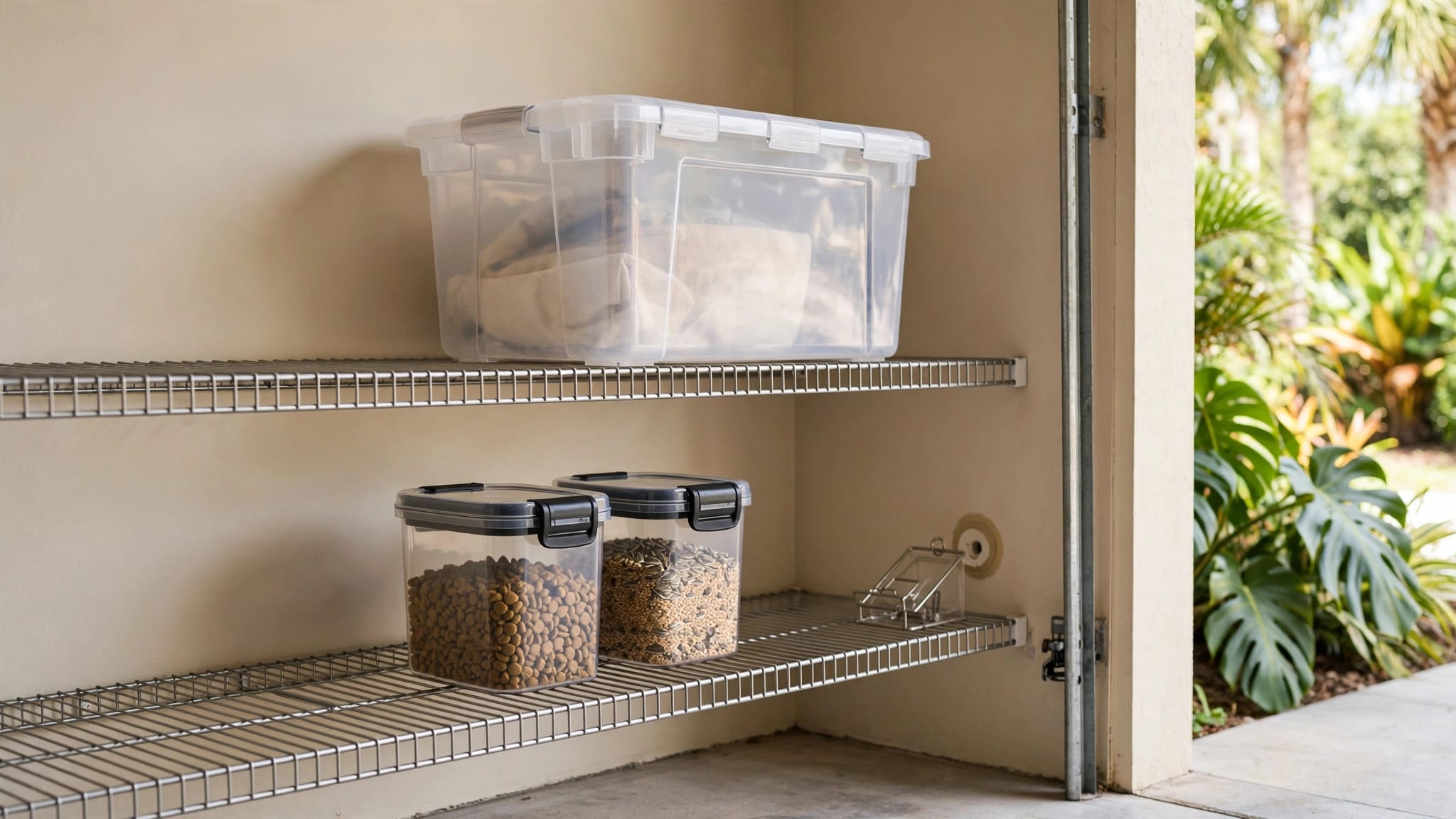
The best defense is simple, steady upkeep. Wipe counters well, store food in sealed containers, and clean the hidden spots where crumbs and grease build up.
Pay extra attention to cabinet joints, counter seams, pet bowls, and the space under appliances. Those are the places thief ants use when a kitchen feels easy to enter.
When you remove the food, moisture, and open seams, the kitchen stops looking like an easy stop on their route. That is what breaks the cycle for good.
Schedule a Free Inspection: