Honey Bee Swarms in Cape Coral Yards and Palm Trees
You step into your backyard in Cape Coral and spot a buzzing ball of bees hanging from a palm frond. Your heart skips a beat. Cape Coral bee swarms like this pop up often this time of year, especially in late April.
These clusters look scary at first. But they usually mean a temporary stopover. Bees swarm to start new colonies, and they often pick open spots like your yard or trees. Stay calm because most leave on their own in hours or days.
Here's what you need to know to keep your family safe and handle the situation right.
What Triggers Honey Bee Swarms in Cape Coral Now
Honey bees swarm when their hive gets crowded. In spring, queens lay thousands of eggs. Warm weather and blooming flowers, like our citrus trees, fuel fast growth. Soon, half the colony leaves with the old queen to find a new home.
Cape Coral's mild April days make this peak season. Bees fly out in a cloud, then cluster while scouts search. They hang tight for protection. This phase lasts until they pick a spot, often just a day or two.
You might see them after rain or on sunny afternoons. They favor yards with cover. Palms and low branches offer shade and height. Unlike aggressive wasps, these bees focus on relocating. They rarely sting unless provoked.
Local reports confirm more sightings this month. Bees thrive here because of steady blooms and few cold snaps. If you notice one, mark the spot but keep distance. Most move on without issue.
Why Swarms Love Palm Trees and Cape Coral Yards
Bees pick palms for good reasons. Fronds provide a sturdy, shaded perch high off the ground. In your yard, they cluster on branches or fences away from foot traffic. Open yards give scouts easy takeoff.
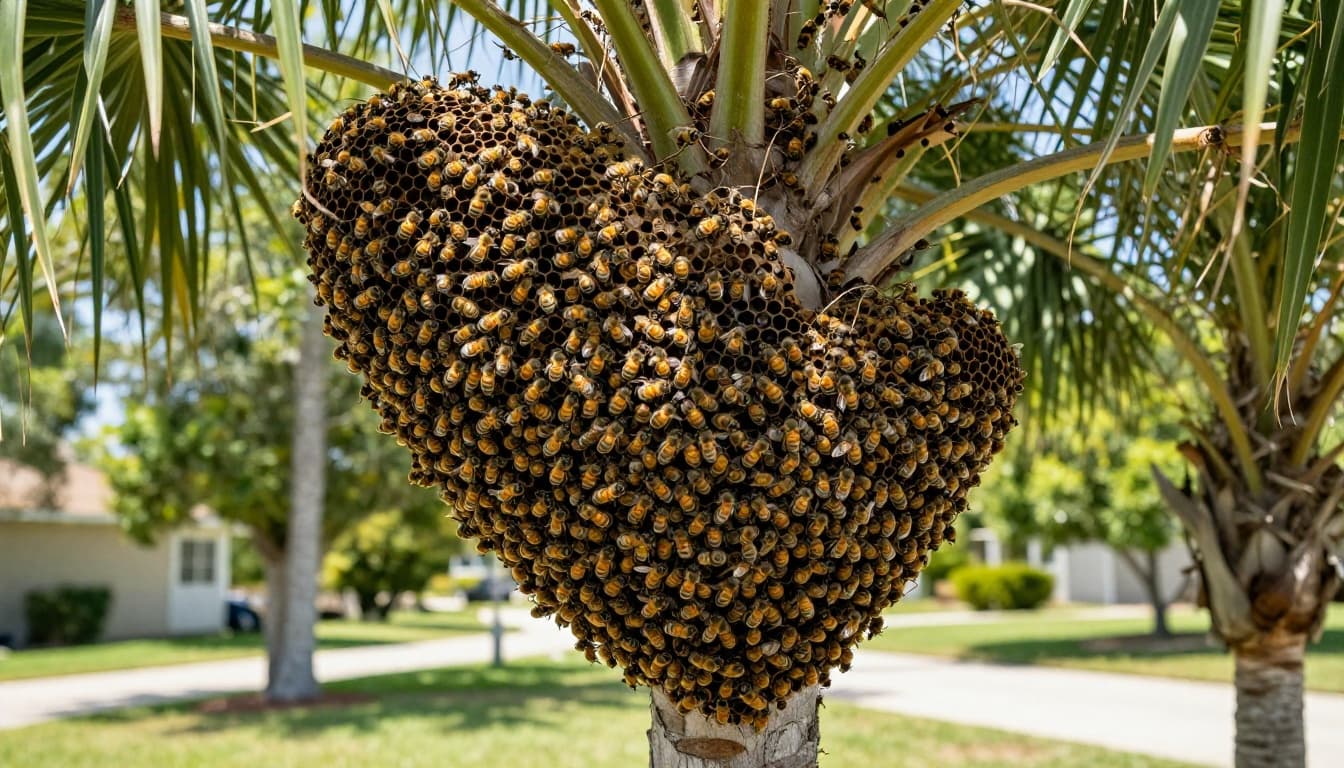
Sunshine filters through, keeping the cluster cool. Winds stay low near trunks. Plus, palms dot most Cape Coral lots, so they're handy rest stops. Bees avoid ground level because predators lurk there.
Swarms differ from nests. A true swarm is a loose ball, fist-sized to basketball-sized. Bees cover the queen inside. They don't build comb yet. If it's in your palm, watch from afar. Scouts return with news, and off they go.
Yards near canals or parks see more action. Flowers draw them first. Then they rest nearby. This setup keeps your lanai or pool clear most times. Still, check trees daily during swarm season.
Safety Tips for Families, Pets, and Your Home
Keep everyone back from a swarm. Stay 15 feet away at least. Bees stay mellow without a hive to defend. But vibrations or swats rile them up.
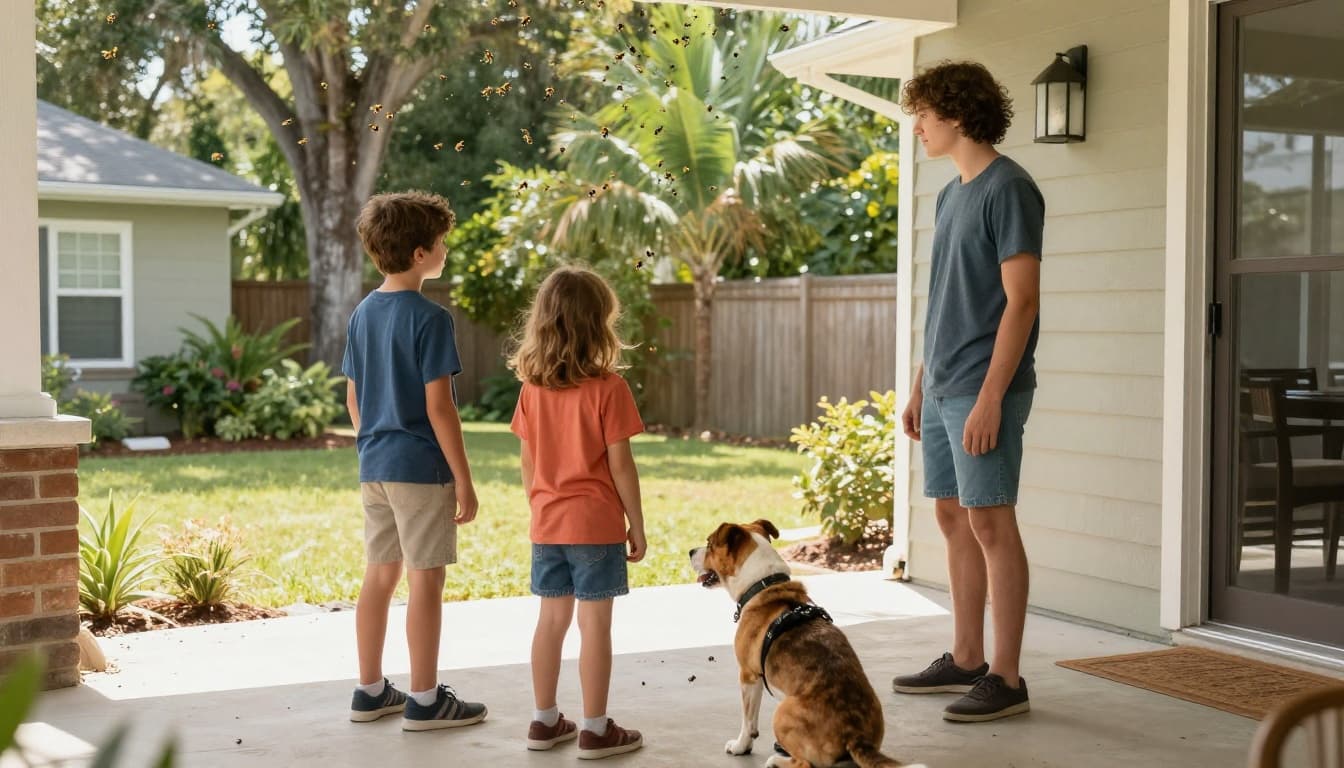
Tell kids to skip ball games or pool dips nearby. Pets sense the buzz and might charge. Leash dogs and keep cats indoors. Lanais work great for viewing from cover.
Pools stay safe unless bees land in water. Skim them off gently if needed. Landscaping crews, pause mowers or trimmers. Vibrations scatter bees toward noise.
Wear light clothes if close. Avoid strong scents like perfume. If allergic, carry epinephrine and leave the area. Most stings happen from close pokes. Distance prevents that.
Watch at dusk when activity drops. Floodlights draw them sometimes. Turn those off. These steps protect without harm.
Swarm vs. Bees Settling into Trees or Structures
Not every bee group is a swarm. A swarm rests openly, no wax or honey yet. Bees entering a cavity act different. They buzz in and out of tree hollows or wall gaps, hauling pollen.
Swarms dangle exposed. Settlers hide fast. Check for constant traffic. Open clusters leave soon. Hidden ones build hives over weeks.
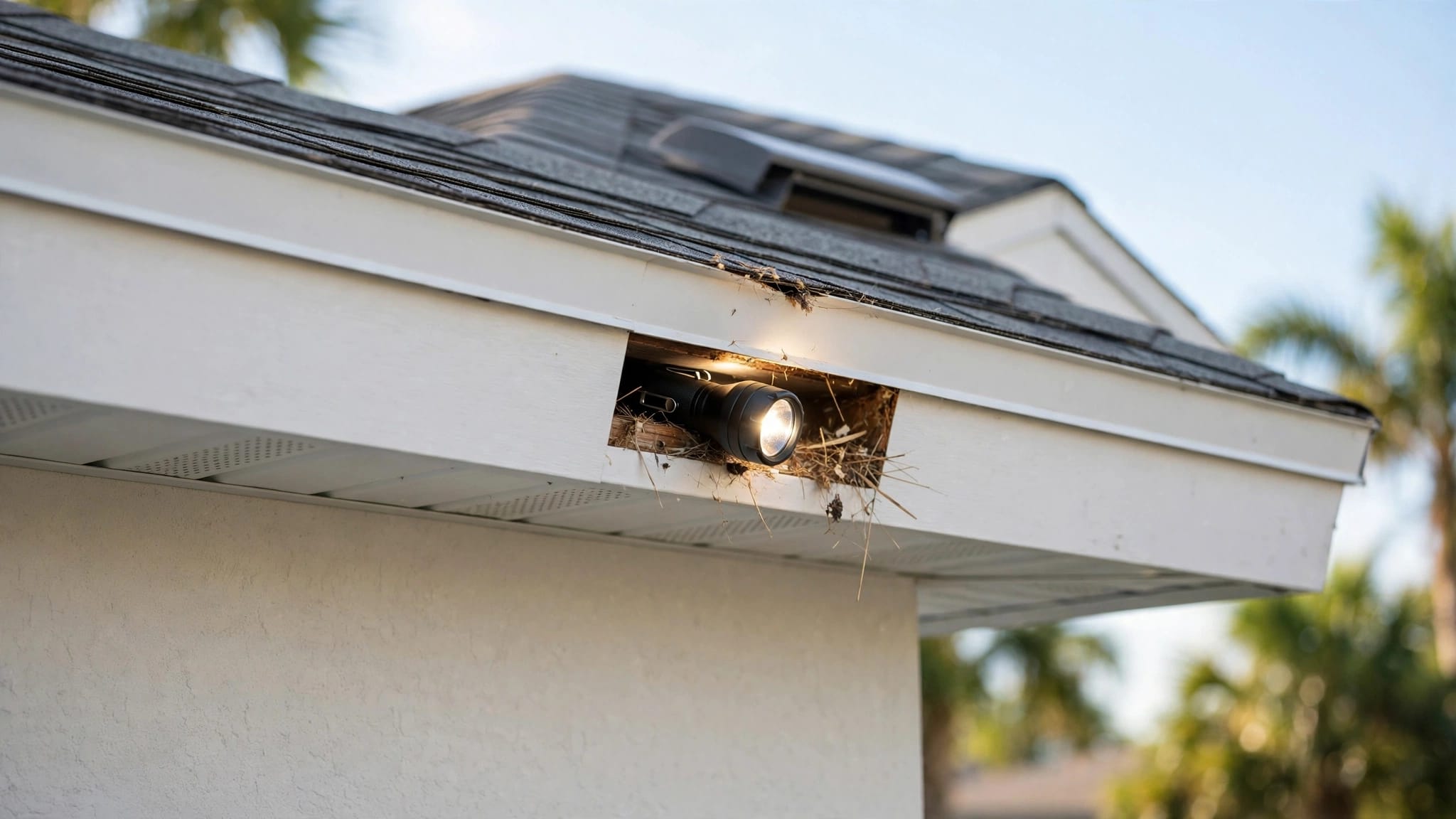
In palms, swarms grip fronds loosely. Cavity bees drill or squeeze into trunks. Your eaves or pool cages might draw settlers too. Spot the difference early.
If bees vanish inside, call help quick. Swarms need less rush. Both benefit from live removal. Pros check without sprays.
Humane Removal Options for Cape Coral Homeowners
Leave swarms alone first. Many depart solo. If they linger near play areas, get pros. Local beekeepers remove them free often. They relocate colonies whole.
Avoid sprays or knock-downs. That kills bees and scatters survivors. Pesticides anger the rest. Humane vacuums or boxes work best.
Pest services like ours handle live extractions safely. We use ladders for palms, no chemicals on swarms. For yards, quick scoop and go. Call for free checks.
Timing counts. Early morning or evening cuts risk. Pros wear suits so you don't. This saves pollinators too. Bees boost our gardens.
Florida favors relocation. Check clubs for swarm catchers. Response beats panic every time.
Honey bee swarms in Cape Coral yards bring brief worry. But they're temporary visitors, not invaders. Keep distance, protect family and pets, and let pros manage removal.
Most clusters move on fast. Spot the signs, stay safe, and enjoy your yard again. Your home stays bee-free with the right steps.
Schedule a Free Inspection: