Red Flour Beetles In Cape Coral Flour Bags And Baking Cabinets
You grab a bag of flour from your Cape Coral baking cabinet. Tiny reddish bugs scatter across the shelf. Red flour beetles turn your pantry into a headache fast. These pests love Florida's warmth and hitch rides in dry goods. Don't worry. You can spot them early and clear them out.
Cape Coral humidity speeds their spread. They hide in flour, cereal, and spices. Most cases start small. Quick action keeps your kitchen safe. Let's cover how to identify, remove, and prevent them.
What Red Flour Beetles Look Like Up Close
Red flour beetles measure about 1/8 inch long. They have slender, reddish-brown bodies that shine under light. Six thin legs help them crawl fast. Antennae end in a three-segmented club, a key trait.
Adults fly short distances at night. They seek lights in your kitchen. Larvae look like tiny white worms with brown heads. They wiggle through flour. Eggs hide deep inside packages.
Spot one beetle? Check nearby bags right away. They breed quick in warm spots. For a clear view, see this close-up.
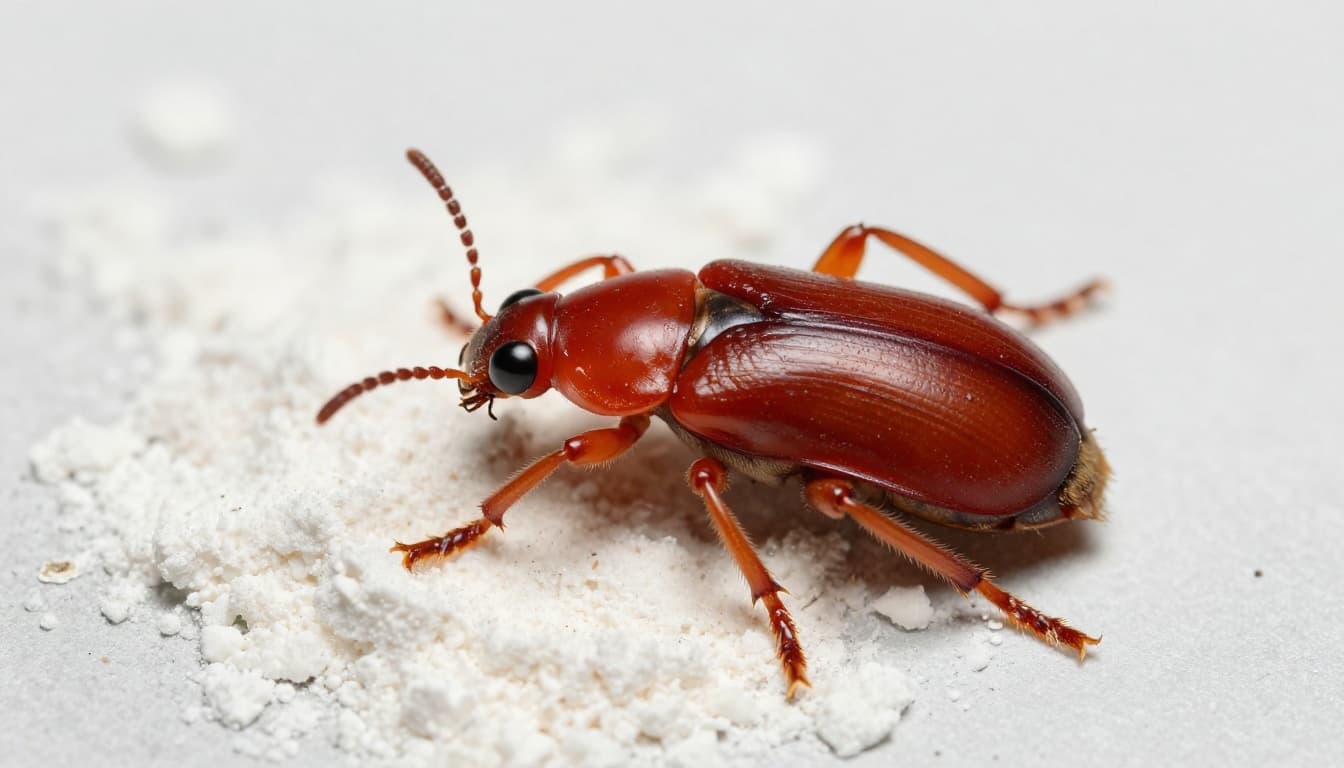
University of Florida Extension notes these beetles differ from confused flour beetles by their antennae shape. Both hit pantries hard. Know the look to act fast.
How Red Flour Beetles Enter Cape Coral Pantries
These beetles ride home in grocery bags. Infested flour or cereal from stores starts it. Bulk bins at markets often hold eggs. You bring them inside unknowingly.
Cape Coral's heat helps too. Females lay up to 450 eggs near food. They hatch in days at 80 degrees. Larvae eat flour as they grow. Adults emerge in 4 to 6 weeks.
Open packages invite them. Pet food, bird seed, and spices serve as hosts. Hurricanes mean stocked pantries sit longer. That raises risk here. Garage storage traps warmth. Bugs multiply before you notice.
Similar pests like rice weevils in Cape Coral pantries follow the same path. Check new buys always.
Signs of Red Flour Beetles in Flour Bags and Cabinets
Look for fine powder at bag bottoms. That's frass from larvae feeding. Flour clumps or smells rancid. Tiny holes show where adults chewed out.
Beetles scatter when you open bags. They play dead, legs tucked in. Check cracks along shelves. Dust gathers there. Spices turn grayish.
In baking cabinets, watch pasta and cake mixes. Warm corners speed growth. Cape Coral kitchens stay humid. That boosts signs fast.
See this common scene in infested flour.
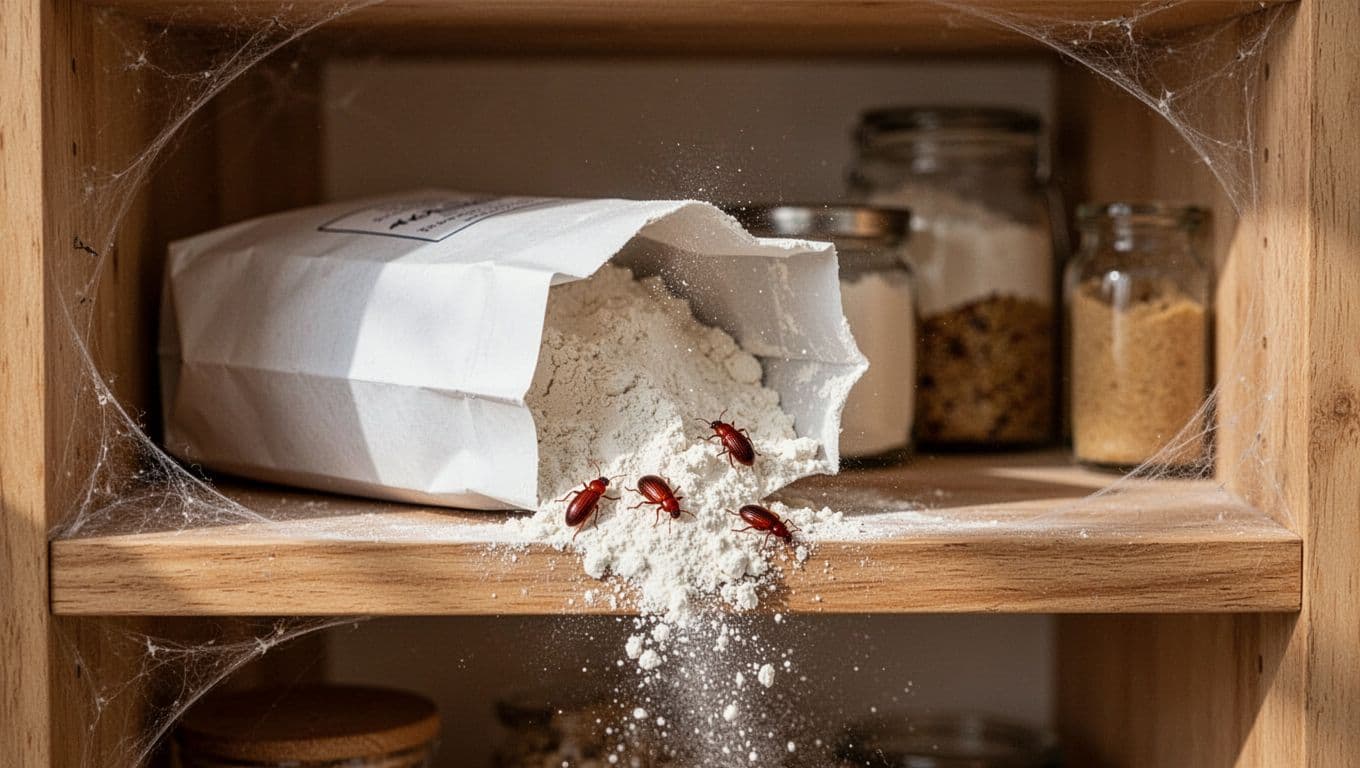
Inspect weekly. Pull all items. Shine a flashlight in crevices. Early catch saves most food.
Safe Steps to Clean Infested Baking Cabinets
Toss infested bags right away. Seal them in plastic outside. Don't compost. Bugs survive heat.
Vacuum shelves deep. Hit cracks and corners. Empty the bag outdoors fast. Wipe with soapy water. Let dry fully.
Freeze suspect dry goods 4 days at 0 degrees. Or heat at 140 degrees for 20 minutes. Kills all stages. Skip sprays near food. They contaminate.
Use pheromone traps for adults. Place near lights. Check monthly. Repeat vacuum weekly for 4 weeks. New bugs emerge slow.
For pantry moths, a related issue, see pantry moths in Cape Coral kitchens. Steps overlap.
Prevention Tips That Stop Red Flour Beetles in Cape Coral
Store flour in airtight glass jars. Thick plastic works too. Avoid paper bags long-term.
Rotate stock. Use oldest first. Buy small amounts. Freeze bulk buys a week before shelf time.
Check pet food and spices monthly. Shake into trays. Watch for bugs. Clean spills daily.
Run fans or dehumidifiers. Cut humidity below 60 percent. Cape Coral air stays moist. Dry pantries help most.
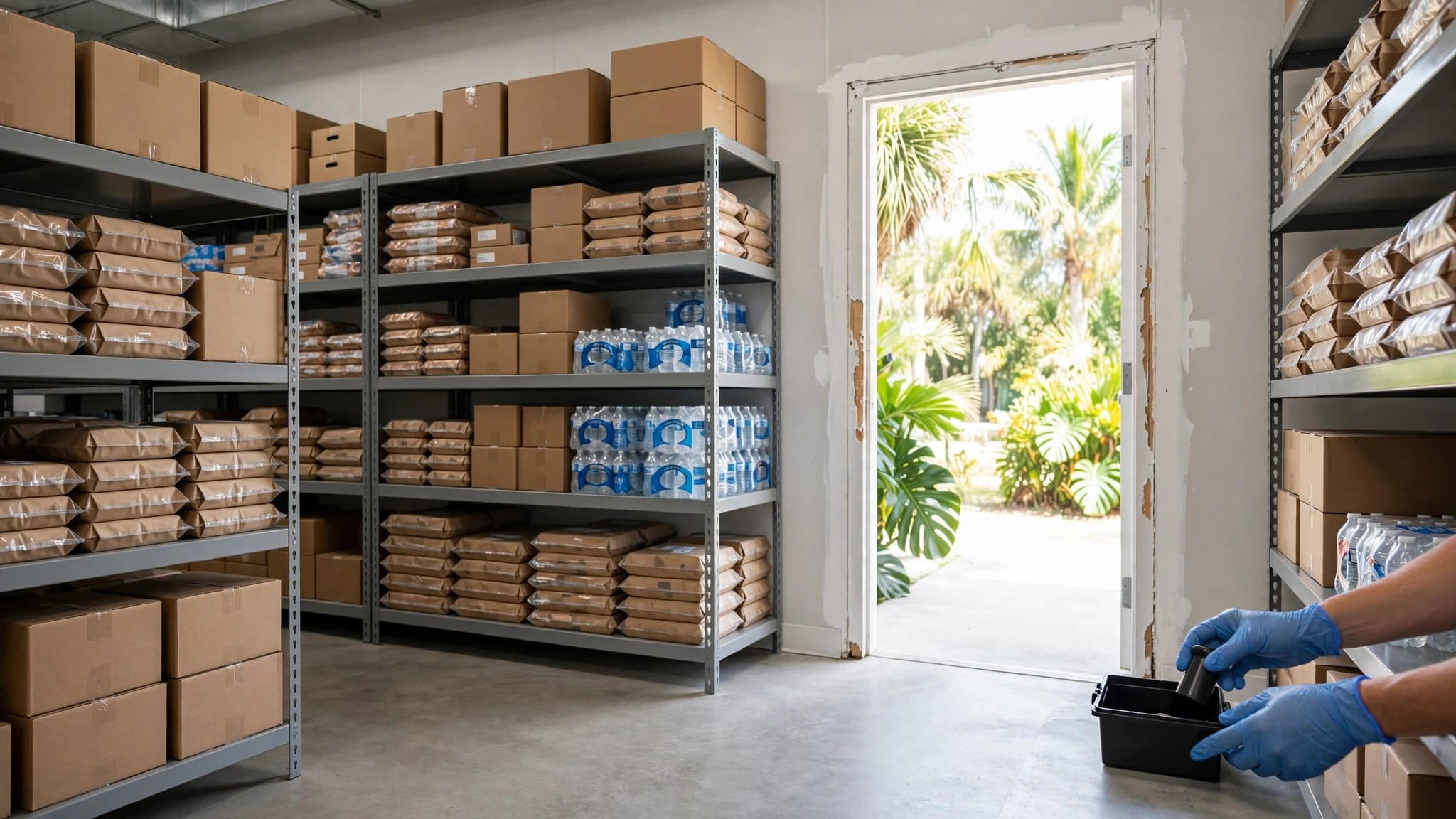
Here's a clean setup that blocks entry.

Bay leaves repel but don't rely alone. Seal cabinet cracks. These habits keep beetles out.
When to Get Help from Cape Coral Pest Pros
DIY clears most spots. Call experts if bugs return after cleanup. Or if they spread beyond pantry.
Hidden nests in walls need pros. Local teams know Florida humidity. They inspect garages and cabinets safe.
Free checks spot sources. Safe treatments fit food areas. Act before it worsens.
Red flour beetles bug Cape Coral pantries because warmth fuels their cycle. Spot powder or bugs early. Toss bad food. Clean deep. Store airtight. Check often.
Your kitchen stays clear with these steps. Small effort now prevents big trouble. Stay vigilant in humid weather.
Schedule a Free Inspection: