Culex Mosquitoes in Cape Coral Storm Drains and Catch Basins
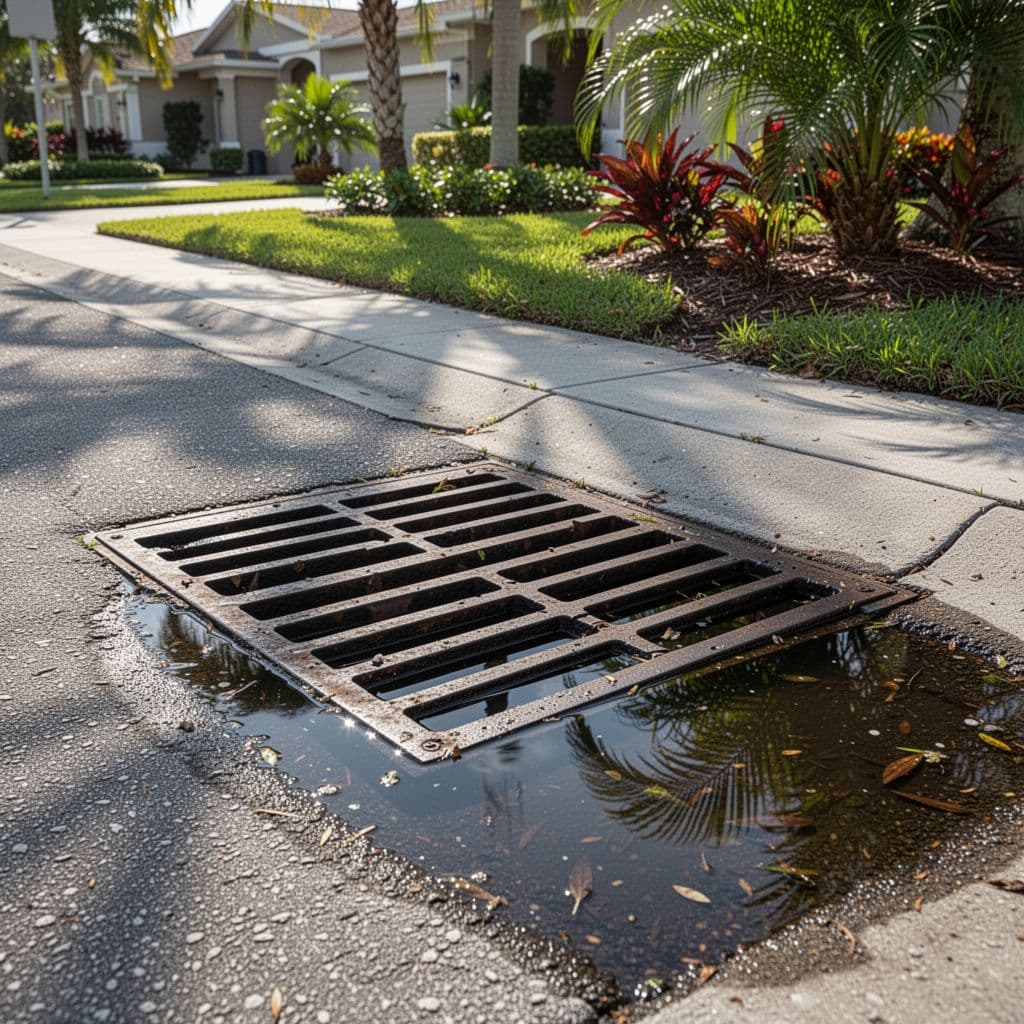
Storm drains can look harmless from the curb, yet they can hold the exact kind of water Culex mosquitoes like. In Cape Coral, summer rain, shade, and leaf litter can turn a catch basin into a quiet breeding spot.
That matters because the problem often sits out of sight. You may notice bites near the driveway or patio before you ever see the water below the grate. The good news is that these sites can be inspected, treated, and monitored in a practical way.
Why storm drains attract Culex mosquitoes
Storm drains collect runoff from streets, lawns, and roofs. When water moves fast, that's fine. When it slows down, sediment, algae, and plant debris settle in the basin. Culex mosquitoes do well in that mix because the larvae feed in water with organic material.
Shade helps too. A basin under trees, hedges, or a curb line that gets limited sun stays cooler and loses water more slowly. In flat neighborhoods, a slight dip in the drainage line can keep a thin puddle in place long after rain stops. That is enough for egg rafts to hatch and larvae to grow.
Cape Coral's heat speeds the cycle. Warm water means faster development, so a basin that stays wet for days can produce adults in short order. If you want a broader yard checklist, a homeowner mosquito control guide for Cape Coral can help you spot the easier sources near the house.
The drain itself is not the whole story. The water, debris, shade, and slow flow work together like a small nursery.
What you may notice near a problem catch basin
Most people notice the mosquitoes before they notice the water problem. The clues are usually small, but they repeat after rain or irrigation.
| What you notice | What it may mean | Why it matters |
|---|---|---|
| Mosquitoes hovering at dusk near the curb | The basin may be holding water with larvae nearby | Culex often rest and feed close to the breeding site |
| Small wrigglers in stagnant water | Active larvae in the basin | The colony is already established |
| Sludge, leaves, or grass in the drain | Organic debris is feeding the water | Debris gives larvae the right conditions |
| Repeated bites after every shower | The site is refilling after rain or irrigation | The source keeps coming back |
Culex mosquitoes are not flashy fliers. They often stay near their source and come out at dusk and night. That makes a drain problem feel random, because the bites show up in the yard while the breeding site sits at the curb. If the same area keeps buzzing after each rain, the basin deserves a close look.
Culex species can also be part of mosquito-borne disease cycles in some settings, so a repeat source is more than a nuisance. The risk level varies by place and season, but the breeding site still matters.
How Cape Coral drainage design can keep water in place
Cape Coral has plenty of flat ground, long curb lines, and landscaped swales. Those features move stormwater, but they can also trap it when the system gets clogged or when the outlet cannot drain fast enough. A few inches of extra silt in a catch basin can change how long water sits.
Organic debris matters as much as the shape of the drain. Palm fronds, seed pods, grass clippings, and mulch wash in during storms. Once they collect, they hold water and create a dark, protected space. Add a little shade from shrubs or fence lines, and the basin stays comfortable for mosquitoes while remaining hard to spot.
Runoff from irrigation can keep the problem going between storms. In Southwest Florida, that means a basin can stay wet even when the sky is clear. The water may not look deep, but Culex mosquitoes do not need much. They need enough still water to finish one life stage and begin the next.
That is why a drain issue can repeat so easily. The structure fills, the debris traps moisture, and the cycle starts again. After a few warm days, the basin can shift from a water-control feature into a breeding site.
What effective Culex control usually includes
Effective control starts with inspection. A technician should look for standing water, blocked outlets, sediment, algae, and nearby sources that feed the basin. Sometimes the fix is clearing debris. Sometimes it means adjusting nearby yard drainage or reporting a public-system issue to the right party.
Spraying around a drain does not solve a hidden larval source. The water has to be found and treated.
When water cannot be drained right away, larvicide treatment is often part of the plan. That targets the immature mosquitoes before they emerge. It is much more useful than trying to fog the area and hoping for the best. A trained team uses EPA-labeled larvicides in the proper dose, placed where the water sits.
Ongoing monitoring matters because drains change after every storm. A basin that looks clean in May can fill with silt by July. Good service checks it again, especially after heavy rain. That is how you stay ahead of the next hatch, not the last one.
For the wider property, a few simple habits still help. Keep leaves out of curb lines, clear gutters, and make sure yard runoff is not feeding the basin. If you want the home-side basics, the homeowner mosquito control guide for Cape Coral is a helpful place to start.
Avoid pouring bleach, oil, or store-bought insecticide into storm infrastructure. Those shortcuts can miss the larvae, and they create risks for water systems and wildlife. The right approach is targeted, measured, and based on what the inspection finds.
When a local inspection makes sense
Call for an inspection when mosquitoes keep returning to the same curb line, when you see larvae in standing water, or when a catch basin stays wet long after rain. A single wet week can happen to any neighborhood. Repeated activity points to a source that needs more than a surface spray.
This is especially true if the area sits near patios, garage doors, mailbox posts, or side yards where people spend time at dusk. Those are the places where Culex pressure feels worst. A local pest control company can inspect the site, document what they see, and decide whether source reduction, larvicide treatment, or follow-up visits make sense.
For HOA communities and commercial properties, that routine matters even more. One neglected basin can seed several nearby lots. Regular checks keep the problem smaller and make later treatments easier.
Conclusion
Storm drains and catch basins are easy to ignore until the mosquitoes show up. In Cape Coral, the mix of standing water, organic debris, shade, and slow drainage can create a dependable breeding spot for Culex mosquitoes .
When the same area keeps producing bites, the fix is usually a mix of inspection, source reduction, larvicide treatment, and follow-up monitoring. The most useful step is simple, find the water that keeps sitting there. If a drain near your home keeps turning into a mosquito source, a local inspection is the fastest way to pin it down.
Schedule a Free Inspection: