Mulch Choices That Cut Pest Pressure at Florida Foundations
The best mulch Florida homeowners choose around a foundation is the one that dries fast and gives pests fewer places to hide. In a humid state like Florida, mulch can either support a healthy landscape or become a damp buffer for ants, roaches, termites, and rodents.
That doesn't mean you need a bare yard. It means the material, depth, and placement matter more than the color on the bag. The smartest setup starts with a clear inspection gap, then uses mulch only where it won't crowd the slab.
Key Takeaways
- Organic mulch holds moisture , and moisture is what many foundation pests want most.
- Rock or gravel works best near a wall when it stays shallow and clean.
- Cedar, cypress, pine bark, eucalyptus, melaleuca, and pine straw all need distance from the foundation.
- Rubber mulch is not pest-proof . It can still hide activity and trap debris.
- A mulch-free inspection strip matters more than the mulch color or scent.
What Pests Actually Use Mulch For
Pests rarely care about mulch for the mulch itself. They care about cover, humidity, and easy travel lanes.
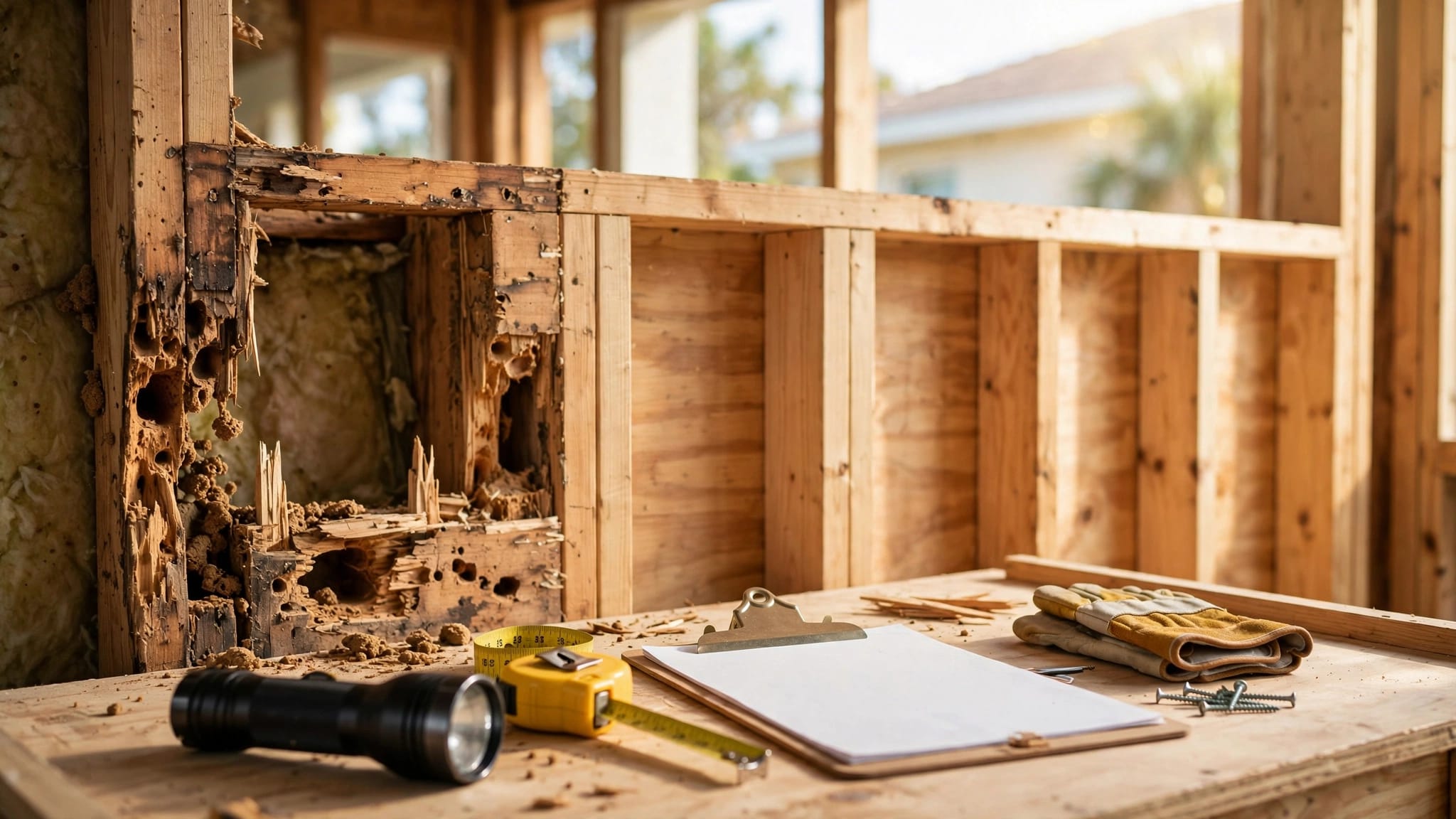
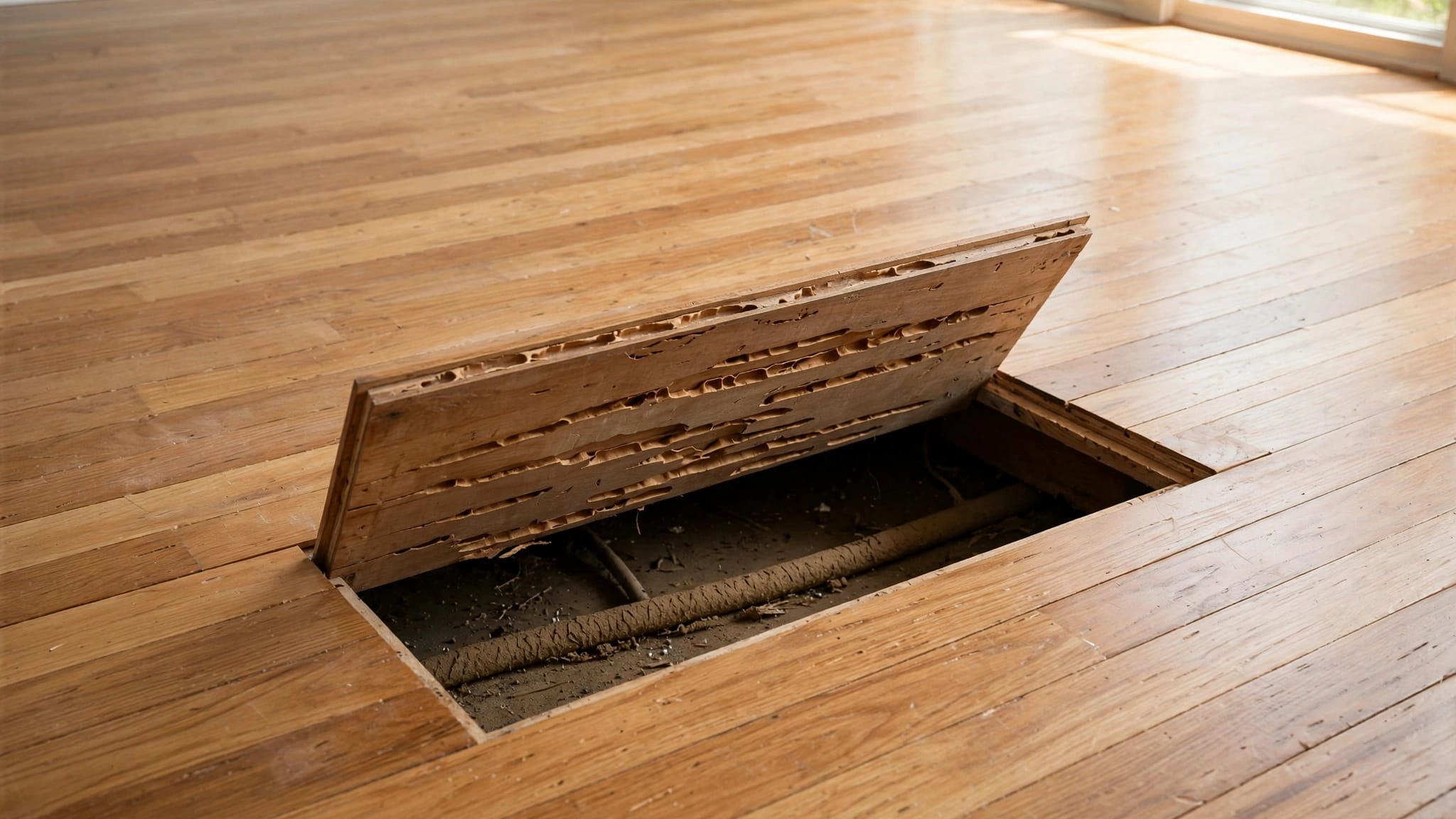
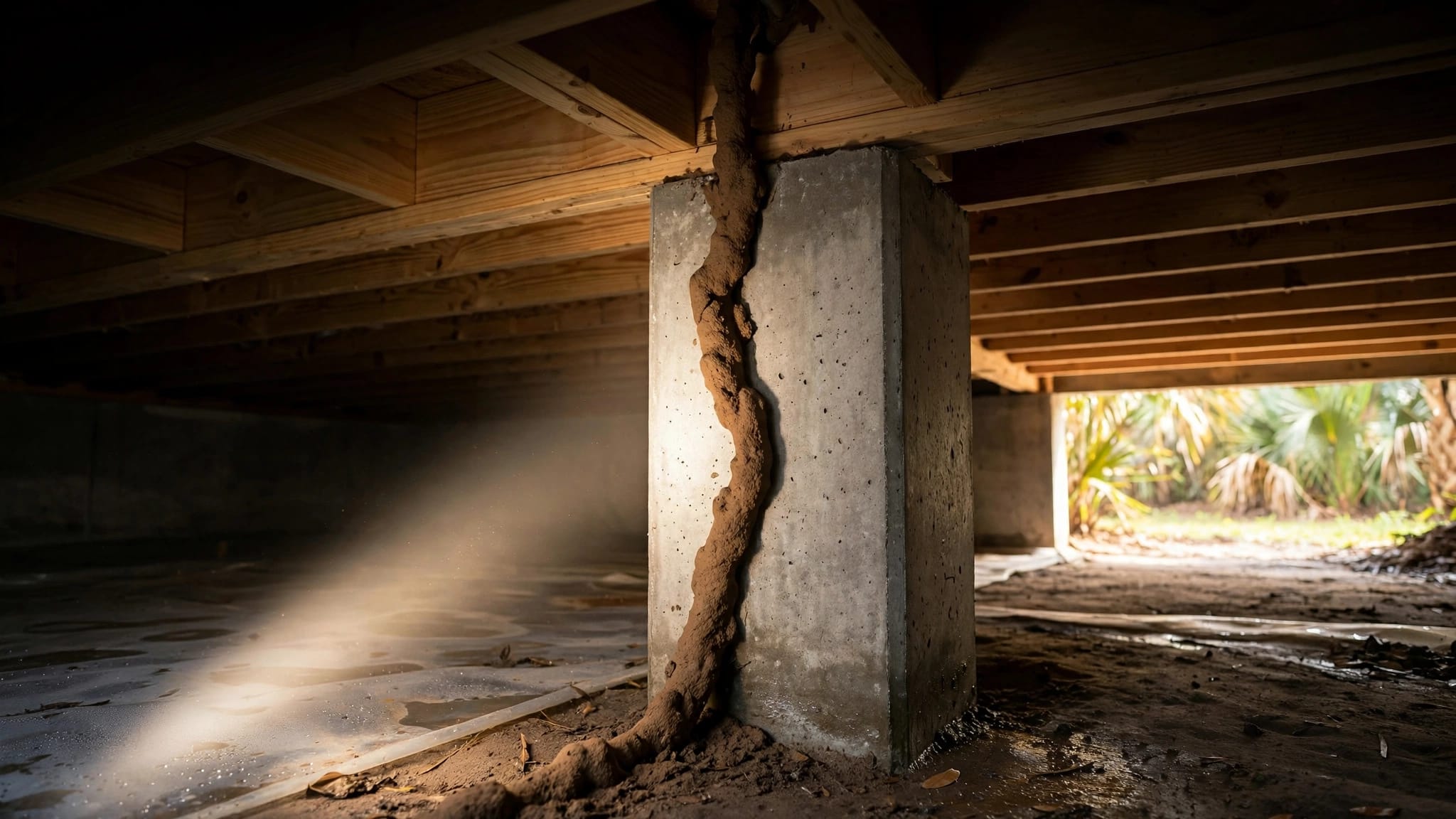
Subterranean termites move through soil and hidden voids. A deep mulch bed gives them shade and a softer transition between the ground and the wood parts of a home. Ants use the edges of beds as protected runways. Roaches, earwigs, and millipedes settle into damp layers after rain. Rodents use thick beds as cover near vents, utility lines, and low openings.
Florida makes all of that worse. Afternoon storms, irrigation overspray, and humid nights can keep a bed wet long after the sun comes out. A mulch layer that looks neat on Saturday can turn into a shelter line by Monday if it sits too deep or too close to the house.
Comparing Common Mulch Choices Around Florida Foundations
The chart below puts the most common options side by side.
| Mulch option | Pest pressure near foundations | Florida fit | Notes |
|---|---|---|---|
| Pine bark | Moderate | Good in beds away from the house | Keep it shallow because fines hold moisture |
| Cypress | Moderate | Common, but still organic | Works better a few feet from the wall |
| Eucalyptus | Moderate | Fine in dry spots | Scent fades, so don't count on repelling pests |
| Cedar | Lower to moderate | Useful in raised beds | Smell helps a little at first, then fades |
| Melaleuca | Lower to moderate | Works if kept dry | Still behaves like wood mulch |
| Rubber mulch | Low food value, but not pest-free | Mixed near hot Florida walls | Can hide activity and trap debris underneath |
| Rock or gravel | Low shelter when installed right | Strong choice for foundation strips | Needs cleanup and good drainage |
| Pine straw | Moderate to high | Common, but not ideal tight to the slab | Light, airy, and easy for pests to move through |
Rock and gravel usually give pests the least cover, but only if the strip stays clean and shallow. Deep stone can bury mud tubes, trap leaves, and make inspections harder. Pine bark, cypress, eucalyptus, melaleuca, and pine straw all behave like organic cover, so they need extra breathing room. Cedar smells pleasant, but scent alone does not stop ants or termites.
Rubber mulch gets marketed as a low-maintenance option, yet it still hides debris and creates shaded pockets underneath. It can work in some landscape areas, but it is not a reason to ignore moisture or foundation clearance.
For pure pest pressure, the simplest answer is often the least decorative one, a clean, shallow hardscape strip near the house.
Why the Foundation Gap Matters More Than the Mulch Type
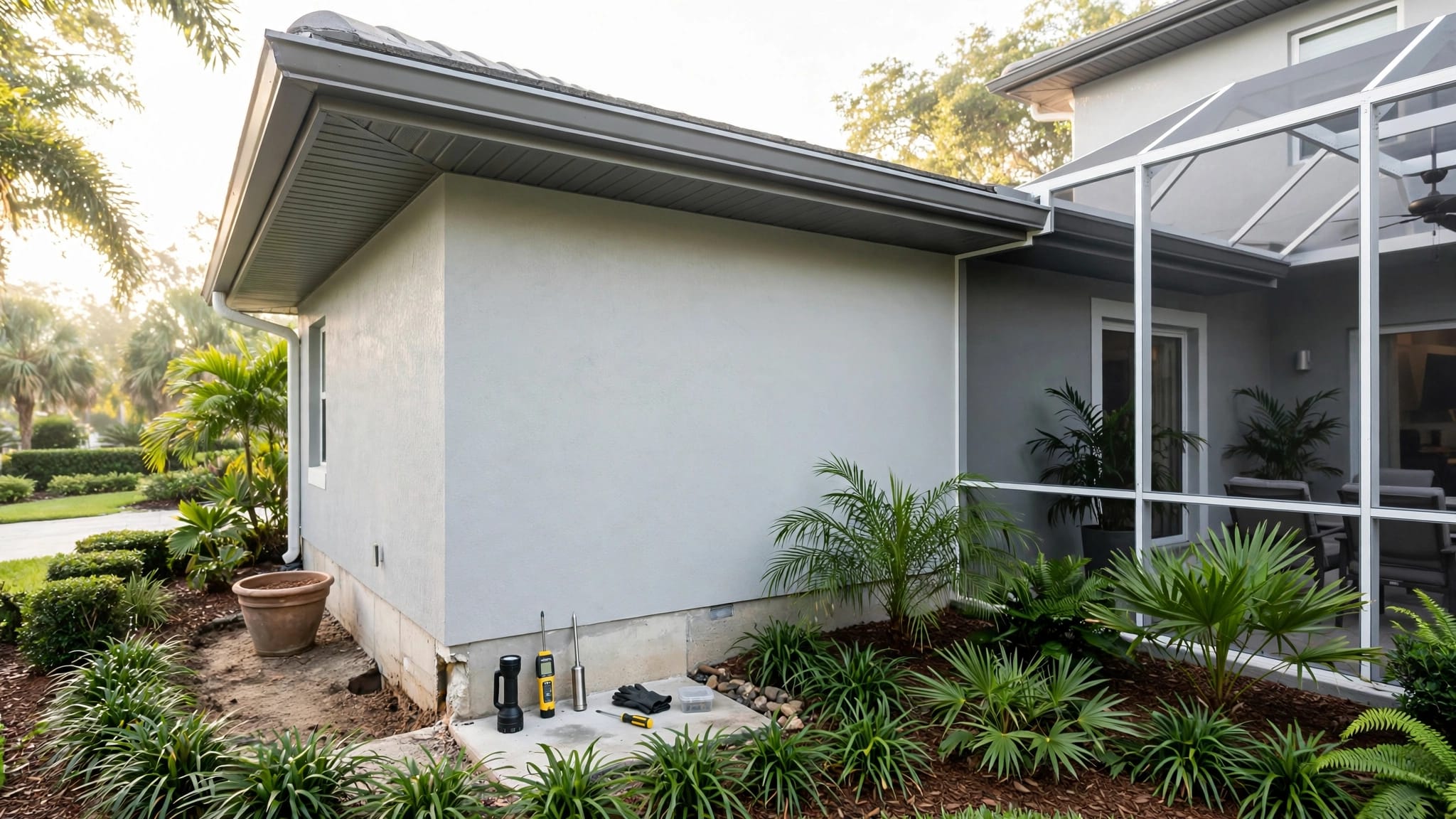
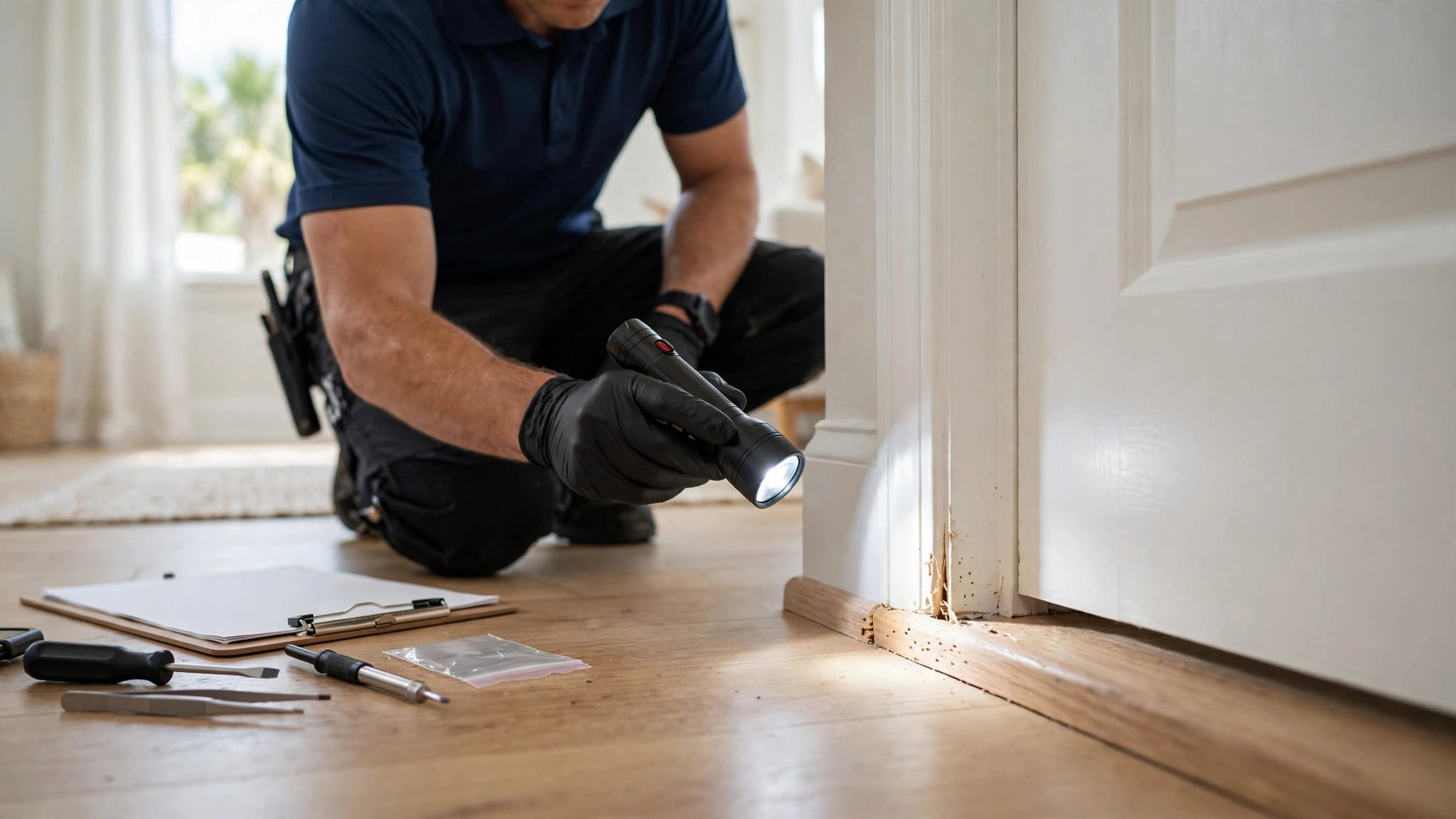
A mulch-free inspection gap gives you a clear view of the part of the home that pests target first. It makes mud tubes easier to spot, and it helps you notice ant trails, damp spots, or soil that has crept too high. It also gives the wall and slab edge a better chance to dry after rain or watering.
If the bed allows it, keep a strip 6 to 12 inches wide along the foundation. Wider is often better if the layout works. Keep sprinkler heads aimed away from the home, and don't let bark, soil, or decorative rock climb up over the slab edge.
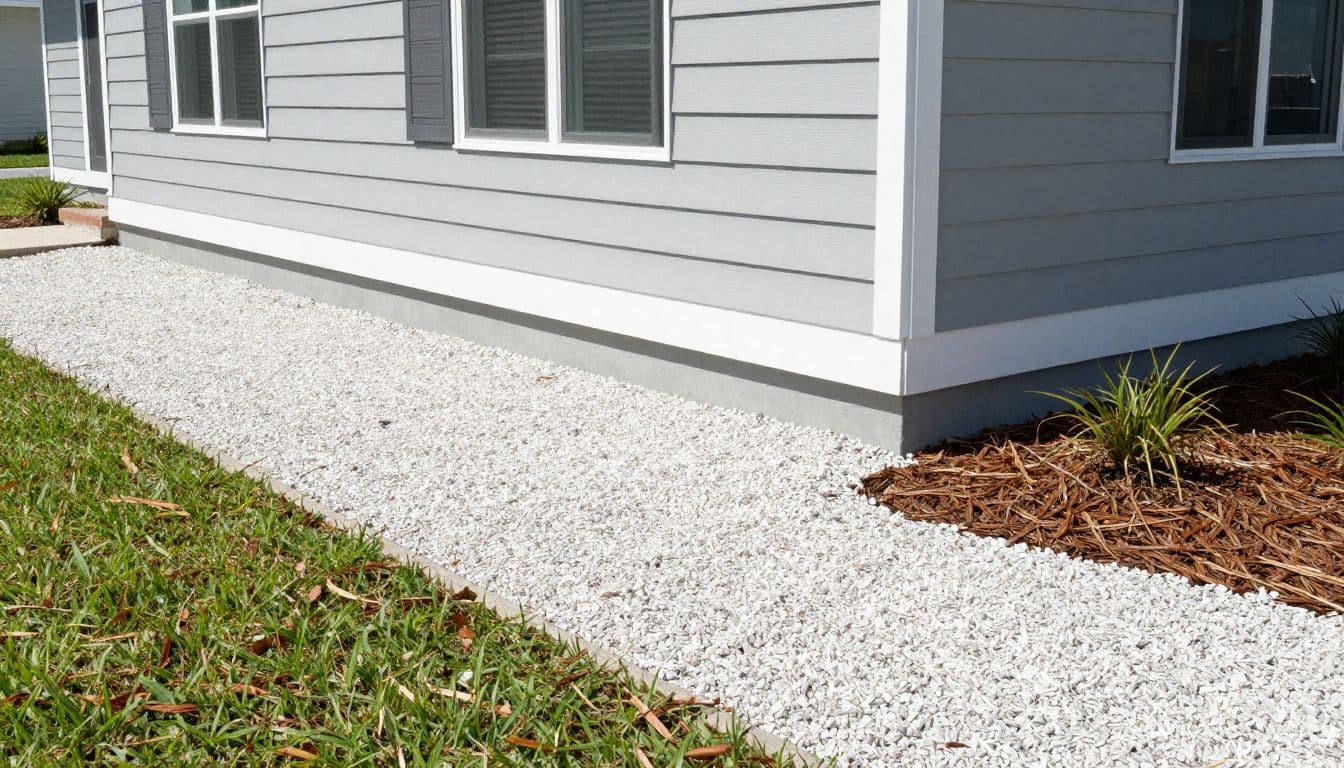
A bed can look finished and still be wrong if it blocks the only easy line of sight to the foundation.
That gap matters in Florida because weather changes fast. A bed that drains well in January can stay soggy in August. When the inspection strip stays open, you can see what changed instead of guessing.
Mulch Habits That Keep Pest Pressure Lower
The installation matters as much as the material. A shallow bed with good airflow gives pests fewer places to settle.
- Keep mulch depth to 2 to 3 inches. Deeper piles hold moisture and break down into fine material that pests can use.
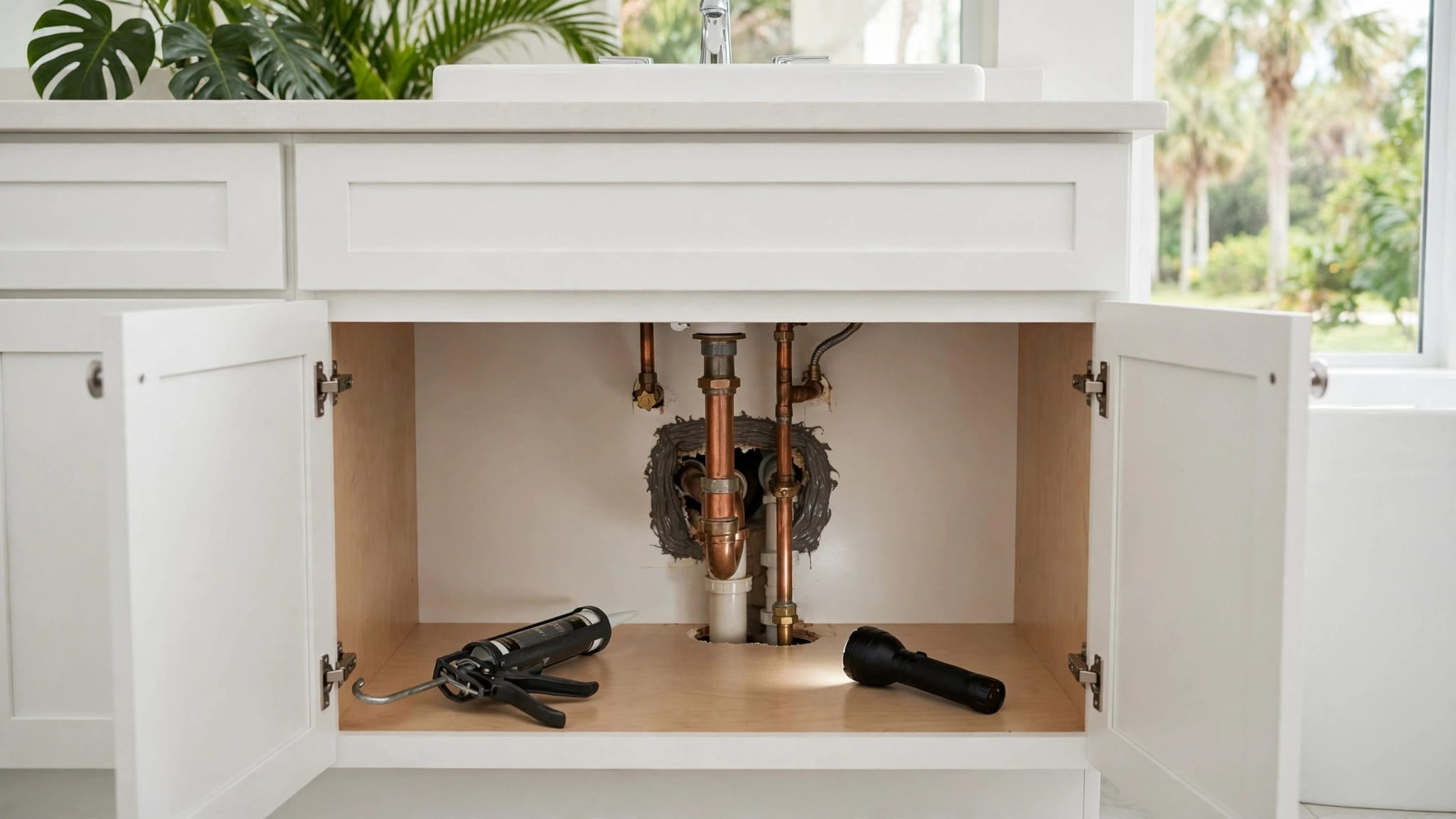
- Pull mulch back from the wall, the AC pad, hose bibs, and downspouts. Those spots stay damp longer than the rest of the yard.
- Avoid wood-to-soil contact. Landscape timbers, edging, planters, and decorative borders should not touch the slab or sit buried against it.
- Fix irrigation overspray and low spots quickly. If water keeps hitting the base of the house, even the best mulch choice will struggle.
- Refresh beds after heavy rain or storm cleanup. Remove soggy leaves, old mulch fines, and debris before they turn into shelter.
- Keep plants trimmed back so air can move through the bed. Dense shrubs trap humidity and hide pest activity.
These habits sound small, but they change how the whole bed performs. A thin, tidy layer dries faster than a deep blanket. That alone cuts down on the conditions many pests prefer.
Pair Mulch Decisions with Routine Pest Prevention
Mulch works best as part of a bigger plan. Clean gutters, working drainage, and sealed entry points matter just as much as the material you spread in the bed. If gutters dump water next to the foundation, or if irrigation keeps the soil soaked, pests get the same message no matter what mulch you bought.
Homeowners in Southwest Florida who want a closer look at problem areas can use professional pest control services to check the slab edge, the bed line, and the most common entry points together. That matters when ants keep returning to the same corner, or when you keep seeing roaches around damp exterior walls.
For homeowners who want a more focused home inspection in the Cape Coral area, residential pest control in Cape Coral is a practical next step when the same foundation spots keep drawing activity.
Mulch decisions and pest control work better together than apart. A bed can look clean on the surface and still hide termites, rodents, or roaches underneath if the moisture problem stays in place.
Conclusion
The right mulch choice can lower pest pressure, but the setup does most of the work. A clean inspection gap, shallow mulch, and dry edges matter more than scent, color, or brand.
If you want fewer pests around your foundation, keep mulch away from the wall, avoid wood-to-soil contact, and stay ahead of moisture. That simple approach gives termites, ants, roaches, and rodents fewer reasons to settle in.
Schedule a Free Inspection: