Florida Lawn Damage: Insects or Irrigation Problems?
Brown grass in Florida doesn't always mean your lawn needs more water. Florida lawn damage often comes from a mix of insect feeding, dry sprinkler zones, poor drainage, or turf disease. Adding water before finding the cause can make some problems worse.
Look closely at the shape of the damage, the grass blades, and the soil beneath them. These clues can help you decide whether to adjust irrigation, inspect for pests, or call for a confirmed diagnosis.
Start With the Damage Pattern
The location and shape of a damaged area often provide the first useful clue. Walk around the lawn before mowing, watering, or applying any product.
Irregular patches point toward insects
Insect damage often appears as irregular brown or thinning patches that expand over several days. The affected areas may look scattered instead of following a sprinkler's reach. Grass near a driveway, sidewalk, foundation, or other hot surface may show heavier damage because heat stresses the turf and attracts some pests.
Chewed or clipped blades are another warning sign. Look for ragged tips, missing sections, or grass that appears shorter than nearby blades even though you mowed evenly. Some caterpillars feed at night, so the lawn may look normal in the morning and worse by afternoon.
A patch can also have a yellow or fading border around the brown center. That pattern often means the problem is spreading through the turf rather than staying inside a fixed dry zone.
Irrigation damage follows coverage
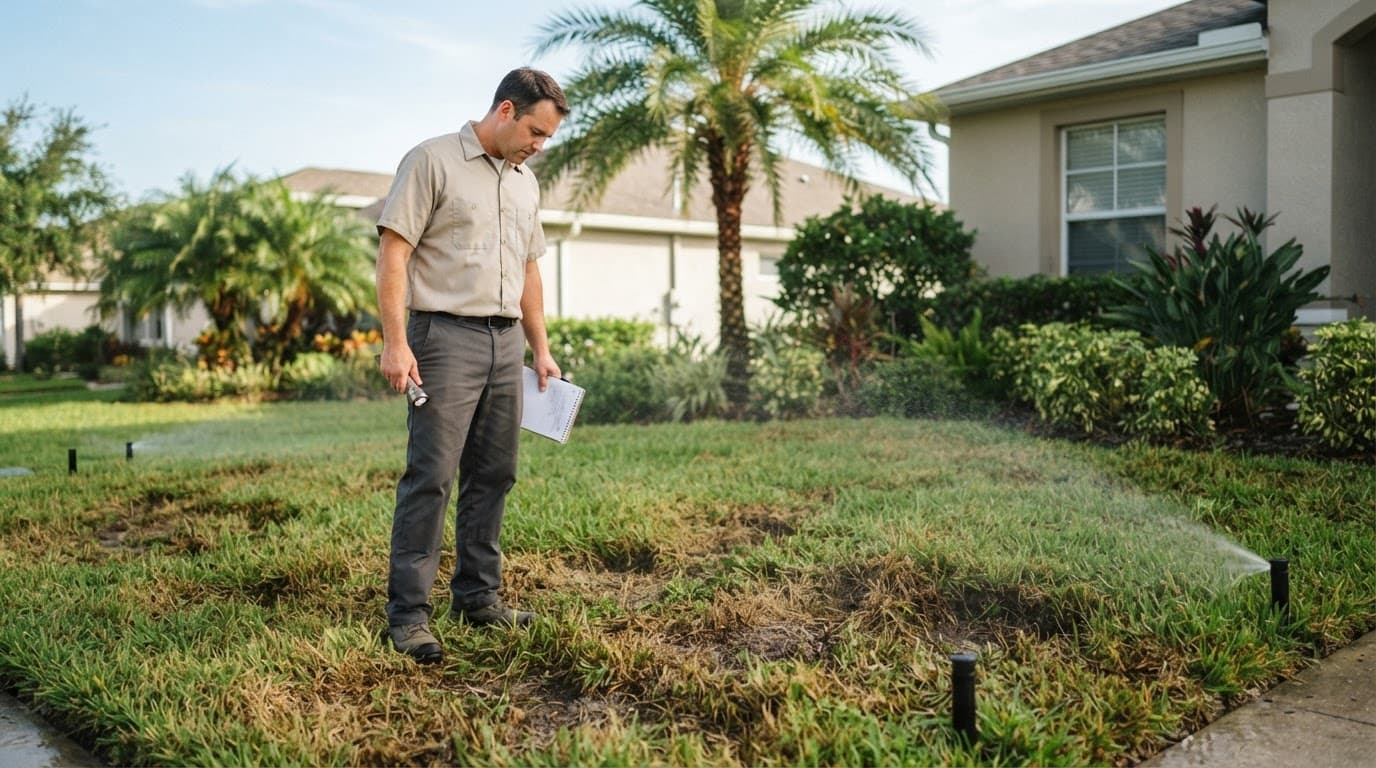
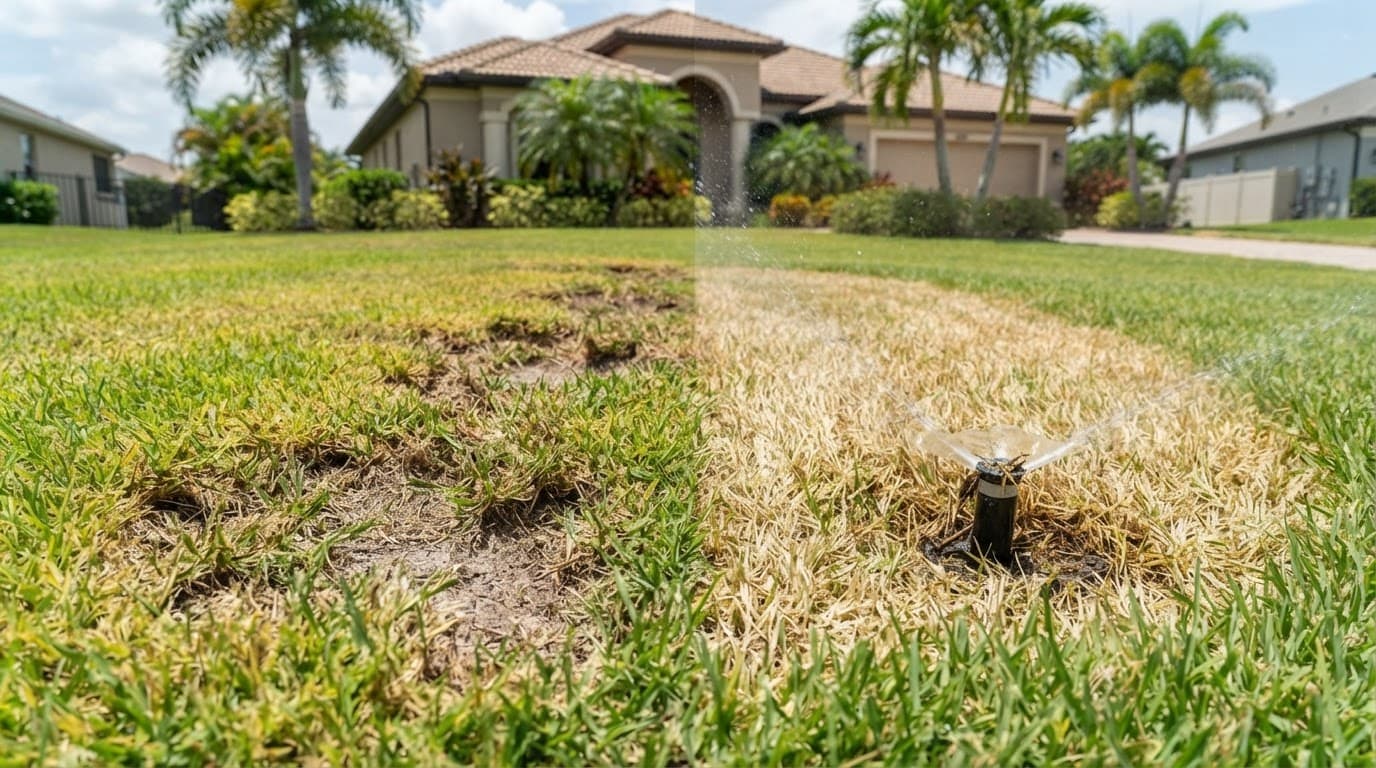
Watering problems usually create a pattern that matches the sprinkler system. Dry grass may form a quarter-circle, strip, or repeated patch along the edge of a sprinkler's spray. Areas between heads often suffer when the system lacks enough overlap.
Inspect the same zone after it runs. A clogged nozzle may produce a weak stream or no spray. A misaligned head may water a sidewalk, driveway, or garden bed instead of the turf. Broken risers and low water pressure can also leave part of the lawn dry.
If every dry patch lines up with a sprinkler boundary, check irrigation before reaching for pesticide.
Check the soil and turf
Push a screwdriver or similar blunt probe into the soil near healthy grass and damaged grass. Dry soil that resists the probe points toward underwatering. Saturated soil, standing water, or a sour smell suggests excess moisture or poor drainage.
Next, tug gently on a small section of grass. Turf that lifts easily may have root-feeding pests, such as white grubs. Firmly rooted grass with dry soil points more toward irrigation or drought stress.
Your grass type matters, too. St. Augustinegrass is common in Southwest Florida and has its own pest and watering concerns. Bahia, zoysia, and bermudagrass can show different responses to stress, so treatment should match the turf.
How Insect Damage Looks on Florida Grass
Florida's warm climate supports several lawn pests for much of the year. Their damage can resemble drought, fertilizer burn, or fungal disease, which makes confirmation important.
Sod webworms and armyworms chew the blades
Sod webworms feed on grass blades and can leave clipped, ragged, or thinning turf. Look through the thatch and around the base of the grass for silk-lined folds, green-black droppings, or small caterpillars. A soap flush can bring hidden larvae to the surface, but use care around plants and follow safe handling practices.
The damage often starts as small brown spots before spreading into larger irregular areas. Identifying sod webworms in Florida grass can help you compare feeding symptoms with dry spots.
Fall armyworms also eat grass blades from the top down. Their damage may appear quickly, with larger areas of missing or chewed foliage. Look for chew marks, small caterpillars, and dark droppings around the base of the blades.
Chinch bugs create yellow-to-brown areas
Southern chinch bugs are especially associated with St. Augustinegrass. They often gather in hot, sunny locations, including turf beside pavement or buildings. Early damage looks yellow or wilted. Over time, the grass turns brown and may die in irregular patches.
To check, part the grass near the damaged edge and inspect the thatch and soil surface. Adult chinch bugs are small, dark insects with pale markings, while younger nymphs may appear reddish or orange. You may need a hand lens because they hide low in the grass.
The signs of chinch bugs in St. Augustine grass can look similar to heat or drought stress. Check the insects before treating.
Grubs and fungal-looking areas need a closer look
White grubs feed below the surface and damage roots. Affected turf can fade, thin, and lift easily because the roots no longer hold it firmly. Birds or other animals digging in the lawn can provide another clue. You can compare these signs with white grub damage in St. Augustine lawns.
Some fungal problems create circular or irregular brown areas that resemble insect damage. Blades may show spots, a greasy appearance, or fine fungal growth under humid conditions. Night watering, wet thatch, shade, and poor drainage can increase disease pressure. Avoid assuming every patch contains a pest.
Irrigation Problems That Mimic Pest Damage
A lawn can turn brown even when the sprinkler system runs every day. What matters is whether water reaches the root zone evenly and whether the soil can drain afterward.
Underwatering causes pale, thin grass
Underwatered grass may look dull, folded, or gray-green before it becomes brown. Footprints can remain visible after someone walks across the turf. The soil feels dry several inches below the surface, especially in sandy areas that drain quickly.
Dry spots commonly appear near the outer edge of a sprinkler's spray. They also develop when new landscaping blocks a head, a nozzle becomes clogged, or a zone has weak pressure. Check for heads that fail to rise, spray unevenly, or tilt into the soil.
Place shallow, straight-sided containers around the zone while it runs. Compare the amount of water collected in each container. Large differences point to uneven coverage. Adjust the system according to local watering rules, recent rainfall, and the turf's condition.
Short daily irrigation can wet only the surface. That pattern encourages shallow roots and keeps the thatch damp, which can increase some pest and disease problems. A better schedule usually uses deeper watering at appropriate intervals, but the right amount depends on rainfall, season, soil, shade, and grass type.
Overwatering and poor drainage weaken turf
Overwatering can leave grass yellow, soft, or thin rather than bright green. The soil may stay wet between irrigation cycles, and puddles can remain after rain. Low areas, compacted soil, blocked drains, and heavy thatch can hold water around the roots.
Fungal-looking spots often appear where blades stay wet for long periods. Evening irrigation adds to that moisture because grass has less time to dry. Wet conditions also make roots more vulnerable to stress, even when the lawn appears saturated.
Reduce unnecessary irrigation and repair drainage problems instead of adding more water to brown areas. A rain sensor or functioning soil-moisture control can prevent the system from running after a heavy Florida storm.
Water on the schedule doesn't prove the lawn is receiving the right amount. Check the spray pattern and soil moisture at the damaged spot.
Safe Steps to Identify the Cause
A careful inspection can prevent two expensive mistakes: spraying for insects that aren't there and watering a problem that needs better drainage.
Inspect at the right time
Start at the border between healthy and damaged grass. This area often contains active insects and shows the direction of spread. Part the blades, examine the thatch, and look for chewing, droppings, webbing, crawling insects, or loose turf.
Check once during daylight and again near dusk if caterpillar damage seems likely. Use gloves, avoid touching your face, and keep children and pets away from any treated or disturbed area.
Don't apply a broad pesticide simply because a patch is brown. Pesticides won't repair clogged heads, compacted soil, root damage from excess moisture, or fungal disease. Unnecessary applications can also harm beneficial insects and create avoidable exposure around the home.
Test every sprinkler zone
Run each irrigation zone for a few minutes while you watch the heads. Replace clogged nozzles, clear grass from blocked sprays, and reposition heads that water pavement. Look for broken lines, low pressure, and heads that fail to pop up fully.
Use catch containers to compare coverage, then inspect the soil several hours later. Healthy irrigation should wet the root zone without producing long-lasting puddles. Adjust the schedule after accounting for rain, shade, soil type, and municipal restrictions in your Florida community.
Don't respond to brown grass by running the system for longer every day. Overwatering may hide the original symptom while increasing root, pest, and disease stress.
Know when to request an inspection
Call a lawn pest professional when patches continue to spread, insects are difficult to identify, or several causes may be present. A technician can inspect the turf, thatch, soil surface, and irrigation pattern before recommending treatment.
Professional help is also useful when the grass lifts easily, damage returns after irrigation repairs, or a large area declines quickly. Ask what pest was confirmed, which turf type was considered, and what product label applies before treatment begins.
Match the Treatment to the Confirmed Cause
The right response depends on what the inspection shows.
| Symptom | More likely cause | First response |
|---|---|---|
| Ragged blades, webbing, or droppings | Sod webworms or armyworms | Confirm caterpillars before using a labeled treatment |
| Yellow-to-brown St. Augustine patches near hot surfaces | Chinch bugs | Inspect the thatch and treat only after confirmation |
| Turf lifts easily and roots are missing | White grubs or another root pest | Check below the surface and repair damaged areas |
| Quarter-circle dry spots | Clogged or misaligned sprinkler | Clean, adjust, or replace the affected head |
| Pale grass with dry soil | Underwatering or weak coverage | Test the zone and correct water distribution |
| Wet soil, puddles, or greasy leaf spots | Overwatering, drainage, or fungal disease | Reduce excess water and investigate the site |
After fixing the cause, remove severely dead turf only when the remaining area and season support repair. Avoid fertilizing heavily during stress. Follow the product label for application rate, protective equipment, re-entry time, and watering instructions.
Exact treatment varies by grass type and confirmed cause. A product that fits one Florida turf or pest may be wrong for another.
Conclusion
Brown patches don't automatically call for more water or insecticide. The pattern, blade condition, soil moisture, root strength, and sprinkler coverage can separate Florida lawn damage caused by pests from damage caused by irrigation.
Inspect before treating, repair obvious watering failures, and avoid keeping the lawn wet without a reason. When the clues conflict or the damage spreads, a confirmed local diagnosis can protect the turf and prevent unnecessary pesticide use.
Schedule a Free Inspection: