Chinch Bugs In Cape Coral Lawns And How To Stop Brown Patches
A brown patch in St. Augustinegrass can feel like a mystery stain on a favorite shirt. You water it, you wait, and it keeps spreading.
In Cape Coral, that pattern often points to chinch bugs . These tiny insects can turn a good lawn into a straw-colored mess fast, especially during warm, dry stretches and on sandy soils.
This guide helps you identify chinch bug damage, rule out look-alikes (drought and fungus), and fix the problem with the least chemical input possible.
Chinch bugs in Cape Coral: what the damage looks like on St. Augustinegrass
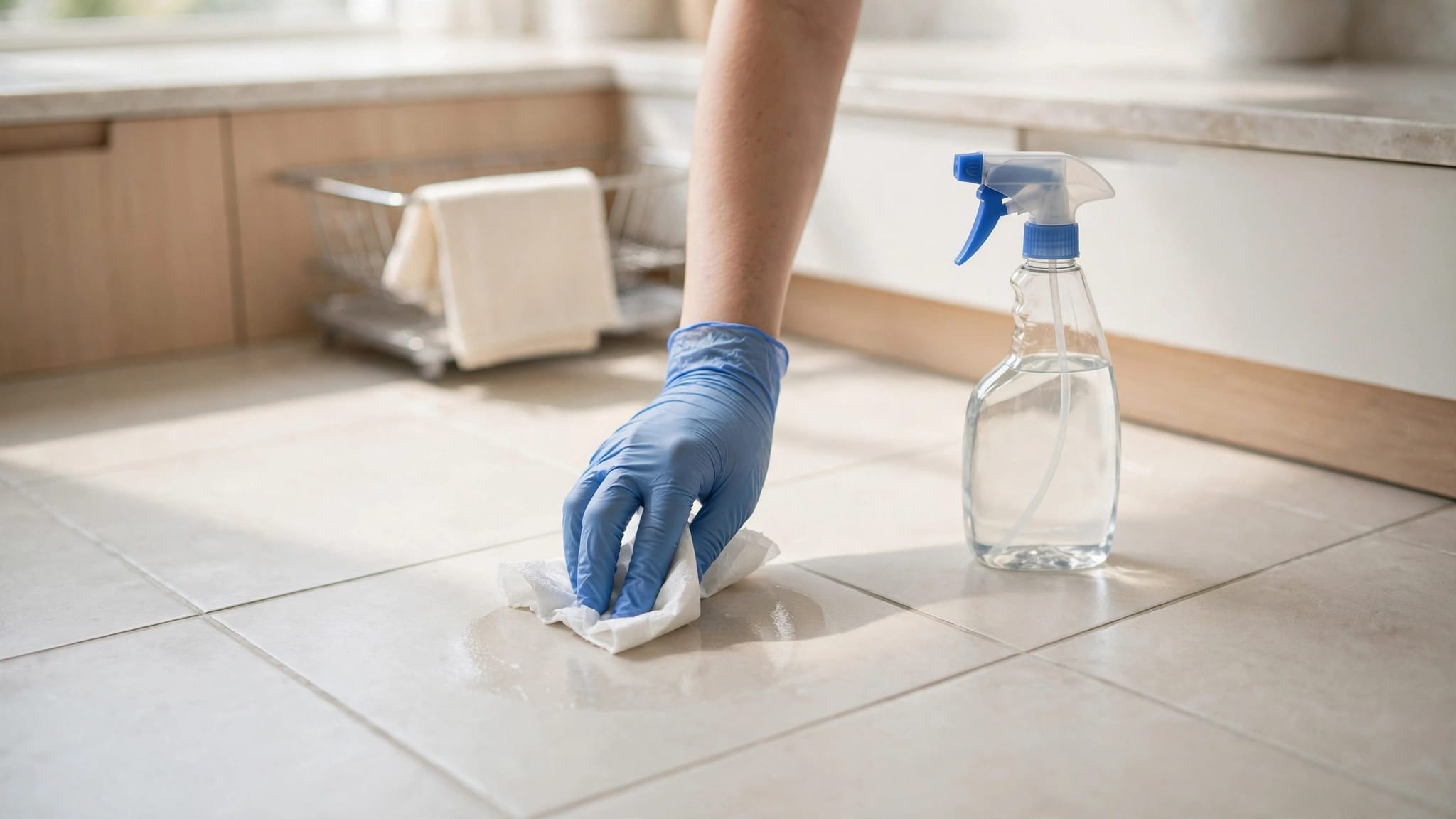
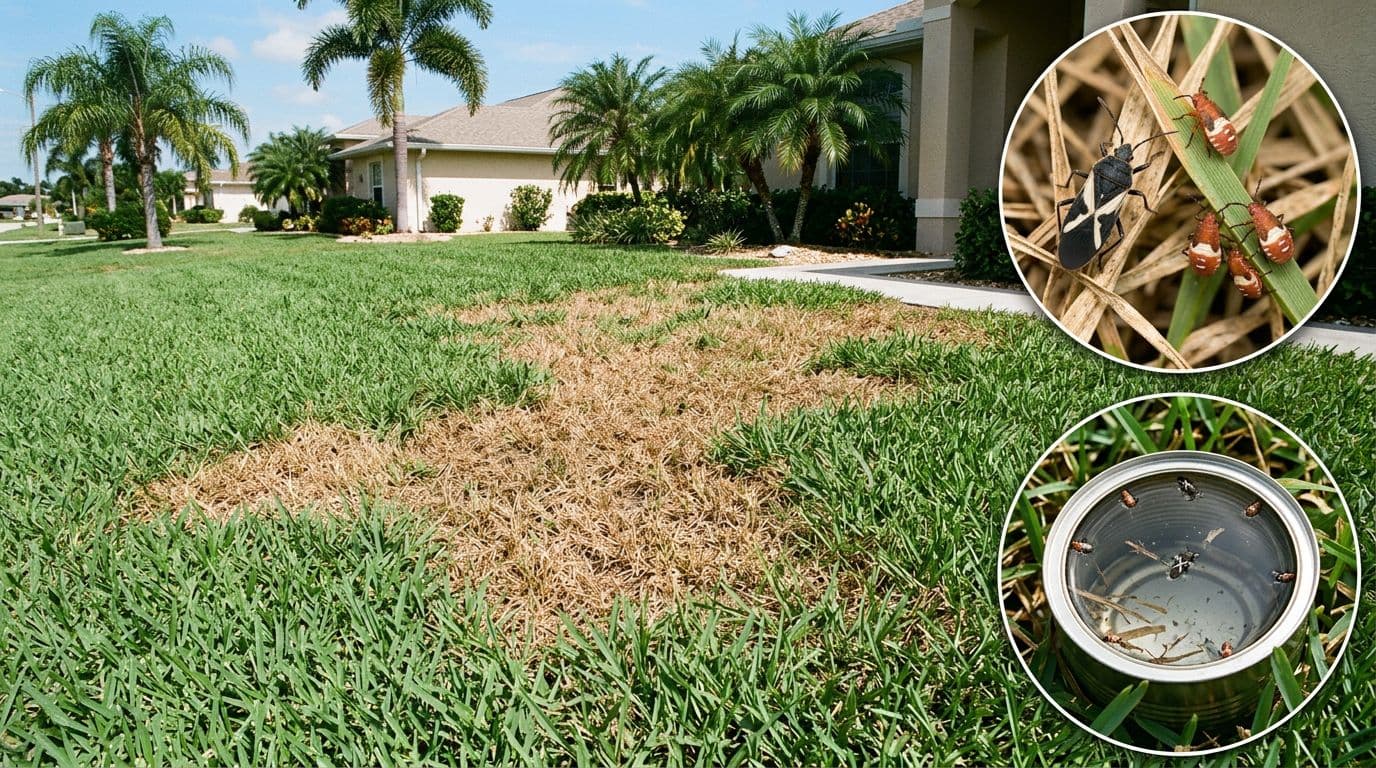 An example of classic chinch bug damage and simple ways to confirm it, created with AI.
Southern chinch bugs (the main turf pest in Florida St. Augustinegrass) feed by piercing grass and sucking plant fluids. Their feeding can also inject toxins that disrupt water movement in the plant. The result often looks like drought stress, even when you're watering.
In Cape Coral, chinch bugs Cape Coral lawns tend to flare up where turf already struggles. For example, along hot pavement, in full sun, or in areas that dry out first. Because sandy soil drains quickly, a lawn can get stressed in a hurry, especially under irrigation day limits.
Watch for these patterns:
- Irregular patches that start yellow, then turn tan or straw-brown.
- A spreading edge where green grass meets thinning grass. That border is the "front line."
- Damage that doesn't improve after normal watering, or gets worse a few days later.
- More activity in sunny spots , even when shaded areas look fine.
A helpful clue is where you find the bugs. Chinch bugs like to hide down in the thatch and at the base of the grass, not on the leaf tips. If your lawn has a puffy, spongy feel, or you can see a thick layer of dead stems near the soil, the yard is more inviting to them.
If you're dealing with other outdoor pests at the same time, you may also want to skim this related local guide on fire ant control in Cape Coral, since lawn stress and pest pressure often stack up together.
Drought, fungus, or chinch bugs? A step-by-step brown patch checklist
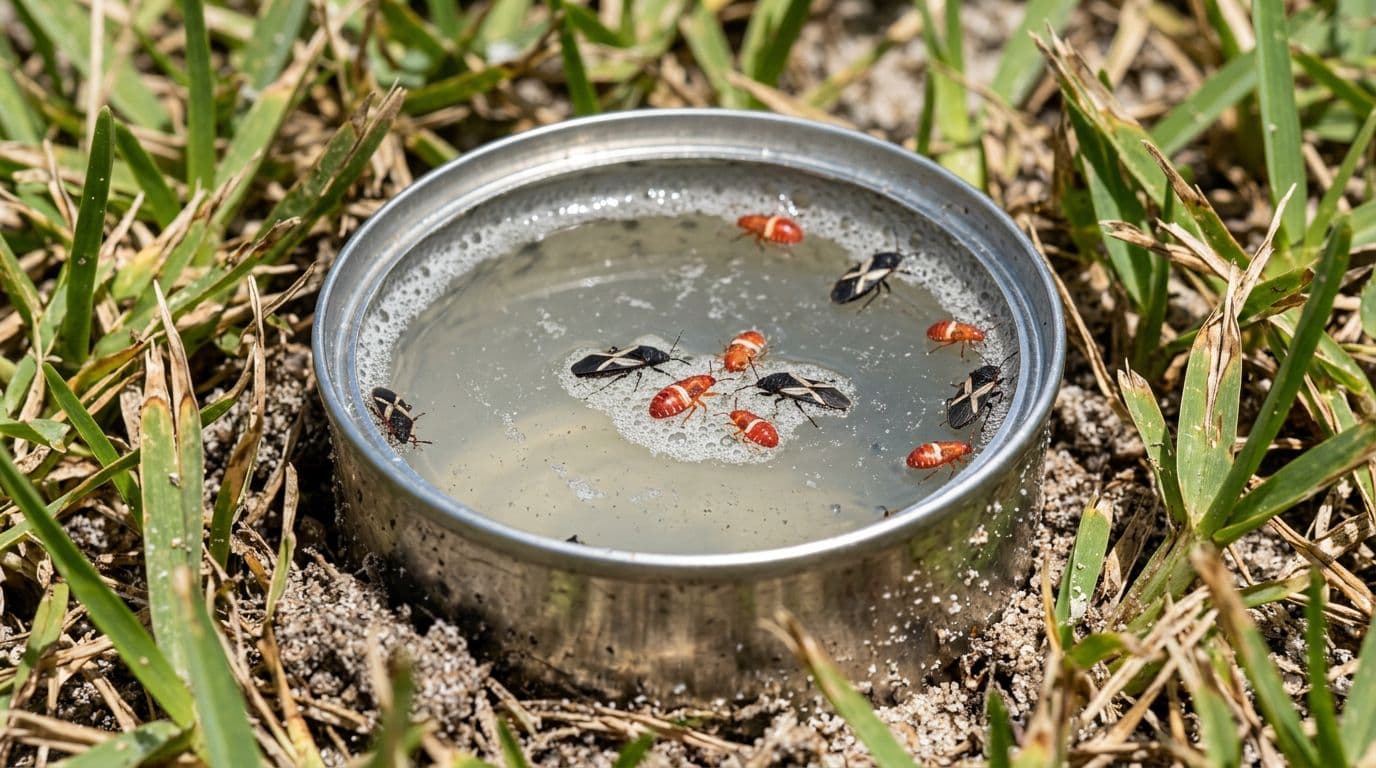 The coffee-can flotation test is a simple way to confirm chinch bugs, created with AI.
Before treating anything, confirm the cause. Otherwise, it's easy to spray an insecticide on a fungus problem, or push more water onto a chinch bug infestation.
Here's a quick comparison to narrow it down:
| What you notice | More like drought stress | More like fungus | More like chinch bugs |
|---|---|---|---|
| Patch shape | Broad, uniform dry areas | Often circular or ringed | Irregular, "spilling" outward |
| Timing | After missed irrigation or wind | After humid, wet periods | Often during warm, dry stress |
| Leaf look | Folded blades, crispy tips | Spots, lesions, greasy look | Yellowing, then thinning at the base |
| Best clue | Improves after correct watering | Pattern repeats, spreads in moisture | Bugs present in thatch, edge advances |
Now use this simple diagnostic checklist in order:
- Check your irrigation first. Look for a broken head, blocked nozzle, or a zone that isn't running. Also check for dry, hydrophobic soil that repels water.
- Do the "tug test." Grab a handful of grass in the brown area and pull. If it lifts like a loose rug, think root issues or severe decline. Chinch bug damage often leaves stolons intact at first, but the turf thins and separates as it worsens.
- Inspect the advancing edge. Part the grass where green meets yellow. Look down at the soil line and thatch. Adult chinch bugs are tiny, dark, with light wings that can form an X pattern. Nymphs are smaller and can look red-orange with a pale band.
- Run the coffee-can flotation test. Push a bottomless coffee can (or similar cylinder) a couple inches into the turf at the border of the patch. Fill with water, a small amount of mild soap can help break surface tension. Watch for several minutes. If chinch bugs are present, some will float up.
- Pause before blaming fungus. Many fungal issues need different products and timing. If you don't see lesions, and the edge is marching outward, keep chinch bugs high on the list.
Biggest "gotcha": if you only inspect the dead center, you may miss the insects. Always check the green-to-brown border .
Stop the brown patch: confirm, reduce stress, spot-treat, re-check, recover
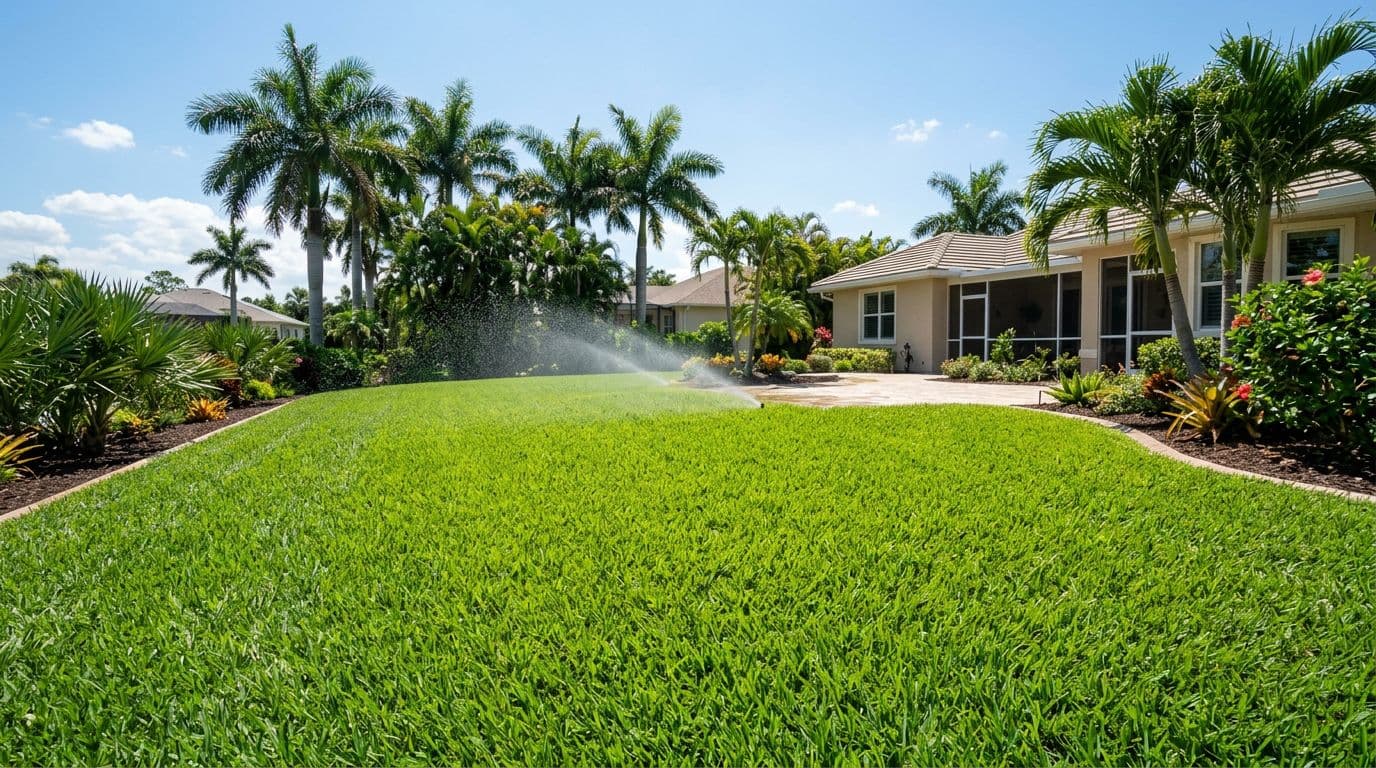 Healthy St. Augustinegrass is dense and even, which helps resist pest damage, created with AI.
Once you're confident it's chinch bugs Cape Coral homeowners are dealing with, use this action plan. It focuses on accuracy first, then targeted treatment.
- Confirm the infestation (don't guess). Re-check two or three spots along the patch edge. If you find consistent bug activity, move forward. If you don't, revisit irrigation and disease possibilities.
- Reduce lawn stress right away.
- Water correctly : Follow Cape Coral watering day rules, and aim for deep, infrequent irrigation that wets the root zone, not daily sprinkles. Also water early morning so blades dry out fast.
- Mow at the right height : St. Augustinegrass usually does better a bit higher, scalping adds stress. Keep blades sharp.
- Manage thatch : Too much thatch shelters chinch bugs and blocks water. If the lawn feels spongy, plan for dethatching or core aeration at the right time for your turf and season.
- Use targeted treatment, not a whole-yard "carpet bomb." Chinch bug activity concentrates at the perimeter and the advancing edge. Spot-treat that zone and a small buffer into the healthy grass, following the label for the product you choose. In many cases, this is enough to stop the spread while using less material.
- Avoid pyrethroid overuse (resistance is real). Many over-the-counter sprays rely on the same class of active ingredients. Repeating the same mode of action can select for resistant chinch bugs over time. Rotate modes of action when the label allows it, and avoid automatic re-sprays "just because."
- Re-check in 7 to 14 days. Repeat the flotation test at the edge. If bug numbers drop and the patch stops expanding, you're on track. If the edge keeps moving, it's time to reassess product choice, coverage at the border, or consider professional help.
- Support recovery once the feeding stops. Brown stolons may not green back up. However, nearby runners can fill in with time. Keep mowing steady, avoid heavy nitrogen right away, and consider light topdressing or plugging if the area is thin.
If you'd rather have a technician confirm what's going on and prevent repeat problems, it helps to understand pest control costs in Cape Coral before you schedule service.
Bottom line: brown patches don't always mean you need more water or a fungicide. With chinch bugs, the win comes from confirming the pest, reducing turf stress, and treating the advancing edge with care.
In other words, stop the spread first, then let the lawn rebuild. Healthy, dense St. Augustinegrass is your best long-term defense.
Schedule a Free Inspection: