Palm Flower Beetles at Cape Coral Porch Lights and Entryways
Palm flower beetles can turn a quiet Cape Coral porch into a moving target after sunset. They often show up in clusters around lights, screens, and front doors, especially when the weather is warm and nearby palms are dropping debris.
For most homeowners, the problem is annoyance, not damage. These beetles are a nuisance pest , but they can still make entryways messy and frustrating when they gather by the dozens.
A few simple changes around the porch can cut the traffic fast. The key is knowing what draws them in and what keeps them coming back.
Why Palm Flower Beetles Head for Porch Lights
Bright entry lights act like a beacon after dark. When a porch light sits close to a front door, beetles fly toward the glow, circle the fixture, and land on the walls, screens, or door frame.
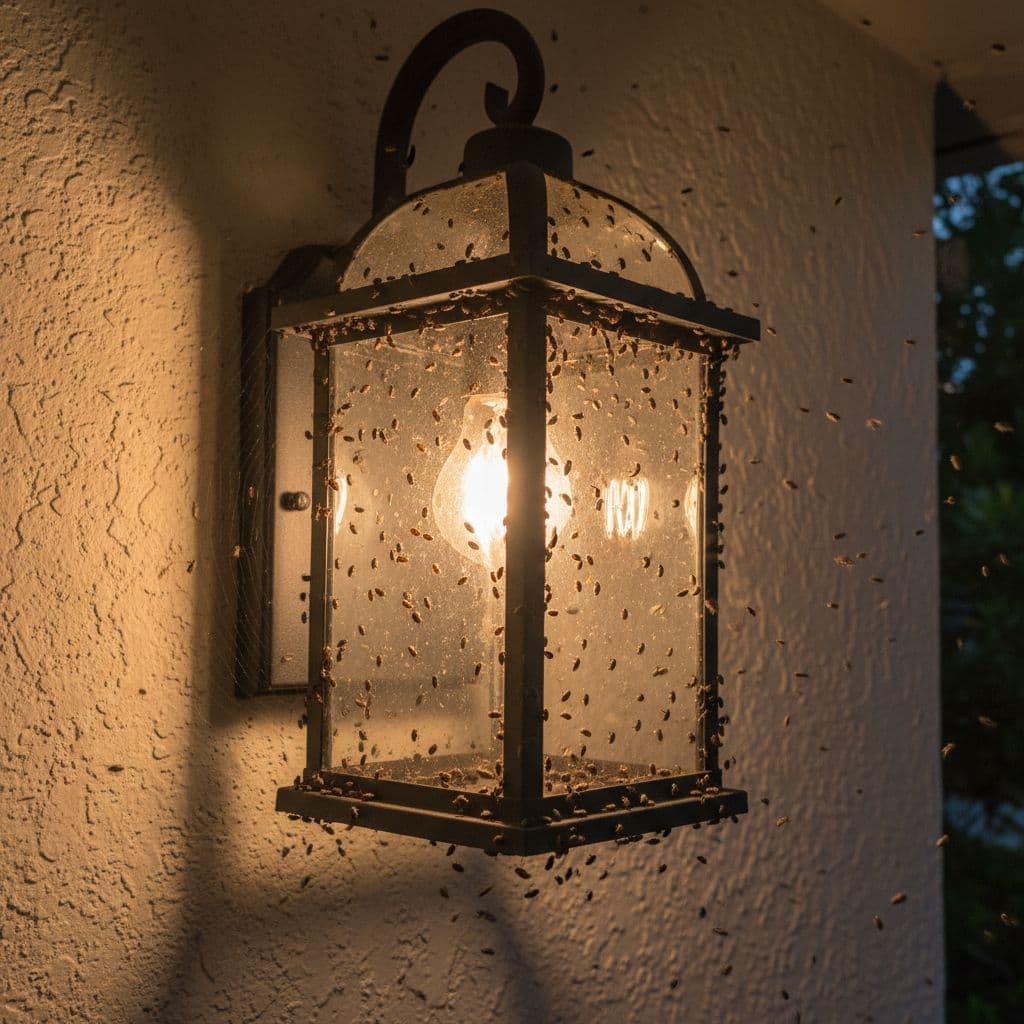
Warm lights can be part of the problem, especially when they sit near palms, mulch beds, or piles of plant debris. In other words, the beetles are not chasing your house itself. They are responding to a mix of light, shelter, and nearby organic material.
That's why one Cape Coral entryway can seem fine during the day, then get busy at night. The porch becomes the brightest stop in a small area full of plant life. Add a little breeze, a little humidity, and a light left on for hours, and the doorway starts to look like a landing zone.
The beetles often appear in bigger numbers during seasonal stretches. Warm evenings, recent rain, and trimmed palms can all bring out more activity. If your front porch sits close to landscaping, you may see them collect on the same side of the home again and again.
How to Recognize Them Around Entryways
Palm flower beetles are easy to confuse with other small insects at a glance. Size, shape, and behavior matter more than a single blurry photo on a screen door.
Here are the most common clues.
| What you see | What it often means |
|---|---|
| Small, hard beetles on screens or glass | They are gathering where light spills onto the porch. |
| More bugs near one fixture than the rest | That light is acting like a magnet. |
| Activity after palm trimming or windy weather | Nearby plant material may be adding to the draw. |
| Bugs outside the door, but no damage inside | This is usually a nuisance at the entry, not a structural pest problem. |
A quick pattern check helps. If the insects are mostly outside, show up after dark, and fade when the light goes off, palm flower beetles are a good suspect. If they were coming from inside walls or chewing wood, the picture would be different.
Most porch-light beetle problems are about irritation, not danger. The goal is to make the doorway less inviting, not to panic over every bug that shows up.
They are not a termite problem. They are not a sign that your house is being damaged. Still, a porch full of beetles can make it hard to open the door, sit outside, or keep the entry looking clean.
Why Cape Coral Homes See Seasonal Surges
Cape Coral yards give these beetles plenty of reasons to stay nearby. Palms are common, and so are decorative beds, mulch, and fallen plant material. Those spots offer shelter and organic matter that can help keep insects close to the house.
Warm weather matters too. On mild nights, lights stay on longer and bugs stay active later. If a porch light shines over a walkway lined with palms or shrubs, it can pull beetles straight toward the entry.
Weather can make the problem worse. After rain, wind, or pruning, loose plant debris often ends up on the ground. That debris draws insects in, and the nearby light keeps them there.
Homes with strong outdoor lighting see this more often. A bright lantern by the front door may look great from the street, but it can also pull insects from the yard. When the light sits near soffits, windows, or a glass door, the beetles get even more places to land.
The good news is simple. A season of heavy activity does not mean the house is infested. It usually means the porch setup is giving beetles too many reasons to stop by.
Simple Ways to Cut Down Porch Activity
A few changes around the entry can make a big difference. The goal is to reduce what attracts the beetles and close off easy paths to the door.
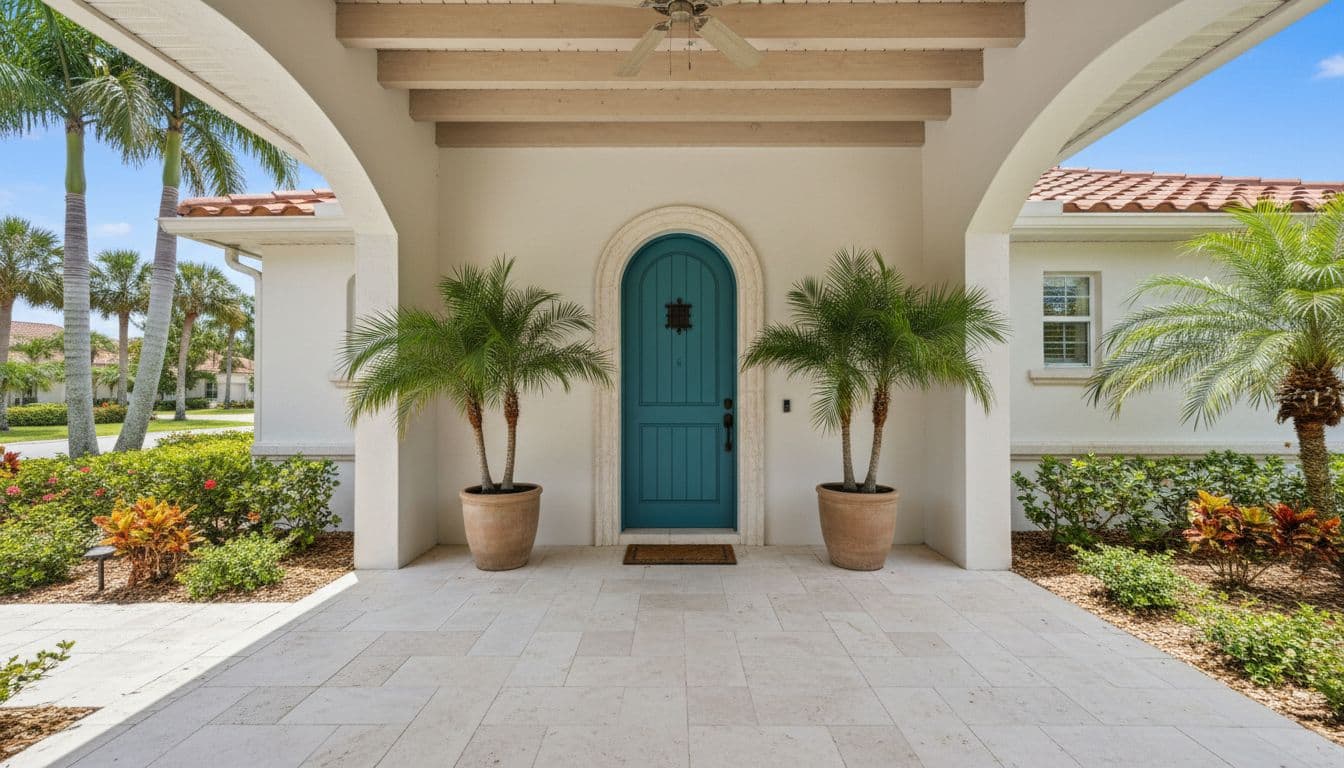
Start with the light itself. Swap bright white bulbs for warm-white or amber LEDs when you can. Move the fixture farther from the door if the layout allows it, and aim it downward so less light spills across the wall.
Then close the gaps. Worn weatherstripping, loose door sweeps, and small openings around the frame give insects an easy way to slip in. Tight seals won't stop every bug, but they will lower the number that reach the threshold.
Cleanup matters just as much. Sweep away palm seeds, fronds, mulch, and fallen fruit. Trim back plants that touch the house, because touching branches create a direct path to the porch.
These steps work best together:
- Swap bright white bulbs for warm-white or amber LEDs.
- Move the fixture away from the door if the layout allows it.
- Add a door sweep and replace worn weatherstripping.
- Sweep away palm seeds, fronds, mulch, and fallen fruit.
- Trim plants that touch walls, screens, or soffits.
Also check the space around planters, hose reels, and stacked decor. Clutter gives insects more places to rest. A cleaner entry stays less attractive after dark.
If you already keep the porch tidy, focus on the light source next. Many homeowners see a big drop in activity after changing bulb color alone.
When Repeated Beetle Traffic Needs Professional Help
If beetles keep coming back night after night, the source is usually outside the door, not inside the house. That can mean nearby palms, a light that draws insects from the yard, or a small opening that keeps pulling them toward the entry.
A local inspection can sort that out fast. A residential pest control in Cape Coral visit can identify where the beetles are gathering, check likely entry points, and apply targeted exterior treatment where pests enter and live.
That kind of service is useful when the problem repeats even after you change bulbs and clean the porch. It's also helpful if you have multiple entryways, a shaded yard, or heavy landscaping around the home. The technician can look at the whole setup, not just the front door.
Exterior-focused treatment makes sense here because the beetles spend most of their time outside. A careful approach keeps the work near lights, eaves, screens, and nearby plant areas. That gives you a better shot at reducing the nightly buildup without turning the whole home into a treatment zone.
If the porch lights are still crowded after the simple fixes, the issue is usually deeper than a few stray bugs. A good inspection finds the pattern and helps break it.
Conclusion
Palm flower beetles around Cape Coral porch lights are frustrating, but they usually point to a simple pattern. Bright light, nearby palms, and leftover plant debris often create the perfect setup for a nightly swarm.
Once you change the bulb, clean the entry, and close the small gaps around the door, the problem often drops fast. If the beetles keep returning, the next step is a targeted look at the outside of the home.
A calmer porch usually starts with a few small changes, and those changes go a long way.
Schedule a Free Inspection: