How Lubber Grasshoppers Damage Hibiscus and Screen Enclosures in Cape Coral
A single lubber grasshopper can leave a hibiscus bloom looking shredded overnight. In Cape Coral, that kind of damage often shows up fast on ornamentals, then the pests start showing up again around patios, lanais, and pool cages.
If you've seen ragged petals, chewed leaves, or big insects clinging to your screen enclosure, you're not alone. The fix starts with knowing what these pests eat, why they hang around your yard, and why a screen does not always keep them out.
Why Cape Coral yards attract lubber grasshoppers
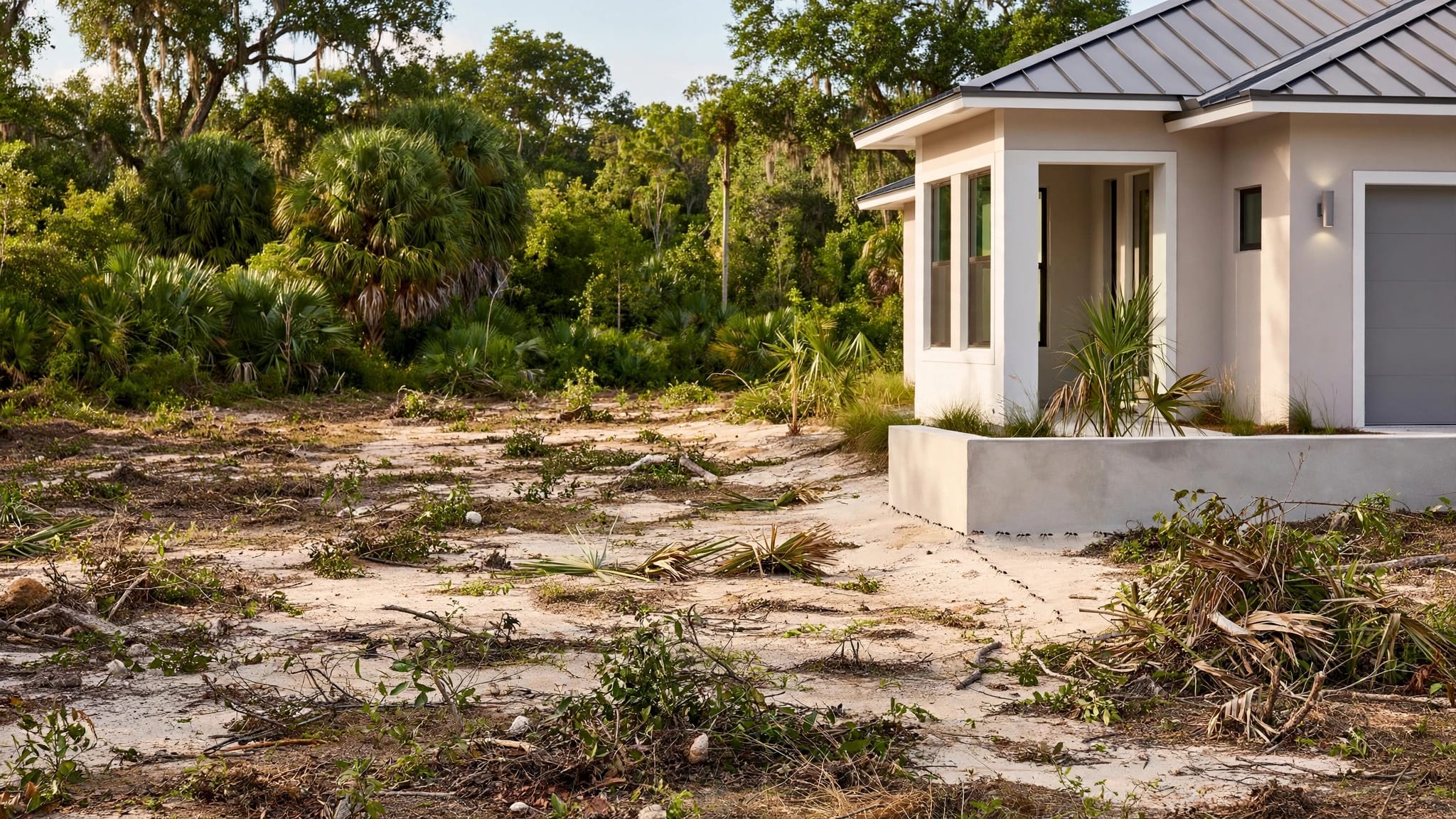
Cape Coral landscapes give lubber grasshoppers what they want: warmth, shelter, and plenty of tender plants. After summer rain or regular irrigation, new growth comes back fast, and that fresh material is easy for them to feed on.
They are large, slow-moving, and hard to miss once they settle in. Even so, people often confuse them with other pests at first. The big difference is simple. Lubber grasshoppers are plant pests , not termites or structural pests. They chew ornamentals, vegetables, and soft landscape growth. They do not eat framing, drywall, or the structure of your home.
That matters because the problem looks dramatic, but the source is usually in the yard. Hibiscus, cannas, and other broadleaf plants can draw them in. Mulch beds, dense shrubs, and overgrown edges give them cover during the day. In other words, the yard can act like a buffet and a hiding place at the same time.
Once they settle into one area, they often keep returning to the same plants. That is why homeowners may see damage on one shrub first, then notice the same pattern on nearby ornamentals a few days later. The feeding can look random, but the pattern usually tells a clear story.
How hibiscus shows the damage first
Hibiscus is one of the easiest plants for homeowners to spot trouble on. The petals are soft, the leaves are tender, and new buds are especially vulnerable. A lubber grasshopper does not need long to make a bloom look rough.
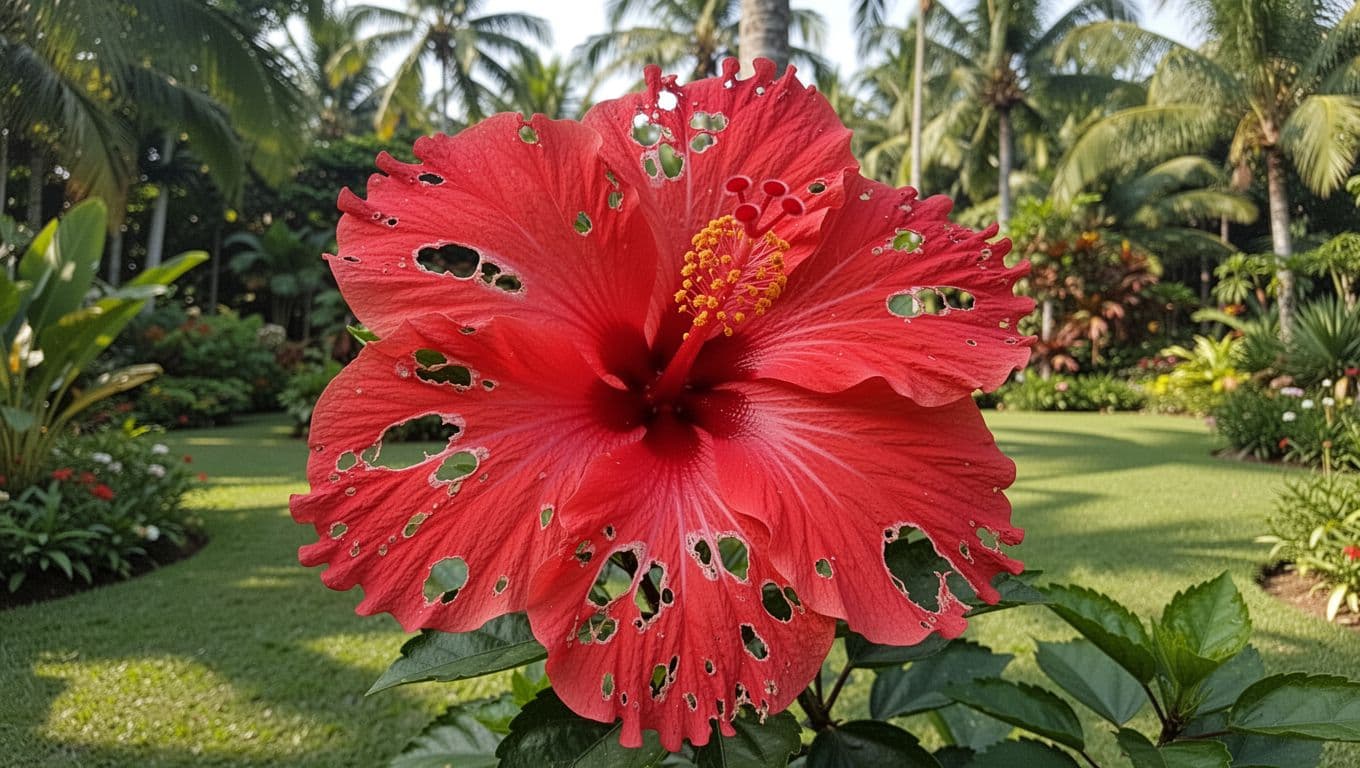
The damage usually shows up as irregular holes, torn edges, or petals that look half eaten. Leaves may have large missing sections. New buds can be chewed before they ever open. When a plant is hit hard, it can look thin and tired even if the roots are still healthy.
That kind of feeding is frustrating because hibiscus is supposed to be one of the showpieces of a Southwest Florida yard. Instead of a full bloom, you get petals that look like they went through a paper shredder. The plant may recover, but repeated feeding can weaken new growth and keep the shrub from looking its best.
The best clue is often the timing. If the damage appears after rain, after fresh trimming, or after a burst of new growth, grasshoppers are often involved. You may also find the pest resting on nearby stems, mulch, or fencing during the day. Their size makes them easier to spot than many garden pests, but their feeding can still catch people off guard.
Why screen enclosures and lanais still get visits
A screen enclosure helps with many pests, but it does not create a perfect barrier for lubber grasshoppers. If the insects are already in the yard, they can still reach the outside of the cage, the frame, and nearby plants. That is one reason homeowners see them around pool cages even when the screen itself looks intact.
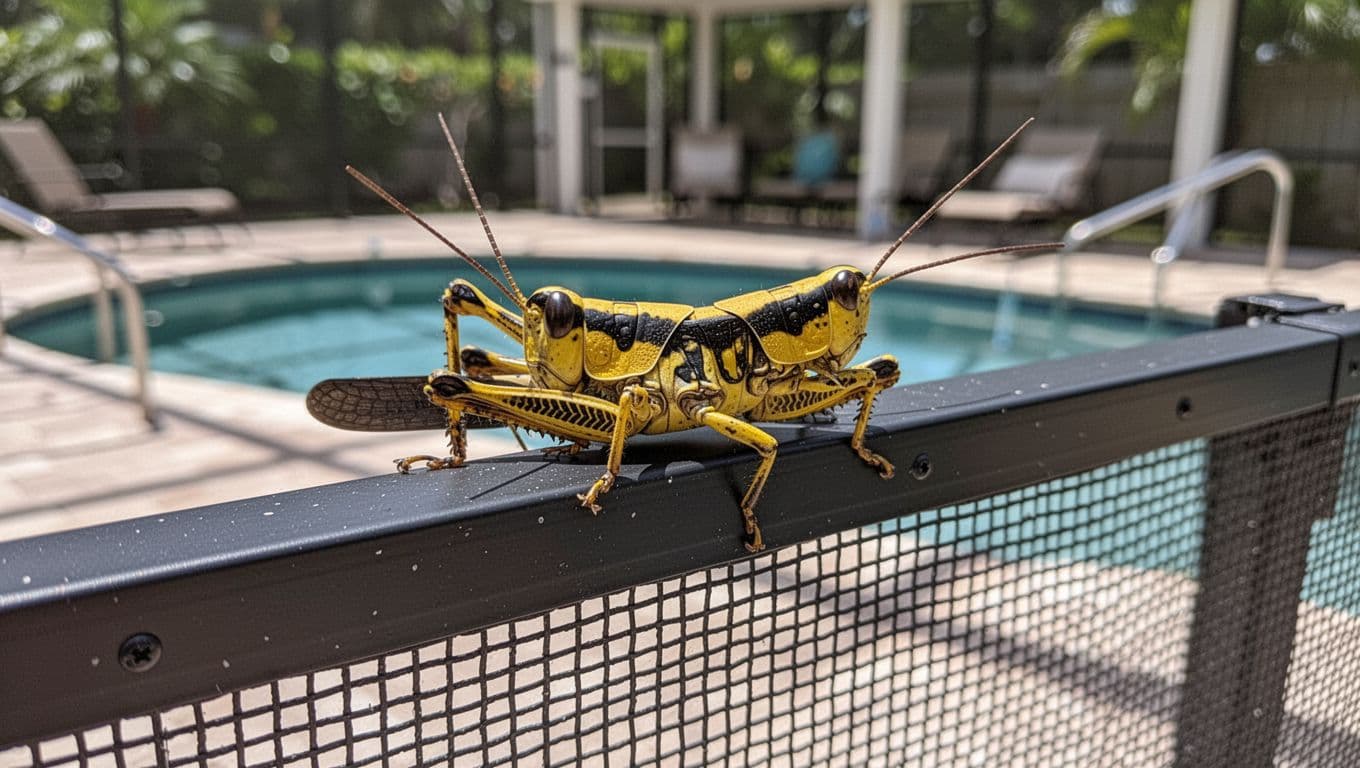
A screen enclosure can slow them down, but it cannot solve a yard problem by itself. If a hibiscus bush leans into the cage, the pest can feed from the outside. If potted plants sit beside the frame, the grasshopper can move between the plant and the enclosure. If a door stays open, even briefly, the pest can wander inside the lanai.
The frame itself also gives them a place to rest. That makes them more visible, which is annoying, but it also means the enclosure may be acting like a staging area instead of a barrier. You may not see dozens at once. Still, a few large grasshoppers in the same spot can cause steady damage around the patio and screen line.
A screen enclosure helps with insects, but it doesn't fix a landscape that already has feeding pests in place.
Homes with dense planting around the cage tend to see more of this problem. The closer the foliage sits to the screen, the easier it is for grasshoppers to move back and forth without crossing much open space. That is why trimming and spacing matter as much as the enclosure itself.
Practical ways to cut down damage around the yard
The most useful steps are simple, steady, and local to the landscape. You do not need a complicated setup to make the yard less appealing.
- Trim plants away from the enclosure so hibiscus and other ornamentals do not touch the screen or frame.
- Remove weeds and overgrown edges where grasshoppers can hide during the day.
- Check new growth often , especially after rain, because fresh leaves are what they feed on first.
- Rake up fallen leaves and petals so the base of the plant stays easier to inspect.
- Watch potted plants on lanais , since they can become an easy feeding spot close to the house.
- Use irrigation wisely , because overly lush growth can keep tender plants attractive for longer.
The goal is to make the yard less comfortable for them and easier for you to inspect. If you can see the base of the shrub, the frame of the cage, and the leaves without squeezing through thick growth, you are in a better spot.
It also helps to avoid grabbing the first spray you find in the garage. Random over-the-counter products can miss the target, and they may create extra risk around pets, kids, and beneficial insects. For a home with ornamental plants and a screened outdoor living area, placement and timing matter more than a quick blast of product.
If the same hibiscus keeps getting hit, check what is around it. A nearby vine, weed patch, or overgrown hedge can keep the problem going even after the main plant is trimmed back.
When repeated feeding calls for local help
One or two grasshoppers in the yard may be a nuisance. Repeated feeding across several plants is a different story. If the damage keeps spreading, or if you keep seeing large adults around the patio and enclosure, it makes sense to bring in help.
A local inspection can sort out whether the problem is centered in the landscape, around the screen enclosure, or somewhere else on the property. That is useful because lubber grasshoppers need a different response than termites, ants, or other structural pests. They are a garden issue first, and a home issue only when their activity keeps moving toward the living space.
For Cape Coral homeowners, that often means looking at the whole outdoor setup. The yard, the pool cage, the patio plants, and the edges of the lawn all work together. If one part keeps giving the pests food and cover, the damage usually returns.
If you need a closer look, residential pest control Cape Coral can help identify where the pests are coming from and what part of the yard needs attention first.
Conclusion
Lubber grasshoppers are easy to overlook until a hibiscus bloom comes back shredded. They do their worst in Florida yards with lush growth, close plantings, and screened patios that sit right next to the action.
If you keep the landscape open, trim plants back from the cage, and watch for early feeding, you can stay ahead of most of the damage. The key is treating the yard as part of the problem, because screen enclosures alone will not stop pests that are already on the move.
Schedule a Free Inspection: