Spiny-Backed Orbweavers on Cape Coral Pool Cages
A bright, spiny spider on your pool cage can look alarming, especially when it appears beside a lanai door or above the pool. In Cape Coral, however, spiny-backed orbweavers are usually harmless outdoor spiders that help catch insects.
Their webs can become a nuisance when they collect along screens, lights, and walkways. The right response is gentle removal, fewer insect-attracting conditions, and careful landscaping rather than unnecessary pesticide use. First, it helps to understand what you're seeing.
Key Takeaways
- Spiny-backed orbweavers in Cape Coral are generally nonaggressive and beneficial insect predators.
- Their webs often appear where flying insects gather, including pool cage lights and lanai entrances.
- Remove webs with a soft brush or extension duster instead of pulling on screen mesh.
- Trim vegetation away from the enclosure, reduce nighttime lighting, and repair screen gaps.
- Call a pest professional when spider activity is extensive, recurring, or mixed with other pest problems.
What Spiny-Backed Orbweavers Look Like
The spiny-backed orbweaver, Gasteracantha cancriformis , is easy to recognize once you know its shape. The female has a small, hard-looking abdomen with several short spines around the edges. Her body may appear white, yellow, orange, or reddish, and dark spots are common.
Most homeowners notice the web before they notice the spider. The web is usually a round, wheel-shaped structure stretched between plants, cage supports, railings, or other narrow surfaces. The spider often sits near the center during daylight, waiting for insects to strike the sticky strands.
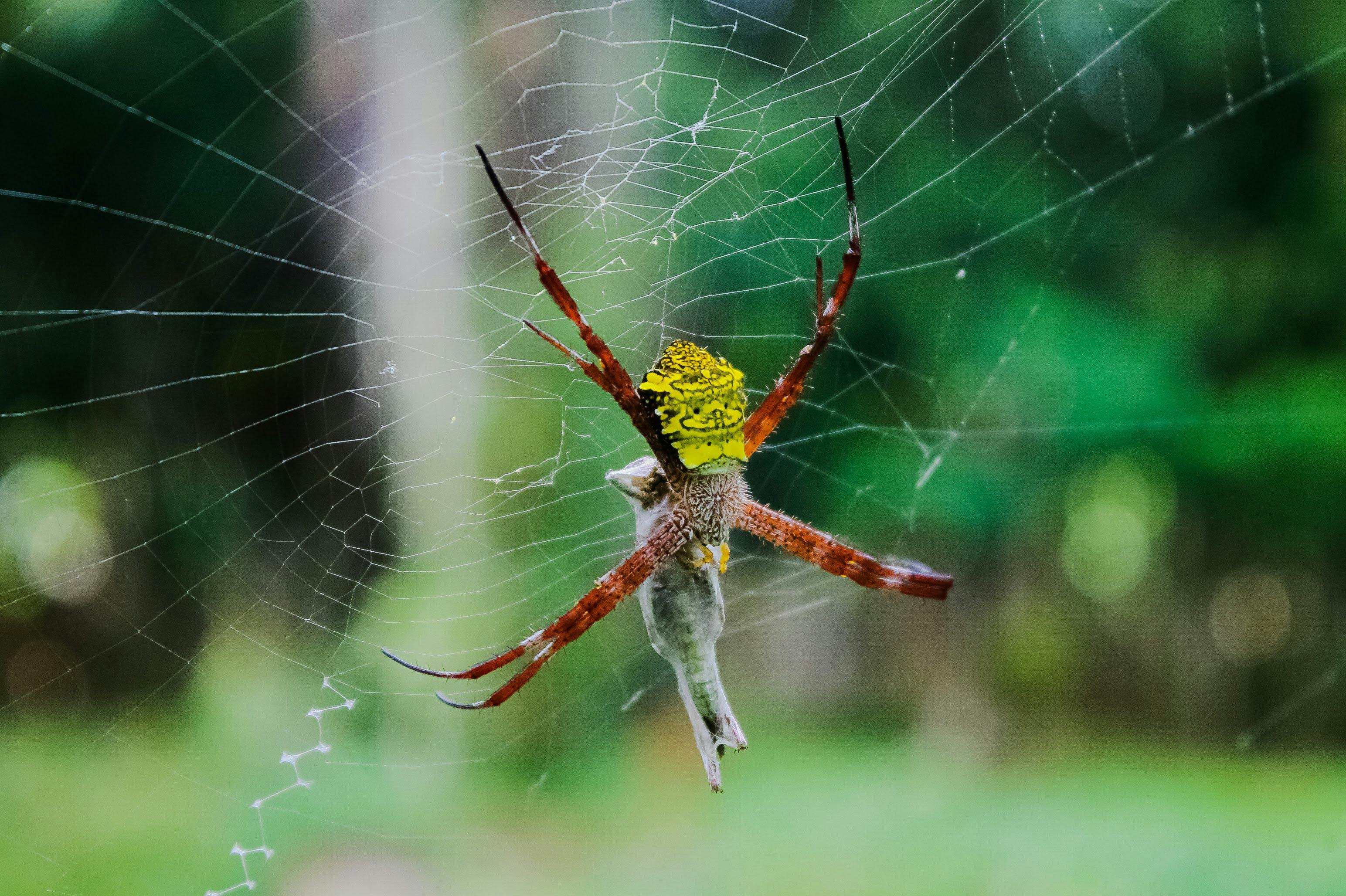
An adult spiny-backed orbweaver resting on its web.
These spiders don't build nests inside homes, chew through screens, or damage aluminum pool enclosures. They also don't seek out people. A spider may drop or move when someone walks through its web, but it doesn't typically defend the web aggressively.
Their main value is insect control. Orbweavers catch small flying insects, including flies and moths. They may capture mosquitoes, but a web shouldn't be treated as a dependable mosquito-control method. The spider is part of the outdoor food chain, so leaving it alone can be useful when its web isn't blocking a walkway.
Why Cape Coral Pool Cages Attract Them
Cape Coral's warm, humid climate supports spiders and the insects they eat for much of the year. Pool cages and screened lanais create convenient web-building surfaces, especially when vegetation grows close to the enclosure.
Lighting also plays a role. Outdoor bulbs attract moths, flies, and other insects after sunset. Spiders may build nearby because the light creates a steady food source. A web near a lanai light doesn't mean the spider is attracted to the light itself. It is usually following the insects.
The cage's frame provides stable attachment points. Horizontal bars, corners, roof supports, and screen seams can all hold anchor lines. When evening moisture settles on the web, it becomes easier to see the next morning.
Landscaping can increase activity around the enclosure as well. Palms, shrubs, vines, and flowering plants that touch the cage give spiders more places to move and stretch webs. Dense plants also shelter the insects that orbweavers hunt.
A few conditions commonly contribute to recurring webs:
- Bright lights that stay on all night
- Shrubs or vines touching the cage
- Torn screens or gaps around doors
- Heavy insect activity near standing water or vegetation
- Unused corners that rarely receive cleaning
Moving a light or trimming a plant won't remove every spider. Still, these changes can make the enclosure less attractive without harming beneficial insects or nearby pollinators.
Are Spiny-Backed Orbweavers Dangerous?
For most Cape Coral homeowners, the answer is no. Spiny-backed orbweavers are generally harmless to people and pets. They aren't known for aggressive behavior, and bites are uncommon because these spiders prefer to stay on their webs.
Their unusual spines cause concern, but the spines are part of the spider's body shape. They don't indicate that the spider is preparing to attack. The more noticeable female is often less than half an inch across, although the web can span a much larger area.
You can distinguish this orbweaver from a more concerning spider by looking at its overall form. Spiny-backed orbweavers have a broad, flattened, spiny abdomen. Black widows have a smooth, glossy body and may show red or orange markings. Identification becomes harder when the spider is small, damaged, or seen only in poor light, so don't handle an unknown spider.
A large web does not mean a dangerous spider. Look at the spider's body shape and markings before deciding how to respond.
If a spider is in an inconvenient location, keep children and pets away while you remove the web or wait for the spider to move. Anyone who experiences a suspected spider bite with severe or worsening symptoms should seek medical care. Most web sightings around a pool cage don't require emergency action or chemical treatment.
Safe Web Removal Around Screens and Lanais
Web removal is simple, but the tool you use matters. A stiff broom, pressure washer, or sharp pole can stretch screen fabric, loosen spline, or damage the frame finish. Screen repairs are more expensive than careful routine cleaning.
Use a soft-bristled outdoor brush, microfiber duster, or extension cobweb duster. Work from the outside when possible, and move slowly around corners and roof panels. Sweep the web away rather than pressing the tool into the screen.
Follow these steps:
- Turn off nearby lights and wait until the spider has moved, if possible.
- Wear gloves and closed-toe shoes while cleaning around plants, storage areas, or equipment.
- Start at the highest point and pull the web outward with a soft brush.
- Avoid dragging the brush across the mesh with force.
- Collect loose web material and place it in a sealed trash bag.
- Check the same area the following morning for new anchor lines.
A handheld vacuum can remove webs from sturdy frame surfaces, but keep the nozzle away from delicate screen mesh. Never use a flame, aerosol spray, or harsh solvent near a screen enclosure. These methods can damage materials and create avoidable safety risks.
If the spider is still on the web, don't crush it against the screen. You can leave it in place until it moves, or use a container and stiff piece of cardboard if you feel comfortable doing so. Many homeowners prefer to remove only the web and allow the spider to relocate.
Pool owners should also keep web debris out of skimmer baskets and filters. Loose material can collect around equipment, especially after wind. Brush cage surfaces before rinsing the pool deck, so debris doesn't wash into the water.
Preventing Recurring Webs Without Harming Pollinators
The best prevention plan reduces the conditions that bring insects close to the cage. It doesn't need to eliminate every spider from the yard. Beneficial predators deserve space, especially in landscaping that supports butterflies, bees, and other pollinators.
Start with the area immediately around the enclosure. Trim branches, vines, and shrubs so they don't touch the screen or roof. Remove dead leaves and dense debris from corners, but avoid broad spraying on flowering plants. Targeted maintenance works better than treating the entire yard.
Lighting changes can also help. Turn off pool and lanai lights when no one is using the area. Motion sensors or timers can reduce the hours that insects gather near the cage. If you replace bulbs, choose an outdoor fixture that provides the needed visibility without excessive brightness.
Inspect the enclosure every few months. Repair small tears before they become larger openings, and check the door sweep, latch, and frame corners. Spiders can enter through gaps, but insects can enter too, which creates more food for them.
Keep other insect sources under control. Empty containers that collect rainwater, maintain pool chemistry, and keep garbage containers closed. These steps support mosquito and fly control while reducing the prey that attracts spiders.
Avoid routine perimeter spraying solely because you see a few orbweaver webs. Pesticides can kill non-target insects and may expose pollinators to unnecessary chemicals. If treatment becomes necessary, a licensed technician can inspect the property and select the narrowest practical approach.
When to Call a Cape Coral Pest Professional
A few webs on a pool cage usually need cleaning, not pest control. Professional help makes more sense when webs return across multiple areas, spiders appear inside the home, or you see several types of pests at the same time.
An inspection can identify conditions that homeowners may overlook, such as damaged screens, gaps around doors, dense vegetation, or an insect source near the lanai. A technician can also help separate harmless orbweavers from spiders that require a different response.
Contact a local pest control company if activity interferes with outdoor use, continues after routine maintenance, or comes with flies, ants, mosquitoes, or rodents. Shield Home & Pest Control Services offers residential inspections and estimates for Cape Coral homeowners who need a broader property assessment.
Ask what the treatment targets, where products will be applied, and how the company will protect pets, people, flowering plants, and beneficial insects. A clear plan should address the cause of recurring activity instead of relying on repeated blanket spraying.
Conclusion
Spiny-backed orbweavers on Cape Coral pool cages and lanais are usually a sign of active outdoor insect life, not a dangerous infestation. Their webs can be removed safely with a soft brush, while trimming vegetation, reducing unused lighting, and repairing screen gaps can limit repeat activity.
Because these spiders are useful predators, removal and prevention should come before pesticides . When webs are widespread or other pests are present, a professional inspection can identify the source and recommend a focused solution that keeps your lanai comfortable without treating every spider as a threat.
Schedule a Free Inspection: