Pool Cage Screens: What They Block and What Gets Through
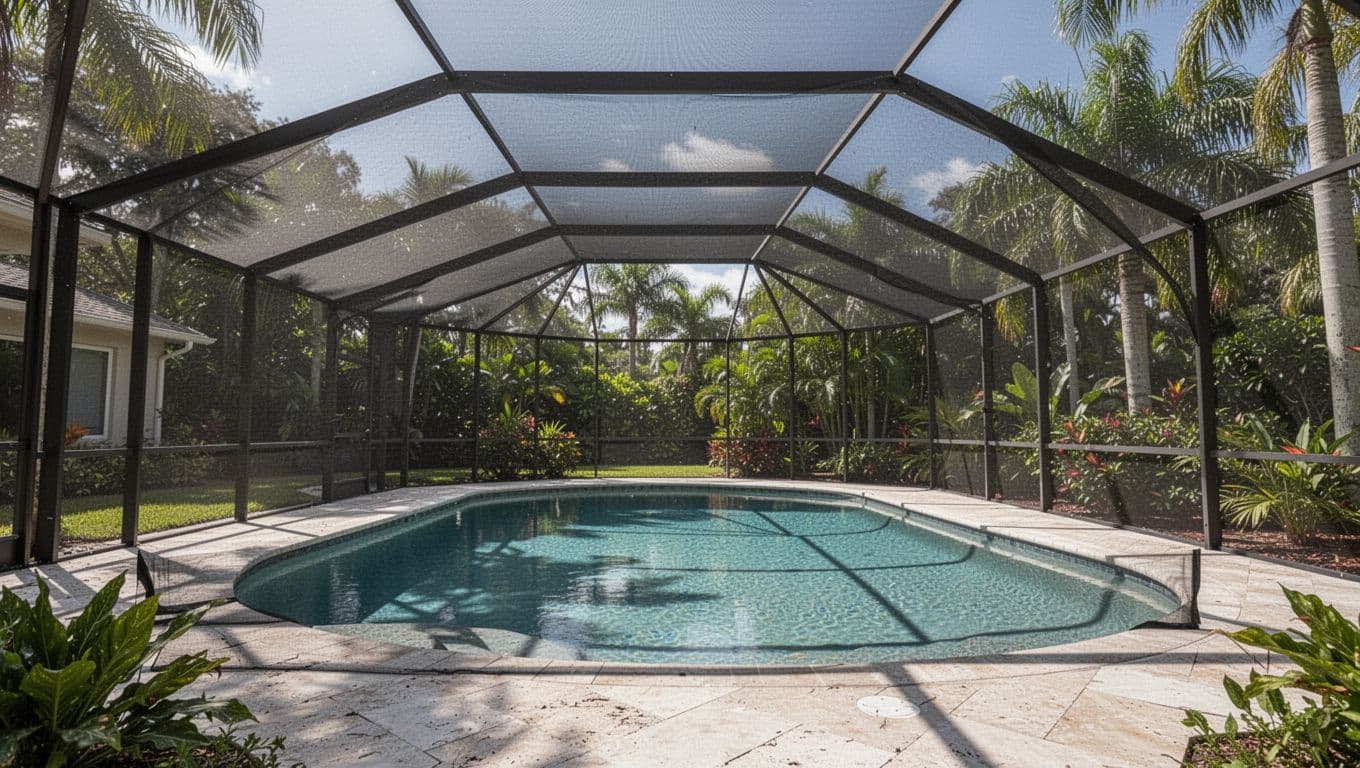
Pool cage screens do a lot of quiet work. They cut down on leaves, keep larger bugs outside, and make a screened patio feel more usable after sunset.
They also have limits. Pool cage screens are a barrier, not a sealed shell, so tiny pests, dust, and wear-related gaps can still cause problems. If you live in Southwest Florida, where wind, humidity, and insects all show up regularly, those limits matter.
How pool cage screens help around a pool
A good screen enclosure changes the feel of a backyard fast. It filters out the obvious debris that would otherwise end up in the water, and it softens the blow of constant outdoor traffic from bugs and blowing trash.
That means less scooping, fewer interruptions during dinner outside, and less time chasing every leaf that falls into the pool. It also gives you a little more comfort at dusk, when mosquitoes and other flying insects start moving around.
Still, the screen does not seal the space. Air passes through. So do tiny particles and the smallest insects. The screen works best as a first line of defense, not the last one.
Standard fiberglass vs tighter insect-control mesh
Most homeowners run into one of three screen styles. Each one handles pests and debris a little differently, so the best choice depends on what bothers you most.
| Screen type | What it blocks well | What can still get through | Best fit |
|---|---|---|---|
| Standard fiberglass mesh | Leaves, twigs, larger flying insects | Gnats, no-see-ums, dust, pollen | General pool and patio use |
| Tighter insect-control mesh | Smaller flying insects, more fine debris | Very tiny pests, airborne dust, wear gaps | Homes with heavy bug pressure |
| Specialty options | Extra durability, sun control, or stronger performance | Still not airtight, still not fully bug-proof | Homes with storms, sun exposure, or frequent repairs |
Standard fiberglass is common because it balances airflow, visibility, and price. It does a solid job on everyday debris and larger insects, but it leaves room for the smallest pests.
Tighter insect-control mesh closes that gap some. However, it usually trades a bit of airflow and visibility for better screening. That tradeoff can be worth it in areas with more gnats or no-see-ums.
Specialty screens add another layer of choice. Some are made for better durability, while others focus on visibility or solar control. None of them turn a pool cage into a sealed indoor room, though.
What pool cage screens block well
For most homes, the biggest win is simple: the enclosure catches the stuff you see right away. Palm fronds, oak leaves, seed pods, and larger bits of yard debris are the usual suspects, and screens handle them well.
They also reduce the number of larger bugs that drift in from the yard. Flies, moths, beetles, and many mosquitoes have a harder time reaching the pool area when the enclosure is intact and the doors stay closed.
That creates a cleaner, calmer space. You still need to brush the deck and skim the water, but the job gets easier. In a windy area, that difference is hard to miss.
Screens can also soften some direct sun and make the space feel less exposed. They do not replace shade, but they cut enough glare to make the patio more comfortable during the hottest part of the day.
What slips through the mesh
The fine print matters here. Pool cage screens stop a lot, but they do not stop everything.
Tiny insects are the most common issue. Gnats, no-see-ums, and other very small flyers can pass through standard mesh more easily than larger bugs can. That is why some homeowners still notice bites around the pool, even with a screened enclosure.
Dust and pollen also travel through many screens, especially when the wind picks up. If your yard sits near open land, a busy road, or thick landscaping, you may still see a film on furniture and railings after a breezy day.
Small pests can get in around the edges too. A torn panel, loose spline, worn door sweep, or small gap around the frame can create a path for ants, roaches, spiders, and even lizards. The mesh in the middle may be fine, but the weak point is often somewhere else.
A screen can reduce pest pressure without solving every pest problem. The frame, doors, and seams matter as much as the mesh itself.
Rodents are a different story. A pool cage screen does not keep mice or rats out if they can reach gaps, damaged sections, or nearby entry points. That is why a screened enclosure should never be treated like a rodent barrier.
What affects real-world performance
A new screen and a neglected one do not perform the same way. The difference usually comes down to a few plain factors.
Mesh size matters first. A tighter weave blocks more tiny insects, but it can also reduce airflow and visibility. A looser weave feels lighter and often looks cleaner from a distance, yet it lets more small pests pass.
Installation quality matters just as much. Even a good screen will underperform if the frame is bent, the spline is loose, or the panel was stretched unevenly. Small mistakes leave openings that bugs find fast.
Wear and tear changes everything. Sun exposure, storms, pressure washing, and age all break screen material down over time. Once a screen gets brittle, frayed, or torn, its performance drops quickly.
Your surroundings shape the results. Dense landscaping, standing water nearby, mature trees, and heavy insect pressure all make a screened enclosure work harder. If your yard sits near a pond, canal, or thick vegetation, you will likely notice more pests testing the enclosure.
If bugs keep showing up even when the screens look fine, the problem may not be the enclosure alone. In that case, broader pest control around the home can help lower the pressure outside the cage. Professional pest control and rodent removal often makes more sense than replacing panels one at a time.
When a screen issue is really a pest issue
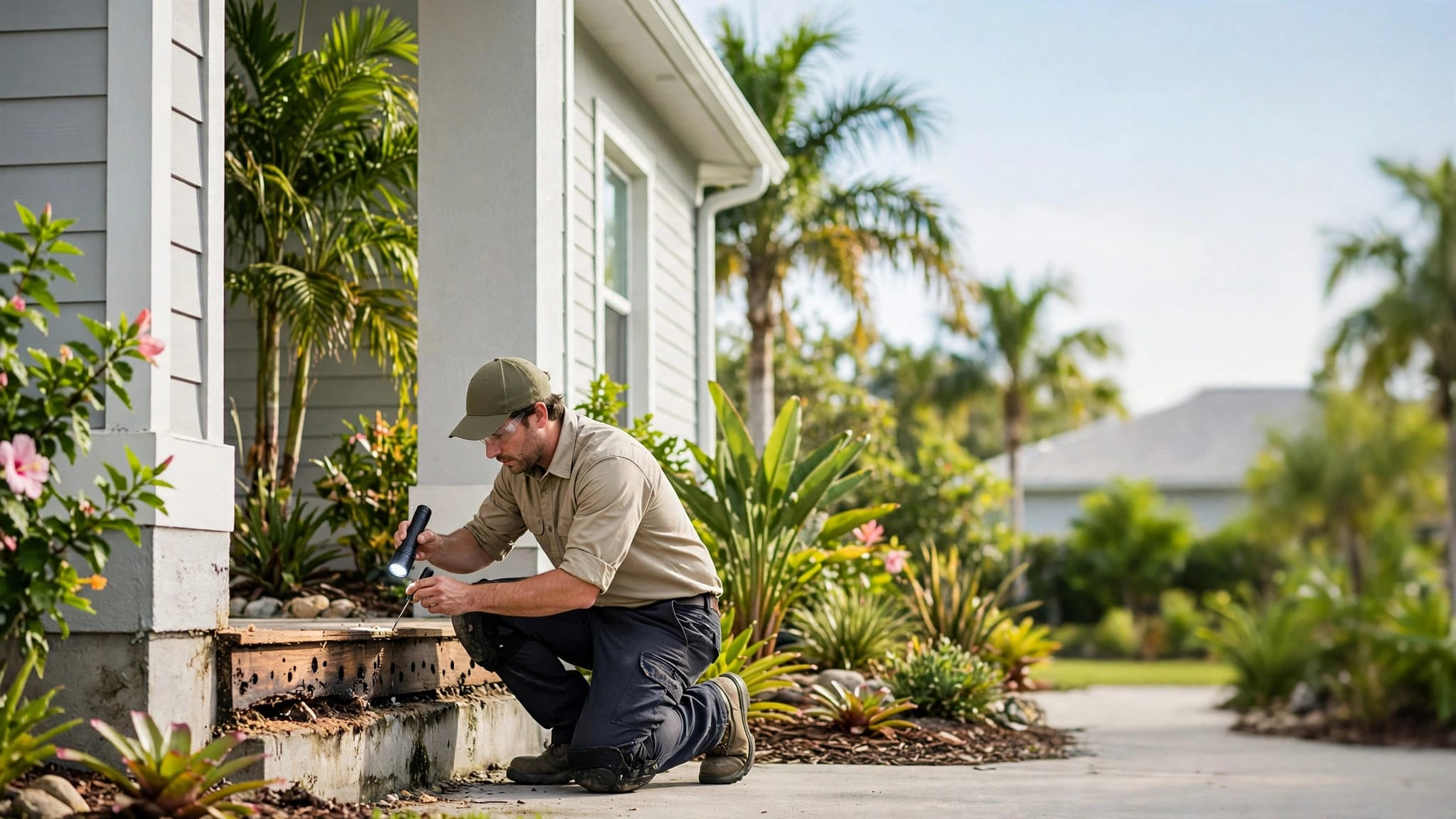
A screened pool area can hide the source of a problem for a while. A homeowner may blame mosquitoes, when the real issue is a torn corner near the door. Or they may notice roaches outside at night and assume the mesh failed, when nearby mulch, lighting, and shelter are drawing pests to the structure.
That is why it helps to look at the whole enclosure. Check the bottom edges, the door hardware, the kick plate, and any places where the frame meets the house or deck. Those are common weak spots.
It also helps to watch what is actually getting in. If you mostly see leaves and larger bugs, the screen is probably doing its job. If you keep seeing no-see-ums, ants, or spiders inside the cage, you may need a tighter mesh, a repair, or a pest control plan around the perimeter.
For homeowners who want protection that reaches beyond the screen, residential pest control in Cape Coral can help address the areas the enclosure cannot touch.
Keeping pool cage screens working longer
Good screens do not stay good on their own. A little attention goes a long way, especially in a humid climate.
Look over the enclosure after storms. Small tears can grow fast, and loose corners often start as tiny problems.
Keep plants trimmed back from the cage. Branches and vines rub on the mesh and wear it down faster.
Watch the doors. If they don't close cleanly or the bottom sweep drags, pests will use that opening before they try the mesh.
Also, avoid harsh treatment. Pressure washing at the wrong angle or using rough tools on the screen can shorten its life. Gentle cleaning and regular checks are usually enough.
If you already see sagging sections, rusting hardware, or repeated tears in the same spot, repair matters more than a fresh layer of cleaning. The screen can only block what it still covers.
Conclusion
Pool cage screens do a good job of blocking bigger debris and many flying insects, but they do not create a sealed barrier. Tiny pests, dust, and entry gaps can still slip through, especially when mesh wears down or installation problems show up.
The best results come from matching the mesh to your needs, keeping an eye on damage, and paying attention to the space around the enclosure. When the screens alone are not enough, the answer is often a mix of repair and pest control, not more guesswork.
A screen keeps a lot out. A well-maintained screen keeps far more out.
Schedule a Free Inspection: