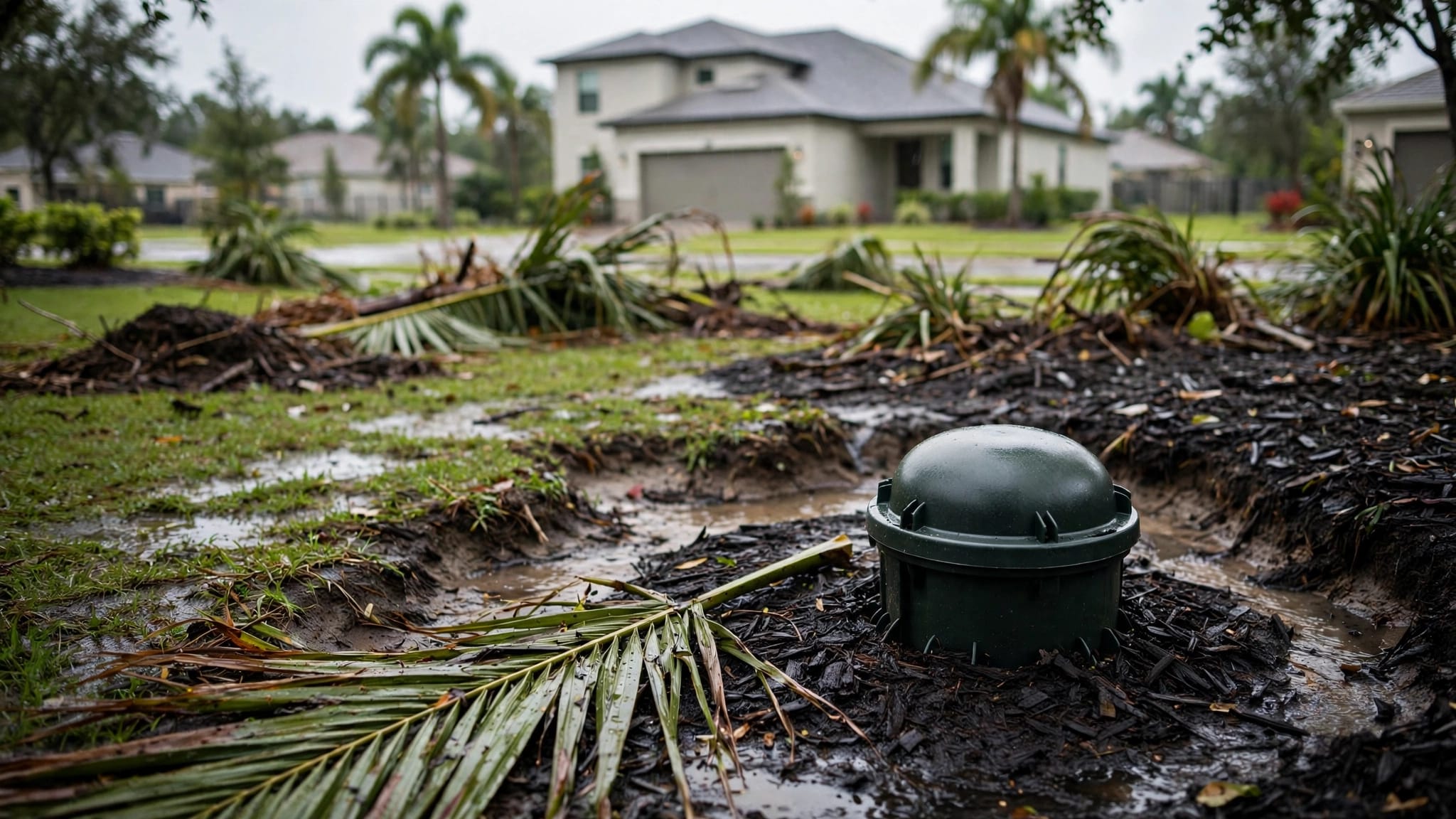
Armadillo Damage in Cape Coral: Signs and Exclusion
Small, cone-shaped holes can appear across a Cape Coral lawn overnight, leaving homeowners wondering what happened. If you're searching for armadillo exclusion Cape Coral homeowners can trust, start by identifying the damage before filling holes or blocking a suspected burrow.
Armadillos usually forage after dark for insects and other small invertebrates. Their digging can affect grass, garden beds, mulch, patios, sheds, and the soil along a home's foundation. The right response combines accurate identification, humane exclusion, and habitat changes that make the property less appealing.
How to Spot Armadillo Damage on a Cape Coral Lawn
Armadillo lawn damage often looks different from ordinary insect activity. Look for small, shallow, cone-shaped holes scattered through the grass. Many are only a few inches across, with loose soil pushed around the opening. Fresh digging may leave torn roots, lifted sod, or narrow scratches across the surface.
The pattern matters. A single hole could come from many causes, but several new holes appearing overnight suggest active foraging. Armadillos often investigate areas with moist soil because those spots may contain grubs, beetle larvae, worms, and other food.
Irrigated sections of St. Augustine grass can attract digging because regular moisture supports soil organisms. Recently watered lawns, shaded areas, and garden beds with thick mulch deserve a close inspection.
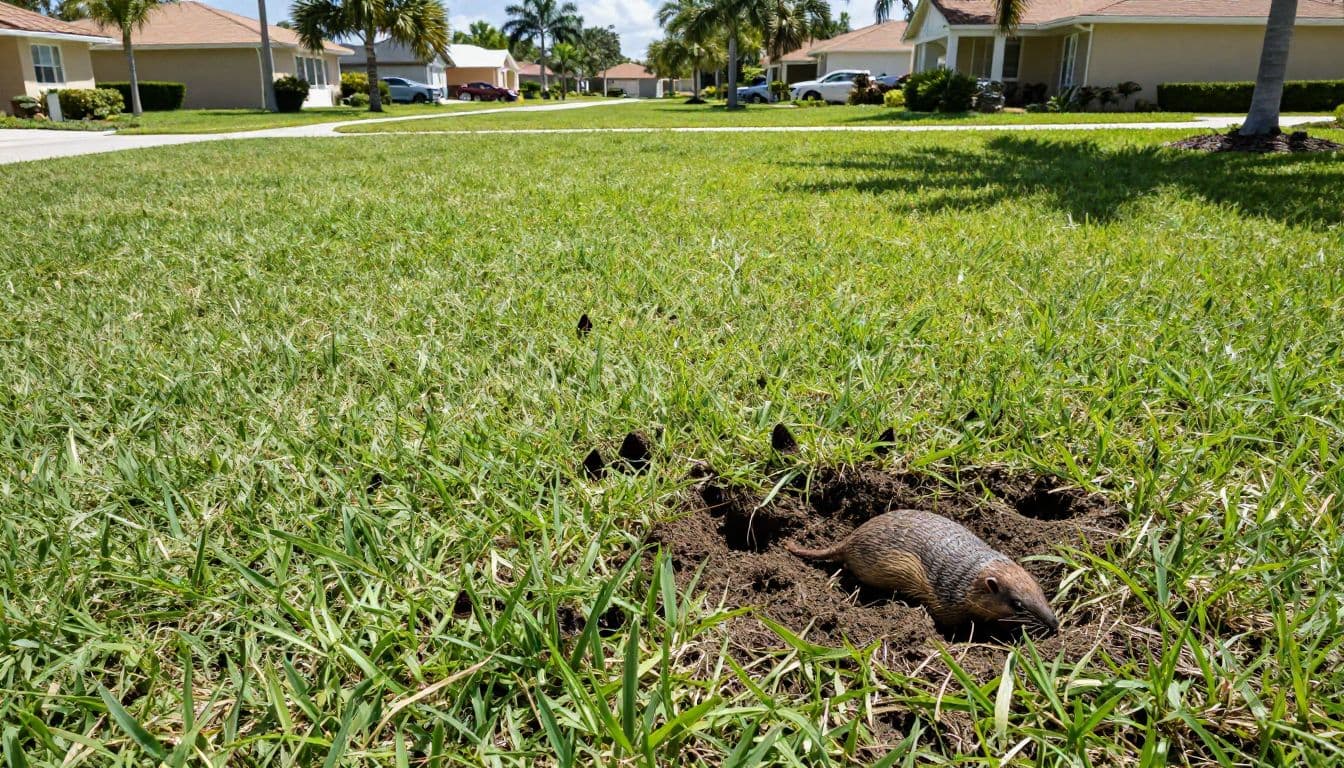
Before repairing the lawn, photograph the holes beside a common object for scale. Check the damage again the next morning. Fresh soil, new holes, or disturbed mulch can help show whether the animal is still visiting.
Other wildlife can create similar damage. Skunks, raccoons, feral hogs, and even pets may disturb turf. Armadillos usually leave smaller, individual holes rather than wide areas of overturned grass. A pest professional can help confirm the animal when the signs overlap.
Read the Clues Around Beds, Patios, Sheds, and Foundations
The lawn is often the first place homeowners notice damage, but armadillos may investigate the entire perimeter of a property. Walk slowly around the yard during daylight and inspect each area where soil meets a structure.
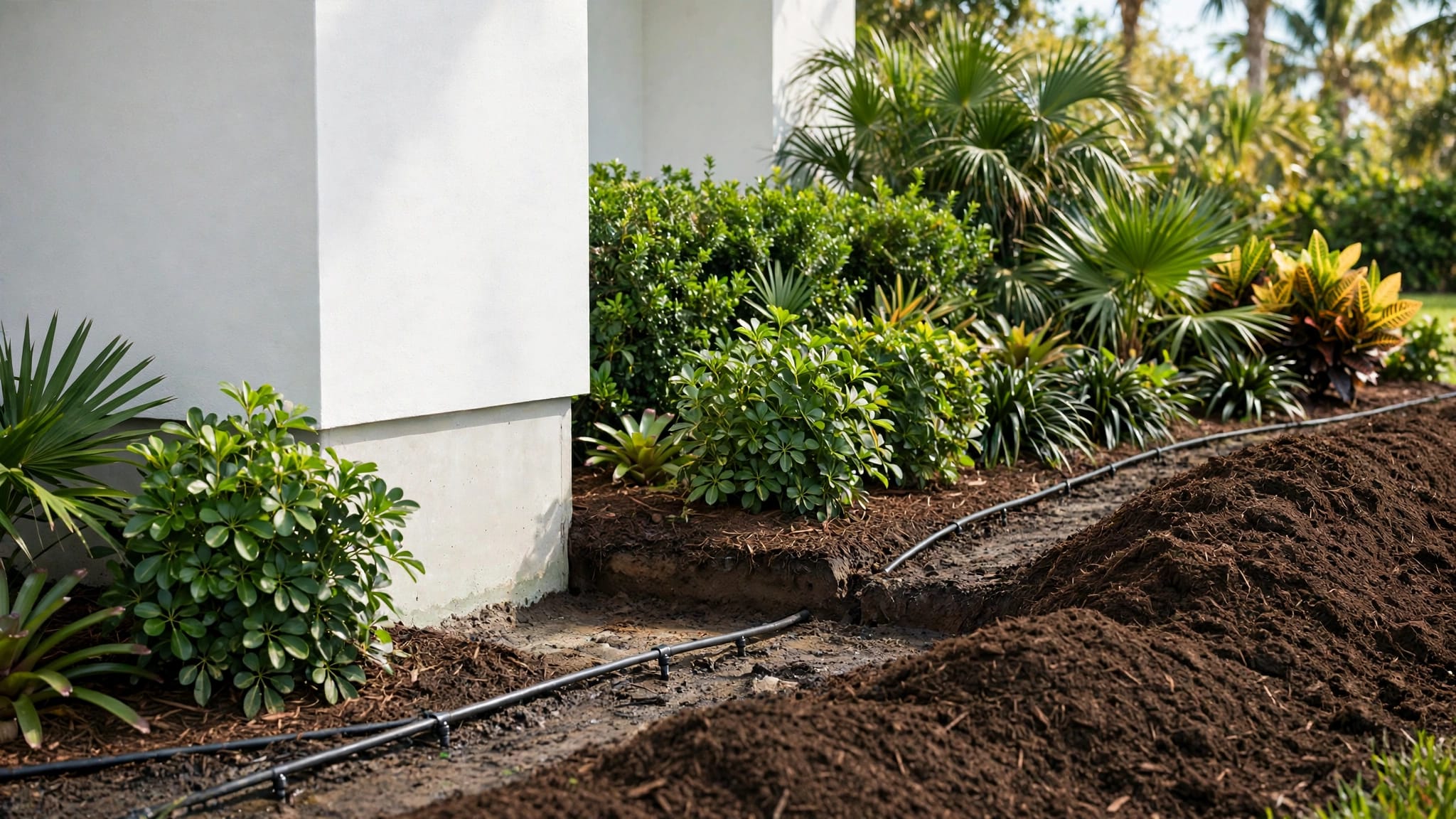
In garden beds, look for displaced mulch, shallow trenches, and plants with exposed roots. Dense shrubs, ornamental grasses, and leaf piles can hide the beginning of a burrow. Remove loose debris carefully, and avoid reaching into dark openings.
Patios and walkways deserve attention because gaps at their edges can provide protected digging locations. Look beneath low steps, around pavers, and where concrete meets soil. Soil pushed against a patio edge may indicate repeated activity rather than simple erosion.
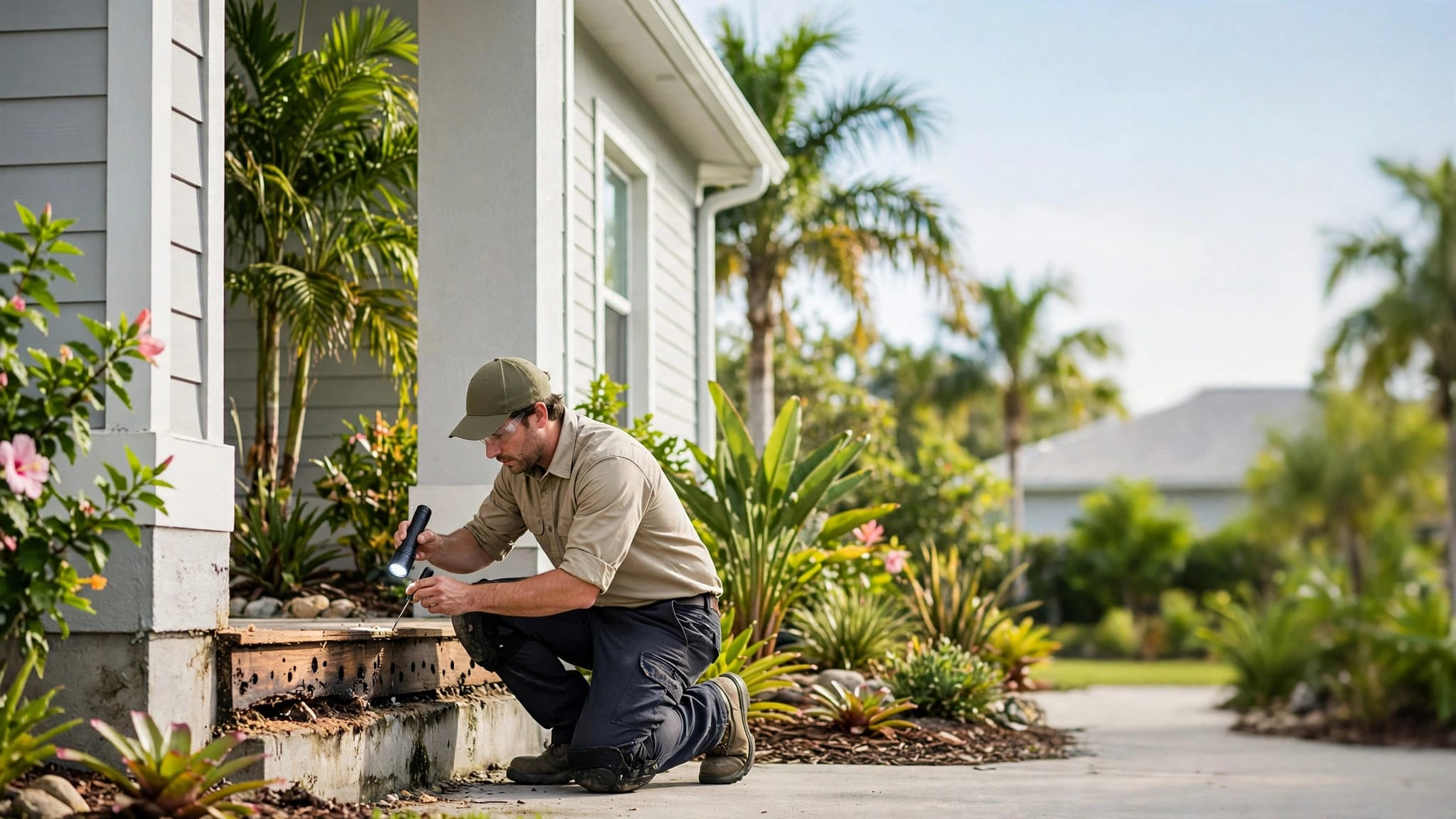
Sheds, porches, and raised structures can offer shade and shelter. Check the lower edges for fresh soil, gaps beneath skirting, and trails that lead from the lawn to the structure. Look for spaces under doors, deck boards, lattice, or shed walls. Armadillos typically forage outside, but they may dig beneath these areas when the soil stays cool and protected.
Inspect the foundation line as well. Pay attention to:
- Loose soil beside the slab or stem wall.
- Openings beneath porches, stairs, decks, or additions.
- Gaps around shed skirting and crawl-space covers.
- Fence corners where an animal can start digging out of view.
- Unsealed spaces beneath gates or along landscaping borders.
Fresh holes near a shed don't prove the animal is inside it. Check for active use before sealing any opening.
A foundation hole also needs careful interpretation. Armadillo digging beside a home doesn't automatically mean the animal has entered the structure. Still, repeated digging can disturb soil, expose roots, and create openings that other pests may use.
Planning armadillo exclusion Cape Coral homeowners can trust
Humane exclusion changes the property so an armadillo can't continue using a preferred route. Habitat modification removes conditions that encourage repeated visits. Removal is different because it addresses an animal already present through lawful trapping or another professional response.
Start with the areas that show fresh activity. A fence or barrier must cover the full route, including corners and transitions near gates. If even one easy opening remains, the animal may move around the barrier and keep digging.
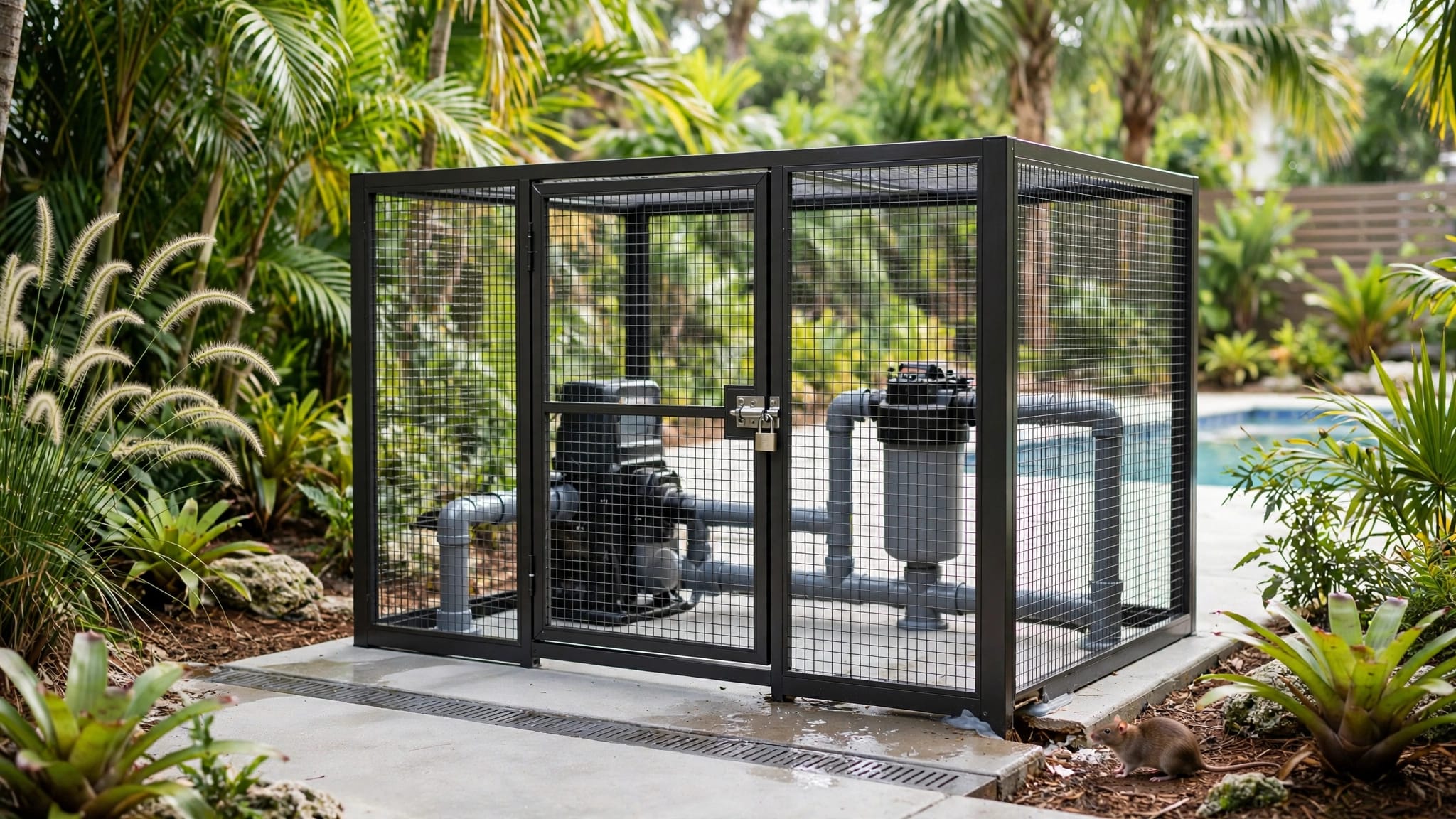
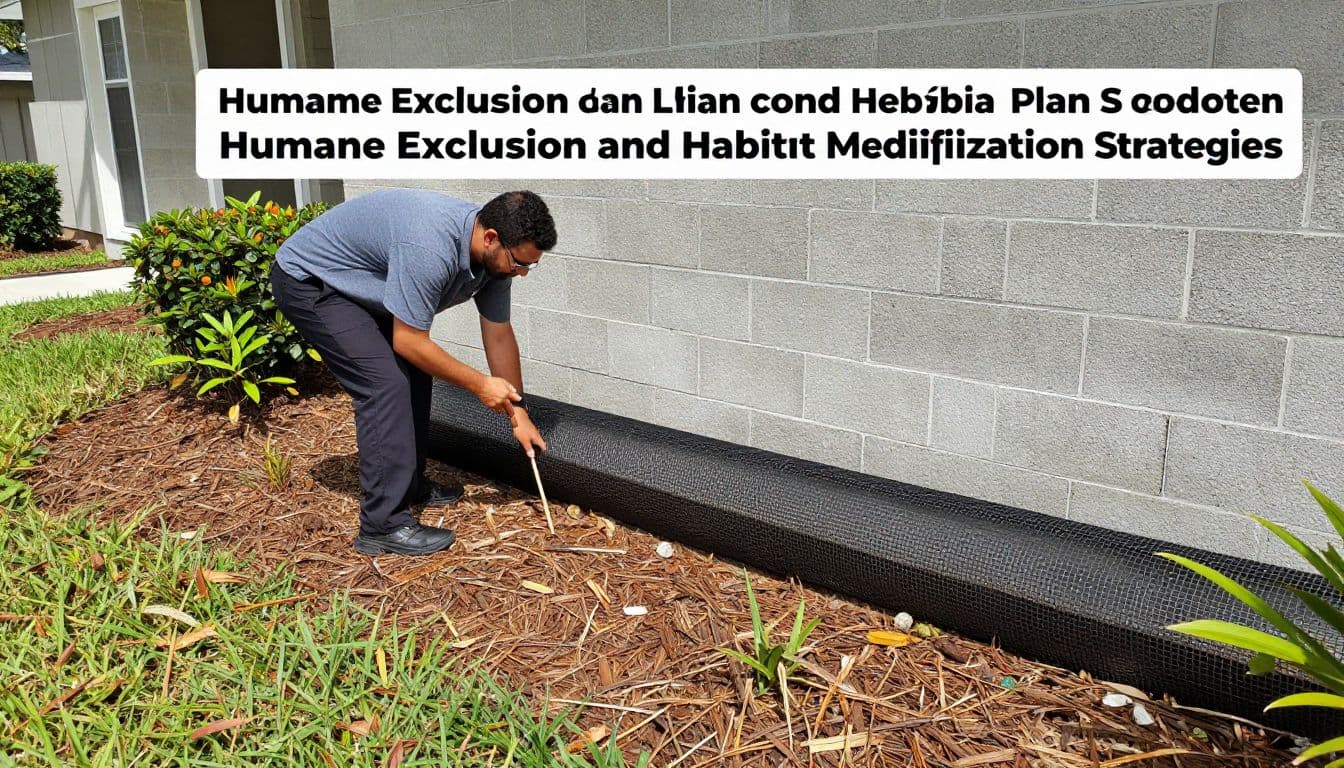
Physical barriers work best when they resist digging below the surface. Heavy-gauge welded wire or similar mesh can protect vulnerable edges when installed securely. The lower portion usually needs to extend below grade and turn outward, but the exact depth depends on the soil, structure, and location. A local technician can choose materials that fit Cape Coral's sandy ground and the property's layout.
Around sheds, decks, and porches, repair damaged skirting and close gaps only after confirming no animal is using the space. Never seal an occupied burrow or trap an animal inside a structure. Monitor the area first, especially when activity has continued for several nights.
Habitat changes that reduce repeat digging
Exclusion lasts longer when the yard offers fewer easy feeding and shelter sites. Keep mulch at a reasonable depth near structures, trim dense vegetation, and remove brush piles or unused lumber. Store pet food indoors and keep outdoor garbage containers closed.
Irrigation also matters. Fix overspray and leaking outdoor faucets, then avoid keeping soil saturated when the lawn doesn't need water. These changes won't remove every insect, but they can reduce the moist, disturbed conditions that make digging attractive.
Grub treatments require care. Applying pesticides without identifying the underlying problem may harm beneficial insects and won't create a reliable wildlife barrier. If lawn pests are also present, address them through a targeted plan rather than treating the entire yard at random.
Good armadillo exclusion Cape Coral work focuses on the route, the shelter, and the food source. Removing an animal without changing those conditions often leads to another visit.
A Simple Inspection and Exclusion Checklist
Use this short process after finding fresh holes:
- Document the damage. Photograph each area, note the date, and mark where new holes appear. Avoid disturbing tracks or loose soil before you record them.
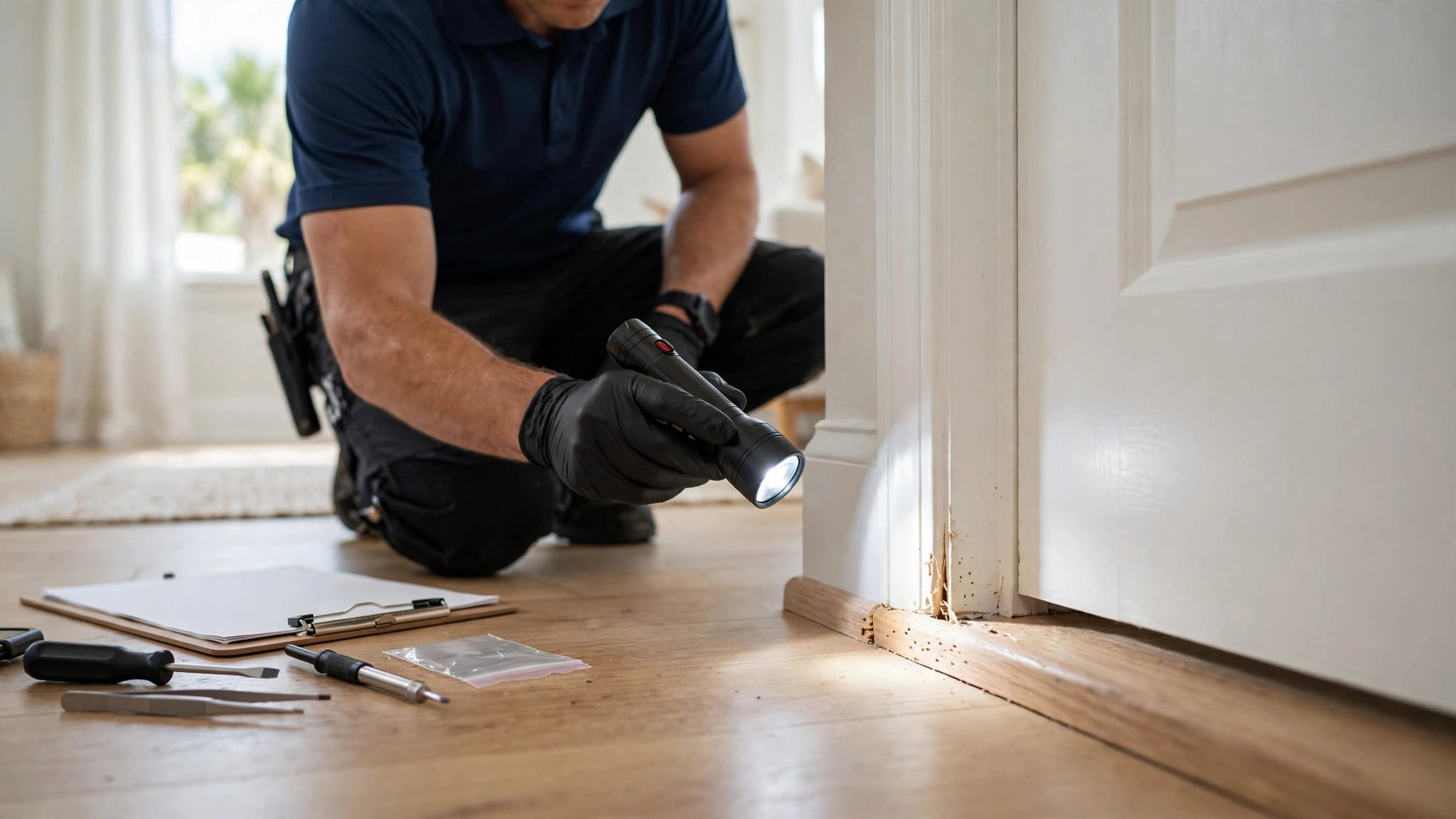
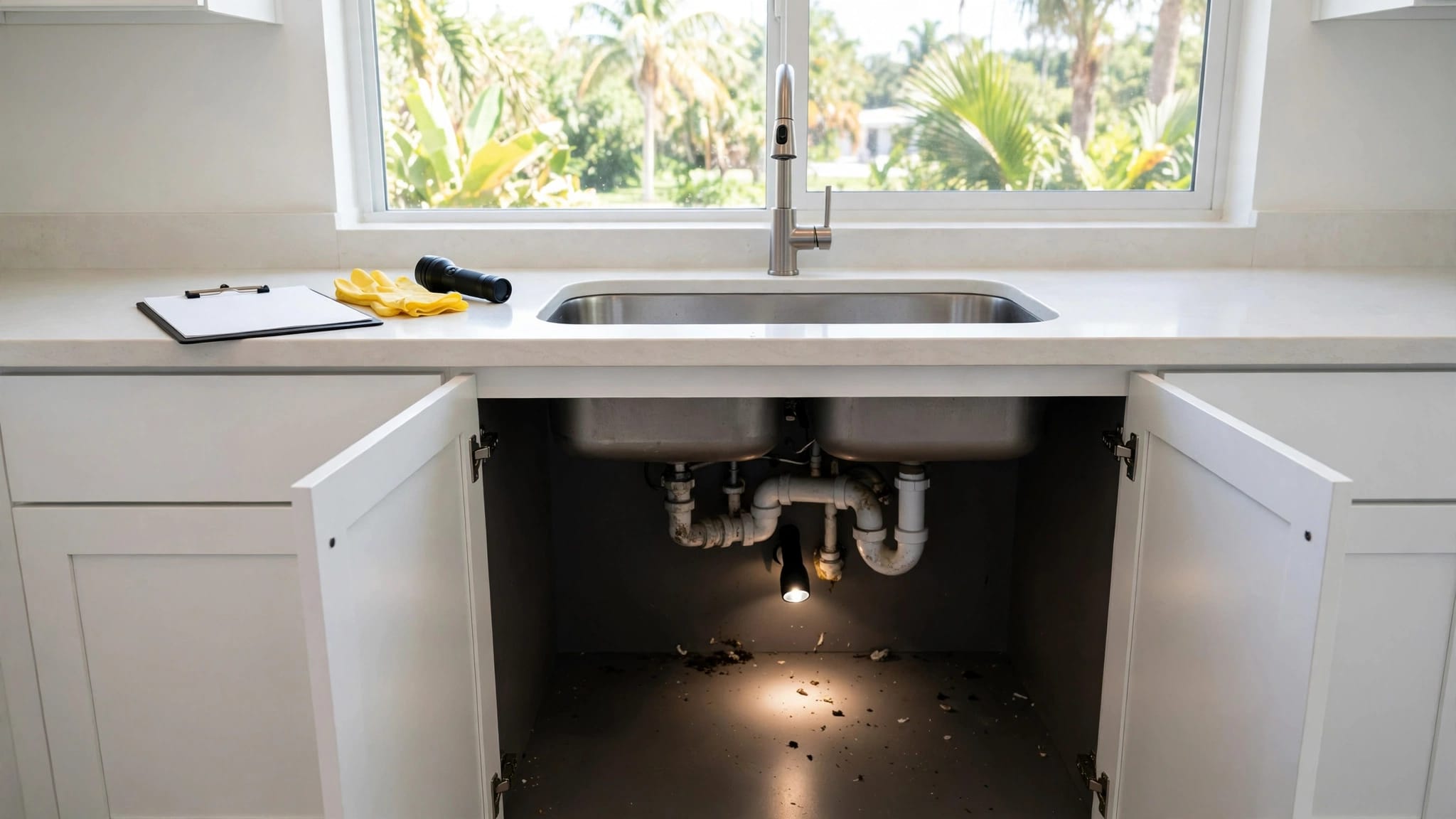
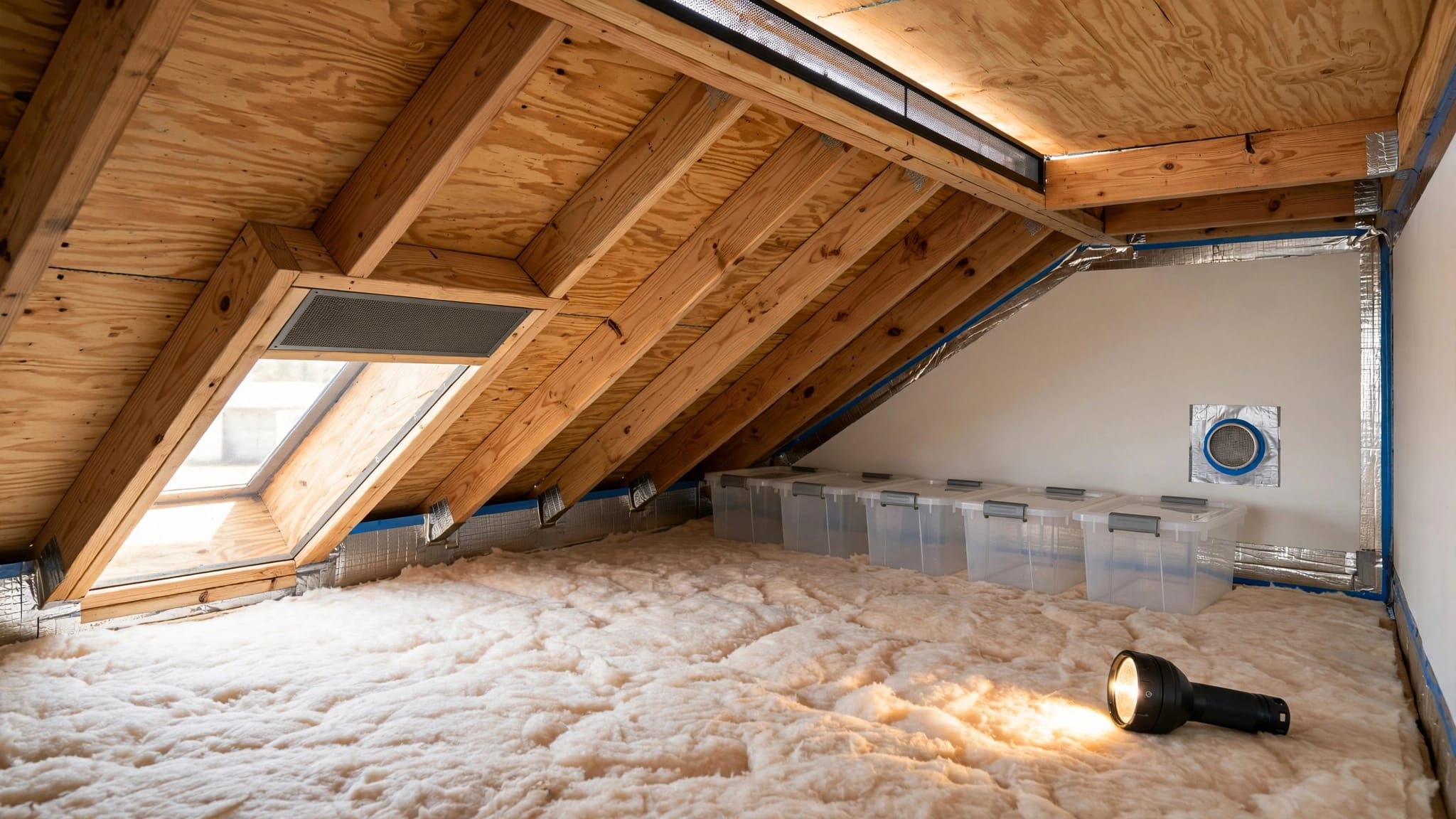
- Inspect during daylight. Walk the lawn, beds, patio edges, shed perimeter, fence line, and foundation. Use a flashlight to look beneath raised structures, but don't reach into a burrow.
- Look for an active route. Follow disturbed soil, flattened mulch, and repeated holes toward shrubs, structures, or fence corners. The route often matters more than one isolated hole.
- Remove easy attractants. Clear brush and leaf piles, secure trash, correct irrigation leaks, and keep pet food inside. Trim plants that touch the house or hide the lower foundation.
- Confirm openings are empty. Before closing a gap beneath a shed, porch, or deck, monitor it for signs of use. A wildlife professional can check safely when the status is unclear.
- Install a complete barrier. Cover the full edge, secure the mesh or skirting, and check corners for bypass points. A partial repair may redirect the animal only a few feet.
- Monitor after the work. Look for fresh soil, new holes, or digging along the barrier for several nights. Continued activity means the route or attractant needs another inspection.
Keep children and pets away from holes, burrows, and wildlife. Don't chase an armadillo, handle one, or place a trap without knowing Florida's current wildlife requirements. Trapping and relocation may involve rules that vary by species and situation.
When Professional Help Makes Sense
Call a local pest or wildlife professional when digging continues after basic yard changes, when an animal is active beneath a structure, or when you can't tell which species caused the damage. Professional help also makes sense when a barrier must protect a long fence line, patio, shed, or foundation.
A proper visit should begin with an inspection. The technician should identify active areas, check likely entry points, discuss habitat changes, and explain whether the property needs exclusion, removal, or both. Ask what happens if activity continues after the initial work.
Avoid services that promise a quick fix without checking the site. Filling a burrow, placing poison, or sealing a gap too soon can create new problems. Armadillo control should protect the animal from unnecessary harm while keeping people, pets, buildings, and landscaping safe.
Costs vary with access, barrier length, repair needs, and whether removal is part of the job. For a broader local pricing reference, review this guide to pest control cost in Cape Coral. A no-pressure inspection can help separate a small lawn issue from a larger exclusion project.
You may also need a different specialist if the damage involves structural repairs, irrigation leaks, or extensive lawn replacement. Pest control can address animal activity and access points, but each property problem needs the right trade.
Protect the Lawn by Closing the Pattern
A few fresh holes don't always require immediate removal. First, identify the damage, inspect the property's edges, and check whether an armadillo is using a burrow or only passing through to forage.
The most reliable armadillo exclusion Cape Coral plan combines a complete physical barrier with practical habitat changes. Keep structures closed only after confirming they're empty, and call for help when activity reaches a foundation, porch, shed, or other hard-to-access area. Once the route is closed and the yard offers fewer easy feeding spots, the lawn has a better chance to stay intact.
Schedule a Free Inspection: