Why Are Cockroaches Near Florida Electrical Outlets?
Cockroaches may appear near electrical outlets because those outlets are close to the food, moisture, and shelter roaches find in Florida homes. The sighting alone doesn't reveal how they entered or where they're hiding.
Your next step is to look beyond the outlet for signs of activity and accessible gaps. A few practical changes can help, but repeated sightings may call for a pest inspection and, in some cases, an electrician.
Why cockroaches gather around electrical outlets
An outlet sighting can be unsettling, especially when the insect seems to appear out of nowhere. The location is a useful clue, but it doesn't identify the source of the problem on its own.
Nearby food and moisture
Outlets often sit near kitchen counters, refrigerators, bathroom sinks, and laundry appliances. These areas can offer food residue or water, as well as sheltered spaces around cabinets and appliances.
A roach seen near a kitchen outlet may have been traveling toward crumbs behind the stove or moisture under the sink. Check those nearby areas before assuming the outlet itself is the attraction.
Florida's warm, humid conditions
Southwest Florida's climate supports cockroach activity outside throughout much of the year. Damp leaf litter, mulch, and vegetation near a home can provide shelter, while gaps around doors and pipes offer potential ways indoors.
Inside, a dripping faucet or humid utility room can make conditions more favorable. One large roach may be an outdoor visitor, while repeated sightings of small roaches can point to an indoor infestation.
Which cockroaches are you seeing?
Identification helps you decide where to focus. Take a clear photo or save a specimen in a sealed container if you can do so safely. Size and location offer clues, but a pest professional can help identify the species.
Small roaches in kitchens and bathrooms
German cockroaches are small, light brown insects with two dark stripes behind the head. They often live near food and water, so look around kitchen cabinets, sinks, and appliances.
Seeing small roaches repeatedly, especially along with young roaches or egg cases, deserves prompt attention. A single sighting doesn't establish the size of an infestation, but several signs together suggest more activity than you've seen.
Brown-banded cockroaches are another small species. They can turn up in drier areas, including bedrooms and closets. Our guide to brown-banded cockroaches in bedrooms covers where to look.
Large roaches near doors and damp areas
American cockroaches are larger and reddish brown. In Florida, people sometimes call large cockroaches "palmetto bugs." They may appear near damp areas, garages, or exterior doors.
Florida woods cockroaches are also large and generally associated with outdoor debris and damp yards. One large roach indoors doesn't automatically mean you have a breeding population in your kitchen. Repeated sightings are still worth investigating.
Our guide to identifying cockroaches in Cape Coral can help you recognize common household pests.
Look for signs beyond the outlet
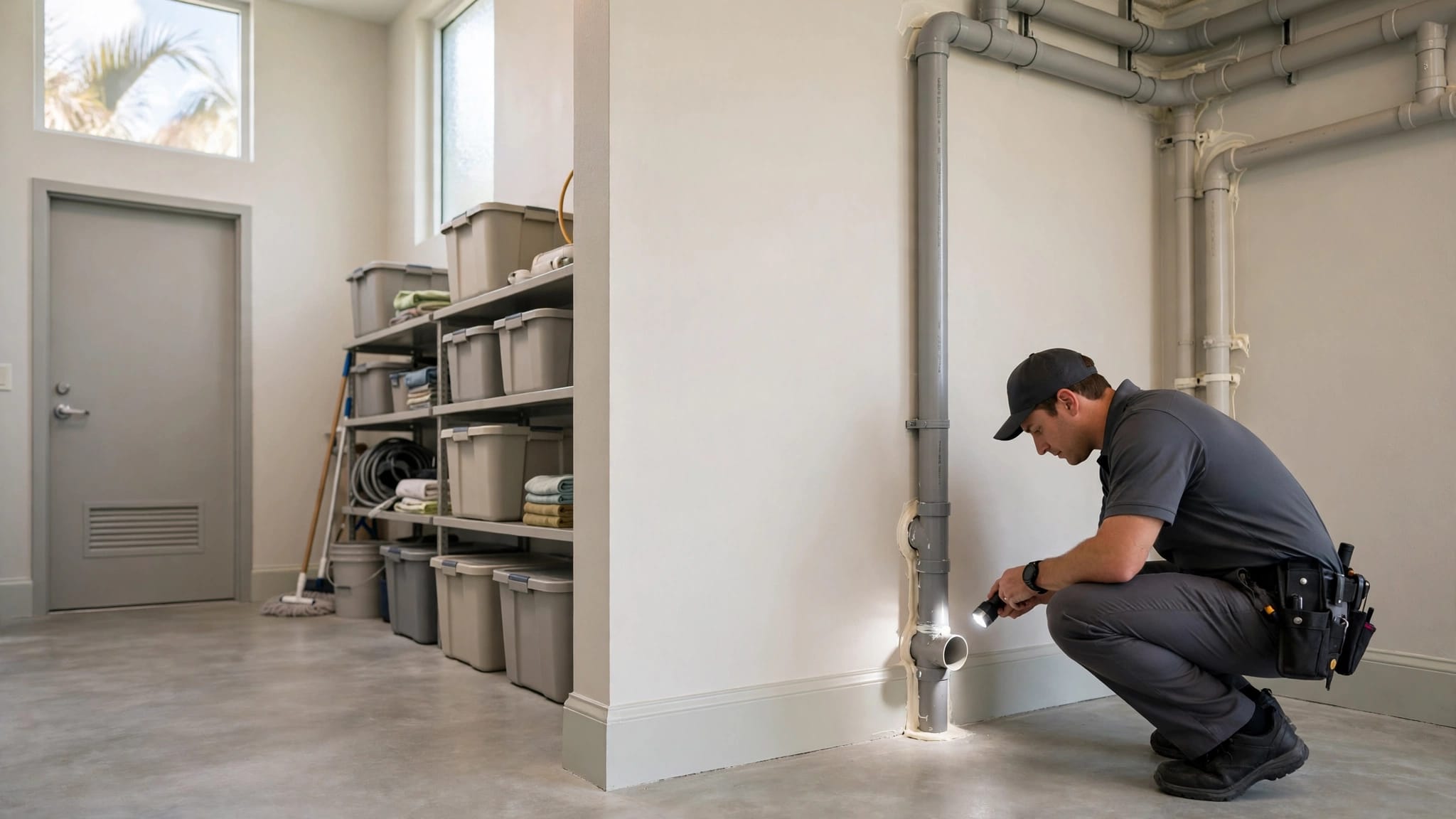
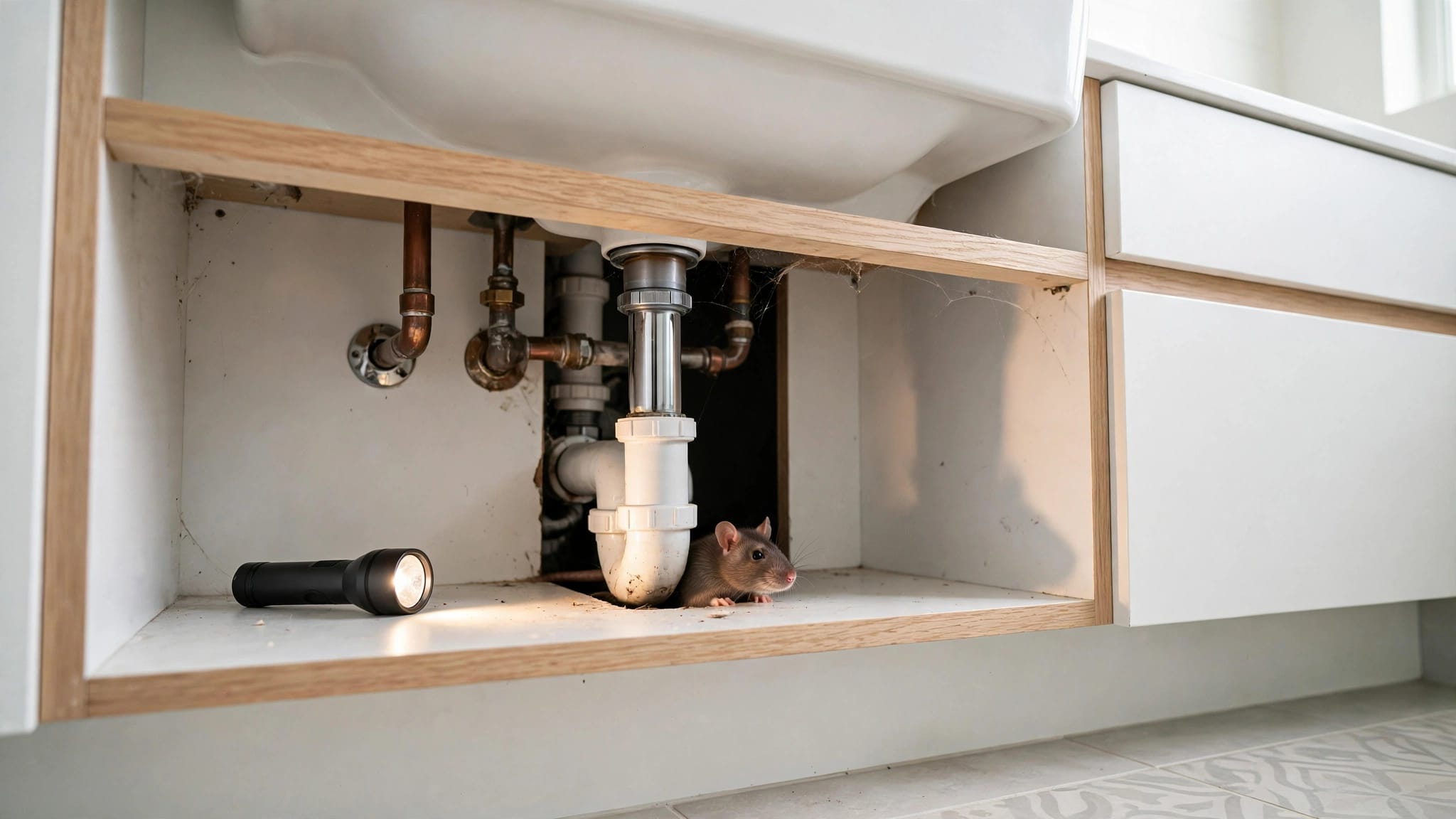
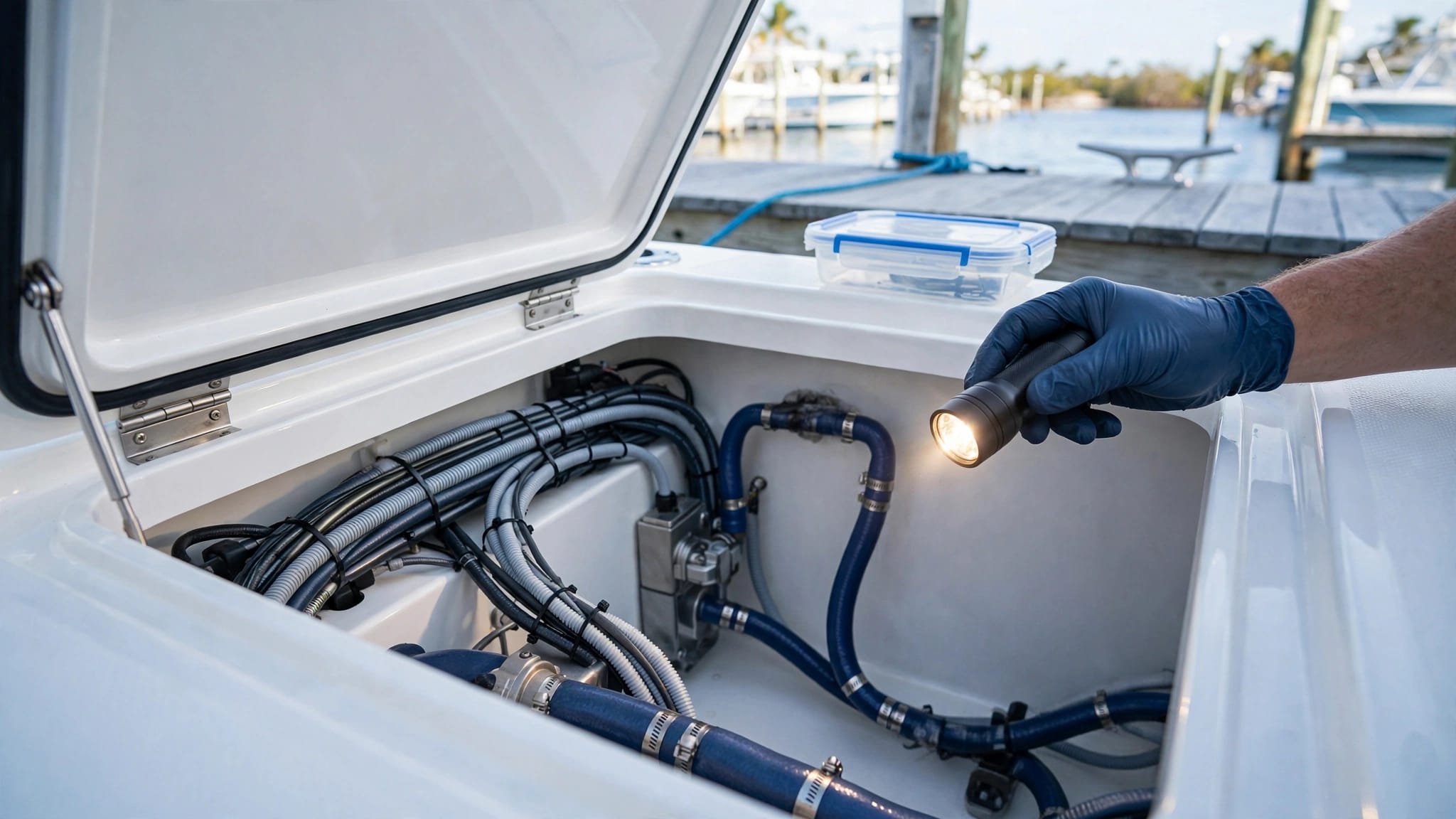
Start in the room where you saw the roach, then inspect nearby rooms. Use a flashlight to look along baseboards, under sinks, behind freestanding appliances, and inside accessible cabinet corners.
Small dark droppings can resemble pepper or coffee grounds. You may also find shed skins, brown egg cases, dead roaches, or a musty smell. Note where you find each sign and whether you see live insects during the day or after dark.
Sticky traps can help you monitor activity. Place them flat against baseboards or in protected areas near suspected hiding spots, following the product directions. Keep traps away from children and pets, and don't place them in or on an outlet.
Check the traps regularly and record what you find. More activity near a sink, for example, gives you a place to investigate for leaks and food residue. A trap helps show where roaches travel, but it won't eliminate an established infestation by itself.
Remove the food, water, and shelter roaches need
Cleaning won't solve every cockroach problem on its own, but it makes your home less inviting and supports a treatment plan. Focus on the areas where your inspection found activity.
Clean food residue and reduce clutter
Wipe counters after meals, sweep up crumbs, and clean grease around the stove. Move appliances when it's safe to do so, and vacuum the accessible floor edges underneath. Store dry food in sealed containers and avoid leaving pet food out overnight.
Cardboard boxes and paper bags can offer hiding places. Reduce stored cardboard, particularly in kitchens, garages, and utility rooms. For items you need to keep, closed plastic bins are easier to inspect and clean around.
Our cockroach prevention tips for Florida homes cover more ways to reduce food and shelter.
Fix moisture problems
Repair dripping faucets and leaks under sinks. Dry standing water, use bathroom ventilation, and consider a dehumidifier in persistently damp rooms.
Outside, fix leaking hose bibs and direct irrigation away from the foundation where possible. Pull damp leaf litter and excess mulch away from the wall so you can see and maintain the area.
Seal gaps around the home
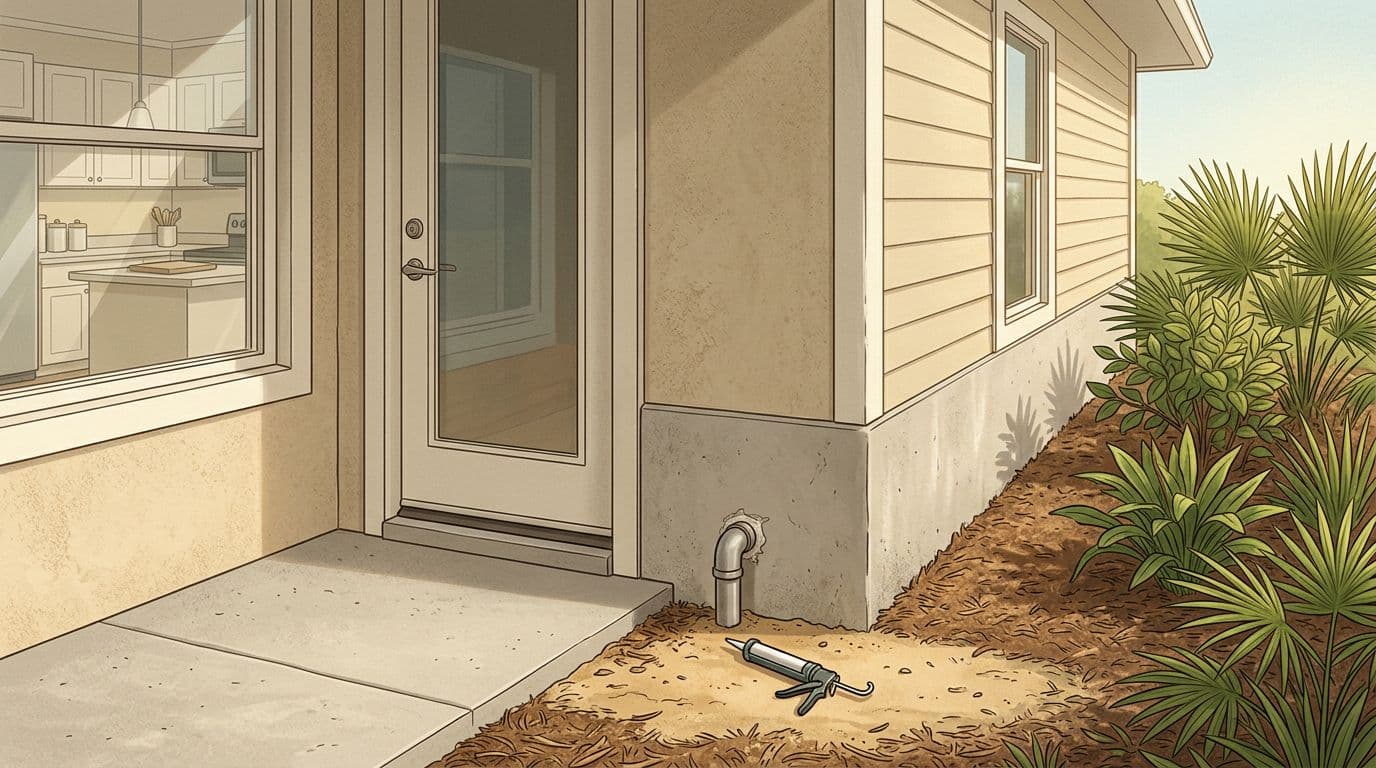
Look for accessible openings around doors, windows, plumbing, and other utility penetrations. A worn door sweep, damaged screen, or gap around a pipe gives pests an opportunity to enter.
For small, stationary gaps around plumbing or trim, use a sealant appropriate for the material and location. Replace worn weatherstripping and repair damaged screens. If light shows beneath an exterior door, the sweep may need adjustment or replacement.
Indoors, inspect accessible gaps where pipes enter cabinets and where baseboards meet the wall. Closing these openings can reduce hiding places and movement between spaces.
Keep sealants and other materials out of electrical outlets and boxes. Don't push caulk, foam, steel wool, or other material into an outlet opening. If a cover plate is damaged, loose, or doesn't fit properly, an electrician can assess and repair it.
Sealing helps prevent future access, but it doesn't replace treatment when roaches are already established. If you find active roaches or droppings, address that activity as well.
Choose treatments that fit the infestation
A few retail products can help with a small problem, but placement and safety matter. Read and follow the entire product label, including directions for where the product may be used.
Use traps and baits in accessible areas
Sticky traps are for monitoring. Cockroach baits, including bait stations and gels, are intended to control roaches that feed on them.
Place a labeled bait in permitted, protected locations near activity, away from food-contact surfaces, children, and pets. Don't apply bait inside an outlet or electrical box. Strong sprays can interfere with bait placement, so avoid spraying over or around the bait.
Some treatment plans also use an insect growth regulator, or IGR, to interfere with cockroach development and reproduction. An IGR works as part of a broader plan rather than as an instant solution.
Avoid spraying into electrical openings
Don't spray liquid insecticide into an outlet, switch, or electrical opening. Also avoid applying loose pesticide dust or placing bait there yourself. Those areas require electrical safety considerations and may call for professional treatment.
Foggers and broad sprays can miss sheltered roaches. They may also scatter insects into other areas, making activity harder to track. If sightings continue after cleaning, monitoring, and label-directed bait use, the problem may need professional attention.
Learn more about cockroach treatment options for Cape Coral homes, including the limits of DIY control.
Address the problem together in condos and apartments
In a multi-unit building, roach activity in one unit may be connected to conditions elsewhere in the property. Shared waste areas, food residue, plumbing issues, and items moved between units can all complicate control.
Tell your property manager or association where and when you've seen roaches. Share photos and trap locations rather than relying on a general description. Nearby units and common areas may also need inspection, depending on the findings.
A coordinated plan can combine bait, targeted treatment, moisture repairs, and monitoring. Residents can support it by reducing clutter and avoiding sprays that interfere with bait. Our guide to German cockroach control in Cape Coral condos explains how a building-wide approach can work.
When to call pest control or an electrician
Pest control and electrical repairs address different parts of the problem. You may need one professional or both, depending on what you find.
Call pest control for repeated activity
Arrange an inspection if you keep seeing roaches, find droppings or egg cases, notice activity in several rooms, or have tried treatment without improvement. Small roaches around kitchen appliances or regular daytime sightings also deserve attention.
At Shield Home & Pest Control Services, we offer free inspections and German roach treatments. We serve Cape Coral, Fort Myers, Punta Gorda, Bonita Springs, and Sanibel. An inspection can help identify the roach, locate signs of activity, and guide a treatment plan.
Call an electrician for outlet damage
An electrician should handle a loose, damaged, discolored, or unusually hot outlet. Don't touch or use an outlet that is sparking, smoking, or hot.
If it's safe to reach your electrical panel, switch off the affected circuit. For smoke or fire, leave the area and call emergency services. Don't apply water or pesticide to the outlet.
Stop repeat sightings by addressing the source
Cockroaches near an outlet are a reason to inspect the surrounding room, not proof of where the insects came from. Look for food, moisture, shelter, and signs of activity before choosing a treatment.
If roaches keep returning, schedule a free inspection. We'll help identify the problem and recommend next steps for your home.
Schedule a Free Inspection: