Termites in Cape Coral Sheds: Signs and Prevention
Termites can damage a detached shed for months while the main house looks completely normal. A practical termite prevention Cape Coral plan starts with every wood structure on the property, not only the home.
Cape Coral's warmth, humidity, rainfall, irrigation, and sandy soil can create favorable conditions around backyard buildings. Sheds also hold cardboard, firewood, tools, and stored materials that can hide early termite activity.
Learn which signs deserve attention, how to inspect a shed safely, and which maintenance steps help keep termites outside.
Termite prevention Cape Coral starts with the shed base
A detached shed has its own foundation, floor, walls, and moisture problems. The main house may have a termite barrier or regular pest service, but that protection usually doesn't extend to a separate building across the yard.
Wooden skids, support posts, bottom plates, and floor joists are common entry points. When these materials touch soil or sit close to damp ground, subterranean termites can reach the structure without crossing the home's foundation.
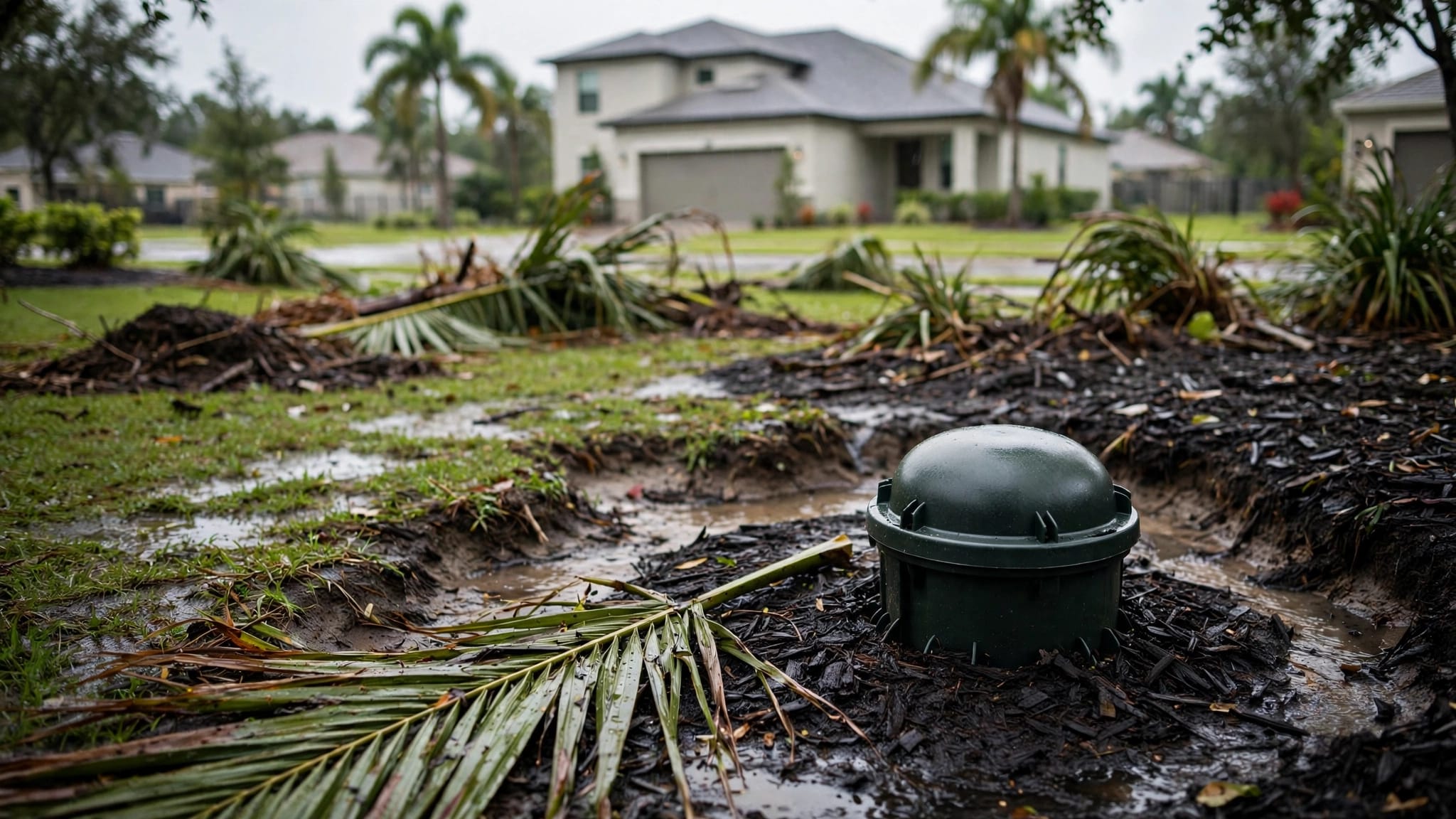
Cape Coral's frequent rain can leave soil wet around a shed. Sprinklers may also spray the siding or foundation each day. Poor drainage, leaking roof edges, and blocked vents add more moisture. These conditions make the lower part of the shed attractive to termites and can also accelerate wood decay.
Drywood termites present a different concern. They live inside dry wood and don't need a connection to the soil. A shed can develop a drywood infestation through a door frame, roof trim, wall board, or stored wooden item.
A clean-looking main house doesn't rule out termites in the shed. The two structures can have different moisture levels, construction materials, and entry points.
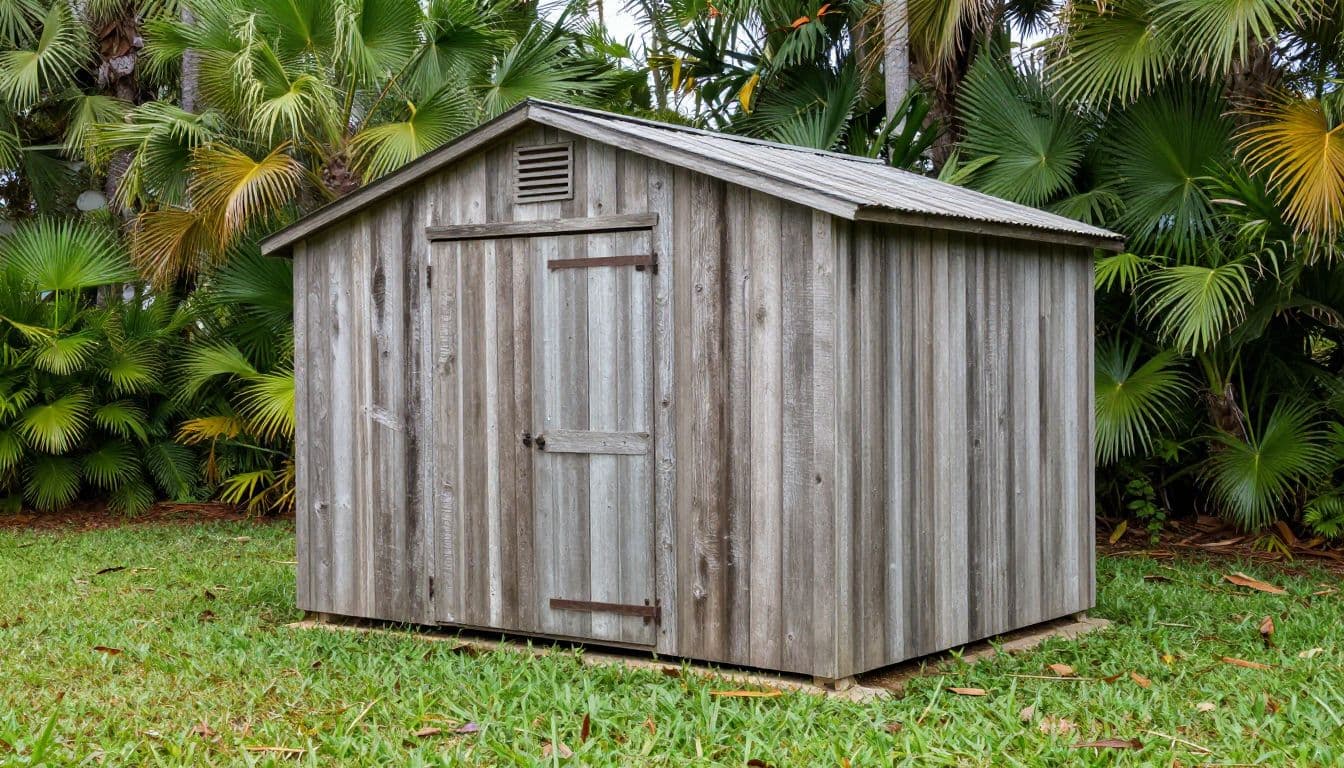
A shed's lowest boards and supports deserve close attention because they sit nearest to soil and moisture.
A shed termite signs checklist for Cape Coral homeowners
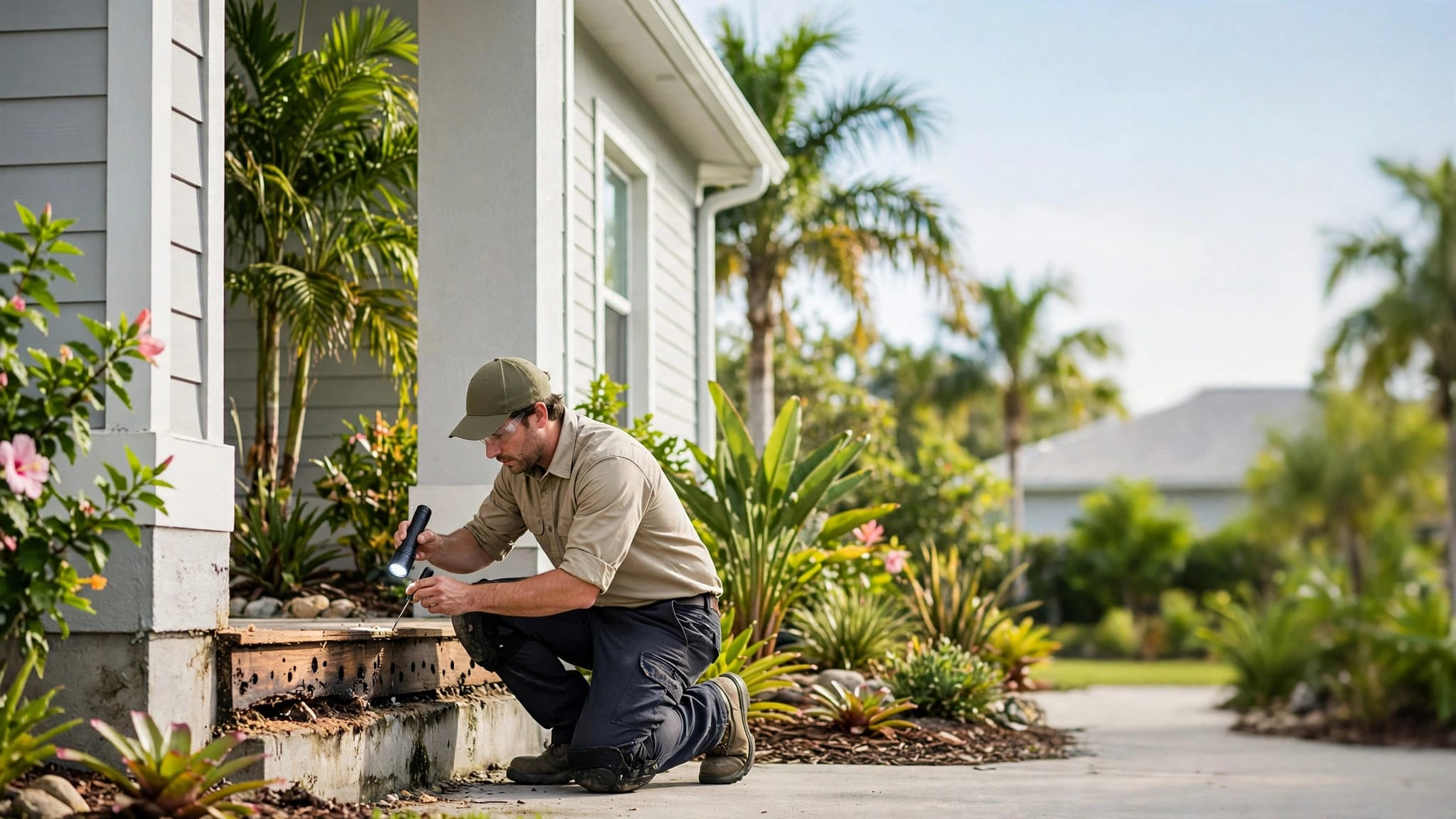
Termites often stay hidden inside wood, behind trim, or beneath the shed floor. Visible damage may appear only after a colony has been active for some time. During a routine inspection, check the inside and outside of the structure.
Look for these warning signs
- Search for mud tubes along the foundation, support posts, floor edges, or interior walls. Subterranean termites build these narrow earthen paths to stay protected while traveling between the soil and wood.
- Tap exposed wood lightly with a screwdriver handle. Damaged boards may sound hollow compared with solid wood, although this test cannot confirm an infestation by itself.
- Check for blistered, raised, or sagging wood. Termite feeding beneath the surface can create rippled paint, thin areas, or weakened boards.
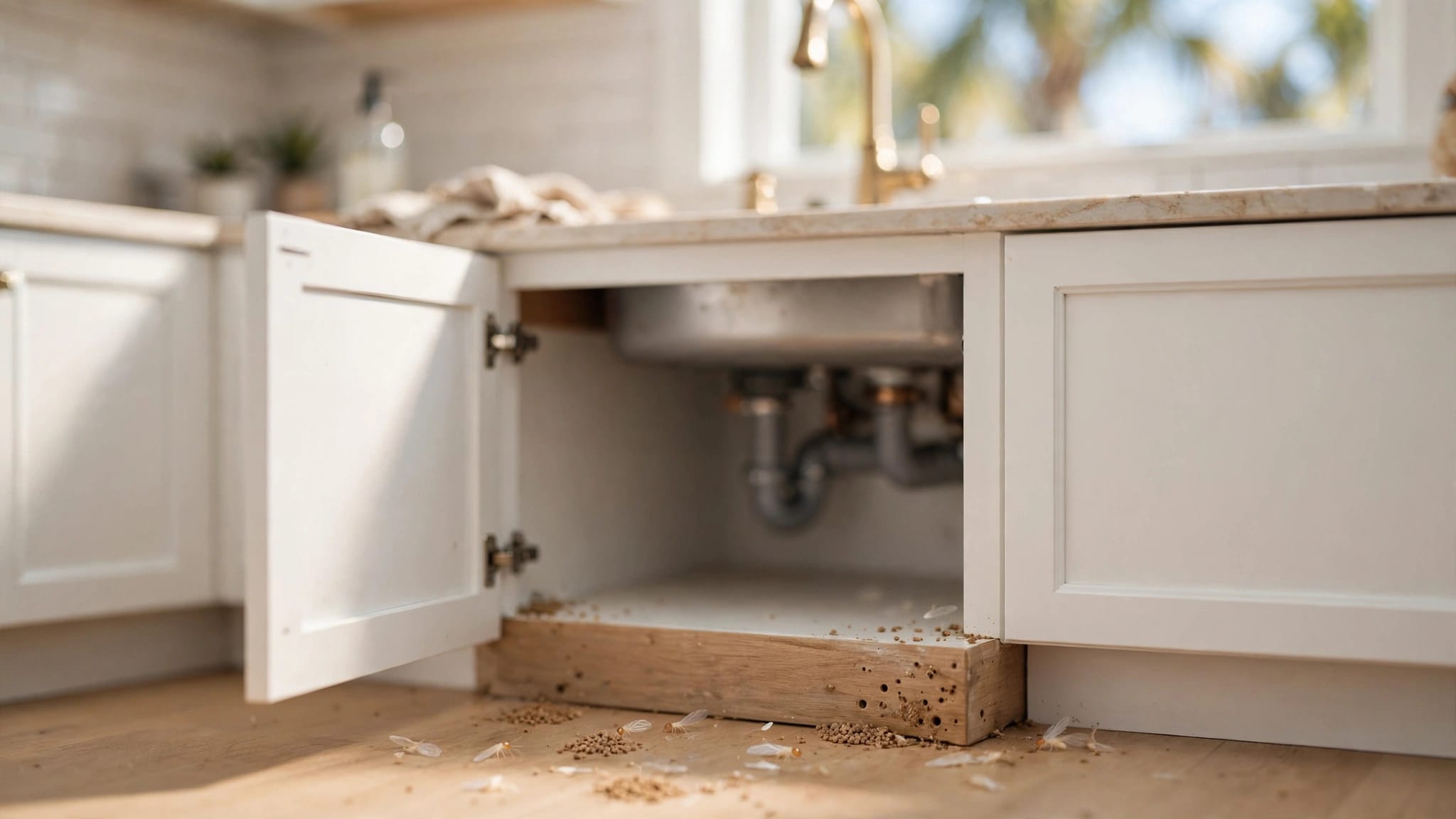
- Inspect corners for discarded wings. Swarmers shed their wings after landing, so small piles near doors, windows, light fixtures, or wall openings deserve attention.
- Look for drywood termite pellets. These small, hard granules may collect beneath a hole in a wall, beam, shelf, or door frame. Their presence can point to termites living inside the wood.
- Watch for doors or windows that suddenly stick. Moisture can cause the same problem, but swelling near damaged framing should prompt a closer inspection.
- Examine stored materials. Cardboard boxes, firewood, lumber, old furniture, and wooden pallets can conceal termites or provide a path into the shed.
One sign doesn't always prove an active infestation. Mud tubes, for example, may be old, and swollen wood may result from rain. Still, multiple signs or fresh-looking damage justify a professional inspection. You can also review these early warning signs of termites when comparing what you find in the shed with common activity around a home.
How to inspect a detached shed without making damage worse
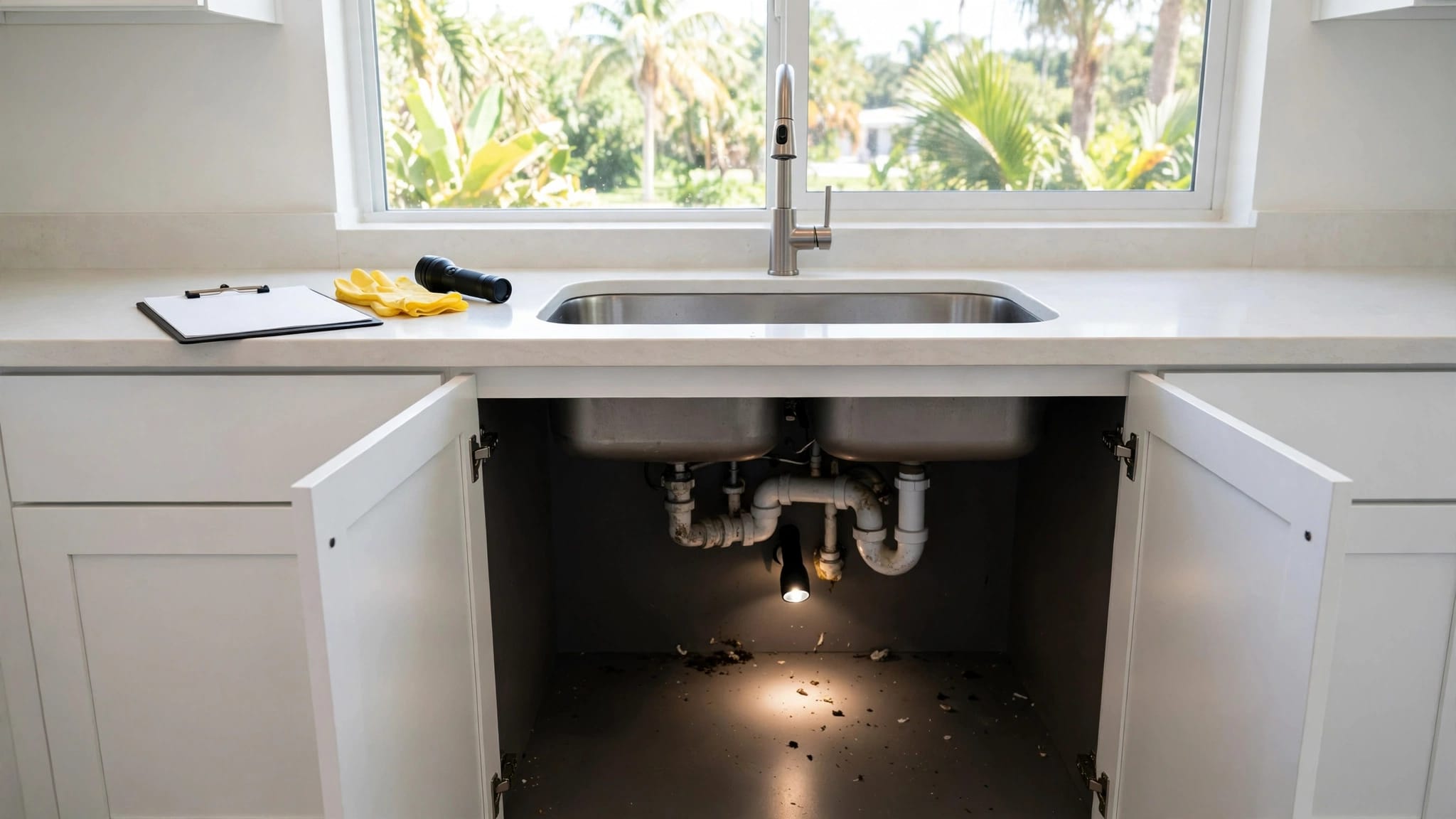
Choose a dry, well-lit day. Wear gloves, long sleeves, and closed shoes, especially if the shed contains old boxes, standing water, or rodent droppings. Use a flashlight to examine dark corners and the underside of shelves.
- Start outside and walk around the entire shed. Look at the soil line, skids, posts, siding, door threshold, and areas where plants touch the walls.
- Check the roof edge, gutters, downspouts, and nearby sprinkler heads. Mark any place where water lands against the shed or remains pooled beside it.
- Move stored items carefully and inspect the floor beneath them. Don't stack boxes directly against walls because they can hide tubes, pellets, or damaged wood.
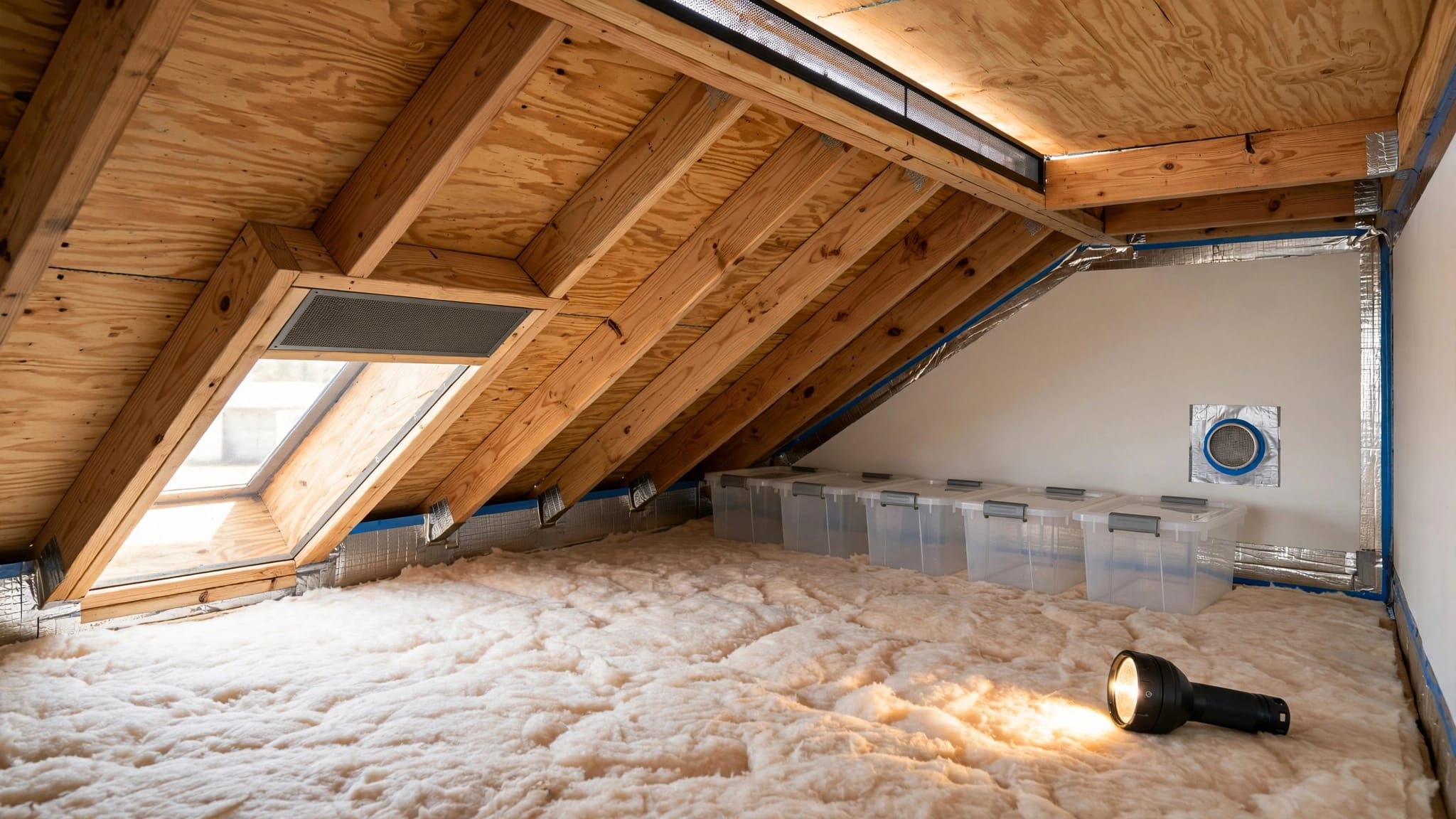
- Examine exposed framing inside the shed. Pay attention to lower corners, window trim, shelving supports, and places where wood meets concrete or soil.
Avoid breaking open mud tubes or prying apart suspicious boards. Disturbing the area can remove evidence that helps a technician identify the termite type and entry route. Don't apply household insect spray to galleries or pour chemicals into the soil without following a product label. These actions may hide signs without reaching the colony.
Take clear photos and note where you found each sign. If the shed shares a fence line or sits close to the house, arrange for both structures to be checked.
Prevention actions that help keep termites out
Good termite prevention Cape Coral habits focus on moisture control, visible construction, and fewer wood sources near the shed. Small maintenance issues matter because termites can use a damp, concealed area for access.
- Keep wood siding, skids, and support members visibly separated from soil where the shed design allows. About six inches of clearance is a useful target, but follow the structure's construction requirements.
- Place the shed on a sound concrete pad, masonry supports, or an approved raised base. Replace damaged skids and don't bury untreated wood posts in the ground.
- Direct roof runoff away from the building. Clean gutters when the shed has them, extend downspouts, and repair roof leaks before the floor or walls stay damp.
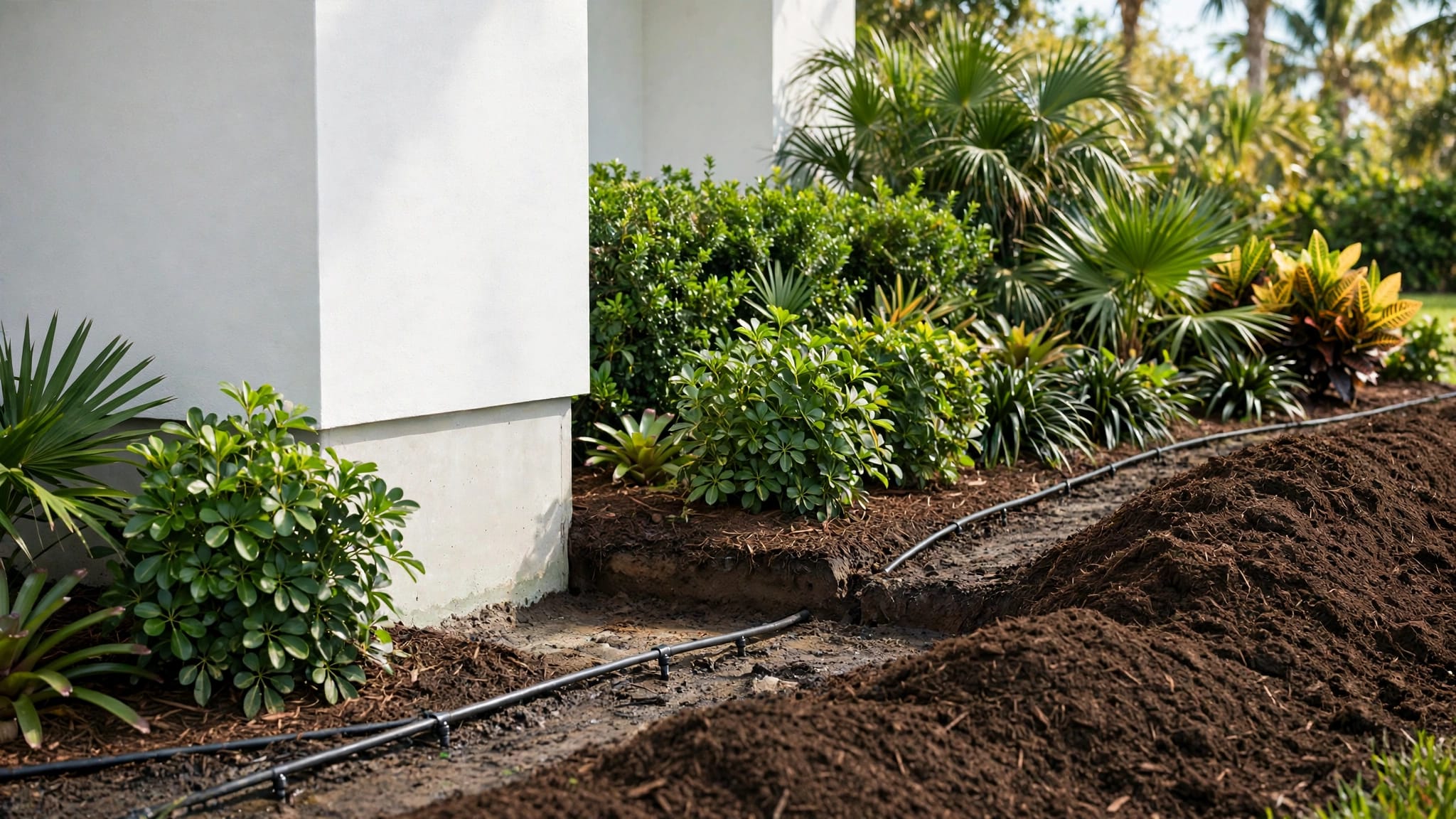
- Adjust sprinkler heads so they don't spray the shed. Also correct low spots that hold water beside the foundation after rain.
- Keep firewood, lumber, cardboard, mulch, and wooden pallets away from the shed. Store necessary materials on metal shelving or another raised surface.
- Trim plants and vines so you can see the walls and foundation. Leave enough space for air movement and regular inspections.
- Repair rotted boards and peeling paint. Seal exposed wood after it dries, but remember that paint and sealant won't stop termites already inside the structure.
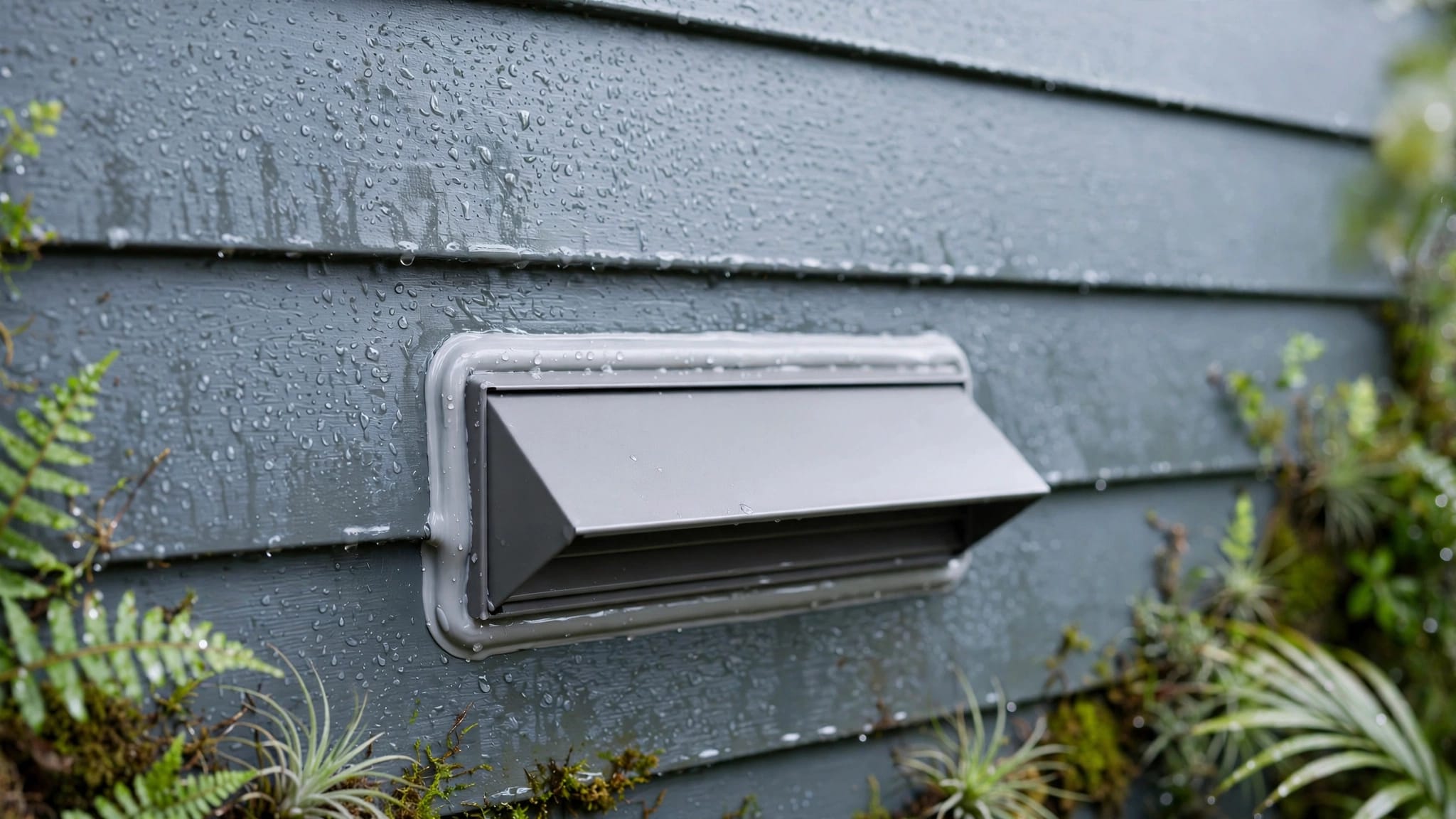
- Keep vents open and screened. Good airflow helps the shed dry, while screens reduce access for other pests.
These measures reduce favorable conditions, but they don't remove an established colony. For broader property maintenance advice, review these termite prevention strategies.
What to do when you suspect termites in the shed
Call for a professional inspection if you find active-looking mud tubes, fresh wings, termite pellets, hollow wood, or structural damage. An inspection should include the shed's exterior, interior, floor supports, stored materials, moisture sources, and the area between the shed and home.
A technician can determine whether the activity comes from subterranean termites, drywood termites, or another wood-damaging pest. Carpenter ants and wood decay can resemble termite damage, but they require different solutions.
Treatment depends on the findings. Subterranean termite activity may call for a soil treatment, baiting system, or localized treatment around entry points. Drywood termites may require targeted treatment or a broader structure treatment when several areas are affected. A small shed doesn't automatically need the same service as a full home, but a small building can still have serious structural damage.
Don't move suspicious boxes, lumber, or furniture into the garage or house. That can spread the problem to another structure. Instead, leave the items in place when possible and tell the technician what you observed.
If you see signs in your Cape Coral shed, contact Shield Home & Pest Control for a professional termite inspection. A clear inspection and written treatment plan can show whether the problem is active, how far it has spread, and what needs attention first.
Protect the shed before damage becomes visible
A detached shed can become a termite source even when the main house shows no warning signs. Soil contact, rain exposure, irrigation, hidden cardboard, and poor ventilation all deserve attention during routine property care.
Inspect the shed several times a year, keep the base dry and visible, and remove wood or cardboard stored against the walls. When you find mud tubes, pellets, wings, or weakened wood, schedule an inspection instead of relying on surface spray. Termite prevention Cape Coral homeowners can count on begins with treating the shed as part of the property, not as an afterthought.
Schedule a Free Inspection: