Irrigation Leaks and Termite Risk Around Florida Slabs
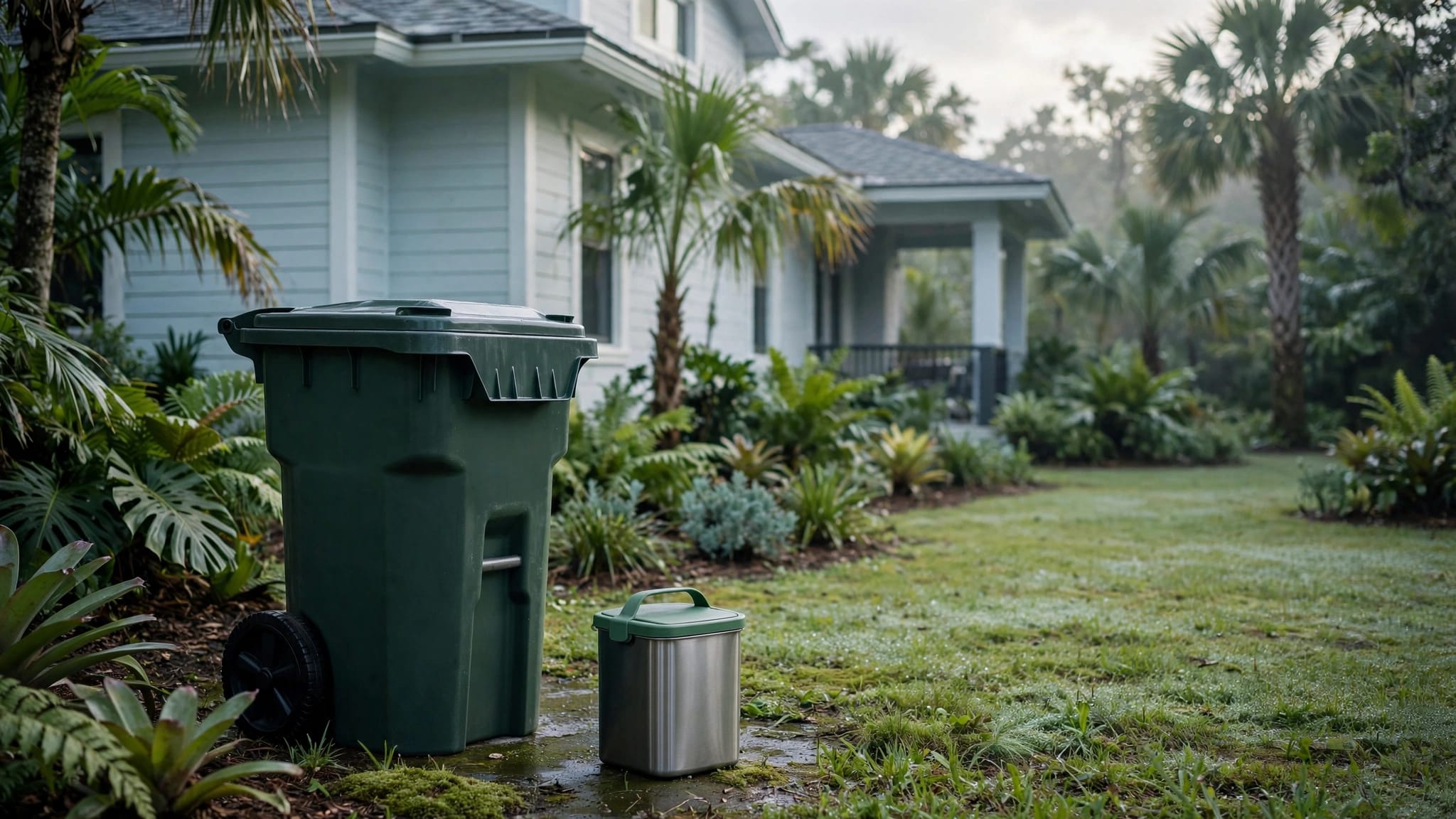
A sprinkler that runs too long can do more than waste water. Around a Florida home, constant moisture near the foundation may create conditions that help subterranean termites survive and find entry points.
Concrete slabs protect much of the structure, but they don't make a home termite-proof. Irrigation leaks, overspray, drainage problems, and plumbing leaks can all leave different clues. Finding the actual moisture source is the first step toward reducing risk.
Key Takeaways
- Irrigation leaks can keep soil and foundation edges damp, which may support subterranean termite activity.
- Overspray and poor drainage create similar moisture problems but require different repairs.
- Plumbing leaks need attention from a qualified plumber, especially when moisture appears indoors or stays present without irrigation.
- Mud tubes, discarded wings, hollow wood, and termite pellets justify a qualified termite inspection.
- Repairing the water source helps, but it doesn't guarantee that termites won't enter or remain active.
How Irrigation Leaks Create Termite Risks
Subterranean termites need moisture in the soil around their tunnels. Florida's warm climate already supports termite activity for much of the year. When irrigation continually wets the same area beside a slab, that damp strip can become more attractive to termites than dry, compacted soil.
The concrete slab itself isn't a food source. However, termites can travel through soil beneath or beside the slab and reach the structure through small openings. Common access points include plumbing penetrations, cracks, construction joints, gaps around utility lines, and areas where the slab edge meets the wall.
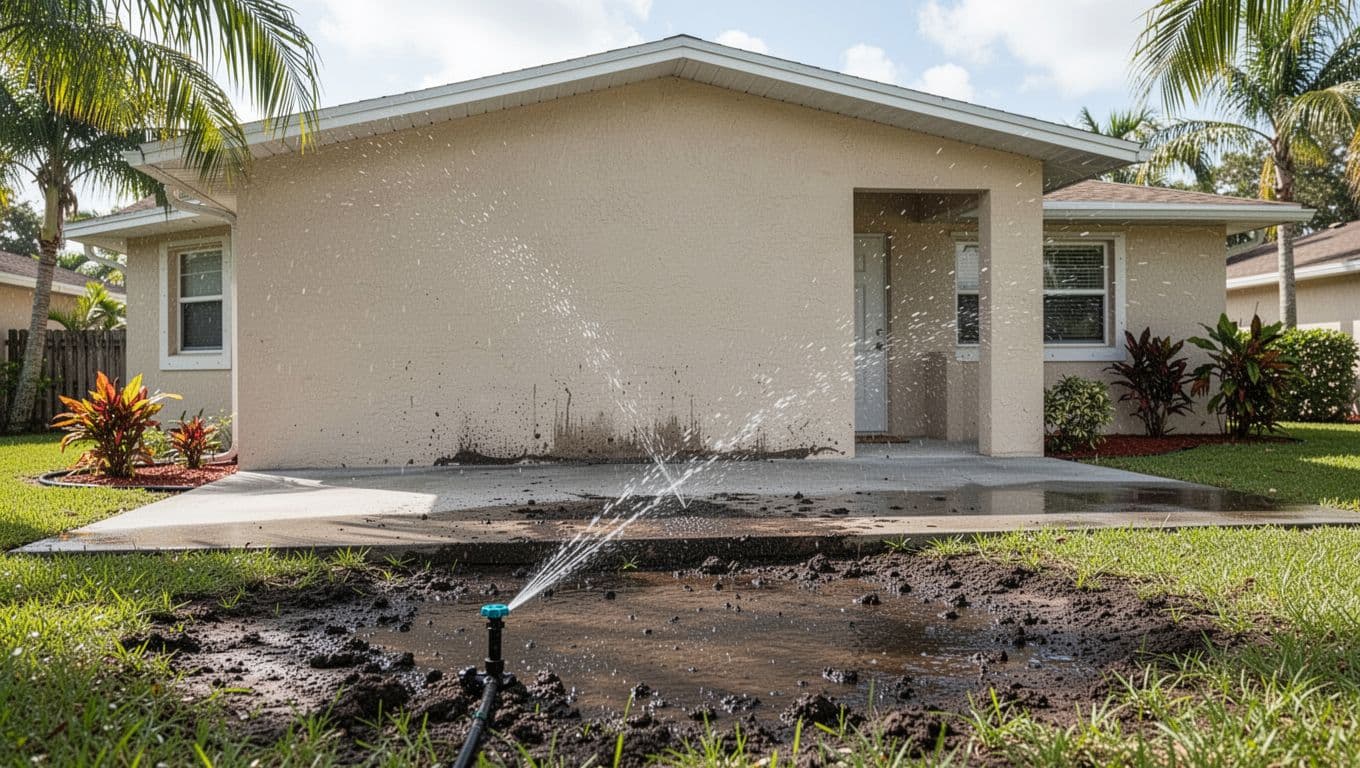
A damaged sprinkler head may spray directly against stucco instead of watering the lawn. A cracked underground irrigation line can saturate soil without creating an obvious puddle. Leaking valves may keep one section wet between watering cycles, while a broken riser can send water toward the foundation every time the zone runs.
Moisture also affects the condition of nearby materials. Damp mulch, landscape timbers, cardboard, and buried wood can provide food or shelter for termites. Wet soil may hide early activity, especially when thick plants or mulch cover the slab edge.
A wet foundation area doesn't prove termites are present. It does create a condition worth correcting, especially when other warning signs appear.
Irrigation problems raise concern mainly for subterranean termites. Drywood termites live inside dry wood and don't depend on wet soil in the same way. Therefore, a leaky sprinkler won't explain every termite issue, but it can increase exposure around slab-on-grade homes.
Irrigation Leaks, Overspray, Drainage, or Plumbing?
The source of the water matters because each problem needs a different response. A pest technician can identify termite evidence, but an irrigation contractor, plumber, or drainage professional may need to repair the moisture source.
An irrigation leak usually follows a schedule. You may notice a soggy area after the sprinklers run, a bubbling patch of grass, an unusually soft spot, or water collecting near one sprinkler head. A broken underground line can also cause weak pressure in part of the system.
Overspray happens when the irrigation system works but points water toward the house. Sprinkler heads may rotate too far, spray patterns may overlap, or shrubs may push a head out of alignment. Look for wet stucco, splash marks, algae, or damp mulch along the wall. This problem often appears only during watering.
Poor drainage continues after rain or irrigation because water cannot move away from the structure. Downspouts that discharge beside the slab, compacted soil, low spots, clogged swales, and roof runoff can all keep the perimeter wet. In Southwest Florida, heavy rain can expose drainage problems that remain hidden during dry weather.
A plumbing leak has a different pattern. It may cause a persistent damp area, a sudden increase in water use, a drop in water pressure, warm flooring, damp baseboards, or moisture near a bathroom or kitchen. A slab leak can remain hidden below the floor, so don't assume that every foundation-area puddle comes from irrigation.
You can narrow down the source by turning off the irrigation system for several days, if conditions allow, and watching the area. Check whether the wet spot returns after rain, after a watering cycle, or without either event. Avoid opening walls or breaking concrete to investigate. If moisture continues with irrigation off, contact a qualified plumber or drainage professional.
Termite Warning Signs Around a Florida Slab
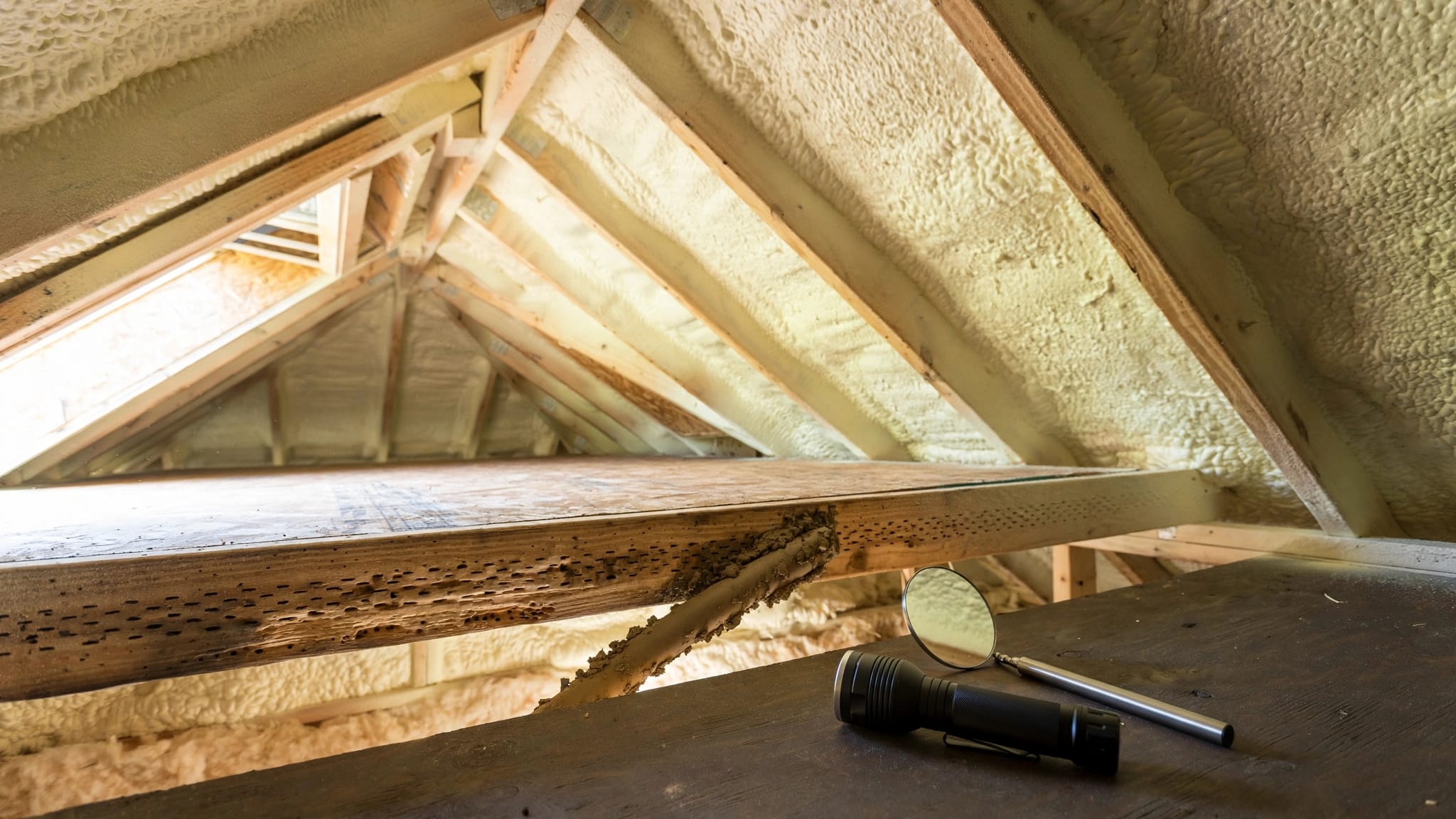
Moisture becomes more urgent when it appears with evidence of termite activity. Subterranean termites often build mud tubes along foundation walls, cracks, piers, plumbing penetrations, or other sheltered surfaces. These narrow tubes protect termites as they travel between the soil and wood.
Look closely around areas hidden by mulch, edging, stored items, and dense plants. Check garage walls, patio edges, door frames, baseboards, and areas where pipes enter the home. A tube may be the size of a pencil or wider, and an old tube may look dry or cracked. Even an inactive tube deserves professional evaluation because termites can rebuild one nearby.
Other signs include:
- Discarded wings near windows, doors, lights, or vents
- Wood that sounds hollow when tapped
- Blistered paint or raised flooring
- Doors or windows that become difficult to close
- Small piles of termite pellets from drywood activity
- Damaged trim, framing, cabinets, or stored wooden items
Not every sign confirms an active infestation. Damp wood can rot, paint can blister from many causes, and ants may resemble termites. A qualified termite inspector can identify the insect, locate entry points, and assess whether evidence is active, old, or unrelated to the wet area.
The inspection should cover more than the visible sprinkler. A technician may examine the foundation perimeter, accessible crawlspaces, garages, attics, plumbing penetrations, expansion joints, wall voids, and wood-to-soil contact. Tell the inspector when the leak started, which irrigation zone serves the area, and whether anyone has seen wings or mud tubes.
Homeowners in Cape Coral, Fort Myers, Punta Gorda, Bonita Springs, and Sanibel can also review this termite prevention guide for homeowners before scheduling an inspection. It covers common entry points and treatment approaches without treating one method as suitable for every property.
Fix the Moisture Source Before It Hides the Problem
Start with the irrigation system. Turn off the affected zone, then inspect the sprinkler heads, risers, valves, exposed fittings, and nearby soil. Replace broken heads and fittings, repair damaged lines, and adjust spray patterns so water reaches the lawn or planting bed instead of the wall.
Don't cover a wet area with fresh mulch before finding the leak. Mulch can hide mud tubes, retain moisture, and make the foundation edge harder to inspect. Keep soil, mulch, plants, and stored materials from covering accessible slab edges, vents, or wall openings.
Next, check the property's drainage. Extend downspouts away from the foundation, clear blocked discharge areas, correct low spots where appropriate, and keep roof water from collecting beside the slab. If water remains after repairs, a drainage contractor may need to evaluate the grade and discharge path.
Plumbing concerns require a different professional. A plumber can test supply lines, fixtures, sewer connections, and possible slab leaks. Don't apply termite chemicals to a suspected plumbing leak. Chemical treatment won't repair a broken pipe, and ongoing moisture can continue to damage the structure.
Once the source is repaired, arrange a termite inspection when you find mud tubes, wings, wood damage, or persistent moisture near the slab. Treatment may involve a liquid soil application, bait stations, localized work, or another plan based on the inspection. A licensed provider should explain the findings, treatment limits, follow-up needs, and any warranty terms in writing.
Repairing irrigation leaks lowers excess moisture around the home, but it doesn't remove every termite pathway. Regular inspections remain useful, especially after landscaping changes, plumbing work, foundation repairs, or long periods of heavy rain. Shield's professional pest control services include termite-related evaluations for homes and businesses across Southwest Florida.
Conclusion
A sprinkler leak can keep the soil beside a Florida slab damp enough to support termite travel and conceal early evidence. Overspray, poor drainage, and plumbing leaks can create similar conditions, but each source needs its own repair.
Fix the water problem, keep the foundation perimeter visible, and schedule a qualified termite inspection when warning signs appear. Drying the area helps reduce risk, but only a proper inspection can determine whether termites are already active.
Schedule a Free Inspection: