Termite Damage vs Water Damage in Florida Homes
A soft spot near a window, bubbling paint, or a pile of wood-colored dust can make any Florida homeowner uneasy. Termite damage vs water damage is difficult to identify because both problems can weaken wood, stain walls, and remain hidden for months.
Florida's warm, humid climate supports termite activity and creates frequent moisture problems. The right clues can help you decide what you're seeing, but a professional inspection may be needed when damage is inside walls, beneath floors, or near the roof.
Key Takeaways
- Termites often leave galleries, mud tubes, discarded wings, or dry pellets.
- Water damage usually follows a leak, flood, plumbing issue, or area with poor drainage.
- Soft wood can result from either problem, so texture alone doesn't provide an answer.
- Moisture meters, termite inspections, and careful tracing can help locate the source.
- Fix active leaks quickly, but avoid covering or repairing suspected termite damage before inspection.
Why the Two Types of Damage Look Similar in Florida
Humidity affects nearly every Florida home, even when there isn't a visible leak. Warm air can create condensation around air-conditioning systems, windows, ductwork, and plumbing lines. Heavy rain can also expose roof leaks, clogged gutters, damaged flashing, and drainage problems.
Termites benefit from many of the same conditions. Subterranean termites can enter through soil, foundation cracks, plumbing penetrations, and other openings. Drywood termites don't need soil contact, so they can infest roof areas, attic framing, window trim, and furniture.
Both issues can cause:
- Wood that feels weak or sounds hollow
- Peeling paint or bubbling drywall
- Dark stains and discolored trim
- Cracks around doors and windows
- Sagging floors or ceilings
- A musty smell in enclosed areas
The location and pattern usually provide more information than the damage alone. Water tends to spread outward from a leak or collect in low areas. Termites often create narrow, repeated paths inside wood and may damage sections that aren't directly exposed to water.
A previous leak can also make a termite problem harder to spot. Wet wood may hide galleries, while damaged wood can absorb water faster and deteriorate more quickly. In some homes, both problems exist at the same time.
Signs That Point to Termite Damage
Termite damage often develops behind the surface. You may see only a small crack or soft patch while insects continue feeding inside structural wood. Look closely at baseboards, window frames, door jambs, attic beams, crawl spaces, and areas where wood touches or approaches soil.
Mud tubes and shelter tubes
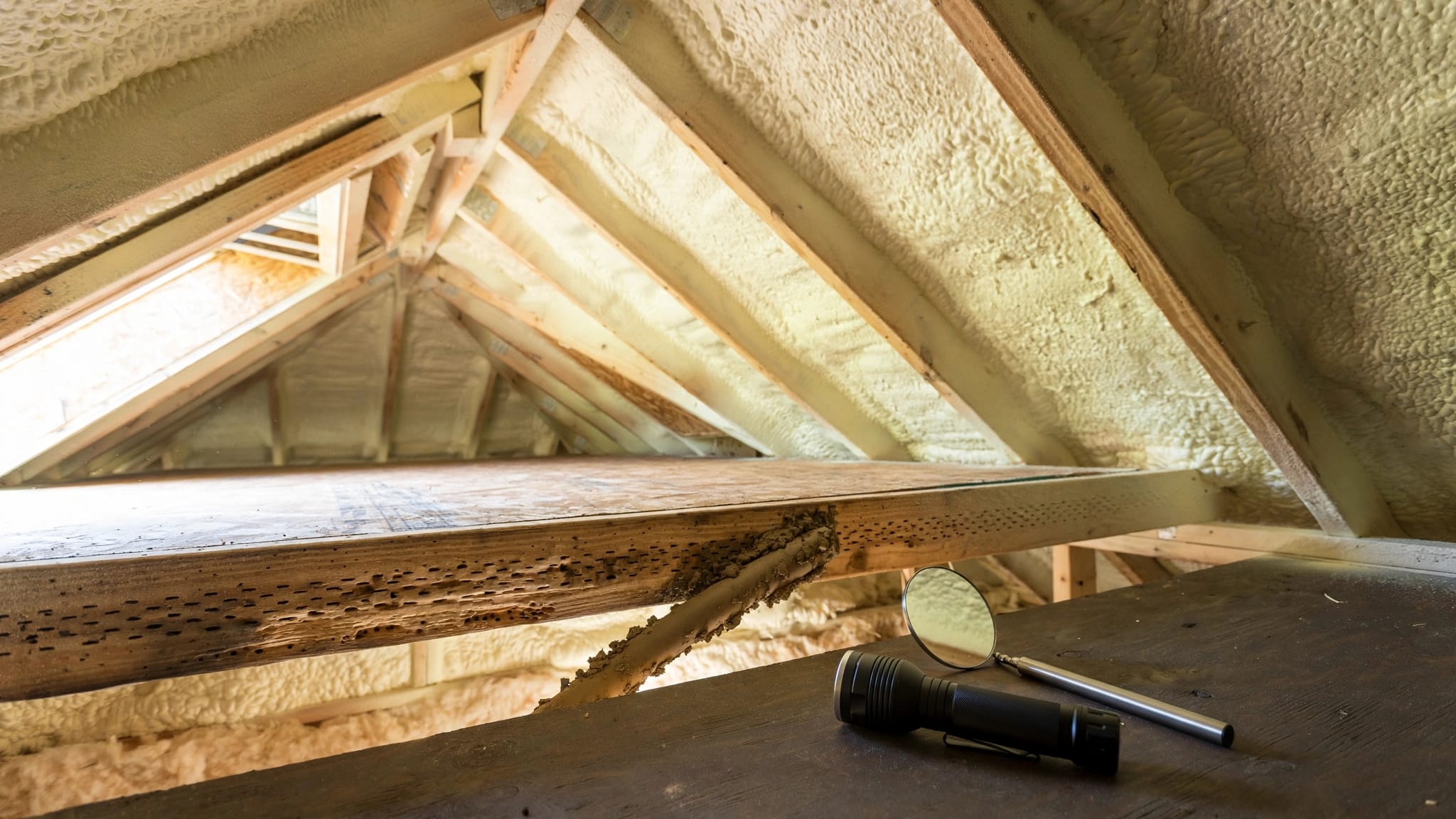
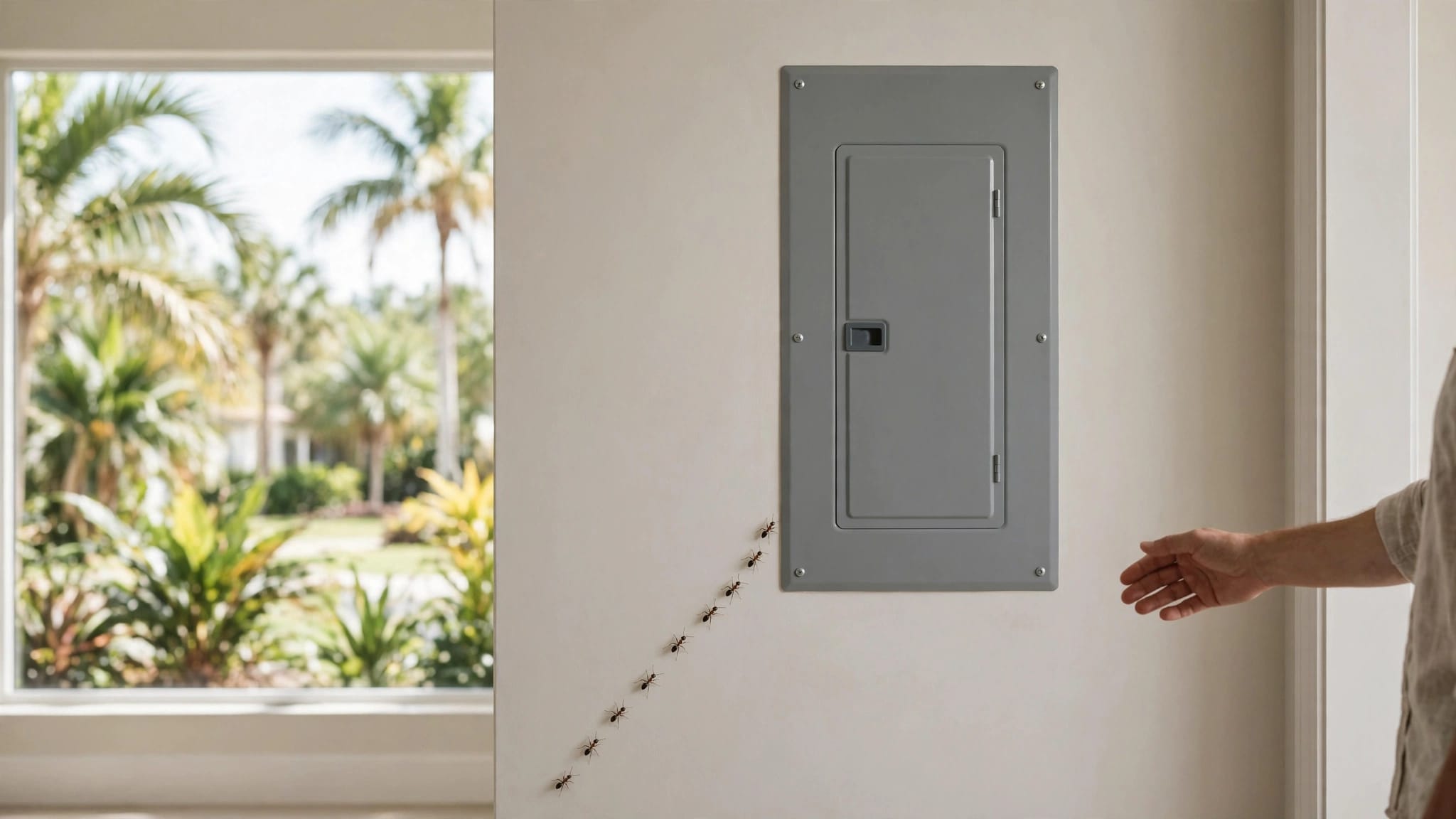
Subterranean termites build narrow mud tubes to travel between the ground and the wood in a home. These tubes may appear on foundation walls, concrete blocks, garage walls, patios, plumbing penetrations, or the underside of floors.
A tube that is broken and repaired can still indicate activity. Don't rely on the absence of live insects. Termites may retreat when disturbed, while the colony remains nearby.
Hollow or layered wood
Tap exposed wood with the handle of a screwdriver. Damaged wood may sound hollow, but this test isn't conclusive. Termites can leave a thin outer layer intact, creating a surface that looks normal until it breaks.
Subterranean termites often follow the softer grain of wood. Drywood termites can leave small chambers and tunnels throughout a board. In advanced cases, the surface may blister, buckle, or collapse under light pressure.
Frass and discarded wings
Drywood termites push waste pellets out of small holes. This material, called frass, often looks like tiny tan, brown, or sand-colored grains. You may find it on a windowsill, floor, shelf, or beneath a piece of furniture.
After swarming, termites leave behind discarded wings. A few wings near windows, doors, lights, or vents can point to an indoor swarm. Flying ants can also shed wings, so the wings alone don't confirm termites.
Patterns that don't match a leak
Termite damage can appear in dry rooms or on wood far from plumbing and roof lines. Repeated pinholes, blistered wood, narrow grooves, and hollow sections are more concerning when no water source is nearby.
The table below compares common clues, but no single sign proves the cause.
| Clue | More consistent with termites | More consistent with water |
|---|---|---|
| Mud tubes | Yes, especially near foundations | No |
| Small dry pellets | Often drywood termites | No |
| Discarded wings indoors | Possible termite swarm | No |
| Yellow or brown ceiling stain | Uncommon | Common |
| Damage beside a pipe or roof line | Possible, but less direct | Common |
| Musty odor | Sometimes, if wood stays damp | Common |
| Hollow wood | Common | Possible after rot |
| Bubbling paint or drywall | Possible | Common |
A pest professional can identify termite evidence, locate likely entry points, and determine whether activity appears current. That matters because replacing damaged trim won't solve an active infestation.
Signs That Point to Water Damage
Water damage usually has a source, even when that source is difficult to see. Plumbing leaks can run along framing before appearing on a ceiling. Roof water may travel several feet before leaving a stain. Air-conditioning condensation can collect above a ceiling or behind a wall.
Start by examining the damage pattern. A circular ceiling stain often points to water entering from above. Stains that grow after rain suggest a roof, flashing, or exterior drainage issue. Damage beside a bathroom, kitchen, water heater, washing machine, or air handler deserves close attention.
Water-damaged materials often show these signs:
- Yellow, brown, or rust-colored staining
- Paint that blisters, peels, or flakes
- Drywall that swells or crumbles
- Warped flooring or baseboards
- A persistent musty odor
- Mold growth on damp surfaces
- Water rings that expand after storms or plumbing use
Wood rot has a different texture from most termite damage. Rot may feel spongy, stringy, or crumbly. It often affects end grain, joints, sill plates, and areas where water remains trapped. Paint may cover the problem until pressure breaks through the softened surface.
A moisture meter can help locate damp areas behind drywall and under flooring. However, a high reading doesn't identify the cause. It may reflect an active leak, old water intrusion, condensation, or damp soil below the home.
Florida's air-conditioning systems deserve attention during an inspection. A clogged condensate drain, frozen coil, cracked drain pan, or poorly insulated duct can release water into ceilings and walls. These leaks may continue during humid weather without creating a dramatic puddle.
How to Separate Termite Damage From Water Damage
When you compare termite damage with water damage, trace the problem outward instead of focusing only on the worst-looking spot. Ask where the damage begins, whether the area becomes worse after rain or plumbing use, and whether insects or insect debris are present.
A leak usually leaves a trail. Check the roof above a ceiling stain, the plumbing behind an adjacent wall, and the floor around nearby appliances. Water may also follow electrical wiring, pipes, or framing, so the visible stain may sit away from the original source.
Termite activity often follows wood, cracks, and concealed access routes. Search nearby for mud tubes, frass, pinholes, wings, or additional damaged wood. Use a flashlight to examine joints and the back edges of trim. Avoid pulling apart structural materials before someone documents the condition.
Age can offer a clue, but it doesn't settle the question. Old water damage may leave stained, dry wood. Old termite damage may look inactive while remaining structurally weak. A home can also have repaired plumbing damage and a separate termite issue in the same wall.
A dry surface doesn't rule out termites, and a wet surface doesn't rule out them either. Moisture and insect evidence need separate checks.
What to Do When You Find Possible Damage
Take practical steps without disturbing more material than necessary. The goal is to stop ongoing damage, preserve evidence, and get the right inspection.
- Document what you see. Photograph stains, holes, tubes, pellets, wings, soft wood, and affected rooms. Include wide shots that show the location within the home.
- Look for an active water source. Check under sinks, around toilets, near the water heater, beside the air handler, and above the damaged ceiling. After rain, inspect the attic only if you can do so safely.
- Control water when you can do it safely. Shut off a leaking fixture or appliance. Place a container under a drip, then contact a qualified plumber or roofing professional when the source requires repair.
- Don't seal suspected termite evidence. Avoid painting over mud tubes, vacuuming frass, or replacing damaged trim before a pest inspection. Preserving these signs can make identification easier.
- Schedule the appropriate inspection. A pest-control technician can check for termite activity, wood-destroying insect evidence, entry points, and conditions that attract pests. A plumber, roofer, or water-damage specialist can trace leaks and assess moisture-related deterioration.
- Ask whether the damage is active or old. This distinction affects treatment and repairs. If termites are active, the colony or infestation needs attention before cosmetic work begins.
- Repair the cause after identification. Termite treatment won't correct a roof leak. Drying a wall won't eliminate termites. Addressing only the visible symptom leaves the underlying problem in place.
Get prompt help when a floor feels unsafe, a ceiling sags, electrical components are wet, or wood damage appears near load-bearing areas. In those situations, avoid the area until a qualified professional assesses it.
Preventing Both Problems in a Florida Home
Moisture control reduces conditions that support wood rot and makes termite inspections easier. Keep gutters clear, direct downspouts away from the foundation, and repair damaged roof materials. Make sure window and door seals remain intact.
Inside, monitor the air-conditioning drain line and pan. Replace leaking supply lines under sinks and behind washing machines. Fix slow plumbing leaks before they soak cabinets, subfloors, or wall cavities.
For termite prevention, keep soil, mulch, and stored wood from contacting exterior wood components. Store firewood away from the house and remove dead stumps or untreated wood near the foundation. Seal practical cracks and maintain screens around vents and openings.
Regular inspections are useful for homes in Cape Coral, Fort Myers, Punta Gorda, Bonita Springs, Sanibel, and other Southwest Florida communities. Local construction styles, slab foundations, screened enclosures, pools, irrigation systems, and storm exposure can all affect where moisture and termites appear.
Conclusion
Termite damage often leaves insect evidence and concealed channels, while water damage usually follows a leak, stain, moisture pattern, or area that stays damp. Still, the signs can overlap, especially after months of humidity or an older repair.
When you find suspicious wood or wall damage, document it, check for water, and arrange the right inspection before making cosmetic repairs. Identifying the source is the safest way to protect your home, because termite damage vs water damage requires different solutions.
Schedule a Free Inspection: