Giant Water Bugs in Cape Coral: Why They Show Up at Night
A big insect on your pool deck after dark can ruin a calm evening fast. In Cape Coral, giant water bugs often show up near porch lights, lanais, and screened pools because they're drawn to moisture and brightness.
They can look startling, especially when they appear out of nowhere at night. The good news is that a few simple changes around your home can make your pool area far less inviting.
Understanding These Nighttime Visitors
Giant water bugs are aquatic insects, so they spend much of their time near ponds, canals, ditches, and other wet spots. In Southwest Florida, that matters because homes sit close to water, and evening irrigation, rain, and humidity keep many outdoor areas damp.
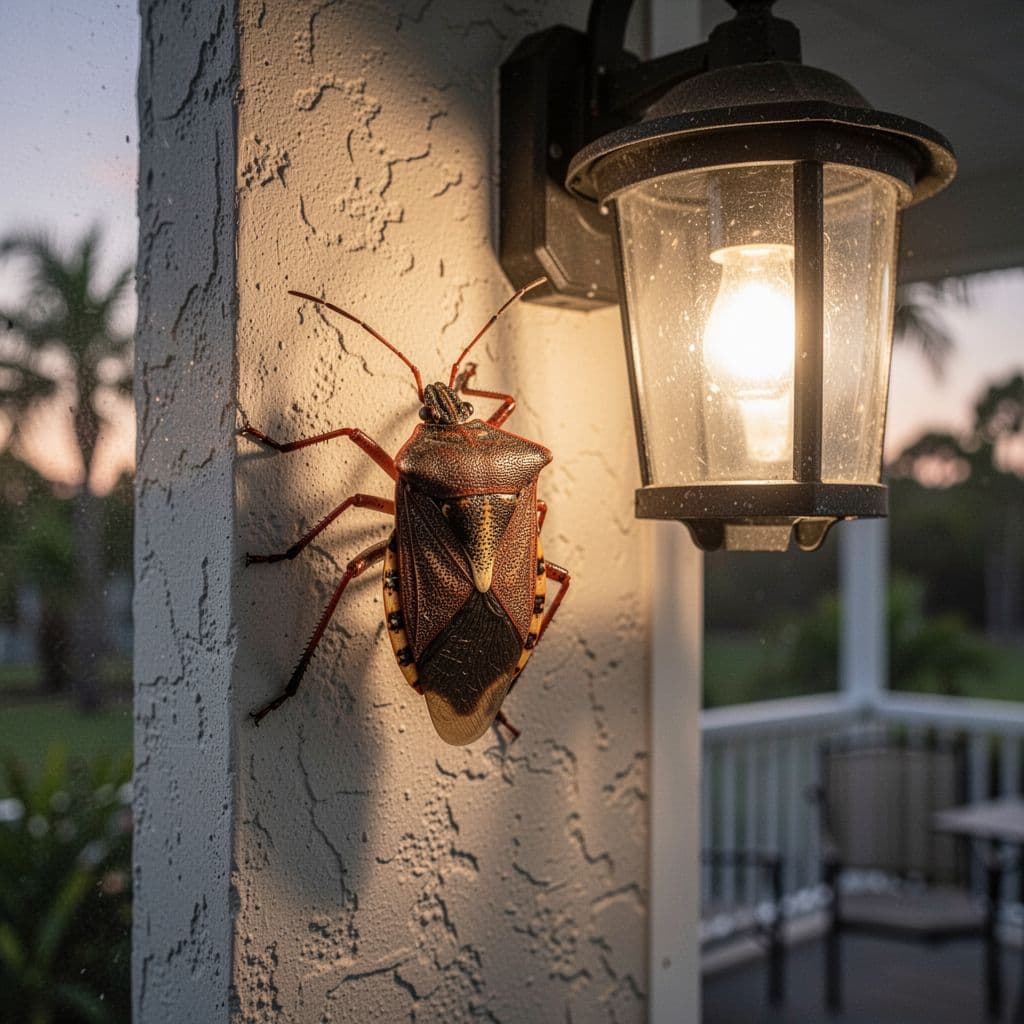
Bright lights make homes even easier to find. A porch fixture, floodlight, or lanai light can act like a beacon, especially on warm, wet nights after a storm. That's why a bug-free patio at sunset can feel fine, then suddenly look like a landing zone an hour later.
These insects do not usually mean your house is dirty. They often mean the area gives them what they want, which is moisture, shelter, and light. If you notice them in the same spot more than once, the problem is usually tied to the environment around the home.
A bug near one porch light can be random. Repeated sightings at the same spot usually point to moisture, light, or entry gaps.
How to Tell a Giant Water Bug from a Cockroach
It's easy to mistake one large bug for another in low light. Still, giant water bugs have a few clear traits that help set them apart from cockroaches.
Here's a quick comparison.
| Feature | Giant Water Bug | Cockroach |
|---|---|---|
| Body shape | Broad, flat, and oval | Narrower and more oval |
| Front legs | Thick and grasping | Designed for running |
| Where you find it | Near water, pools, lights, or damp edges | Kitchens, garages, drains, and hidden indoor spots |
| Movement | Can fly, then stay still on walls or screens | Usually scurries fast and hides quickly |
| Size | Often much larger than a common roach | Usually smaller, depending on the species |
One clue matters more than the rest. If the insect is large, flat, and found near water or a bright exterior light, it's more likely a giant water bug. If it darts across the floor in a kitchen or bathroom, cockroach activity is more likely.
Try not to handle it with bare hands. Giant water bugs can bite if they're trapped or grabbed, and that sting can be painful. A container, broom, or vacuum with a hose attachment is a safer way to remove one from a porch or lanai.
Why Pool Decks, Lanais, and Porch Lights Draw Them In
Cape Coral homes give giant water bugs several reasons to stick close. Pool decks stay damp longer than many other outdoor spaces, especially after rain or a late-afternoon splash session. Screened enclosures help, but they also create edges, corners, and doorway gaps where bugs can slip through.
Lighting plays a big part too. White bulbs, bright floodlights, and uncovered fixtures can attract insects around the pool cage and porch. Once other insects gather, a predatory insect has a reason to follow. In other words, one bright light can become a busy dinner spot.
Moisture around the home adds to the pull. Check for these common trouble spots:
- standing water in planter saucers, toys, buckets, and tarps
- clogged deck drains or slow-draining corners on the patio
- damp mulch, leaf piles, and thick plants near the enclosure
- dripping pool equipment, irrigation overspray, or leaky outdoor faucets
- torn screen panels, loose door sweeps, or gaps around utility lines
Cape Coral weather makes this worse after summer rain. Humid nights keep surfaces wet longer, and that gives these insects more time to move toward lights and sheltered spots. A clean, dry, well-lit exterior is harder for them to settle into.
Practical Prevention Around Your Home
The best prevention starts with small habits around the pool and porch. You do not need a complicated plan. You need fewer wet spots, less glare, and tighter entry points.
Here are the changes that help most:
- Reduce standing water . Empty buckets, flip over toys, and drain water that collects in plant saucers or on pool covers.
- Adjust exterior lighting . Use warmer bulbs, motion sensors, or lower-brightness fixtures when possible. Aim lights downward instead of outward.
- Seal entry points . Repair torn screens, add door sweeps, and caulk gaps where pipes and wires enter the home.
- Keep the deck clean . Sweep leaves, rinse spills, and clear debris from corners, drains, and enclosure tracks.
- Trim back dense plants . Shrubs and vines near the lanai trap moisture and give bugs a darker path to the house.
- Check irrigation timing . Avoid watering late at night if it leaves the patio or cage damp when lights come on.
A clean pool deck is more than a nice look. It removes hiding spots, dries faster after rain, and makes the area less attractive after dark. That matters in Southwest Florida, where humidity can keep a patio wet long after sunset.
If your porch lights stay on every night, make them work for you. A few fixture changes can cut down on the insects that gather near doors and screens. Then giant water bugs have fewer reasons to drift toward the house in the first place.
When a Single Bug Becomes a Pattern
One sighting can happen anywhere. A bug may fly in after rain, rest on a screen, then move on. Repeated sightings are different. If you keep finding them on the same porch wall, around the same light, or inside the lanai, the area likely needs a closer look.
That is when a local inspection helps. A professional can look at the light placement, screen condition, moisture problems, and nearby entry points together. If you want help with residential pest control in Cape Coral, a local visit can reveal whether the issue is isolated or part of a larger pattern.
Frequent sightings can also point to other pests using the same conditions. Damp edges, poor sealing, and bright outdoor lights attract more than one type of insect. A broader plan often works better than treating one bug at a time.
Conclusion
Giant water bugs in Cape Coral usually show up for the same reasons they show up anywhere else, moisture and bright light. Once you see that pattern, the fix becomes more practical. Dry the deck, adjust the lighting, seal gaps, and keep the lanai clean.
If the bugs keep coming back, especially around your pool cage or porch lights, the problem is no longer a one-time surprise. It's a sign that the area around your home needs attention. For help with professional pest control services, contact a local pest professional and get the outdoor spaces checked before the next warm, wet night brings another visit.
Schedule a Free Inspection: