Mosquitoes Breeding in Cape Coral Boat Covers and Tarps
A sagging boat cover can turn into a mosquito nursery after one Cape Coral rainstorm. On canal lots, dockside storage, and backyard pads, tarps hold water in low spots that many people never notice until the bites start.
Florida heat speeds the cycle up fast. If your boat sits under a cover most of the week, the problem may be building right above your head, especially after summer rain or a windy afternoon.
Why boat covers and tarps collect mosquito water
Boat covers and tarps sag for simple reasons. Fabric stretches, straps loosen, and a little debris creates a pocket. After an afternoon storm, that pocket can hold enough water for mosquitoes to start laying eggs.
In Cape Coral, the mix of warm air, humidity, and quick rain showers makes the problem worse. On waterfront properties, the air stays damp longer, so puddles do not dry out as fast.
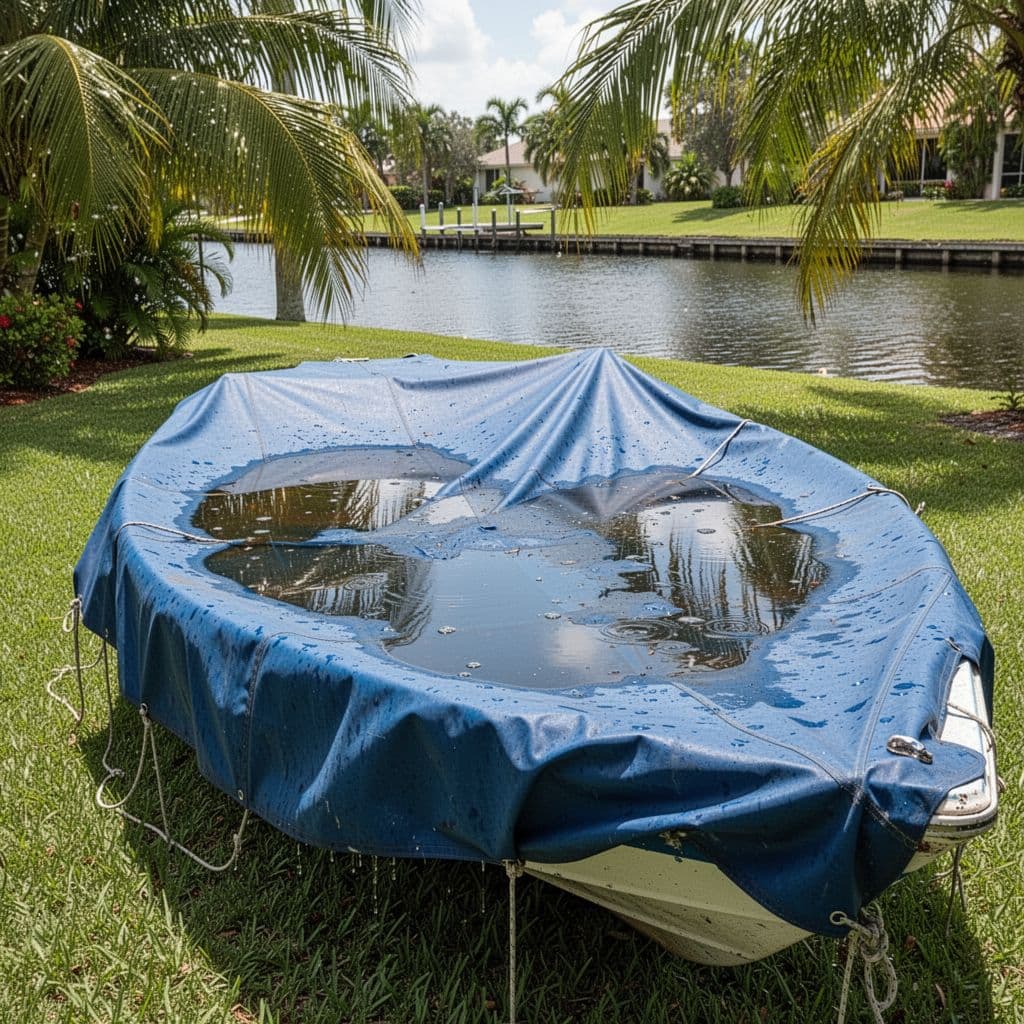
Mosquitoes need only a thin layer of water. They do not need a pond. A fold in a tarp, a crease near a seam, or a low spot over the bow can work just fine. If the boat sits near a canal edge, a shaded side yard, or a dock, the cover may stay wet even longer.
That is why mosquitoes around boat covers are so common after summer storms and late-season rain. Backyard boat storage often has less airflow than an open driveway, so the cover dries slower. On top of that, leaves, pollen, and seed pods can settle into the fabric and create tiny dams.
If water can sit there for days, mosquitoes can use it.
A boat cover does not have to look torn or filthy to cause trouble. It only has to hold water in the right place.
What to inspect after rain, storms, and windy days
The best time to check a cover is right after rain. If you wait until the next dry spell, the water may already be gone and the mosquito cycle may already be underway.
Start with the low points. Walk around the boat and look for anything that sags, wrinkles, or dips more than the rest. Use a flashlight if the cover sits in shade, because small puddles can hide in folds.
Check these spots first:
- The center of the cover, where rain often pools.
- Tie-down lines and straps, where loose fabric forms pockets.
- The bow and stern, especially if the cover shifts in wind.
- The dock side or trailer side, where drainage may be uneven.
- Any area with leaves, sticks, or pollen sitting on top.
If you see tiny wrigglers in the water, that is a clear sign the spot has already become a breeding site. Dumping the water helps, but the real fix is finding out why it collected there in the first place.
Cape Coral homeowners with canal properties often deal with more than one trouble spot at once. A boat cover, a bucket near the dock, and a shaded corner by the fence can all hold water. For a bigger look at those patterns, the homeowner guide for mosquito control in Cape Coral is a helpful place to compare what happens around waterfront homes.
A quick after-rain check takes only a few minutes. Still, those minutes can stop a fresh hatch before it spreads.
How to keep water from collecting in the first place
Small changes to the cover make a big difference. A tighter fit helps rain run off instead of sitting on top. If the tarp or cover has stretched out, replace it before it starts forming a bowl in the middle.
Support matters too. A cover support pole or a simple frame can lift the center so water slides away. Even a slight crown can help if the boat stays outside for long periods. The goal is simple, get rain off the fabric and keep the surface from flattening into a pool.
Wind can loosen a cover faster than people think. After a storm, recheck the straps and corners. If one side flaps loose, water will settle there next time. A cover that looks fine from a distance may still have a hidden dip near a seam or snap.
Keep the area around the boat clean as well. Leaves, seed pods, and trash trap moisture. So do old cushions, buckets, and coolers left near the hull. If the boat is parked under trees, trim branches when you can. Less debris means less water trapped on top of the tarp.
Drainage around the parking spot matters, especially in low Cape Coral yards. A slight puddle under the trailer or beside the dock can keep the whole area damp. If your boat sits near a screened patio or lanai, the same dry-out habits help there too. Mosquito control for pools and screened lanais fits that same prevention-first approach.
A dry cover does more than protect the boat. It cuts off one of the easiest breeding spots on the property.
When mosquitoes spread beyond the boat yard
A few bites are annoying, but a breeding spot near your boat can affect the whole property. Mosquitoes do not stay where they hatch. They move toward shade, still air, and people.
That means the problem can reach the dock, the garage, the back door, and the lanai. You may notice swarms at sunset, bites while loading gear, or mosquitoes hiding near the entryway after dark. Kids and guests often feel it first because they stand still longer.
Florida mosquitoes also bring health concerns. Repeated bites are more than a nuisance, and some mosquitoes can spread illness. The risk is not the same in every yard, but a wet tarp should never be ignored.
If you keep finding mosquitoes in the same places, look for the pattern. A cover that pools water after each rain is not just a cover problem. It is part of a larger yard problem. Canal homes, dockside storage, and shaded side yards give mosquitoes more places to rest.
The same logic applies after storms. If rainwater lingers on a tarp, it often lingers in other spots too. Check gutters, downspouts, planter trays, and low corners near the fence. A single breeding site can turn into several if the yard stays damp.
When professional mosquito control is the next step
Sometimes the tarp is only one piece of the issue. If water keeps coming back after every storm, or if mosquitoes still swarm after you fix the cover, a deeper inspection helps.
Professional mosquito control starts with the places mosquitoes breed and hide. That includes standing water, shaded resting areas, and the edges of docks, patios, and lanais. A good plan uses targeted treatment where it matters most, not blanket spraying across the whole yard. In many cases, EPA-certified products are used in focused spots to reduce mosquito pressure without treating more than needed.
Cape Coral waterfront properties often need that kind of close look. Boat covers, pool cages, irrigation overspray, and thick landscaping can all work together. If one spot stays wet, the rest of the property often feels it.
A technician can also spot problems you may miss. Loose drainage, clogged gutters, hidden buckets, and worn cover straps can all keep the cycle going. The fix may be simple, but finding the source is the hard part.
If your yard also gets hit around screened areas, the problem may not be limited to the boat at all. The same mosquitoes that gather near tarps often rest in shaded lanais and around pool enclosures. That is why a broader plan often works better than treating one spot at a time.
Conclusion
Cape Coral rain gives mosquitoes plenty of chances, and a sagging tarp can be the easiest one. When you keep boat covers tight, dry, and clear of debris, you remove a breeding spot before it turns into a bigger problem.
The same habit helps around docks, trailers, and other shady corners of the yard. If the water keeps coming back after every storm, a closer inspection is the next smart move. A dry cover protects your boat, your yard, and your evenings outside.
Schedule a Free Inspection: