Velvet Ants in Cape Coral Mulch Beds and Play Areas
A fuzzy orange insect in the mulch can be more than a strange find. In Cape Coral, velvet ants often show up along dry landscape edges, and a sting near a play area can turn a normal yard day into a painful one.
If you're dealing with velvet ants in Cape Coral , mulch beds and playground-style spaces deserve close attention. Those areas get used by kids, pets, and bare feet, so hiding spots matter more than they do in a back corner bed. The good news is that a few smart yard habits can lower the risk without changing your whole landscape.
Why velvet ants show up in mulch and sand
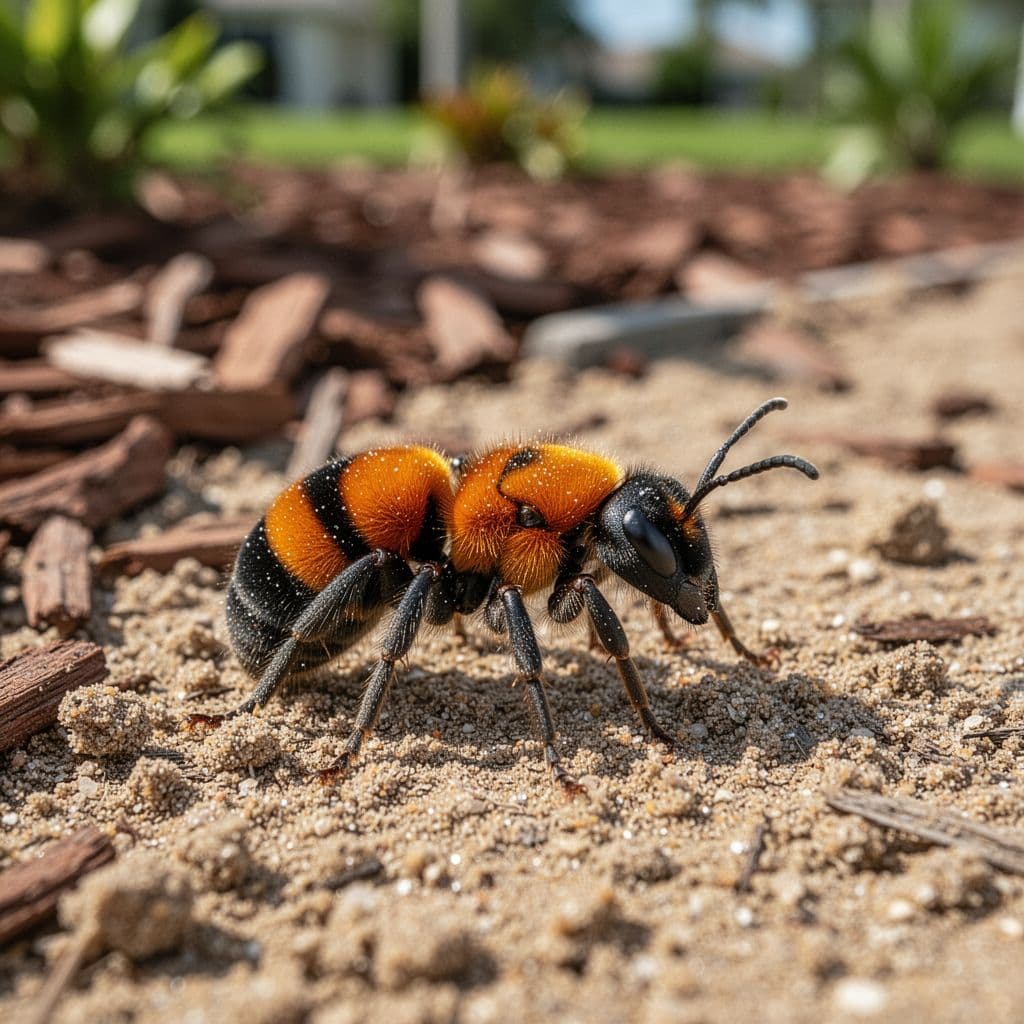
Velvet ants are not ants at all. They are wingless female wasps, and they spend a lot of time on the ground. In Southwest Florida, they often move through dry soil, open mulch, paver gaps, and sunny borders where shelter is easy to find.
That matters in Cape Coral yards. Many homes use mulch around palms, beds, and play zones, and those areas can stay warm and dry for long stretches. Add edging, stacked borders, or loose landscape debris, and you get small pockets where velvet ants can move, rest, and hide.
They do not live in big ant colonies. Instead, they are solitary and travel on their own. That means one sighting does not mean the whole yard is full of them. Even so, a single insect near a swing set or sandbox still deserves respect.
The painful sting is the reason people notice them. They usually aren't aggressive in the way some pests are, but they will sting if handled or pressed against skin. Around family spaces, that is enough to treat every sighting as a real safety issue.
What to look for before someone gets too close
The easiest way to spot a velvet ant is by its look and movement. It is usually fuzzy, bold in color, and quick across the ground. Orange, red, black, and white patterns are common, so they can stand out in mulch or sand.
The body is thick and hard to miss once you know what to watch for. Still, people often mistake them for large ants at first glance. That guess can cause trouble, because a child or adult may try to brush one away by hand.
In play areas, the risk goes up fast. A child may kneel in mulch, reach under a slide, or grab a toy beside a border. A small insect in that spot can make contact before anyone has time to react.
One sighting in the yard does not mean panic is needed. It does mean you should slow down and look at the area more closely. A velvet ant on top of mulch is a warning that the yard has the right mix of shelter, dry ground, and edge space.
In family-use spaces, distance beats guesswork. If a velvet ant is near a play set, clear the area first and inspect the spot later.
Yard habits that lower the risk
The best prevention starts with the places velvet ants like most, the dry, sunny edges of a yard. Cape Coral landscapes often have mulch, shell, pavers, and tight borders, so the goal is to remove easy hiding spots.
Start with the mulch itself. Thick, fluffy mulch can hold heat and create cover. Keep it tidy, and avoid piling it high around the base of play equipment or along the edges where children walk.
Pay close attention to seams and borders. Velvet ants often move through cracks in pavers, brick edging, and the narrow space where turf meets landscape beds. Those joints are easy to miss during routine cleanup, so they deserve a regular look.
A few practical yard changes can help:
- Keep mulch thinner near swings, slides, benches, and toy storage areas.
- Rake back mulch from paver seams and edging stones.
- Check sunny, dry strips after mowing or edging.
- Inspect the legs, supports, and base of play equipment.
- Remove wood scraps, loose debris, and unused landscape fabric.
- Watch for bare soil patches that stay warm all day.
These changes do not guarantee a velvet ant-free yard, but they reduce the places where one can hide. They also make the whole yard easier to inspect, which matters when children use the space often.
Small details help most. A clean border around a play area is easier to monitor than a deep, messy bed with scattered debris. In other words, the less clutter the insect has, the less comfortable the yard becomes.
What to do when one shows up near play equipment
The first step is simple, keep people out of the area. That means kids, pets, and anyone walking barefoot. If a velvet ant is near a sandbox, swing, or paver path, treat it like a live hazard until the spot is clear.
Do not stomp it, trap it by hand, or try to brush it away with a towel. Quick movements can bring you into contact with the sting. Spraying at random is not a great answer either, especially in places where children play later.
If the insect is on a toy, move the toy only if you can do it safely and without touching the insect. If you cannot, leave it alone and mark the area in your mind. Then inspect the nearby border, mulch line, and support posts when the space is empty.
Do-it-yourself handling is not recommended in family-use areas. Home fixes often miss the source, and a missed insect can return to the same seam or edge. The safer approach is to reduce access first, then deal with the yard conditions that brought it there.
A careful check should include:
- the mulch line around the play space,
- the base of pavers and border stones,
- the feet of slides, swings, and climbing frames,
- bare patches of sand or soil nearby,
- any cracks where the ground meets concrete or edging.
If you find repeated activity, keep notes on the location. That helps identify the pattern, which is often more useful than chasing a single insect around the yard.
When a professional inspection helps
Repeated sightings near play areas usually mean the yard has a setup that velvet ants like. That might be dry soil, sheltered edges, thick mulch, or another pest issue that leaves open ground and hidden gaps. A proper inspection can sort out which one matters most.
A visit from professional pest control services can help locate the source without guesswork. The goal is not to flood the yard with product. It is to find the conditions that keep bringing pests back and treat the spots where they live and enter.
For homeowners who want a local plan, residential pest control in Cape Coral is a smart place to start. A technician can look at the mulch beds, borders, and play spaces as one connected area instead of treating each sighting as an isolated problem.
That approach matters because family yards need more than a quick spray. They need clear inspection, targeted treatment, and a plan that fits how the space is used. A play area should feel safe when kids run across it, not like a place you have to check twice every time.
If you already keep up with other pest services, mention the exact spots where you saw the insect. A good inspection is easier when the problem area is narrow, especially around pavers, sunny bed edges, and the base of play equipment.
Conclusion
Velvet ants in Cape Coral are not a sign that your yard is failing. They are a sign that the landscape has the dry, sheltered edges these insects like. Around mulch beds and play areas, that is enough reason to pay attention.
The safest response is simple. Keep kids and pets away, reduce hiding spots in mulch, and watch the sunny borders, paver joints, and equipment bases where they tend to move. A single insect may not be a big infestation, but a sting in a family space is still a problem worth addressing.
When the same spot keeps producing sightings, a targeted inspection is the next practical step. That gives you a safer yard and fewer surprises the next time someone heads outside to play.
Schedule a Free Inspection: