Stink Bugs in Cape Coral: Why Screens and Entry Lights Draw Them In
A quiet Cape Coral evening can change fast when stink bugs start gathering on your screens and porch lights. They look harmless at first, but once they find a comfortable spot, they tend to return night after night.
For many Southwest Florida homeowners, the pattern feels random. One day the lanai is clear, the next the window screens are dotted with bugs and the entry light has become a magnet.
The good news is that the cause usually isn't a mystery. Screens, lighting, warmth, moisture, and tiny gaps around the home all play a part. Once you see how those pieces fit together, the fix gets much easier.
Why window screens in Cape Coral collect stink bugs
Window screens give stink bugs a place to land, rest, and wait. In Cape Coral, that often happens near lanais, patios, and shaded walls where the surface stays cooler than the sunlit yard.
A screen also sits right at the edge between outdoors and indoors. That makes it a natural stopping point for bugs that are looking for cover, warmth, or a route toward the house. If the screen is loose, torn, or dirty, the problem gets worse.
Humidity matters too. Southwest Florida air stays warm and moist for long stretches, and bugs respond to that. Add shrubs, mulch, or potted plants close to the wall, and you create easy hiding places right next to the screen.
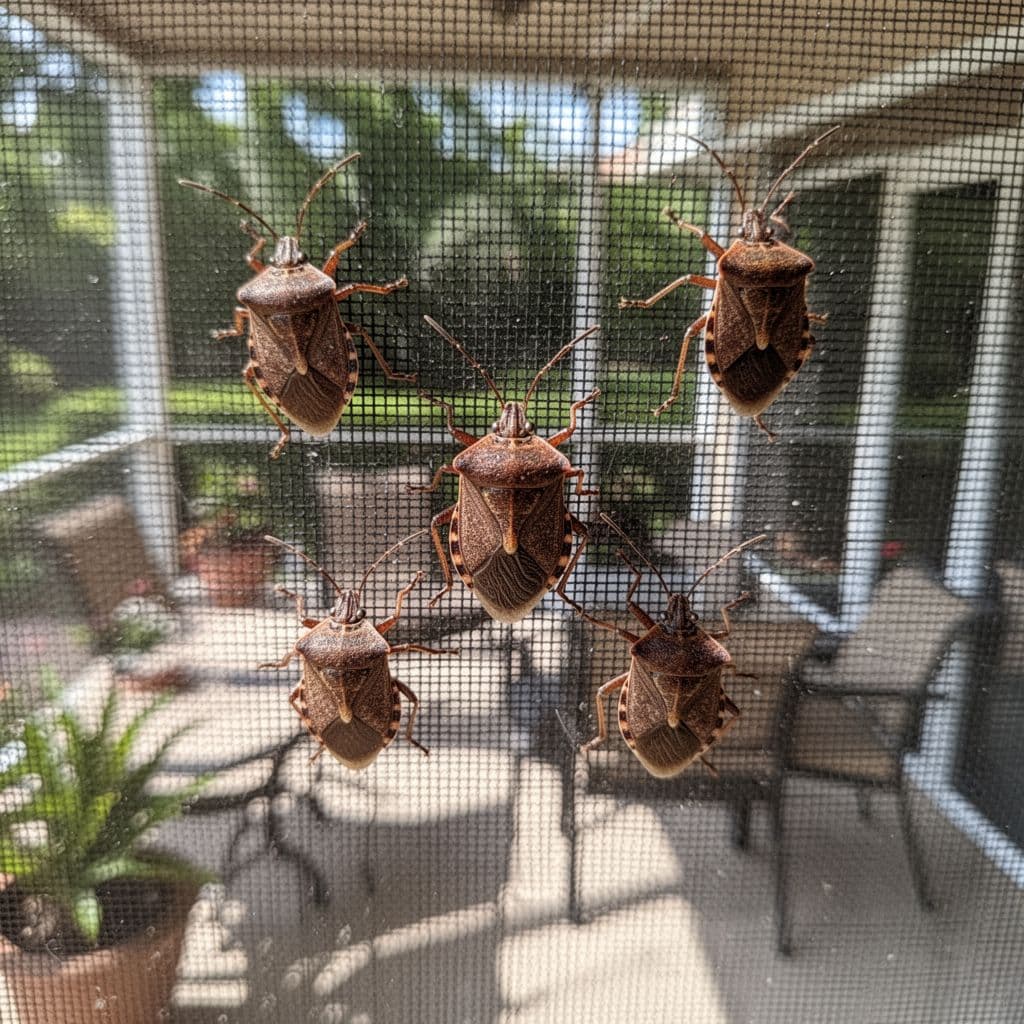
That is why a screen can look like the first problem, even when the real issue starts a few feet away. The bugs are using the screen like a waiting room.
Porch lights, warmth, and why entryways get crowded
Outdoor lighting is one of the biggest reasons stink bugs gather near front doors and garage entries. Bright light creates contrast against a dark wall, so insects notice it fast.
Warm bulbs make the area more inviting. They can add a little heat to the wall, fixture, and nearby frame, which gives bugs another reason to stay close. In Cape Coral, where evenings are warm and humid, that small bit of extra comfort matters.
Moisture can also build around lighted entry areas. Condensation, watering schedules, and damp landscaping all help keep that space attractive to pests. If bugs are already resting on the wall or screen, the light keeps the area active all night.
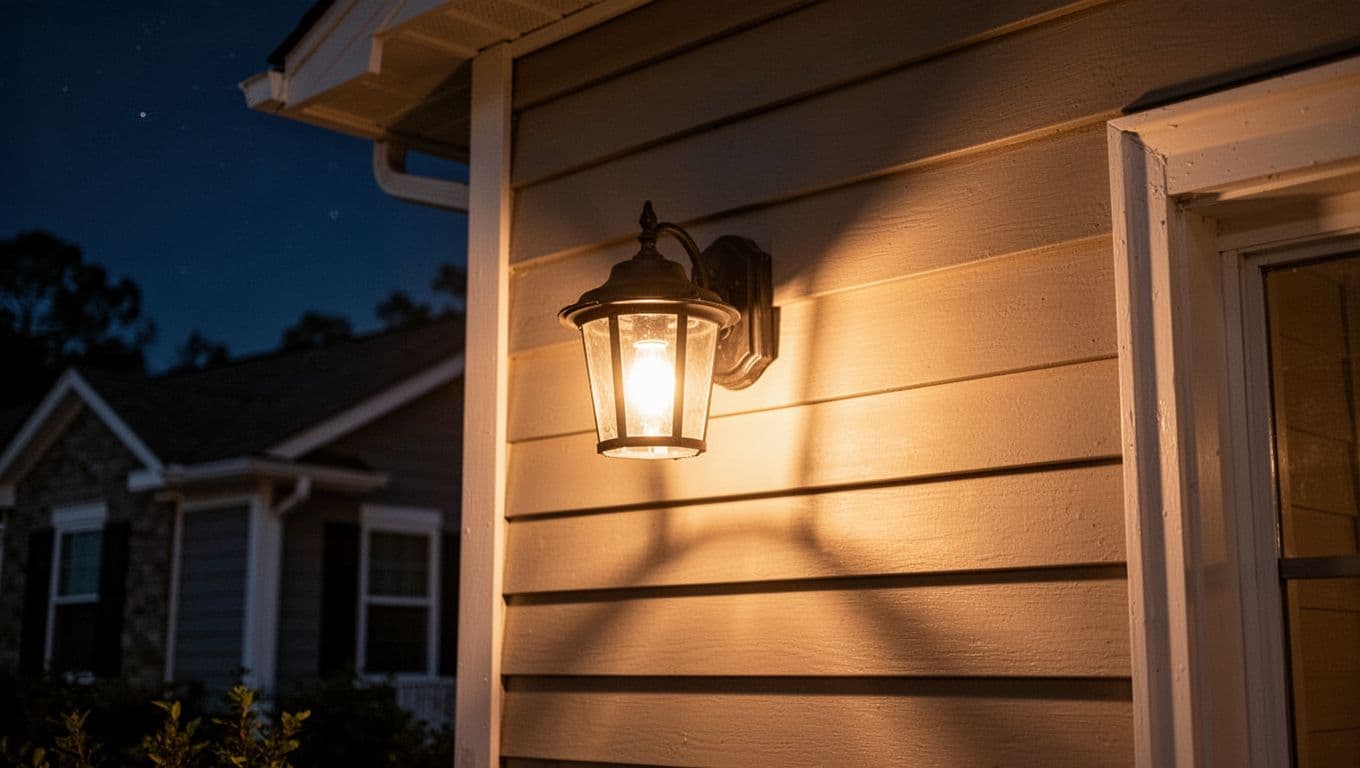
A few lighting changes can make a real difference. The table below shows the easiest swaps.
| Lighting choice | What it does | Better option |
|---|---|---|
| Bright warm porch bulb | Pulls bugs toward the entry | Amber or yellow LED |
| Light left on all night | Keeps the area active for hours | Timer or motion sensor |
| Bulb near a screen or door | Gives bugs a landing zone | Move the fixture if possible |
| Multiple lights at once | Expands the attraction area | Use only the lights you need |
The main takeaway is simple. Less light, less heat, and less time on means fewer bugs circling your door.
Gaps around windows and doors do the real work
Screens get blamed a lot, but the smaller openings around the home usually do the actual work. Stink bugs can flatten their bodies and slip through places you barely notice.
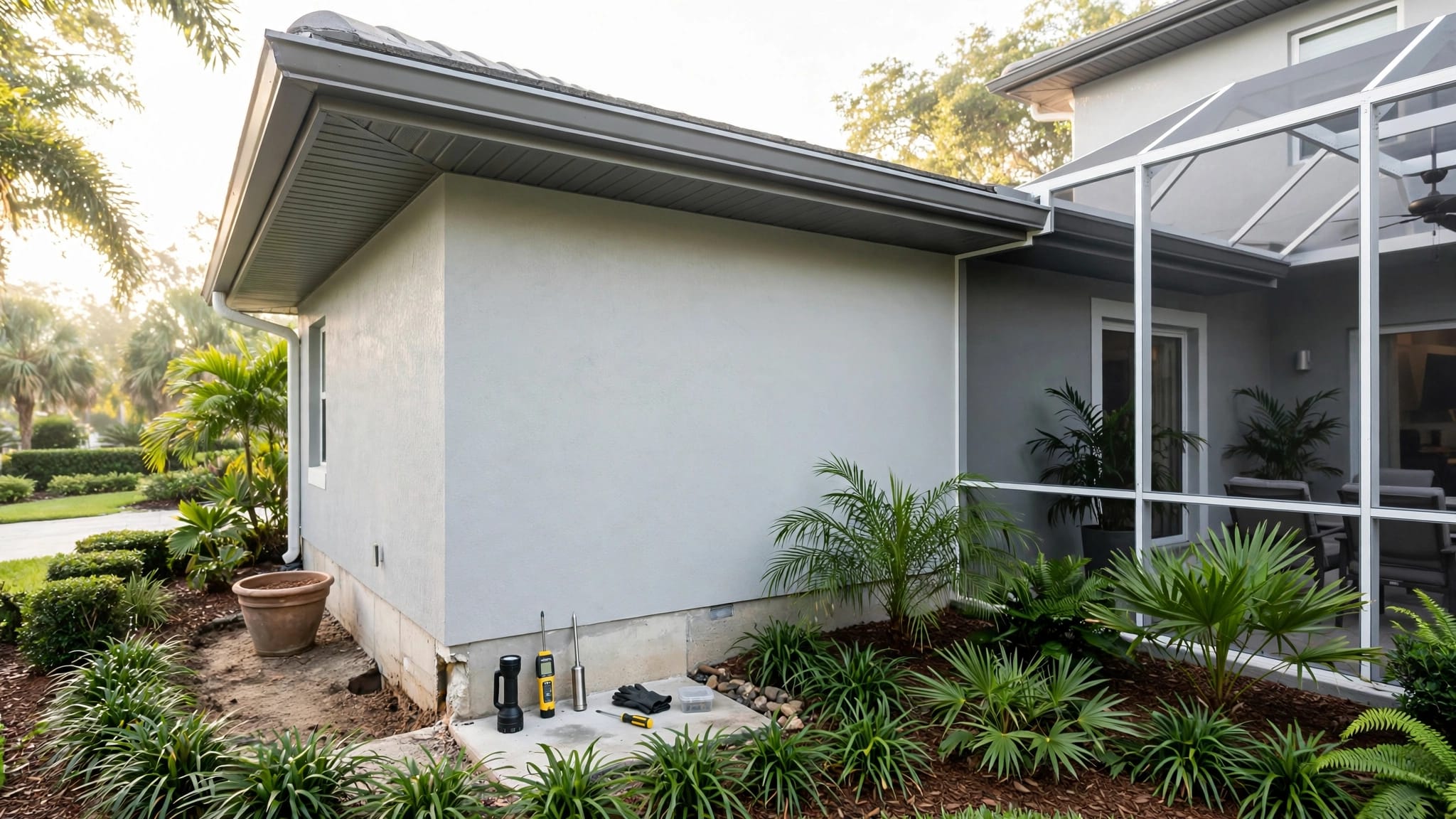
Check the spots around windows, sliding doors, and garage entries. Look at worn weatherstripping, cracked caulk, loose screen frames, and damaged door sweeps. Even a tiny opening can become a steady path inside.
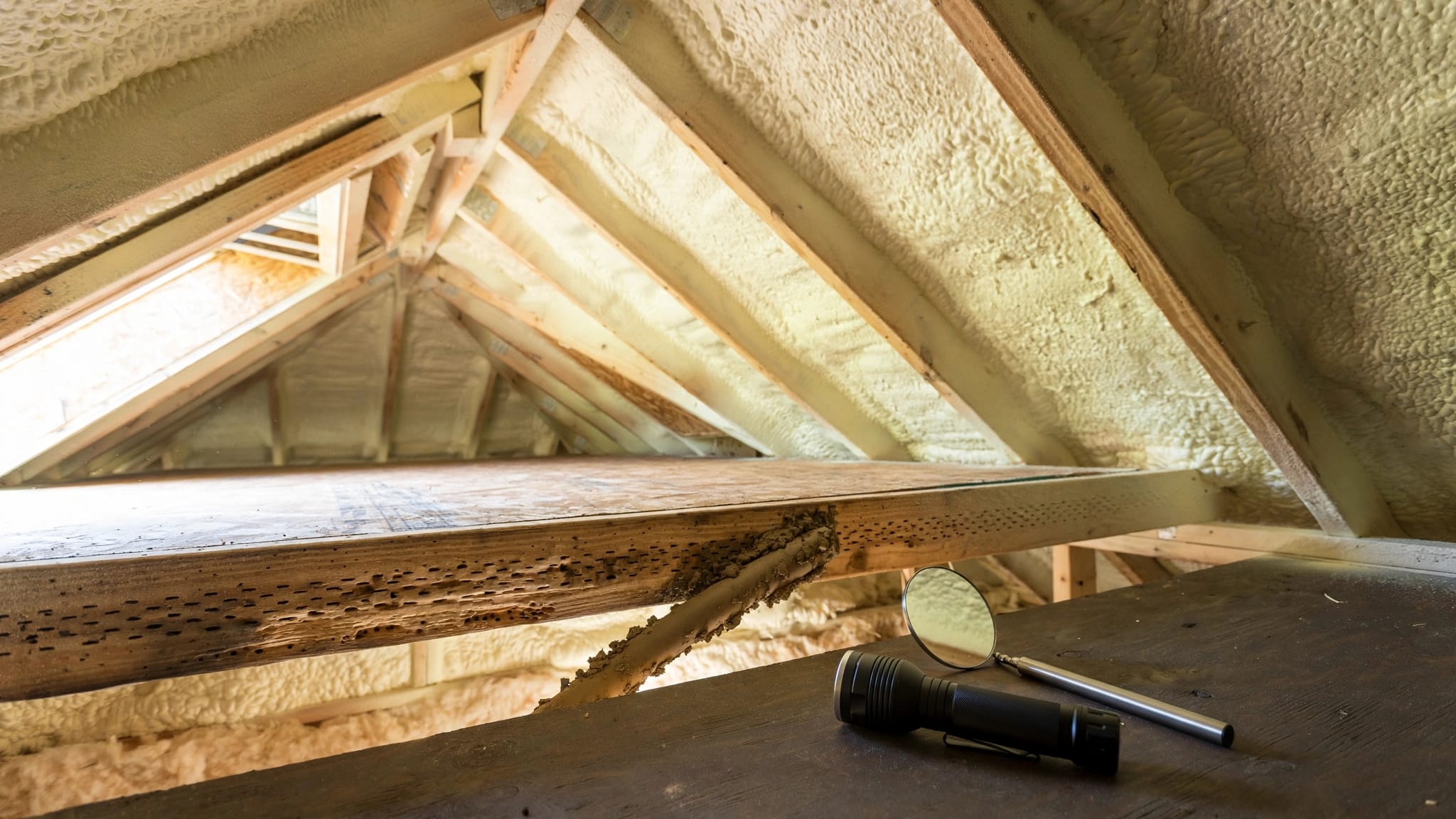
Vent openings, utility penetrations, and attic access points deserve attention too. In many Cape Coral homes, bugs do not come in through one huge gap. They use several small ones.
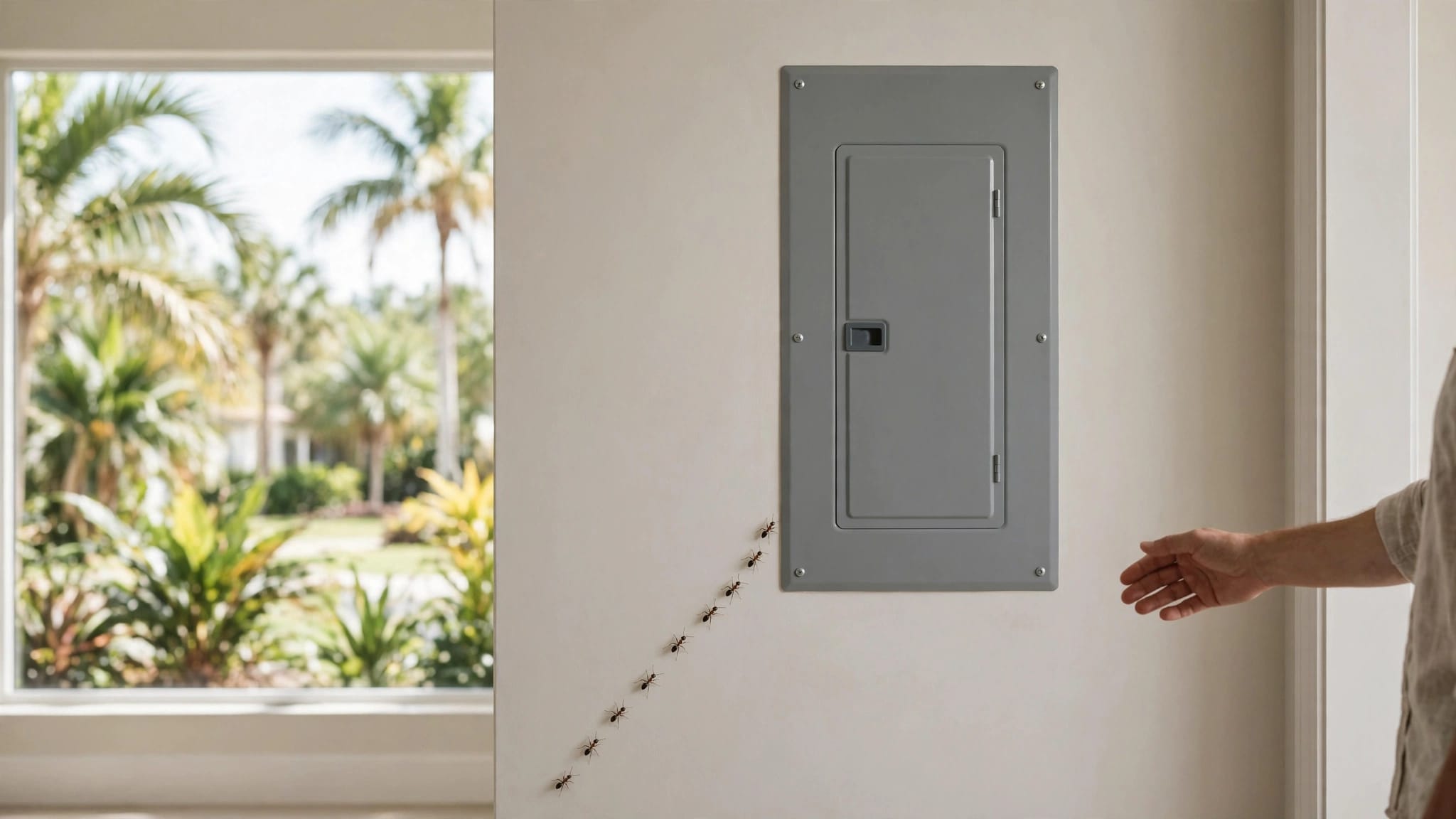
If the same bug keeps showing up on the screen every night, the real entry point is often somewhere outside the glass.
That is why a quick spray on the patio rarely solves the problem for long. The source is usually a weak spot in the shell of the home, not the bug on the wall.
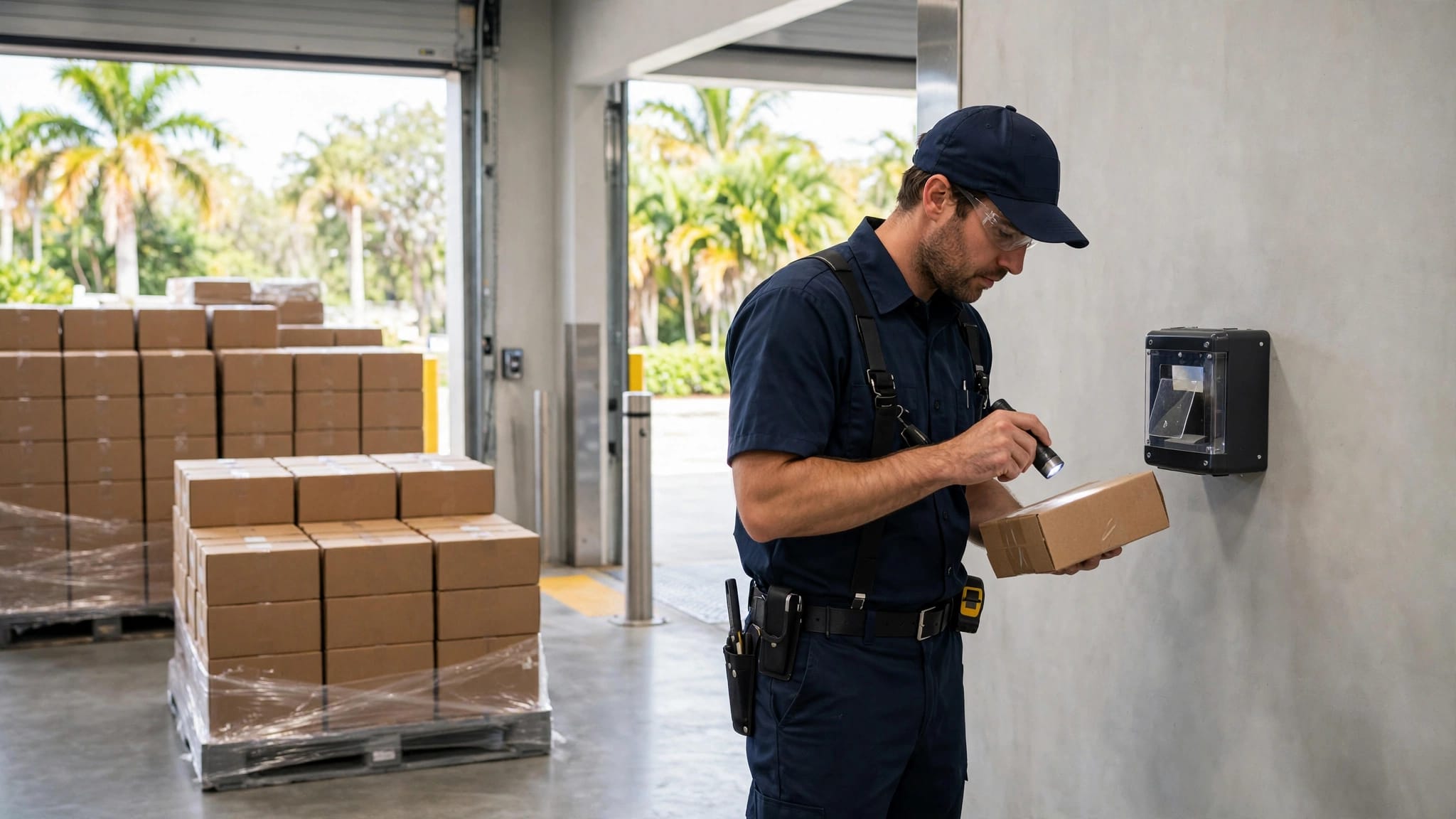
If bugs are making it indoors, a residential pest control in Cape Coral inspection can help find the weak points around doors, screens, and attic openings.
Simple prevention steps for Southwest Florida homes
The best prevention plan is practical and low-drama. A few small changes often do more than one big treatment.
- Swap bright white bulbs for amber or warm LEDs near doors and lanais.
- Use motion sensors or timers so the lights are off when nobody needs them.
- Repair torn screens and tighten loose frames before the next wave starts.
- Re-seal gaps around windows, doors, and utility openings.
- Trim shrubs and palms back from the house so bugs have less cover.
- Keep mulch, planters, and yard clutter away from exterior walls.
- Reduce excess watering near entryways, because damp areas stay attractive longer.
- Clean screen frames and fixtures so dirt and plant debris do not hold moisture.
For many homeowners, the screen is only part of the story. The bigger issue is what sits around it. Thick landscaping, constant light, and a damp corner by the porch can all make the home feel like a landing zone.
That is why Cape Coral pest issues often settle in near the same spots every evening. The bugs are following comfort, not chaos. Change the comfort, and the pattern starts to fade.
When a few bugs become a repeated indoor issue
Stink bugs are mostly a nuisance. They do not bite, and they are not the kind of pest that causes the same kind of damage as termites or rodents.
Still, they can become persistent indoors. Once they find a route inside, they may show up in laundry rooms, near ceiling lights, behind curtains, or along window sills. One or two bugs may not mean much. A steady trickle means the home has a repeat entry problem.
That is when the fix shifts from spot cleaning to inspection. A careful look at screens, seals, vents, and lighting often shows a pattern that is easy to miss from the outside. In Cape Coral and across Southwest Florida, that kind of detail matters because bugs can move in fast once a path is open.
If you want the simplest test, stand outside at dusk and look at the front of the house. Where are the lights strongest? Where does the wall stay damp? Which screens sit closest to shrubs or mulch? Those answers usually point to the next step.
Conclusion
Stink bugs around Cape Coral screens and entry lights are usually a home design and lighting issue first, and a pest issue second. When you reduce bright night lighting, keep screens in shape, and seal the small gaps around doors and windows, the problem often drops fast.
The biggest clue is the pattern itself. If stink bugs keep choosing the same lanai, patio, or porch light, your home is telling you where the weak spots are. Fix those spots, and the bugs have fewer reasons to return.
Schedule a Free Inspection: