Used Furniture Bed Bugs: A Florida Inspection Guide
If you're searching for used furniture bed bugs in Florida, start with the item before it reaches your home. A sofa, dresser, bed frame, or recliner can pick up hitchhiking pests during storage, a move, or resale.
A visual inspection lowers the risk, but it can't guarantee that furniture is pest-free. Bed bugs hide in narrow, dark spaces, and bites alone don't confirm an infestation. The safest routine is to inspect outside or in a garage, keep questionable pieces isolated, and call a qualified pest professional when you find direct evidence.
Prepare Used Furniture Before It Enters Your Home
A secondhand store purchase may look clean under bright showroom lights, yet upholstered furniture has many hidden areas. Moving between Florida apartments also creates opportunities for pests to travel in trucks, storage units, boxes, and furniture.
Florida's humid conditions don't make used furniture safe from bed bugs. Seasonal travel matters, too. Luggage, guest belongings, and furniture can all carry bed bugs into homes, including homes that are clean and well maintained.
Choose a safe inspection location
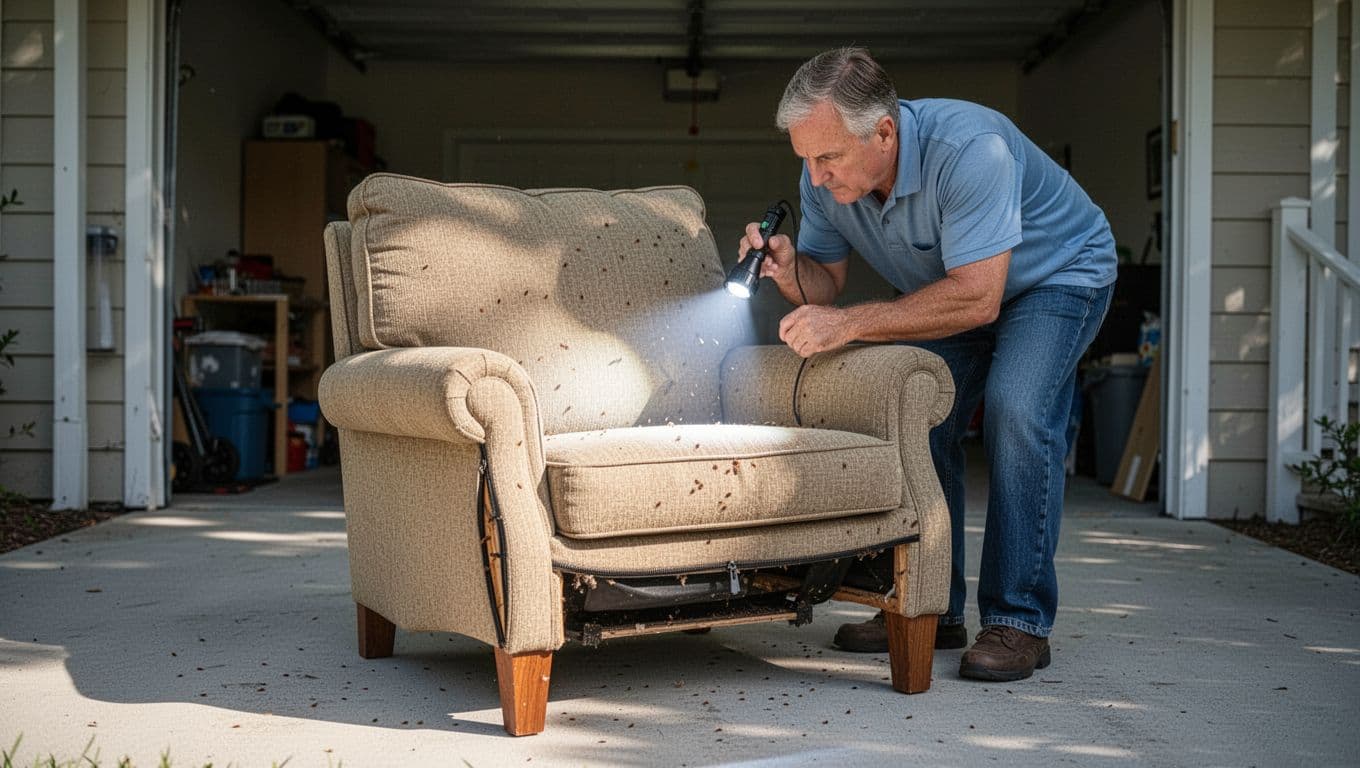
Inspect the furniture outdoors on a dry, paved surface or inside a garage. Avoid placing it on carpet, near bedrooms, or beside stored belongings. Keep the piece several feet away from walls, vehicles, boxes, and other furniture while you examine it.
Don't bring a questionable item indoors to inspect it under better lighting. If you're moving, inspect couches, mattresses, dressers, and bed frames before loading them into the truck. These bed bug-safe moving and packing tips can also help reduce the chance of spreading pests between homes.
Gather the right inspection tools
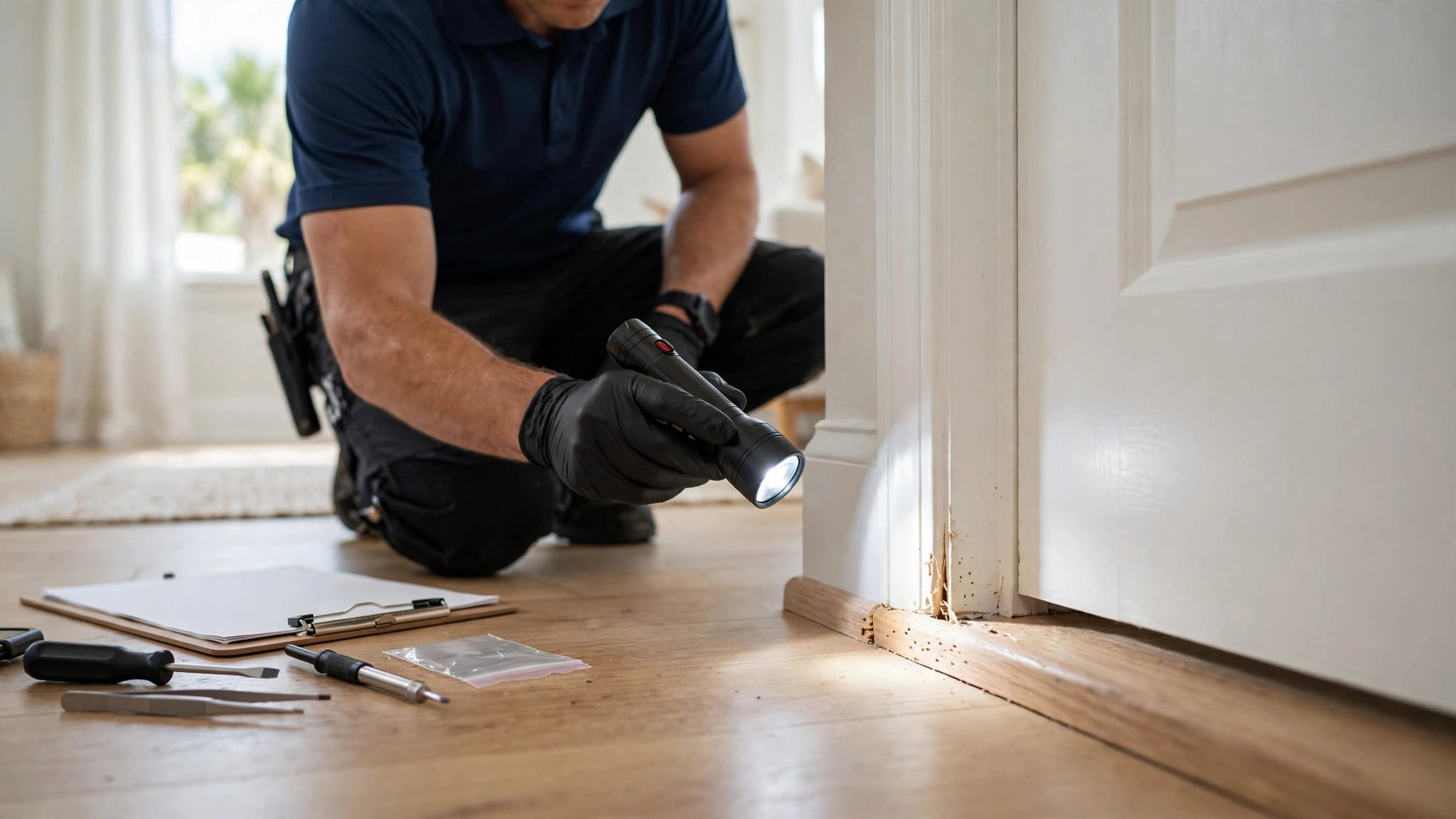
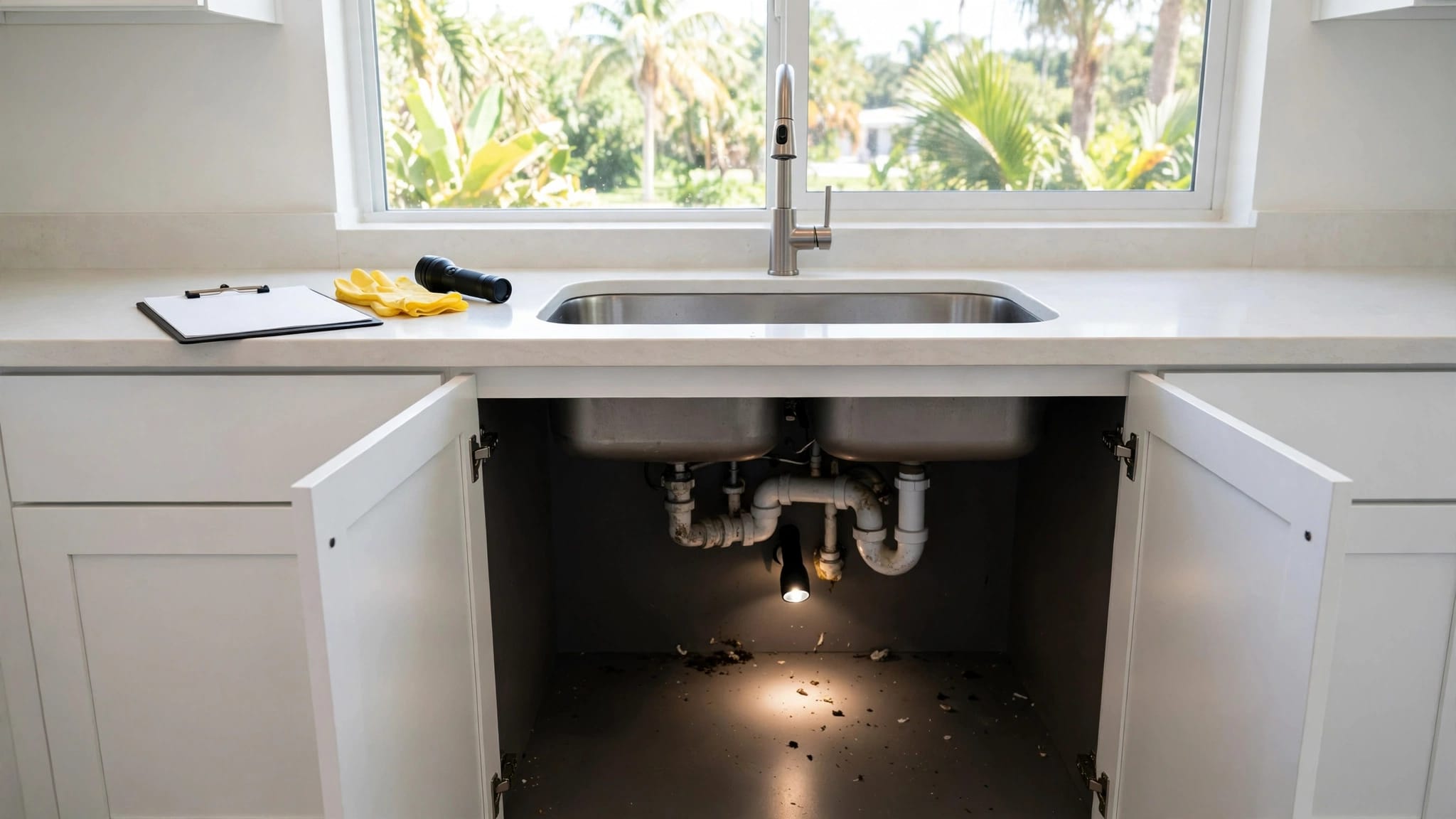
Use a bright flashlight, disposable gloves, and a stiff card, such as an old business card, to trace narrow gaps. Keep a sealable plastic bag nearby for loose removable items or suspected evidence.
Move slowly and inspect one section at a time. If you need to turn over heavy furniture, use safe lifting practices and ask for help. Damaging the item or injuring yourself won't improve the inspection.
Where Used Furniture Bed Bugs Often Hide
The used furniture bed bugs risk is highest in protected areas that stay dark and undisturbed. A quick glance at the front, sides, and top of a piece isn't enough.
Check upholstery, folds, and zippers
Remove every cushion and inspect both sides. Shine the flashlight along seams, folds, tufts, piping, and the edges of zippers. Look beneath fabric flaps, around buttons, inside corner folds, and along the seam where upholstery meets the frame.
Check the back and underside of sofas and chairs, especially where fabric is stapled to the wooden frame. Inspect reclining mechanisms without forcing them. Bed bugs can hide in narrow spaces around springs, brackets, and folds that are easy to miss during a casual check.
Use the card to trace seams and cracks without scraping aggressively. Watch for live insects, tiny pale eggs, shed skins, or dark spots that look like ink marks.
Inspect wood, drawers, and hardware
For dressers, nightstands, and bed frames, remove drawers completely. Examine the drawer corners, bottoms, undersides, runners, handles, and the empty space behind each drawer. Pay close attention to cracks where panels meet.
Next, inspect screw holes, joints, brackets, hinges, caster wheels, and the underside of legs. Turn the furniture over when it can be done safely, then check the bottom edges and protective fabric. Headboards and bed rails deserve the same care because their joints and mounting points create narrow hiding places.
A clean-looking couch can still hide bed bugs beneath its fabric backing, inside a zipper edge, or around a frame joint.
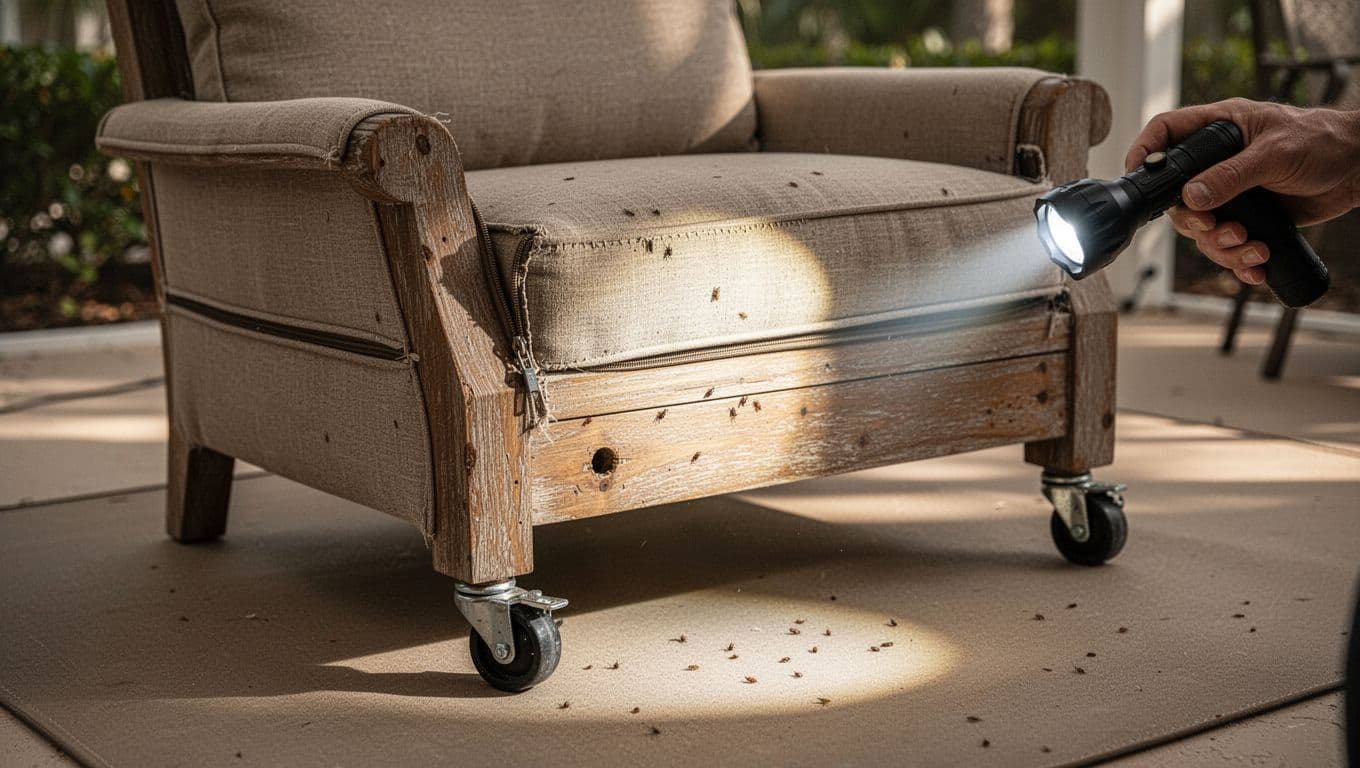
Know the Signs of Bed Bugs
Bed bugs are small and flat, so they may disappear into a crack when disturbed. Their size and color can vary by life stage, but adult bed bugs are often reddish-brown and about the size of an apple seed.
Look for more than one clue, including:
- Live bugs in seams, folds, drawers, joints, or along the underside.
- Pale shed skins or tiny light-colored eggs in protected cracks.
- Dark, ink-like fecal spots on fabric, wood, or nearby surfaces.
- Rust-colored blood spots on upholstery, bedding, or furniture.
- A sweet, musty odor around a heavily infested item.
Dust, old stains, and insect remains can resemble bed bug evidence. If possible, take clear photos without moving the item through your home, and have the material identified by a pest professional.
Bed bug bites alone don't confirm an infestation. Skin reactions vary widely, and other insects or skin conditions can cause similar marks. Direct evidence from the furniture or sleeping area matters more than a bite pattern.
What to Do If You Find Evidence
Stop the inspection once you find a live bed bug or several matching signs. Don't load the furniture into your vehicle, carry it through the home, or give it to another person. Those actions can spread pests to apartments, storage areas, vehicles, and neighboring units.
For small removable items, place them in a sturdy sealed plastic bag without shaking them. Seal the bag before moving it. Large furniture should remain isolated outdoors or in a garage, away from walls and belongings, until a professional provides instructions. If the item is already indoors, avoid relocating it and limit activity in that room.
Don't use a fogger, bug bomb, alcohol, bleach, or an unapproved household pesticide. These products may miss bed bugs inside cracks, create fire or health risks, or damage the furniture. Avoid heating furniture with a hair dryer, space heater, vehicle, or Florida sun. Heat only works when every part of the item reaches a controlled temperature for the required time, using equipment and procedures designed for that specific treatment.
Contact a qualified pest professional
A pest professional can confirm whether the evidence is bed bugs and assess nearby rooms, walls, furniture, and adjoining units. This matters in apartments, where moving an item may spread the problem to another room or residence.
If you're in Cape Coral, Fort Myers, Punta Gorda, Bonita Springs, or Sanibel, professional bed bug removal in Fort Myers and Cape Coral can provide a safer plan than trial-and-error treatment. Ask what preparation the service requires and whether the furniture should remain isolated until inspection.
Conclusion
Inspecting used furniture before bringing it inside is one of the simplest ways to reduce the risk of used furniture bed bugs. Focus your flashlight on seams, folds, zippers, cracks, joints, screw holes, drawers, undersides, and casters.
Keep questionable pieces away from your home and belongings. Remember that bites don't prove an infestation, while live bugs, shed skins, dark spots, and eggs require careful containment and professional guidance. A slow inspection can prevent a small concern from becoming a household problem.
Schedule a Free Inspection: