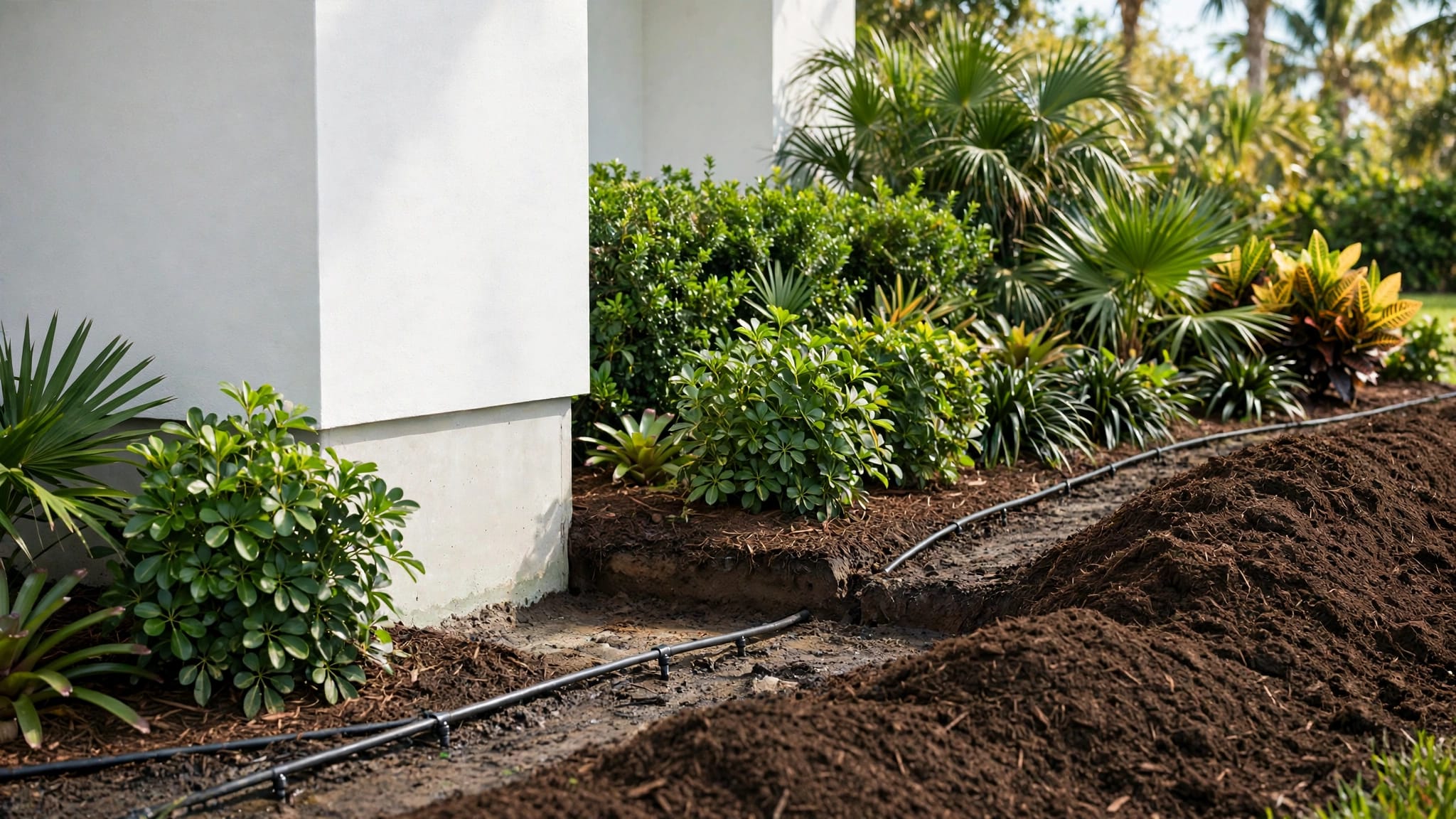
Irrigation Mosquito Control for Florida Yards
A sprinkler can water your lawn correctly and still create mosquito problems around the property. One leaking valve, broken sprinkler head, or low spot can leave enough moisture for mosquitoes to develop.
Effective irrigation mosquito control starts with finding and removing those breeding areas. Adult mosquito treatments can help with current activity, but they work better when irrigation problems aren't feeding the next generation.
Florida's heat, rainfall, humidity, and dense landscaping make small water issues easy to miss. A short inspection after watering can reveal more than a quick walk around the yard. Start with the places where irrigation water collects, spreads, or fails to drain.
How irrigation mosquito control starts with water prevention
Mosquitoes lay eggs in water that remains still long enough for larvae to develop. That water may sit in an obvious puddle, but it can also collect inside a clogged drain, planter saucer, bucket, valve box, or low section of turf.
Irrigation doesn't need to flood a yard to create a breeding site. Repeated overspray can keep soil, mulch, and containers wet between watering cycles.
Breeding sites and adult mosquitoes require different solutions
Removing standing water targets the mosquito life cycle before adults emerge. Empty containers, correct drainage, and repair leaks whenever possible.
Adult mosquito control addresses insects already flying and biting around patios, doors, shrubs, and lawn areas. Depending on the property, a licensed professional may use targeted exterior treatments around resting areas. Those treatments don't replace source reduction because new adults can develop in nearby water.
A dry yard after irrigation is a useful goal, but water that remains hidden inside containers or low spots can still support mosquito larvae.
Irrigation water can move beyond the sprinkler zone
Runoff may travel across concrete, into planting beds, or under outdoor furniture. It can also fill toys, buckets, wheelbarrows, pool covers, and decorative items that sit near a sprinkler's spray pattern.
Check the full path of the water, not only the sprinkler head. A system may be working as designed while the surrounding landscape directs water into a poor-draining area.
Find and fix irrigation problems that leave standing water
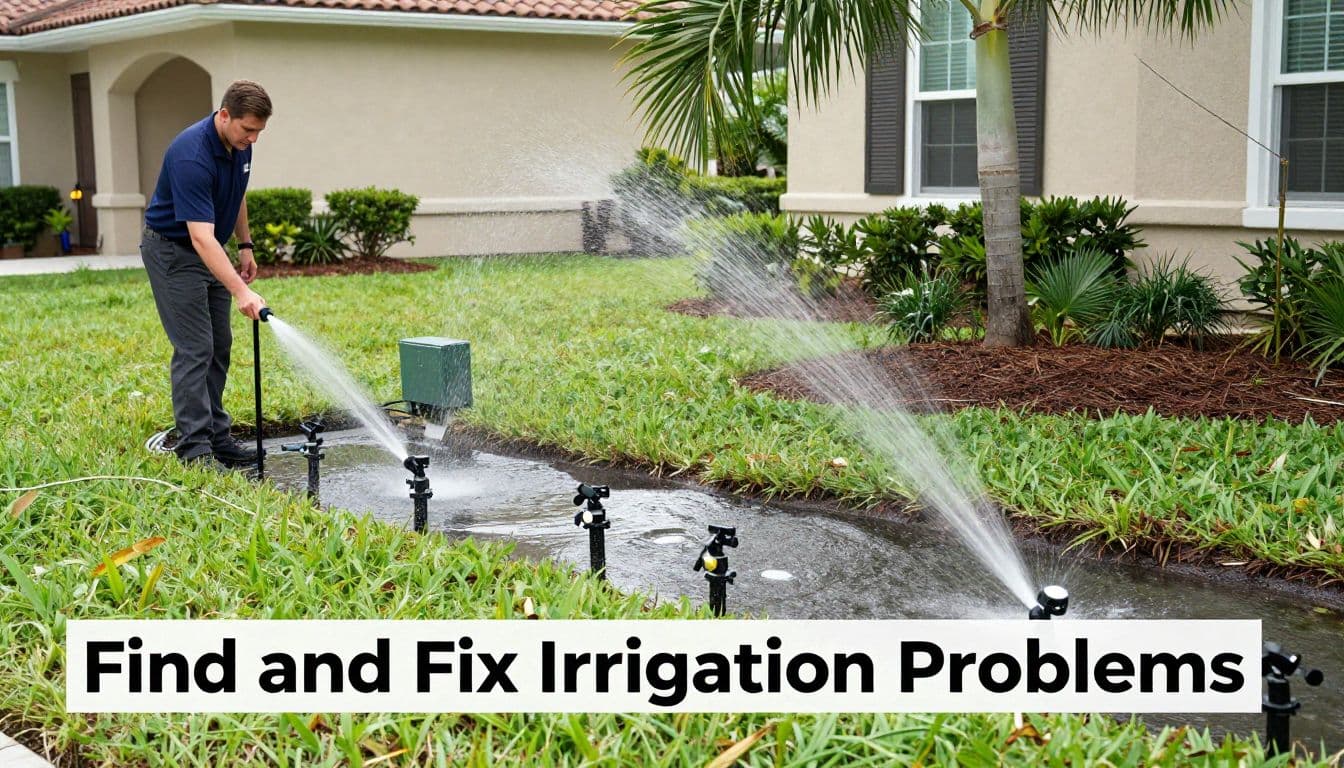
Run each irrigation zone while you inspect it. Watching the system operate makes leaks, uneven spray, and runoff easier to spot than inspecting dormant equipment.
Repair leaking valves and damaged connections
A valve that doesn't close completely may allow water to seep through after the zone shuts off. Look for a wet area near the valve box, a slow trickle at sprinkler heads, or soil that stays soft when nearby areas dry.
Exposed fittings, risers, and flexible connections can also crack or loosen. Turn off the affected zone before opening or repairing components. If the leak involves buried lines, complex wiring, or a controller, use a qualified irrigation professional rather than digging blindly.
Irrigation leaks near walls and foundations can create other moisture concerns. Preventing standing water from irrigation leaks also helps reduce damp conditions near the home.
Replace broken heads and correct overspray
A broken sprinkler head may spray sideways, bubble water from its base, or create a steady stream that runs onto a sidewalk. Replace damaged heads and check that the nozzle matches the zone's design.
Adjust heads so they water turf and planting beds instead of walls, driveways, patios, fences, or containers. A clogged head may produce uneven coverage, which can tempt homeowners to increase the run time and create excess water elsewhere.
Watch for sunken heads and compacted soil. Water can collect around a head that sits below the finished grade. Re-leveling the head and improving the soil's ability to drain may solve the problem.
Inspect the yard during and after each watering cycle
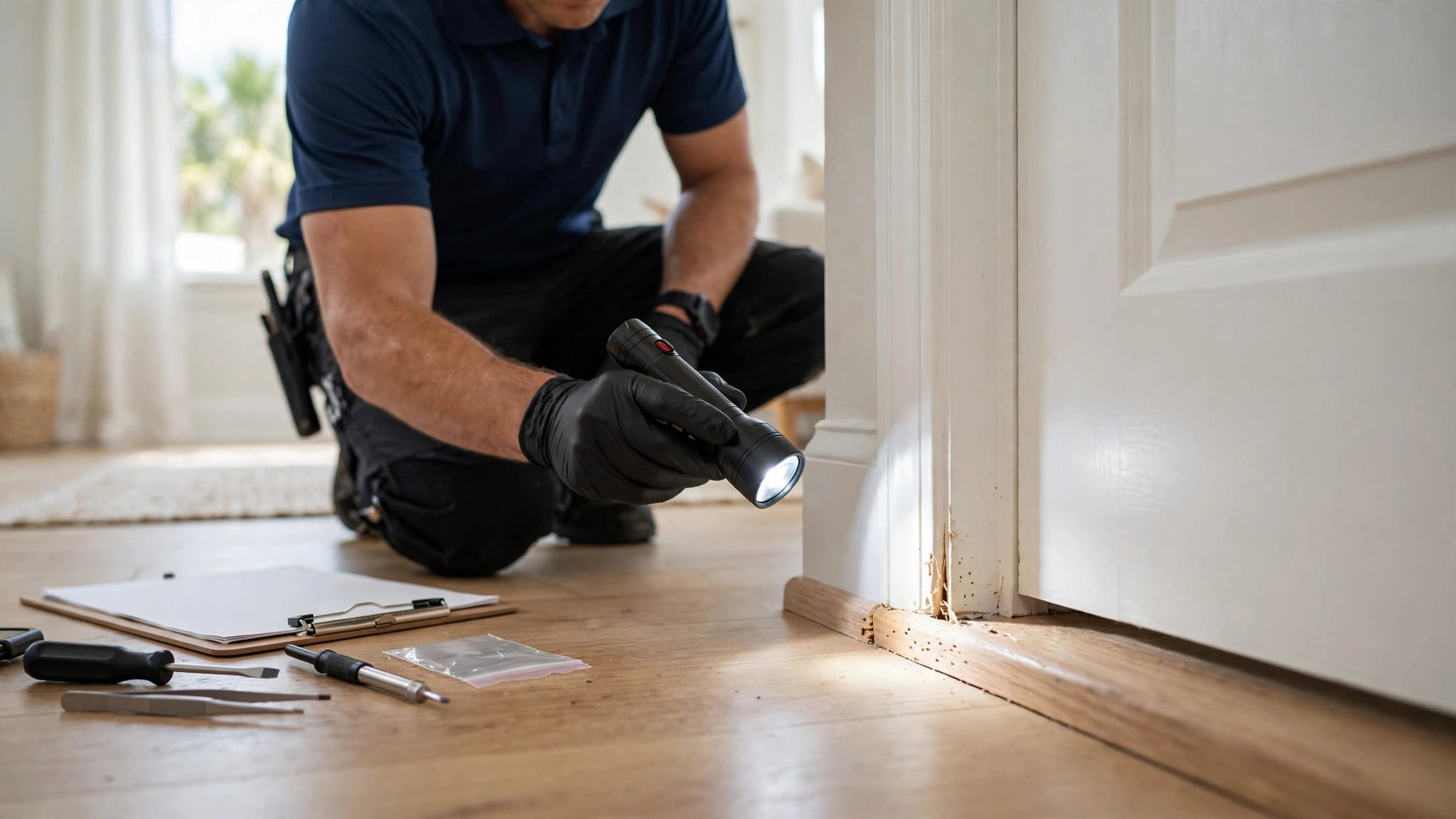
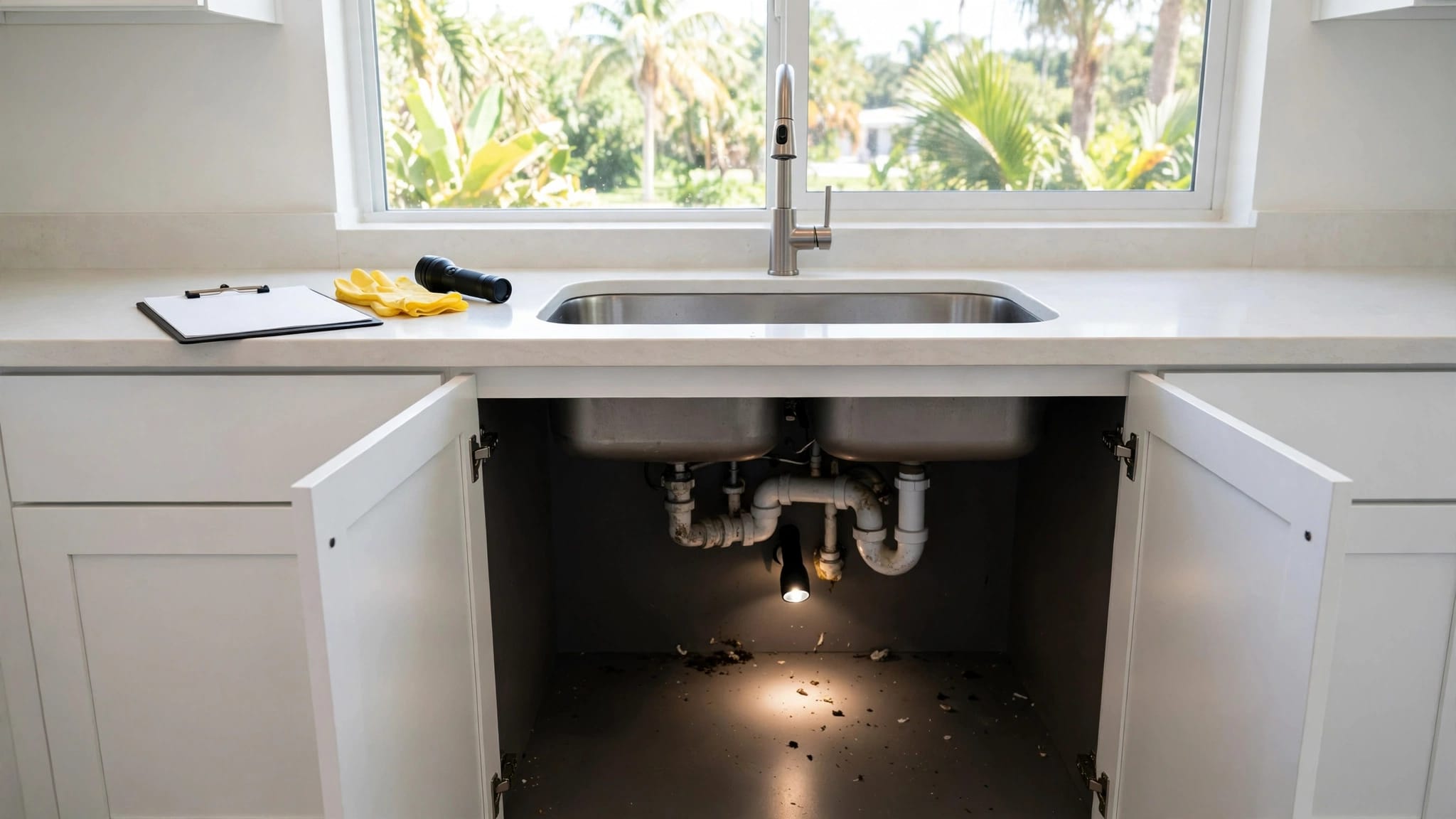
A regular inspection doesn't need special equipment. You need a flashlight, gloves, and enough time to walk the irrigation zones while they run.
Check active zones for leaks and runoff
Start at the valve box, then follow the line toward each sprinkler head. Look for bubbling soil, water spraying from a fitting, broken nozzles, and puddles forming faster than the ground can absorb them.
Notice where water crosses hard surfaces. Even a small amount of runoff can reach a planter saucer or a low corner beside the house. Move containers out of the spray path and correct the sprinkler angle when possible.
Also inspect areas beneath shrubs and ground cover. Dense vegetation can hide wet soil and small containers. Use a stick or gloved hand to check whether the surface is wet only briefly or remains saturated after watering.
Return after the system shuts off
Walk the property again after the water has stopped. Some leaks appear only when pressure drops, while other problems become clear through puddles that remain several hours later.
Check low spots, drains, swales, turf edges, and mulch beds. If a depression repeatedly holds water, fill or reshape it only after identifying the drainage pattern. Moving soil without a plan can send runoff toward a foundation or a neighbor's property.
Shortening the run time may help when the yard receives more water than the soil can absorb. A rain sensor or weather-aware controller can also prevent unnecessary cycles, but confirm that the system still gives plants enough water during dry periods.
Combine breeding-site prevention with adult mosquito control
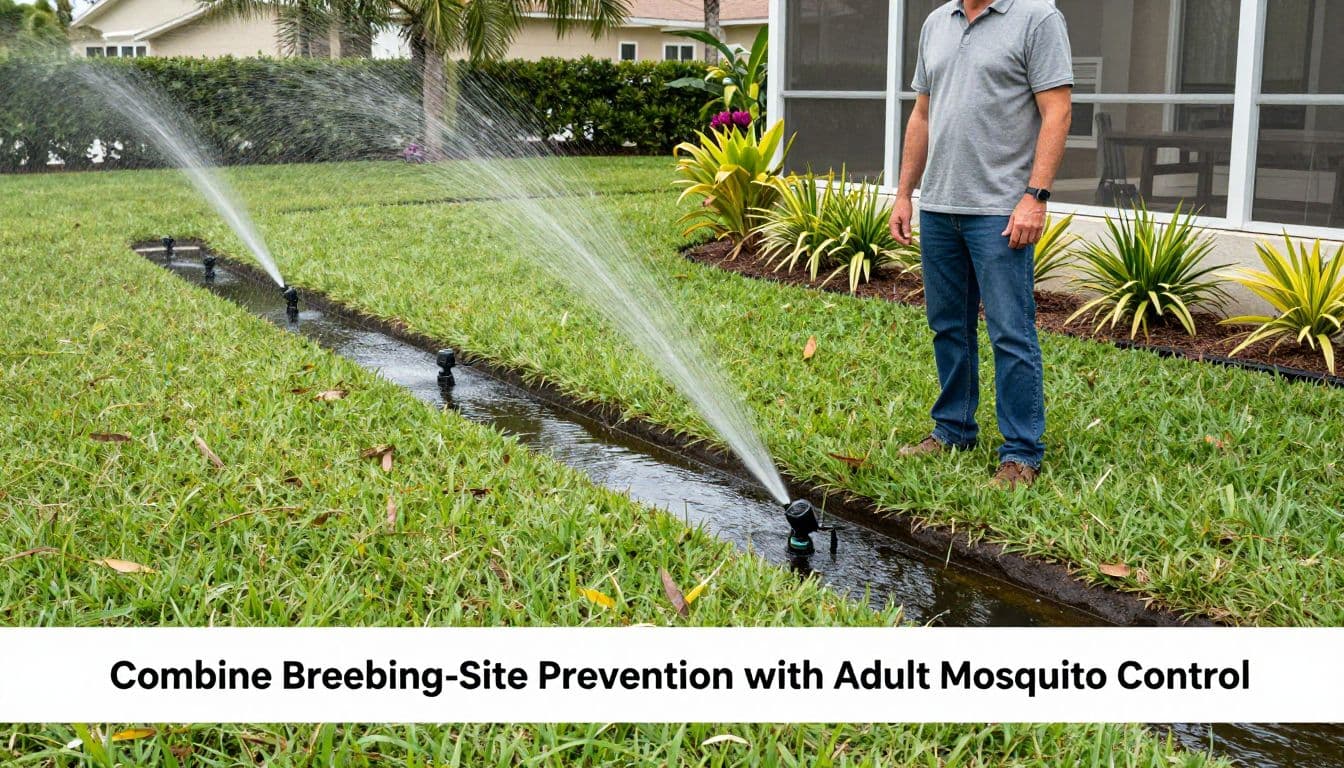
Source reduction and adult treatment address different parts of the problem. Your irrigation mosquito control plan should include both when mosquito activity continues after leaks and puddles are corrected.
Remove water that irrigation reaches
Empty and scrub items that collect water, even when they hold only a small amount. Turn over buckets and toys, clear leaves from drains, and remove water from plant saucers after irrigation or rain.
Pool covers, umbrella bases, furniture covers, decorative pots, and discarded items deserve attention. These objects may sit outside the main sprinkler area but still collect runoff.
For water that cannot be drained, a larvicide may be appropriate in some situations. Products containing Bti or insect growth regulators are made for certain water bodies, but the label must allow the intended use. Never add a pesticide to a pool, drain, ornamental feature, or other water source unless the product label specifically permits it.
Reduce adult mosquitoes around outdoor living areas
Adult mosquitoes often rest in shaded vegetation and protected areas during the day. Keep plants from pressing against screens, trim dense growth near seating areas, and remove damp leaf piles.
Repair holes in screens and keep patio doors closed when practical. Homeowners dealing with biting insects near screened patios can review mosquito prevention for screened lanais along with their irrigation inspection.
A professional treatment may reduce adult activity around patios, entryways, and property edges. Ask the provider what areas will be treated, how long people and pets should stay away, and what steps will improve results between visits.
Follow safety steps around water, wiring, and pesticides
Irrigation systems combine water, electricity, buried lines, and moving equipment. Mosquito prevention shouldn't create a new hazard.
Treat irrigation components as electrical equipment
Turn off the controller before opening a valve box or working near irrigation wiring. Keep hands and tools dry, and don't handle exposed wires while standing in wet soil.
If the controller, pump, low-voltage wiring, or electrical connection shows damage, stop the inspection and contact a qualified professional. Don't pull wires from standing water or bypass a damaged component. Mark underground lines before digging, and keep children away from open valve boxes.
Wear gloves when removing stagnant water or wet debris. Wash your hands afterward, and avoid splashing water onto your face.
Use pesticides only for their labeled purpose
Read the complete product label before applying a larvicide, repellent, or outdoor insecticide. Follow the listed rate, application method, storage instructions, and re-entry directions.
Keep children, pets, food, and drinking water away from treated areas as the label directs. Avoid spraying during wind or when rain could carry the product into drains or ponds. Don't mix products unless the label specifically allows it.
Homeowners who aren't comfortable identifying mosquito breeding water or applying pesticides should hire a licensed pest-control professional. A qualified provider can match treatment to the property instead of applying products where they aren't needed.
Know when irrigation mosquito control needs professional help
Some mosquito problems continue because the source isn't located on the lawn. Canal edges, storm drains, neighboring runoff, dense vegetation, and shared drainage can affect activity around a home.
Call for an inspection when mosquitoes remain heavy after you repair leaks and remove containers. Professional help also makes sense when a property has repeated drainage issues, multiple irrigation zones, a large yard, or outdoor areas that need regular use.
A service visit should include more than spraying. The technician should inspect irrigation equipment, low spots, containers, drains, vegetation, and other water-holding areas. Ask for clear instructions about repairs, treatment timing, pets, children, and follow-up care.
Keep a simple record of wet areas and mosquito activity. Note whether the problem appears after irrigation, rainfall, or at a particular time of day. Those details can help separate a recurring breeding site from adult mosquitoes moving onto the property.
Make your yard less inviting to mosquitoes
Mosquito control around Florida irrigation systems begins with water management. Repair leaking valves, replace broken sprinkler heads, correct overspray, shorten excessive run times, and improve areas that drain poorly.
After that, remove containers and debris that collect runoff. Protect yourself around wet electrical components, and use pesticides only according to the label. When adult activity continues, a licensed professional can combine source reduction with targeted treatment.
The best irrigation mosquito control plan is practical and repeatable. Check the yard while zones run, walk it again after watering, and address small water problems before they become a regular source of bites.
Schedule a Free Inspection: