White Grubs In Cape Coral St. Augustine Lawns
Your Cape Coral lawn turns patchy and brown overnight. You water more, but the spots spread. White grubs Cape Coral homeowners face could be the cause. These root feeders hit St. Augustine grass hard during Florida's warm months.
Grubs munch roots below ground. Turf lifts easily, like a loose rug. Many mix them up with drought or chinch bugs. You can spot the real issue fast, though.
This guide shows you how. First, check damage signs. Then confirm the pest. Finally, fix it with safe steps.
Spotting White Grub Damage on Your Lawn
St. Augustine grass thrives in Cape Coral's sun and sand. White grubs change that quick. They feed on roots from late spring through fall. Hot, humid nights speed up the problem.
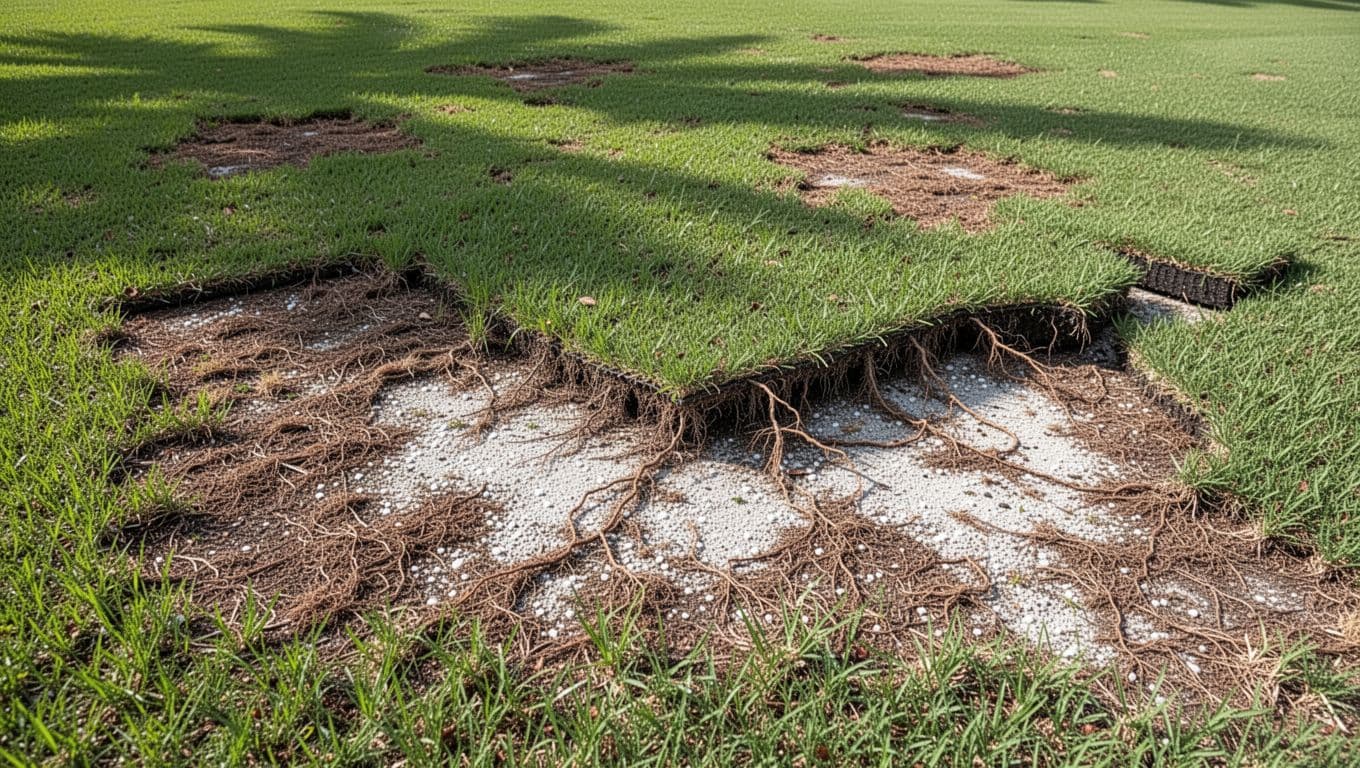
Look for irregular brown patches in sunny spots. Grass wilts even after rain. Edges thin out first. Pull a section gently. If turf lifts with few roots attached, grubs likely work below.
Birds or armadillos digging signal grubs too. They hunt the larvae. Damage worsens in overwatered or thatchy lawns. Sandy soil lets grubs move easy. Patches join up fast.
Thatch hides early signs. Mow high at 3.5 to 4 inches to shade soil. Still, grubs prefer stressed turf. Check after heavy rain. Fresh damage shows then.
Pet urine spots yellow first, then brown. They stay small. Fungal issues form rings. Drought folds blades crisp. Grubs loosen the whole mat.
Diagnose White Grubs Before You Treat
Don't grab spray yet. Confirm white grubs first. Wrong fixes waste time. Cape Coral lawns fool you with look-alikes.
Start with the tug test. Grab grass at patch edges. Lift slow. Turf pulls up easy? Roots sparse or gone? That's grub work. Healthy roots hold firm.
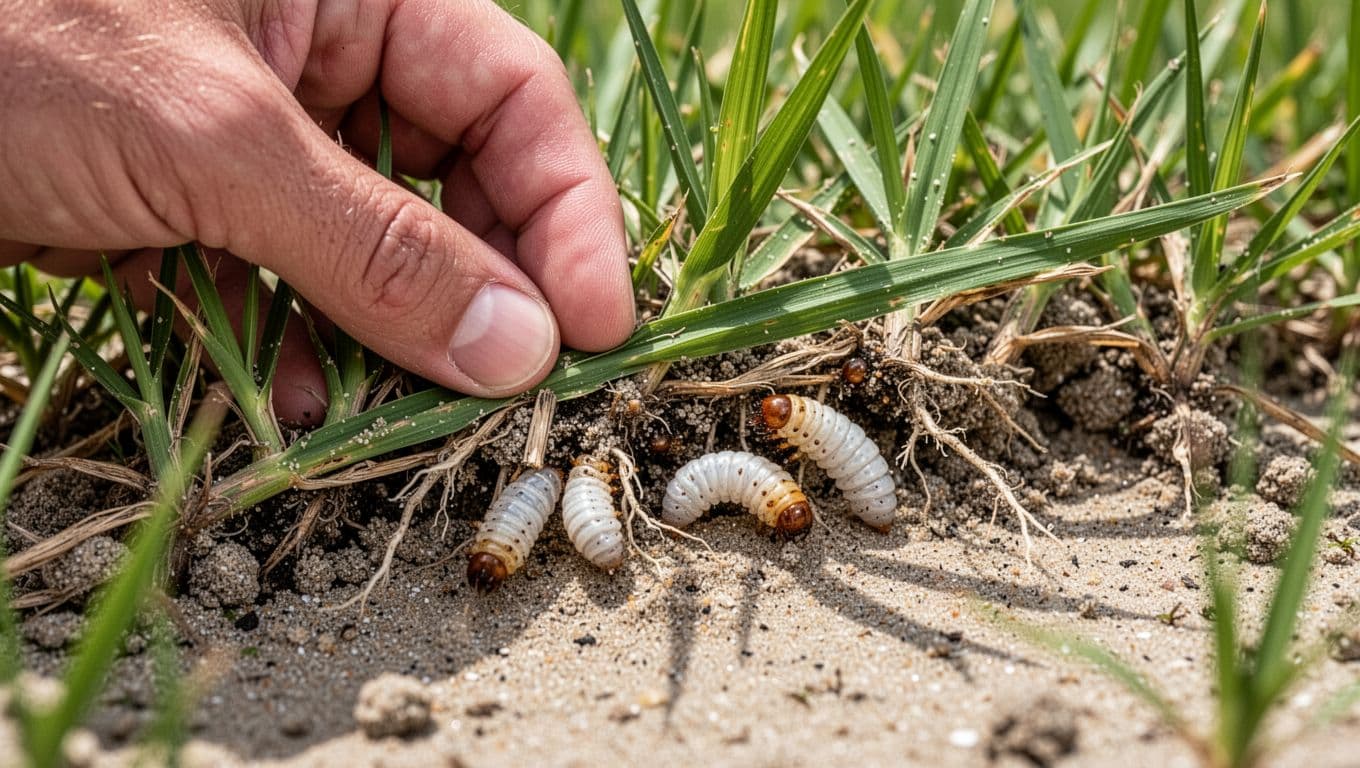
Next, dig a square foot deep. C-shaped white bodies with brown heads mean grubs. They curl when exposed. Small ones under 1 inch feed most.
Compare to others. Chinch bugs yellow from top, hide in thatch. See our guide on chinch bugs causing brown patches in Cape Coral lawns. Drought dries soil deep. No lift. Fungus greases blades. Pet urine scalds center out.
Soap flush works too. Mix 2 ounces dish soap in 2 gallons water. Pour over suspect spot. Grubs surface in minutes. No bugs? Check irrigation or chinch bugs.
Mole crickets tunnel and bump soil. Read about mole crickets tunneling in Cape Coral lawns. Irrigated lawns breed all these pests. Test multiple spots.
Treatment Timing Counts in Florida
Act when grubs are small. Late spring or early summer hits nymphs best. Adults fly at night now, in April. Eggs hatch soon.
Use labeled products. Imidacloprid or chlorantraniliprole work on grubs. Water in light after apply. Follow rates exact. Avoid rain soon after.
Spot treat edges. Full sprays harm bees. Keep off waterways. Bt targets grubs safe. It needs eating.
Pros time it right. They check counts first. Home efforts pair with better care. Reduce thatch. Aerate fall.
Expect slow kill. Re-test in two weeks. New grass fills slow too.
Prevent Grubs and Speed Recovery
Healthy St. Augustine resists grubs. Mow high. Water deep, mornings only. Follow Cape Coral rules.
Dethatch if spongy. Thin layer blocks roots. Fertilize light, spring. Nematodes fight grubs natural.
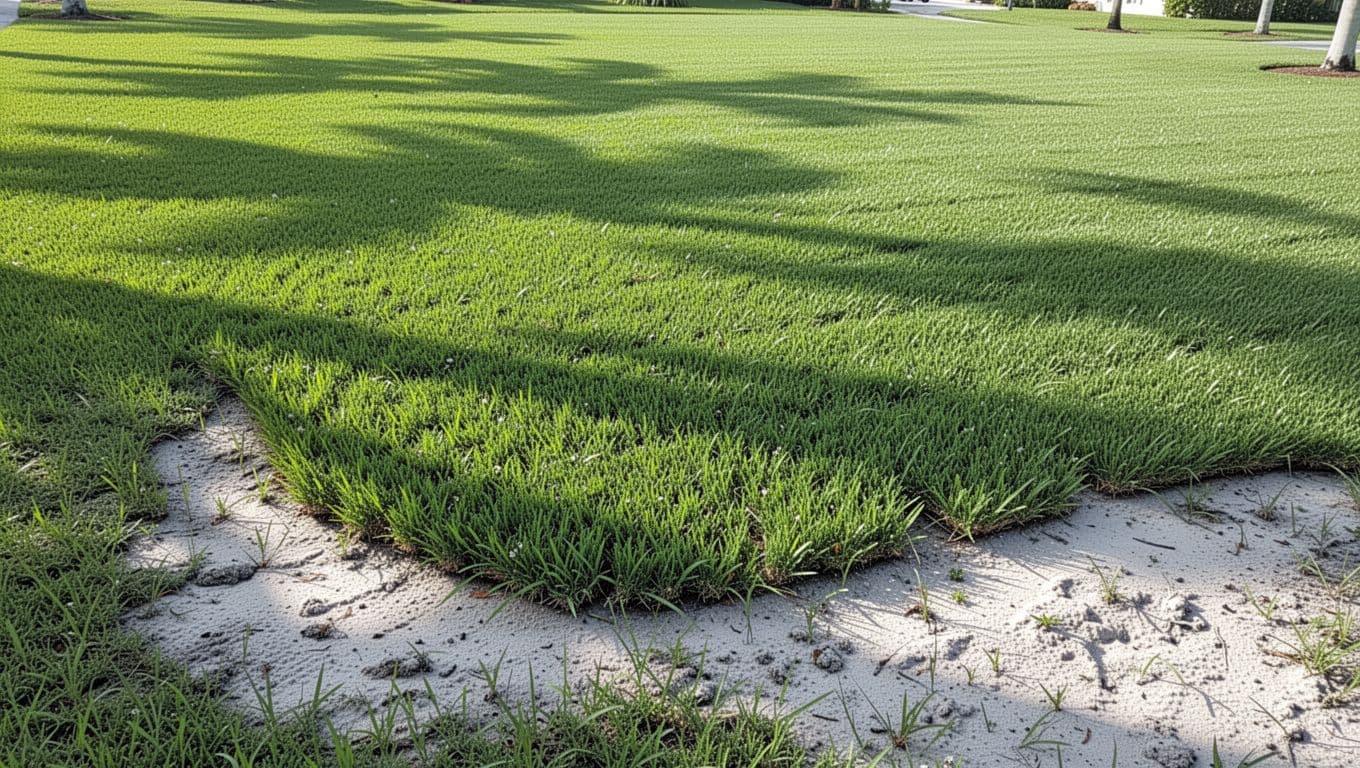
Resod bad spots. Rake level first. New turf roots fast if grubs gone. Overseed won't work here.
Patience pays. Full recovery takes months. Watch edges. Early checks stop repeats.
White grubs Cape Coral lawns hate loosen turf and kill roots. Tug tests confirm them over drought or bugs. Time treatments for small grubs. Pair with smart care for lush St. Augustine again. Your yard bounces back stronger.
Schedule a Free Inspection: