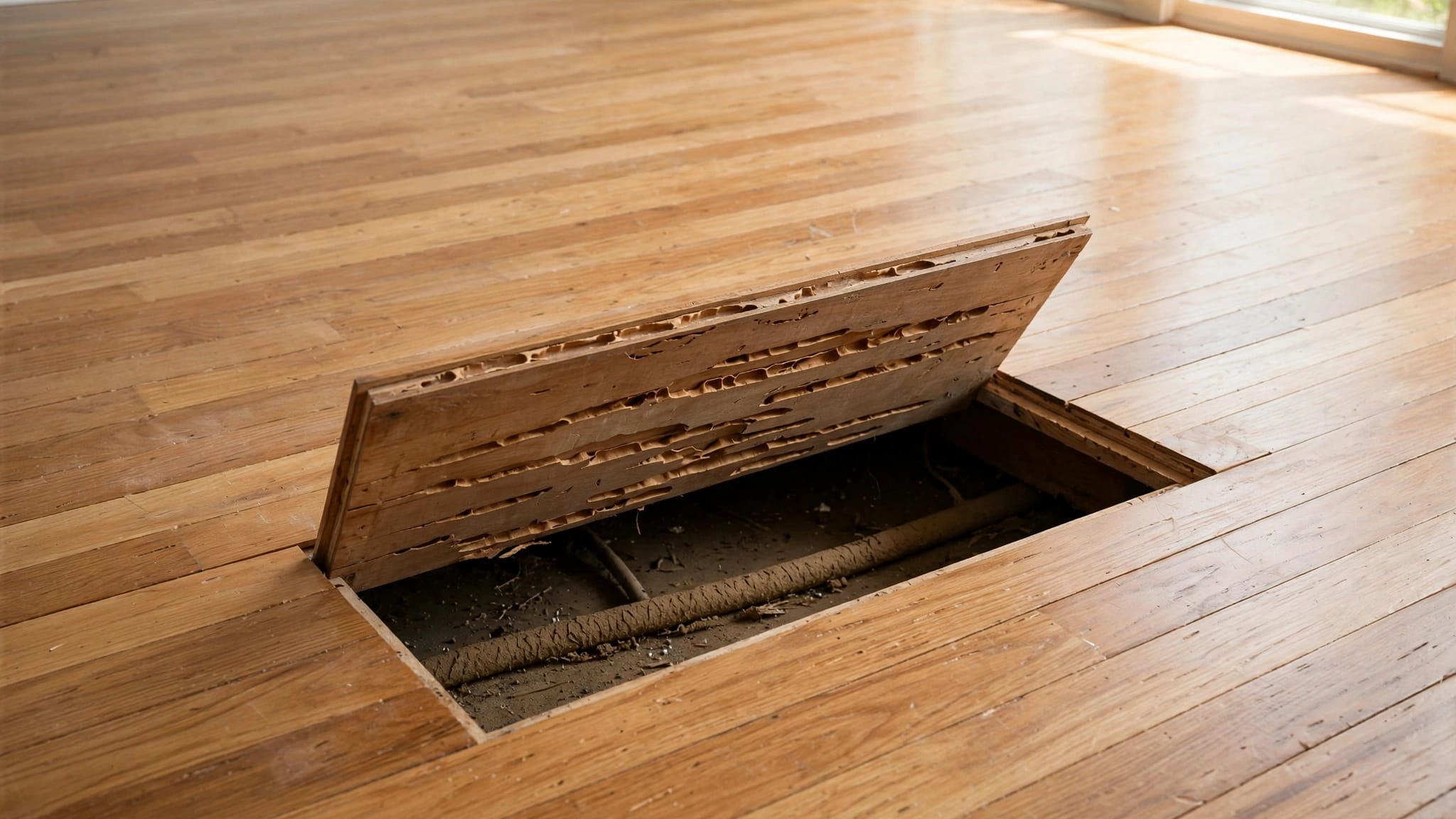
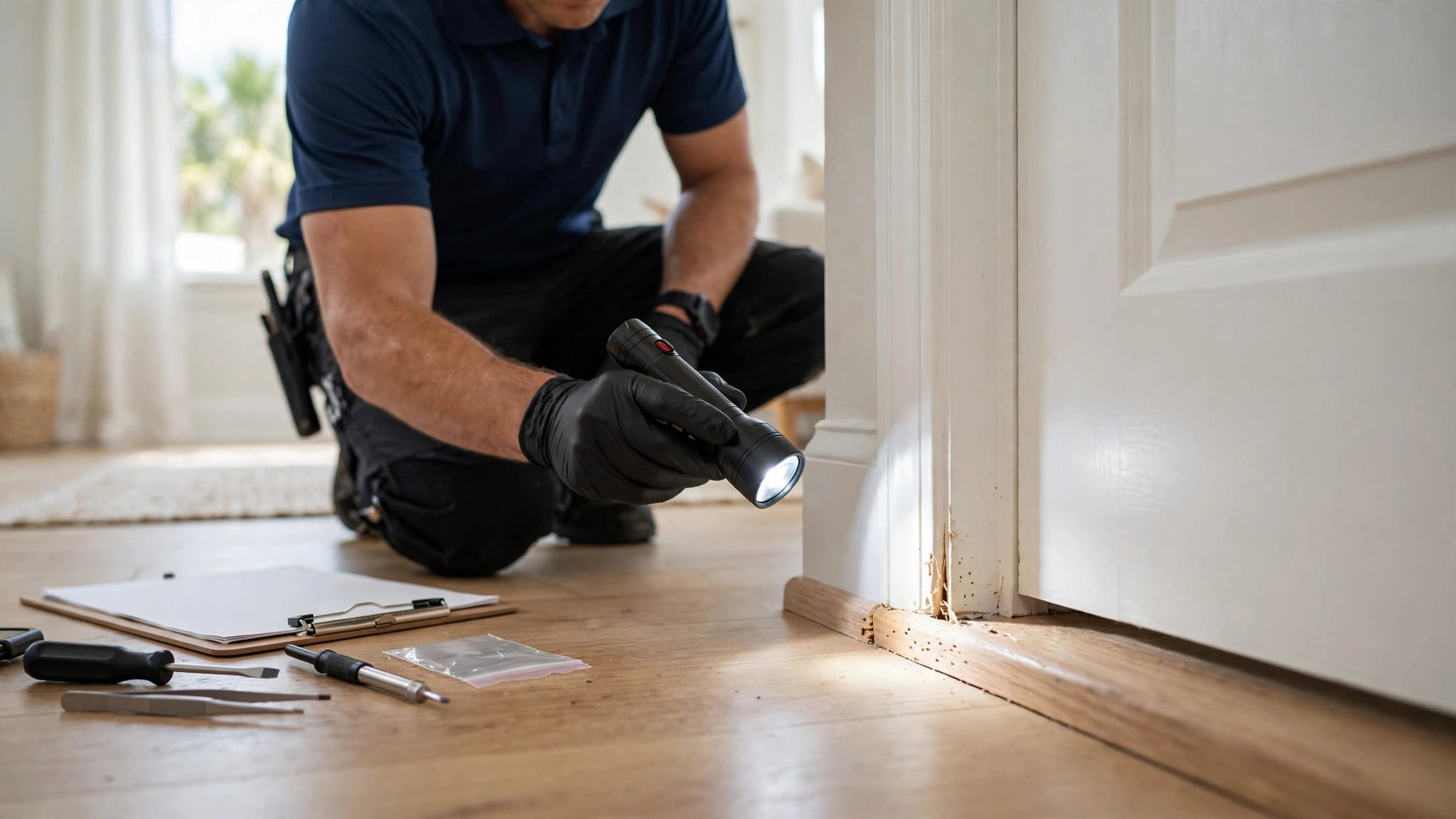
Ants in Florida Electrical Panels: Safe Homeowner Steps
An ant trail disappearing into your breaker box deserves a different response than ants crossing your kitchen counter. If you suspect ants in electrical panels, put electrical safety first : keep your distance, leave the equipment untouched, and arrange professional help.
Florida's warm weather, irrigation, and sheltered landscaping give ants plenty of places to nest near homes. However, seeing ants around a panel doesn't prove they're inside or that an electrical fault exists.
Start with what you can observe safely, then let an electrician and pest-control professional handle the equipment and colony.
Key Takeaways
- Don't open or touch a potentially energized panel, reset breakers to investigate, or attempt electrical repairs.
- Keep sprays, liquids, powders, home remedies, and pest-control tools out of panels, outlets, and utility openings.
- Contact a licensed electrician for electrical concerns and a qualified pest-control professional for ant identification and treatment.
If you notice smoke, active sparking, or fire, move away and call 911 from a safe location. Don't stay nearby to photograph the problem.
Why Ants Gather Around Florida Electrical Equipment
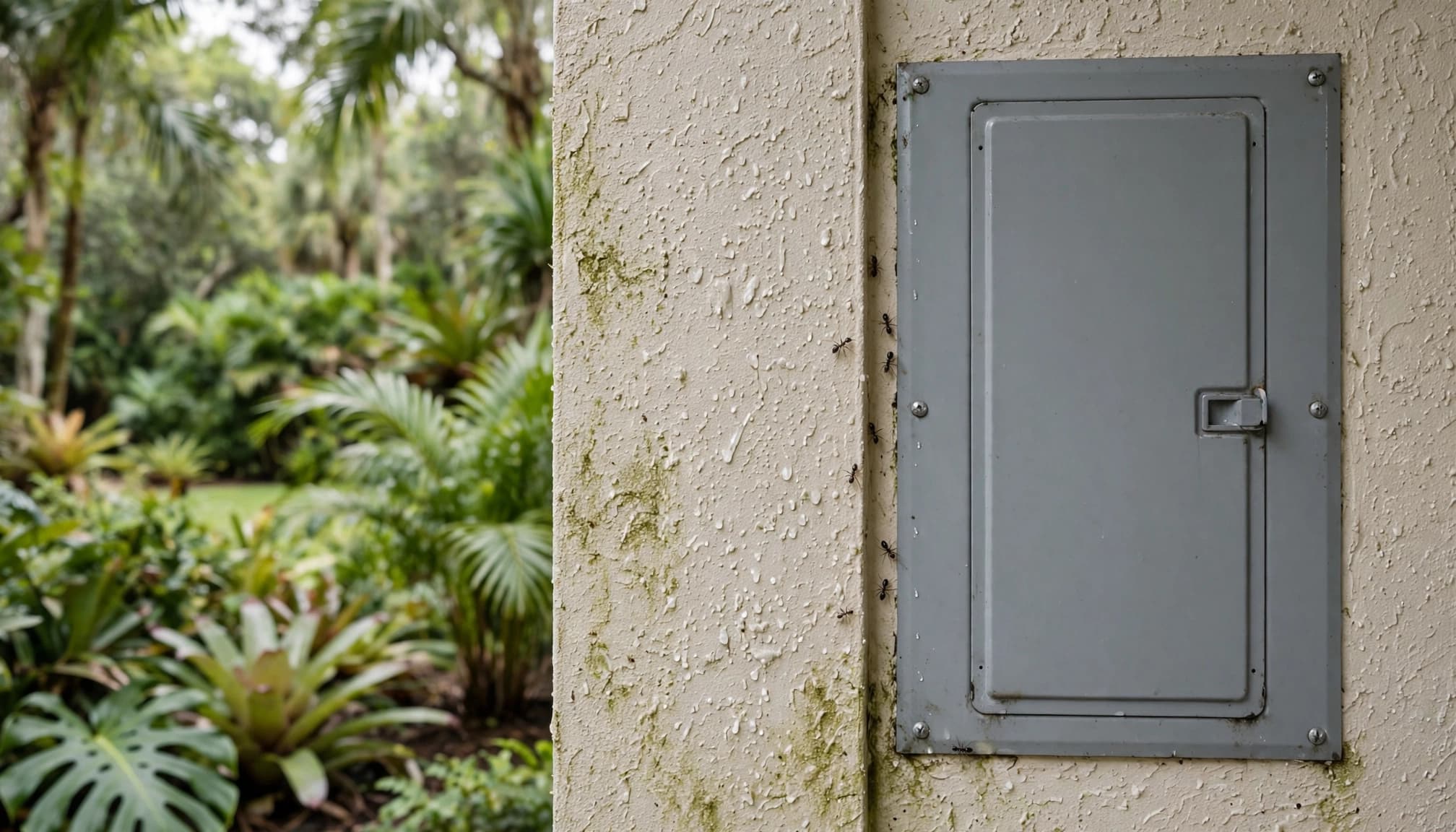
Protected spaces can sit near outdoor nests
Electrical enclosures and nearby utility areas offer protected gaps. Crazy ants may gather around exterior electrical equipment, cable boxes, and air-conditioning pads.
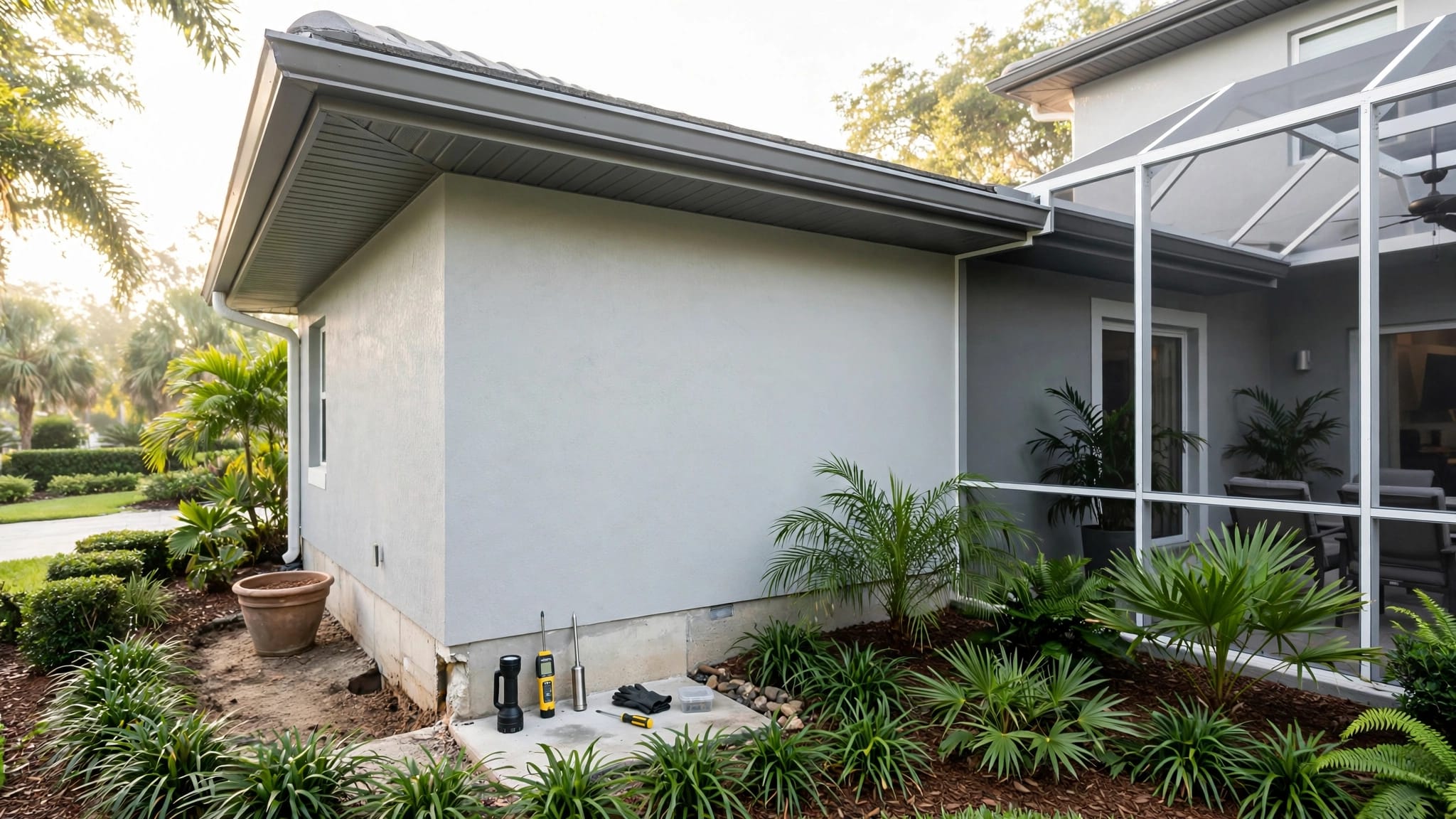
Meanwhile, the surrounding yard can supply shelter and moisture. Ants nest beneath pots, landscape timbers, pavers, and stored objects. Mulch against the foundation also gives them a sheltered route toward the house.
A leaking hose bib or over-watered landscape bed adds dependable moisture. After heavy rain, you may notice trails shifting toward drier, protected locations. The visible trail can therefore extend well beyond the equipment itself.
Panel location doesn't identify the species
Ants near a breaker box aren't automatically crazy ants or fire ants. Location alone can't establish the species, nest location, or treatment needed.
Crazy ants often move quickly along scattered trails. Fire ants can create another concern because they sting, but don't disturb a mound to test their identity.
Shield's guide to identifying common Cape Coral ants explains differences among local species. A pest professional should confirm identification before choosing treatment, particularly when trails enter concealed spaces or utility areas.
Safe First Steps for Ants in Electrical Panels
Leave the panel and its controls alone
Treat the panel as energized unless a licensed electrician has verified otherwise. Don't open its door, remove covers, reach into openings, or touch it to check for warmth.
Also, don't operate breakers as an experiment. A breaker that trips needs electrical assessment, especially if it repeatedly trips or won't stay on. Ant sightings don't establish the cause.
Keep children and pets away from the area. If the panel sits beside a walkway or garage entrance, direct household traffic elsewhere without attaching anything to the enclosure.
Turning off a main breaker doesn't necessarily de-energize every part of a panel. Homeowners shouldn't use it as permission to open or clean the equipment.
Record observations without approaching
From a safe location, note where the ants travel and when you first noticed them. Useful details include whether activity followed rain and whether trails also cross nearby walls or landscaping.
A zoomed photo can help a technician if you can take it without approaching the panel. Skip photographs whenever electrical warning signs make remaining nearby unsafe.
Don't follow a trail into an enclosure or collect ants from electrical equipment. Instead, describe the exterior activity when scheduling service.
Shield's guidance on ants around electrical equipment also warns against treating utility openings with sprays. Leave those spaces untouched while you arrange help.
Electrical Warning Signs That Change the Response
Ant activity and electrical symptoms need separate evaluation. Don't assume ants caused a problem, and don't assume removing visible ants makes equipment safe.
Use these observations to choose your next step.
| What you notice | Safe response |
|---|---|
| Ants near a closed panel without other symptoms | Keep back and arrange pest inspection; seek electrical assessment if ants appear to enter the equipment. |
| Repeated breaker trips, buzzing, or a burning odor | Stay away from the panel and contact a licensed electrician urgently. |
| Smoke, active sparking, or fire | Leave the immediate area and call 911 from safety. |
Electrical symptoms take priority over ant treatment. Don't lean closer to listen, sniff around the enclosure, or touch it while deciding what happened.
If a burning odor is strong or worsening, or you believe there's immediate danger, leave and contact emergency services. Don't attempt to extinguish an electrical fire with water.
Water around equipment adds another concern. Never approach a panel through standing water or inspect storm-damaged electrical equipment yourself. Contact the utility or emergency services if the situation presents immediate danger.
Who to Call and What Each Professional Handles
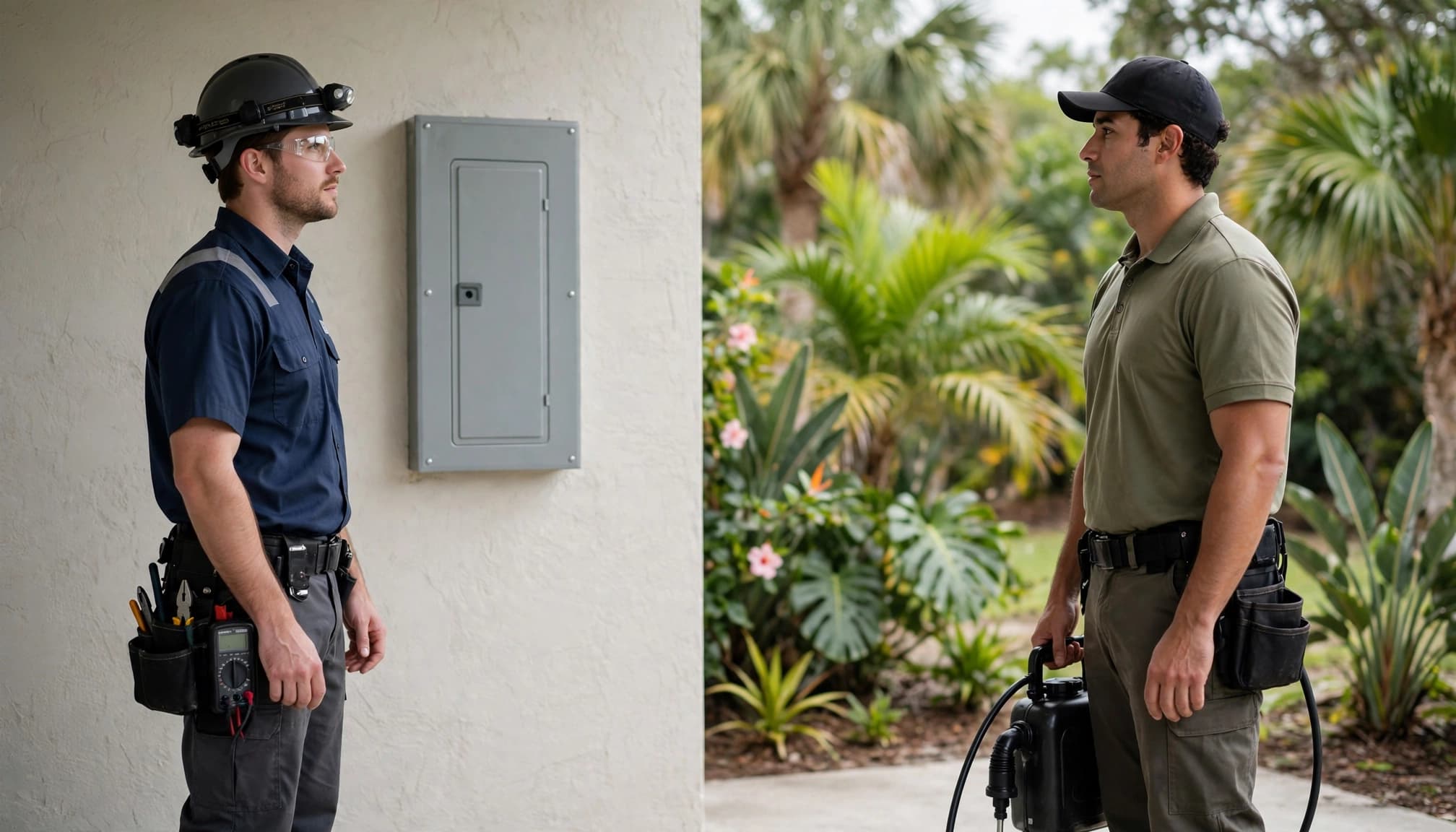
The electrician evaluates electrical concerns
A licensed electrician assesses the equipment and determines whether electrical work is necessary. Any access to the panel, electrical testing, internal cleaning, or repairs belongs with an appropriately qualified professional.
Tell the electrician about ant sightings alongside any trips, sounds, odors, or recent water exposure. Report what you observed without assigning a cause.
Ask whether the equipment needs additional inspection before pest treatment nearby. If ants are entering a meter enclosure or utility-owned equipment, contact your electric utility for its access requirements.
Electrical safety comes before pest work around affected equipment.
The pest professional identifies and treats the ants
A qualified pest-control professional identifies the ants, follows accessible exterior trails, and checks nearby nesting conditions. That inspection may include mulch beds, irrigation leaks, paver edges, and clutter along the foundation.
The treatment plan should address the colony and its supporting habitat. Killing workers visible on the wall rarely resolves a hidden nest.
Pest-control service doesn't replace electrical clearance or authorize panel access. Ask both providers how they'll coordinate the work and who handles each task.
Shield Home & Pest Control offers free inspections and estimates across its Southwest Florida service area, including Cape Coral and Fort Myers. Describe the electrical location when scheduling so the team understands the safety concern before arriving.
How Ant Treatment Works Without Spraying the Panel
Professional treatment can target ants outside electrical equipment rather than putting products inside it. The technician selects the method after identifying the species and inspecting the site.
For many ants, slow-acting bait allows workers to carry the active ingredient back and share it within the colony. However, bait selection matters. Food preferences vary by species and can change with colony needs.
A professional also considers competing food. Honeydew-producing insects on landscape plants can supply ants with sugar, while pet food and household spills offer other meals.
Repellent sprays can disrupt trails and interfere with bait acceptance. Pharaoh ants can also split into additional nesting groups when disturbed by unsuitable treatments.
No product belongs inside the panel as a homeowner treatment. Don't spray insecticide, inject gel, puff dust, insert bait stations, or use vinegar, essential oils, or water in electrical openings.
Ask for written placement and follow-up instructions. Follow pesticide labels, including restrictions around children and pets. A product described as natural still needs appropriate placement and handling.
Prevent Repeat Activity Around Your Home
Reduce nesting conditions away from equipment
Once professionals establish safe boundaries, address ordinary yard conditions that support ants. Move unused pots, boards, and stored materials away from the foundation where you can do so without approaching electrical equipment.
Pull mulch back from contact with the house. Also, correct leaking irrigation valves and hose bibs away from the electrical area. Adjust irrigation that repeatedly saturates landscape beds.
Trim vegetation touching the building, and watch for sticky residue on plants that may indicate honeydew-producing insects. A pest professional can help assess that food source.
For separate lawn infestations, Shield's guide to fire ant control in Cape Coral covers treatment planning around yards and waterways. Don't dig up suspected fire ant mounds near utilities.
Separate household sealing from electrical work
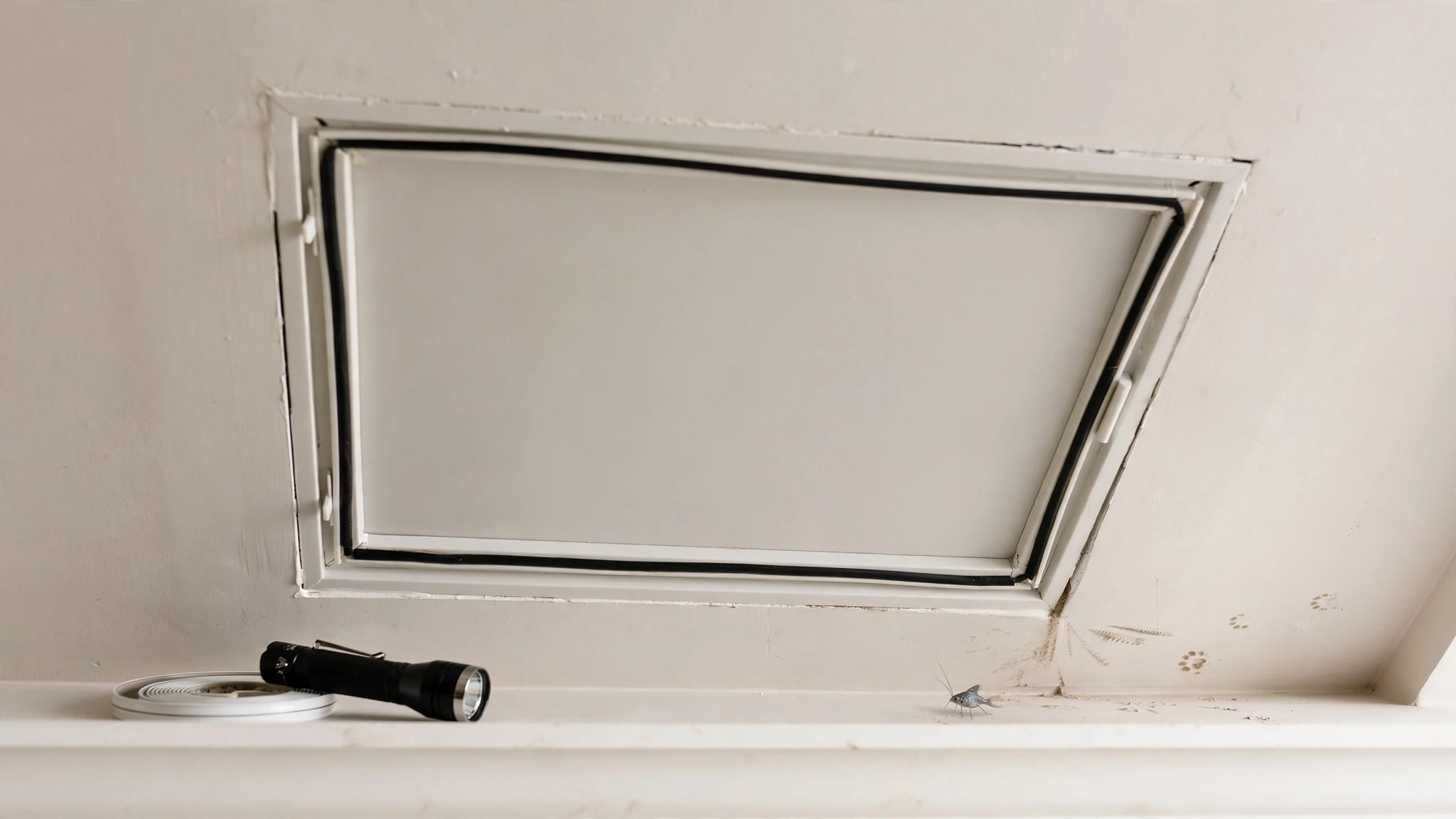
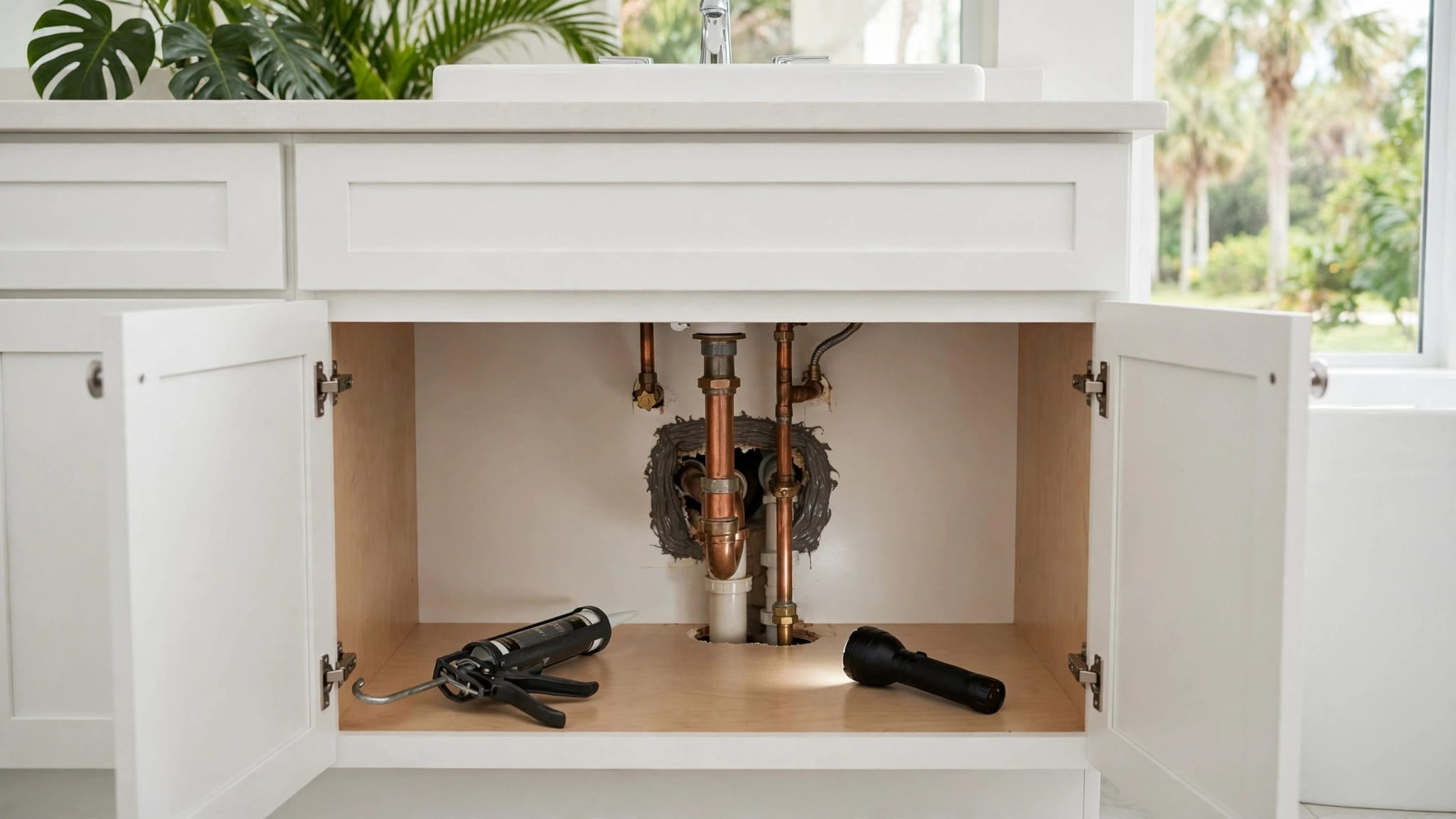
Repair worn door weatherstripping, damaged screens, and ordinary non-electrical gaps after discussing timing with your pest professional. Indoors, store pet food securely, rinse recycling, and clean sticky spills.
However, don't caulk electrical enclosure seams, cover ventilation openings, plug conduit entries, or modify utility equipment yourself. Some openings have functions that homeowners can't assess visually.
Ask the electrician about enclosure condition and any appropriate electrical repairs. The pest professional can recommend exclusion work elsewhere on the building.
After treatment, observe accessible exterior areas without touching equipment. Record recurring trails and report whether they return to the same location. Follow-up inspection helps distinguish continued activity from a separate nearby colony.
Frequently Asked Questions
Does seeing ants mean the panel has an electrical fault?
Ant sightings alone don't establish an electrical fault or equipment damage. They also don't prove ants are nesting inside the enclosure. A licensed electrician evaluates electrical concerns, while a pest professional determines the ant species and likely source. Report unusual sounds, odors, or breaker behavior separately.
Can I vacuum ants out of the breaker box?
Leave the equipment untouched. Don't insert a vacuum nozzle, brush, screwdriver, or other tool into the enclosure. Don't remove covers to reach insects or debris. If internal cleaning is necessary, a licensed electrician should determine how to perform it safely and coordinate any needed pest treatment.
Should I place ant bait beside the electrical panel?
Let the pest professional select the location and product. Keep bait out of the enclosure, away from electrical openings, and wherever the label prohibits placement. Exterior treatment should follow site-specific instructions rather than improvised placement. Also, don't add sprays near professional bait stations unless the technician directs you to do so.
Keep Electrical Safety First
Ants near a Florida breaker box call for separate electrical and pest assessments . Leave the panel untouched, report warning signs promptly, and let qualified professionals determine the next steps.
Longer-term prevention starts outside the enclosure with less moisture, fewer sheltered nesting spots, and treatment that addresses the colony. You can manage ordinary household conditions without handling electrical equipment.
When scheduling an inspection, explain exactly where you saw the ants and whether any electrical symptoms accompanied them.
Schedule a Free Inspection: