Fire Ant Control In Cape Coral How To Eliminate Mounds Safely
A fire ant mound can look like a small problem until someone steps on it. Then it turns into a fast, painful mess.
In Cape Coral, fire ant control takes a safety-first plan because our yards make ants comfortable. Sandy soil drains fast, St. Augustine grass holds moisture underneath, and frequent irrigation keeps colonies going. Add waterfront canals and storm drains, and product choice and timing matter even more.
The goal is simple: knock down today's mounds, then keep new ones from popping up next week.
Why fire ant mounds keep showing up in Cape Coral yards
Fire ants don't need much to thrive. They want warmth, moisture, and food, and Cape Coral offers all three most of the year. Even in February, when nights are cooler, colonies often stay active, especially near canals where soil stays damp.
Sandy soil is a big reason mounds seem to "move." When you treat one mound, surviving ants can bud off and re-form nearby, sometimes just a few feet away. That's why treating only what you see can feel like pulling weeds without getting the roots.
St. Augustine lawns add another wrinkle. Thick runners and thatch can hide ant tunnels, and shallow daily watering keeps the top layer inviting. If your irrigation runs often, the yard becomes a steady water source.
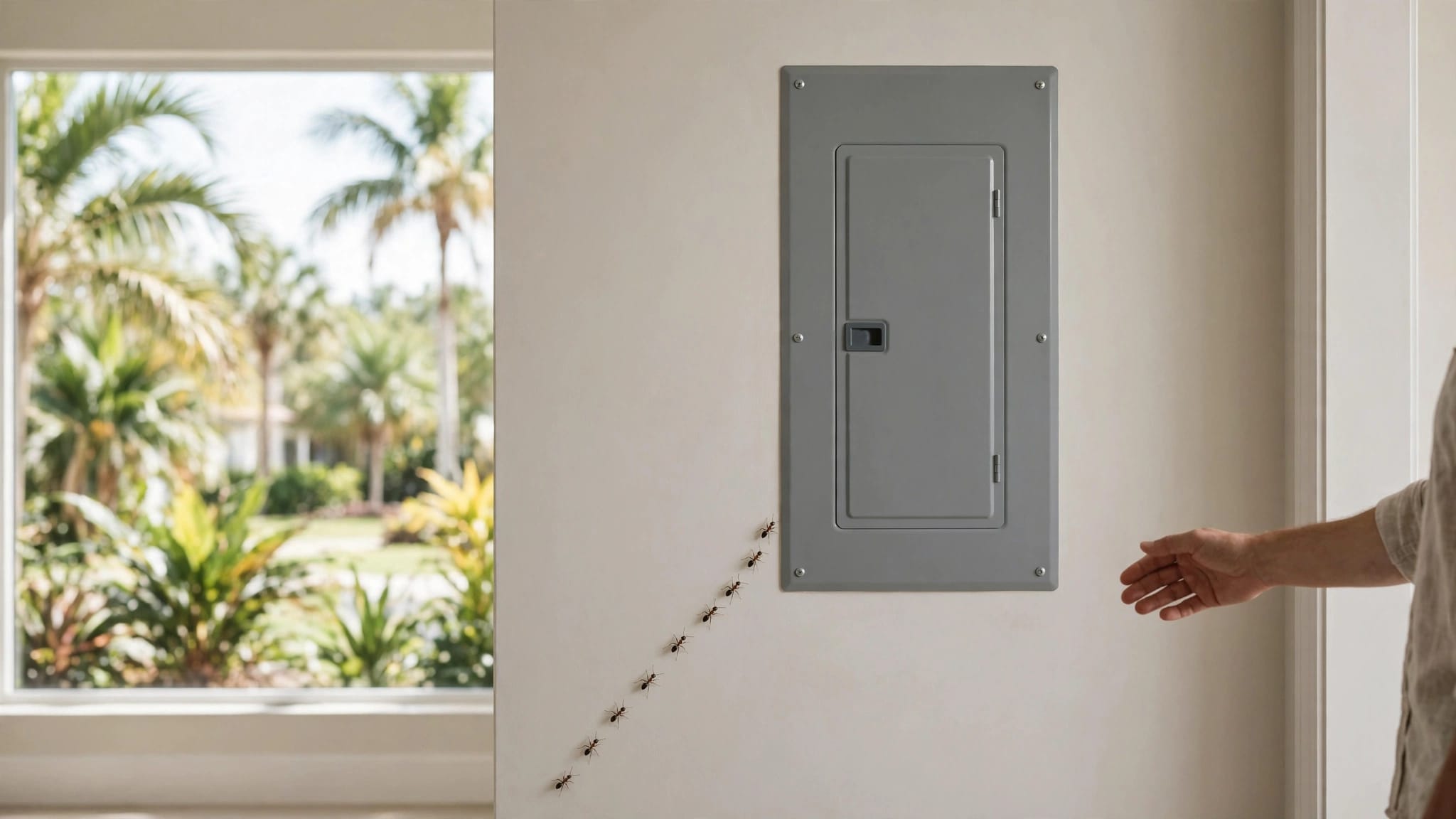
Also, not every mound is obvious. In very sandy areas, fire ant mounds can be flatter and easier to miss. A quick weekly scan helps. Look for fresh soil, small "volcano" rings in open turf, and ant trails along sidewalks, seawalls, and pool decks.
If you want a deeper local overview of what to look for and what works best here, start with this Cape Coral fire ant control guide.
Safety-first setup (especially near canals, pets, and kids)
Before you treat anything, plan to protect people, pets, and the water around your home. Always use products labeled for fire ants, in lawns, and for your site (residential turf, landscaped beds, or non-crop areas). Follow the Florida and EPA label directions every time, because the label is the law.
For canal-adjacent properties, runoff is the main risk. Granules and liquids can wash into storm drains and canals if you apply right before rain, irrigate too soon, or treat slopes that drain toward water.
A few habits reduce that risk fast:
- Treat on a dry day, with calm wind.
- Keep product well back from seawalls, canal edges, and storm drain openings (use the label's setback rules).
- Don't over-water after applying bait, and don't hose off hardscapes where granules land.
- Sweep stray granules off driveways and sidewalks back into the lawn.
Here's a simple gear list that covers most DIY treatments:
- Nitrile gloves : Keeps residues off your skin while spreading bait or mixing a drench.
- Closed-toe shoes and socks : Helps prevent surprise stings when you're near an active mound.
- Long pants : Reduces skin exposure if ants swarm.
- Handheld spreader or shaker : Helps apply bait evenly without clumps.
- Bucket or watering can : Useful for labeled mound drenches.
- Soap and water nearby : For quick cleanup, and for washing stings.
If someone has trouble breathing, swelling of the face or throat, dizziness, or widespread hives after a sting, treat it as an emergency and seek care right away.
Most stings cause burning, then itchy bumps that can form pustules. Don't scratch them. Wash with soap and water, use a cold pack, and consider an over-the-counter antihistamine if appropriate for the person. Watch kids and seniors closely, because they may not describe symptoms well.
If you'd rather skip DIY mixing and setbacks near water, a local plan can be safer and more consistent. You can also compare service options on Shield's pest control services page.
Choosing the right method: two-step control vs treating a few mounds
There are two practical paths. The best one depends on how many mounds you see and how fast you need relief.
A simple decision tree (start here)
- More than 3 to 5 mounds, or mounds keep reappearing : Use the two-step method (broadcast bait, then treat the worst mounds).
- Only 1 to 3 mounds, and they're away from water : Individual mound treatment can work.
- Mounds close to canals or storm drains : Favor baits and low-runoff approaches, follow label setbacks, and avoid heavy drenches.
- Recent heavy rain, or irrigation runs daily : Wait for a dry window, otherwise treatments can fail or drift.
To make the differences clear, this quick table helps set expectations.
| Method | Best for | What it targets | What you'll notice | Typical timeline |
|---|---|---|---|---|
| Two-step (broadcast bait + mound treatment) | Most Cape Coral lawns | Whole colonies across the yard | Fewer new mounds over time | 1 to 3 weeks for strong drop |
| Individual mound treatment only | A few isolated mounds | One mound at a time | Fast knockdown, but new mounds may appear nearby | Hours to days per mound |
The two-step method (most reliable for Cape Coral lawns)
Think of fire ants like an iceberg. The mound is the visible tip, but most of the colony sits below ground. Baits work because workers carry the active ingredient back to the colony.
- Broadcast a fire ant bait across the lawn. Do it in late afternoon when ants forage. Avoid applying right before rain. Also, don't water it in unless the label tells you to.
- Wait, then re-check activity. Many baits need time. You're aiming for a steady decline, not an instant wipeout.
- Spot-treat the toughest active mounds. After the bait has had time to circulate, treat the mounds still causing problems.
When choosing a bait, look at the active ingredient and the label. Common bait actives used for fire ants include hydramethylnon , indoxacarb , and abamectin , plus insect growth regulators like (S)-methoprene or pyriproxyfen that reduce colony rebound. Don't mix products unless the labels allow it.
One key mistake: spraying repellent insecticides all over before using bait. Repellents can stop ants from foraging, so they never take the bait.
Individual mound treatment (when you only have a couple)
If you have a few mounds, a mound drench or labeled granular mound product can be enough. Read the label closely, because dose and water volume matter. Too little liquid won't reach the queen area, and too much can run off.
For mound treatments, you'll often see contact insecticides (many are pyrethroids) that knock ants down fast. These can be helpful, but they also raise water safety concerns, so be extra cautious around canals.
After treatment, avoid disturbing the mound for a bit. Then re-check in 24 to 48 hours, based on label guidance. If the mound stays active, repeat only if the label allows, or switch to the two-step plan.
A realistic maintenance schedule (so it stays under control)
Cape Coral lawns need maintenance, not a one-time "done forever" treatment. Here's a simple schedule many homeowners can follow:
| When | What to do | Why it helps |
|---|---|---|
| Weekly | Walk the yard, mark new mounds | Early action prevents spread |
| Monthly (warm months) | Check irrigation timing, avoid daily shallow watering | Drier surface soil discourages mounds |
| Spring and fall | Consider a broadcast bait (label-dependent) | Suppresses colonies before peak activity |
| After heavy rain | Re-scout near sidewalks, pool deck, canal edges | Colonies relocate to higher ground |
If you're also dealing with other pests, pairing ant control with routine protection can save time. Shield's residential pest control in Cape Coral is designed for the year-round pressure we get in Southwest Florida.
Conclusion: safe fire ant control is a plan, not a single treatment
Fire ants don't play fair, and Cape Coral conditions give them lots of second chances. Start with fire ant control that matches your yard, your water exposure, and your timeline. For most homes, the two-step method gives the best long-term results, while mound-only treatment fits small, isolated problems.
Stay consistent, follow label directions, and treat with extra care near canals and storm drains. With the right approach, your lawn can feel like yours again, not theirs.
Schedule a Free Inspection: