Cicada Killer Wasps in Cape Coral Sandy Lawns and Play Areas
Cape Coral's sandy yards can make a perfect nesting spot for cicada killer wasps , especially along bare turf, sidewalk edges, and play areas. They look big enough to cause a panic, but they usually act less aggressively than many other wasps.
That calm behavior does not mean you should ignore them. A burrow near a sandbox, swing set, or pet path can still become a problem fast. The good news is that with the right signs and a few smart yard habits, you can lower the risk and know when to bring in help.
Why Cape Coral yards attract cicada killer wasps
These wasps prefer loose, dry soil that is easy to dig. Cape Coral often gives them exactly that, especially in sandy patches where turf is thin or worn down.
They like open, sunny spots with little disturbance. That often includes bare lawn edges, the strip beside a driveway, playground borders, and places where kids or pets cut across the yard every day. If the soil stays exposed, a female wasp can tunnel in with very little effort.
The burrow itself is usually simple, but the area around it can look messy. Loose soil piles up near the entrance, and the same patch may keep drawing wasps back. That is why they show up so often around lawns that have gaps, dry corners, or patchy grass.
They are solitary wasps, so you usually do not see a paper nest or a swarm around a hidden hive. Instead, you may notice one or a few large wasps working the same sandy zone. That makes them easy to miss at first, until the holes start multiplying.
Signs they are nesting near sandy lawns and play areas
The first clue is usually a small round hole in the ground. Right beside it, you may see a fan-shaped mound or loose dirt scattered across the sand. On a bright day, the area can look freshly scraped.
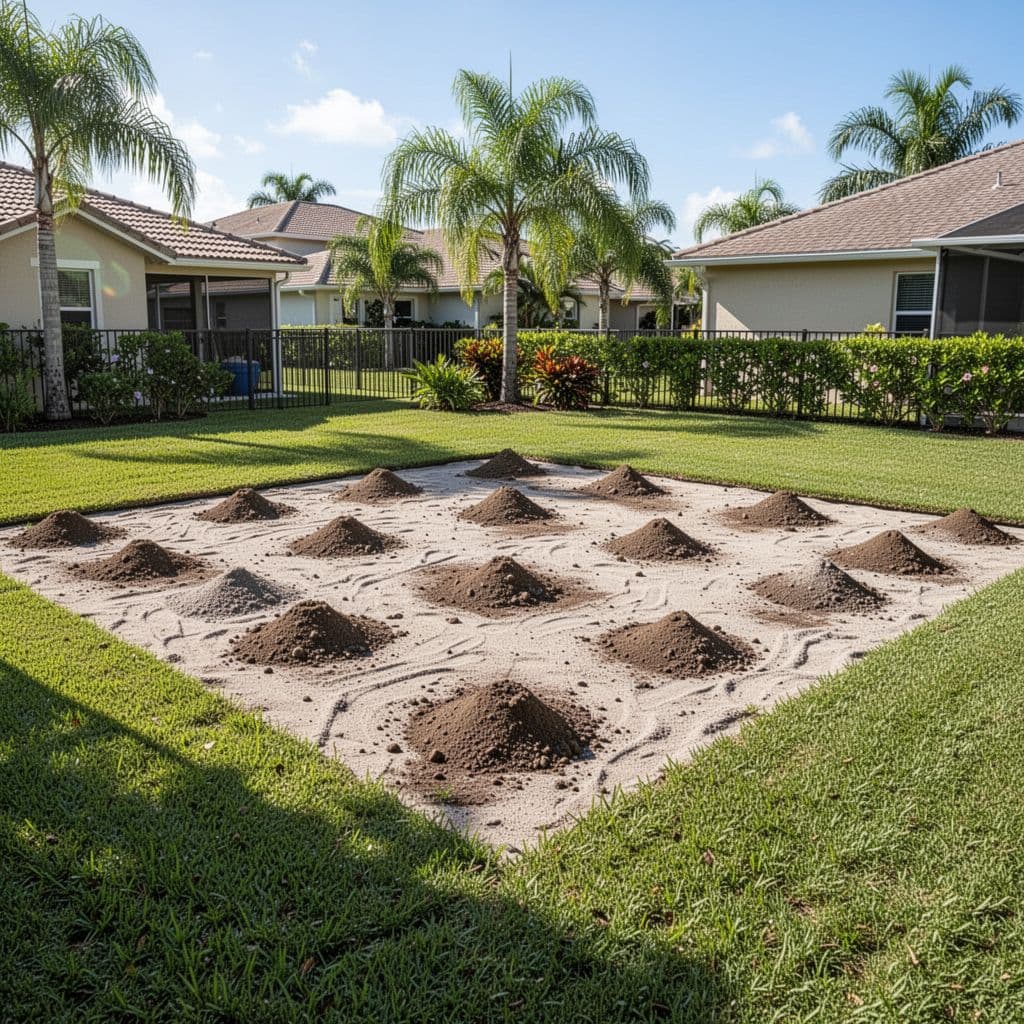
Other signs include a large wasp flying low over the same spot, stopping, and dropping back into the soil. You may also see several holes in a line or a small cluster. That pattern is common when more than one female chooses the same sunny section of yard.
Pay close attention near places children use often. Playground edges, sandbox borders, and the ground beside fence posts or play structures can all become nesting spots if the soil stays open. A single burrow may not look like much, but it can still sit right where small feet run every day.
If you hear buzzing close to the ground while your child is playing outside, take a moment to scan the area. A few seconds of attention now can save a painful surprise later.
Why they are less aggressive, but not harmless
Many homeowners panic when they see a wasp this large. That reaction makes sense. Size alone can make a yard feel unsafe.
Still, cicada killer wasps are usually more interested in nesting than attacking. Males may fly in circles near a burrow and seem bold, but they cannot sting. Females can sting, yet they usually do it only if they are handled, trapped, or stepped on.
A cicada killer burrow is usually a yard issue first, and a sting risk second, but play areas deserve extra care.
That is the part parents should keep in mind. A child digging in loose sand, a dog pawing at a hole, or a lawn chair set right over a nest can turn a quiet burrow into a defensive response. The wasp is not looking to chase people across the yard, but close contact changes the situation.
They also differ from yellow jackets and other aggressive wasps that defend hidden colonies. Cicada killers are more focused on the ground. That makes them less confrontational overall, yet their nesting habit still matters when the spot is part of a family yard.
What homeowners can do to reduce nesting in sandy soil
A few simple yard changes can make the soil less inviting. The goal is to remove the easy nesting spots, especially where kids and pets spend time.
- Cover bare patches quickly with sod, turf repair, or another stable ground cover. Exposed sand is the easiest place for them to dig.
- Keep play zones well defined with solid edging, dense grass, or safer surfacing so loose soil does not spread around the perimeter.
- Water your lawn properly so the turf stays healthier and less patchy, while still following Cape Coral watering rules.
- Rake and level disturbed soil after the wasps are gone, then watch the area for new holes.
- Keep children and pets away from active spots until the burrows stop being used.
- Avoid dumping chemicals into holes . That can make the situation harder to manage and can put people and pets at risk.
Consistent lawn care helps too. Thick grass leaves fewer open gaps, and fewer gaps mean fewer places for wasps to settle. If your yard keeps developing the same dry patches, it may be time to treat the soil and turf as a whole, not just one hole at a time.
For homeowners already dealing with other pest issues, a broader inspection can help too. A local service such as professional pest control in Cape Coral can check whether the problem is limited to a few burrows or part of a larger yard pattern.
When an infestation warrants inspection or treatment
A couple of burrows far from traffic may be something you can watch from a distance. Once the holes start showing up near play equipment, however, the risk changes.
| Situation | What it usually means | Best next step |
|---|---|---|
| One or two holes in a low-use area | Small, isolated nesting | Monitor and keep the spot clear |
| Several holes near a play area | Active nesting in a high-traffic zone | Block access and schedule an inspection |
| New holes keep appearing after you fill them | The yard still offers easy nesting conditions | Get a professional evaluation |
| A sting happened near a child or pet | The area is too close for comfort | Treat it as a safety issue right away |
If the burrows keep returning, the soil is likely giving the wasps exactly what they want. A technician can inspect the yard, confirm the insect, and apply targeted treatment where it matters most. That approach is better than spraying the whole yard and hoping for the best.
It also helps when you are not sure what you are seeing. Several ground-nesting insects look similar at first, especially in sandy Florida soil. An inspection clears up the guesswork and gives you a plan for the next few weeks, not just the next day.
For families with toddlers, pets, or guests who use the yard often, repeated activity near the same play zone is reason enough to act. The safest choice is the one that keeps the area usable without constant worry.
Conclusion
Cicada killer wasps can look alarming in a Cape Coral yard, especially when they settle into bare sand near turf or play spaces. Even so, they are usually less aggressive than many other wasps, and the bigger issue is where they choose to nest.
Watch for small holes, loose soil, and repeated low flights over the same patch. Keep sandy areas covered when you can, and treat play zones as high-priority spots. When the burrows keep coming back or sit too close to where children and pets spend time, an inspection is the cleanest next step.
Schedule a Free Inspection: