Flour Mites in Cape Coral Pantries: What to Spot and How to Stop Them
A tiny bug problem can hide in plain sight for weeks. Flour mites are so small that many people miss them until a bag of flour, cake mix, or rice starts looking dusty or clumpy.
In Cape Coral, warm air and humidity give pantry pests a head start. That matters most in cabinets where dry goods sit too long, lids don't seal well, or moisture creeps in from nearby kitchens and laundry areas.
The good news is that you can spot the signs early and fix the storage conditions that help them spread. The key is knowing what to look for, what to toss, and what to change next.
Signs that point to flour mites
Flour mites are tiny, pale, and easy to mistake for dust. In a pantry, they often show up in products that hold starch and fine grains.
Common problem items include:
- Flour and self-rising flour
- Cake mix and pancake mix
- Cornstarch and baking powder
- Cereal, rice, and pasta
- Pet food, bird seed, and other dry stored goods
You may notice fine clumping in flour, movement when you shake the package, or a dusty look that seems wrong. Sometimes the product feels damp or stale even when it should be dry. Open a bag and the surface may look alive with tiny specks.
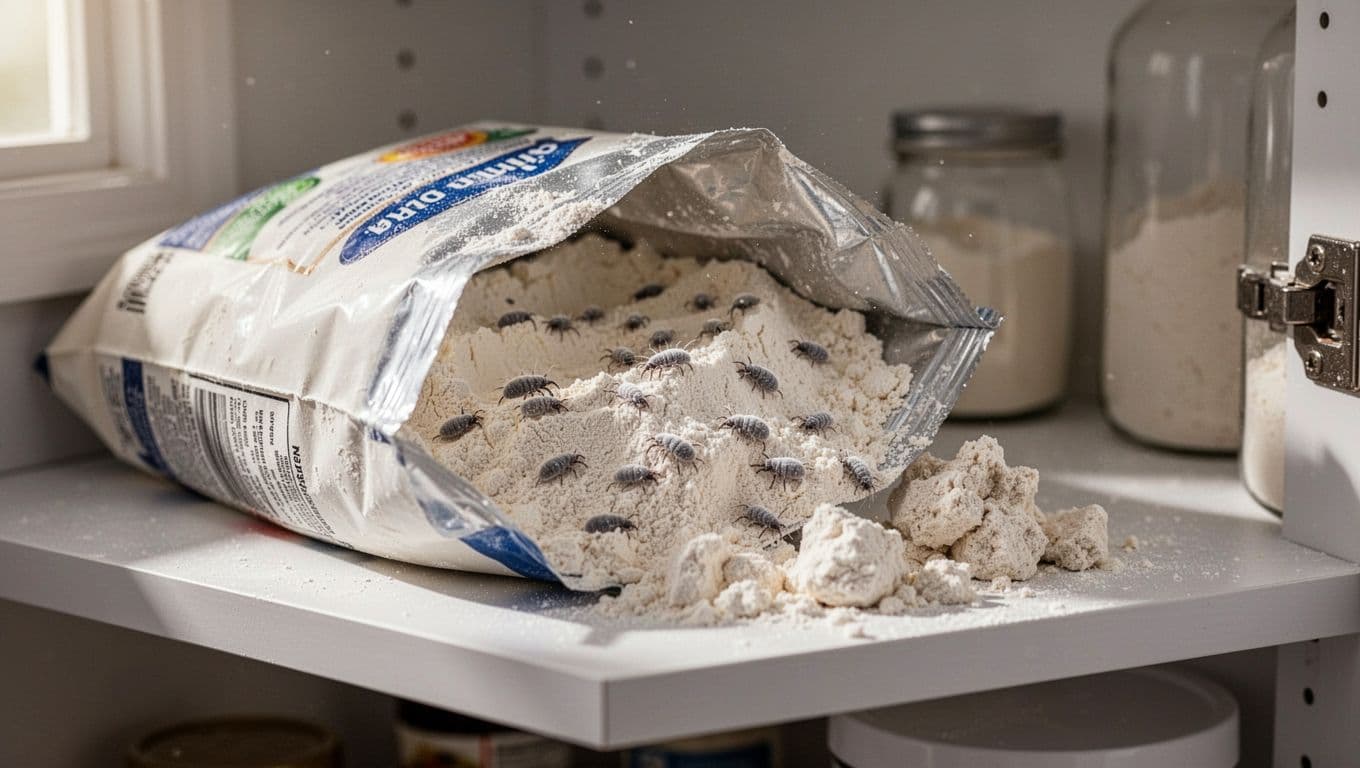
A flour mite problem often starts with one forgotten package. After that, nearby foods can become part of the same mess.
Why Cape Coral pantries invite them
Heat speeds up pest activity. Humidity helps dry goods hold enough moisture for mites to survive and breed. That combination is common in Southwest Florida homes, especially when pantry doors open near kitchens that stay warm and cabinets don't get much airflow.
Packages can also bring the problem inside. A sealed-looking bag may already hold eggs or tiny mites when you buy it. Once that bag sits in a warm pantry, the population can grow fast.
Storage habits make a big difference, too. Old boxes pushed to the back, half-closed bags, and pet food left in thin packaging all give mites an easy place to spread. Rice, pasta, cereal, and baking mixes are all at risk when they sit untouched.
A clean pantry can still have a mite problem if the air stays warm and damp.
That's why prevention in Cape Coral starts with moisture control, not just shelf cleaning. If your pantry has a habit of feeling sticky or stuffy, mites have a better shot at settling in.
Telling flour mites apart from pantry moths, weevils, and mold
Different pantry problems can look similar at first glance. The details matter.
Flour mites look like tiny moving dust. Pantry moths are larger, winged, and often leave webbing in food or on shelves. Weevils are beetles with a more obvious body shape, and they may be easier to spot in rice, grains, or pasta. Mold is not an insect at all. It shows up as fuzzy growth, staining, or a musty smell.
If you're comparing signs, these local guides can help with the other common pests homeowners confuse with mites: pantry moths in Cape Coral kitchens, rice weevils in Cape Coral pantries, and red flour beetles in Cape Coral flour bags.
The best clue is the food itself. Webbing points toward moths. Holes in grains point toward weevils. Fuzzy growth points toward mold. Fine clumps, dust-like movement, and tiny pale bodies point toward mites.
That difference matters because the fix is not always the same. A moth issue may spread through corners and seams. A mite issue often starts in the food and the shelf dust around it.
What to do after you find them
Start with the food. If a package shows mites, clumping, or obvious contamination, discard it . Don't sift it, save the top layer, or move it into another container.
Then inspect nearby items. Check flour, mix, cereal, rice, pasta, and pet food on the same shelf and the shelf above and below. If one package is infested, nearby goods may already have eggs or tiny mites you can't see yet.
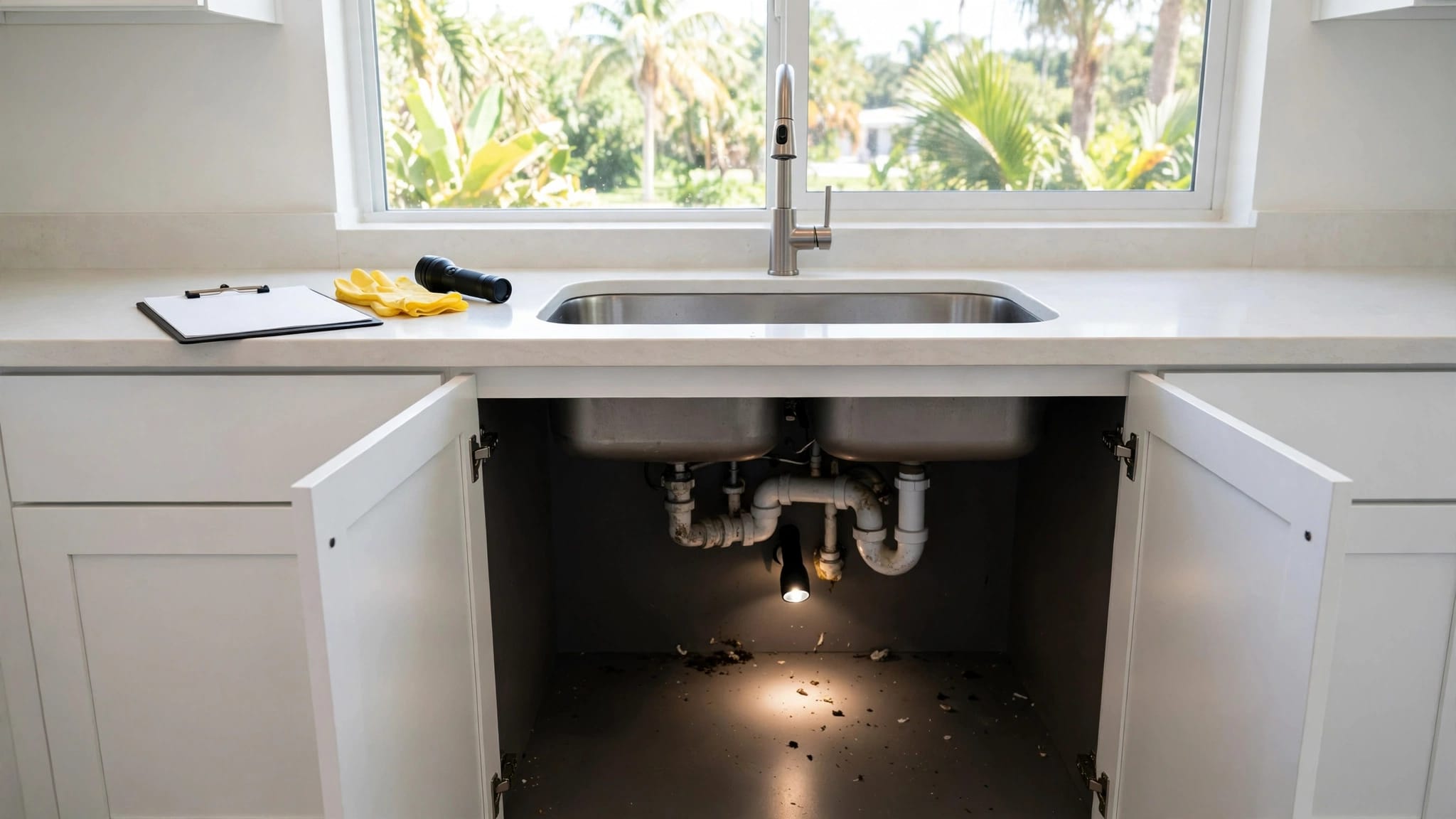
After the food is out, clean the shelf hard. Vacuum crumbs from corners, shelf pin holes, and cracks where dust hides. Wipe the area with warm soapy water, then let it dry fully. Remove shelf liners if they trap grit underneath.
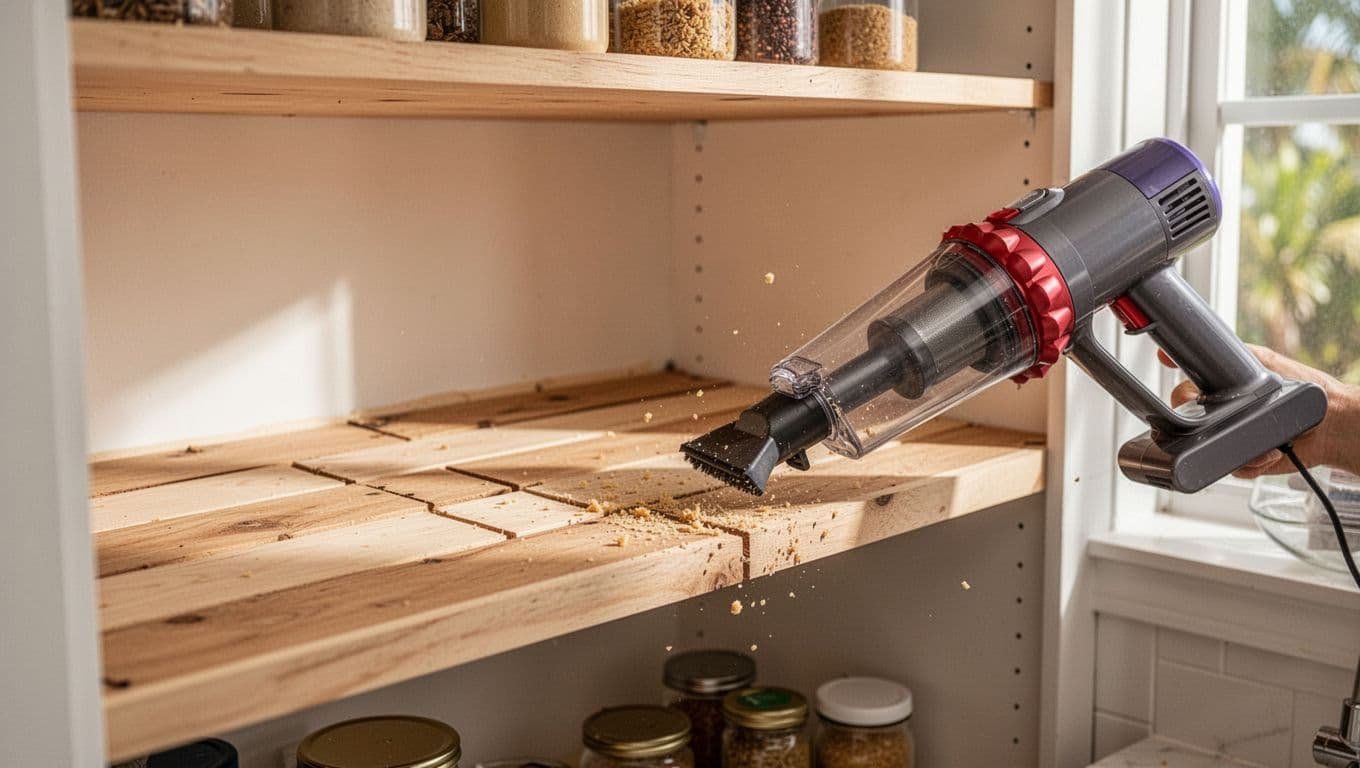
Pay attention to container lids and threads, too. If a jar or bin held infested food, wash it before you reuse it. A quick wipe is not enough when fine powder and eggs can hide in the rim.
A short reset now can save you from a repeat problem later.
Simple habits that keep the pantry dry
The best long-term fix is dry, sealed storage. Transfer open flour, mixes, rice, pasta, and cereal into airtight glass, metal, or heavy plastic containers. Pet food should get the same treatment.
Rotation helps as well. Keep older packages at the front and use them first. Check expiration dates before you buy in bulk, and avoid storing more dry food than you can use in a few months.
Moisture control matters just as much. Run a fan or dehumidifier if your pantry area stays damp. Keep the pantry away from leaks, wet mops, and stored items that hold humidity. If you notice condensation, fix it fast.
A few small habits make a big difference:
- Buy smaller amounts of flour and mixes if you don't bake often.
- Open and inspect new bags before you pour them into containers.
- Clean shelves, cracks, and corners on a regular schedule.
- Keep pet food sealed, not open in the bag.
- Watch for stale smell, clumping, or tiny moving specks.
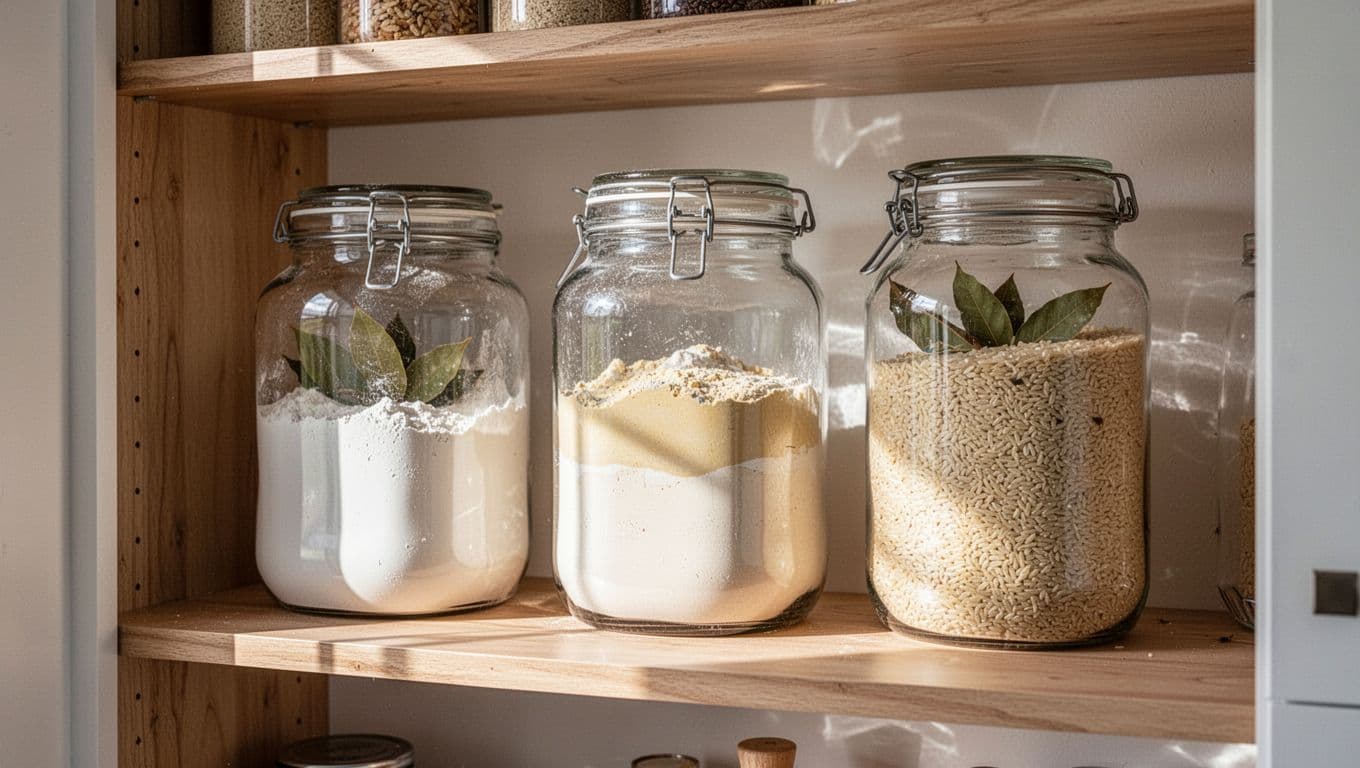
The goal is simple. Make the pantry dry, tidy, and easy to inspect. When dry goods stay sealed and shelves stay clean, mites lose the conditions they need.
Keep Cape Coral pantries dry
A flour mite problem is annoying, but it usually points to a storage issue you can fix. Once you remove the contaminated food, clean the shelves, and reduce humidity, the pantry is much less inviting.
In Cape Coral homes, the biggest wins come from airtight storage , regular rotation, and fast cleanup after spills. Those steps protect flour, cake mix, cereal, rice, pasta, and pet food from the same warm, damp conditions that help mites spread.
When a pantry looks dusty for no clear reason, check it early. A small catch now is easier than a full shelf reset later.
Schedule a Free Inspection: