Banana Spiders in Cape Coral Shrubs and Pool Screens
When people search for banana spiders in Cape Coral, they usually want one simple answer: is that big web near the pool cage a problem? Most of the time, the spider is after insects, not people.
In Cape Coral, many homeowners use "banana spider" as a loose name for a large orb-weaver, often the golden silk orb-weaver. That matters because the fix is usually simple, trim the yard, cut the light that attracts bugs, and clear the web before it spreads.
How to tell what people mean by a banana spider
The term "banana spider" gets used loosely in Florida. In many neighborhoods, it points to the golden silk orb-weaver , a large spider with long legs and a bold web that can look yellow in the sun. The web is the easiest clue. It is wide, strong, and often stretched between shrubs, palms, fence lines, or pool cage frames.
If you want help sorting out the usual suspects, common spiders in Cape Coral homes is a helpful place to start. It gives a wider look at the spiders people often notice around Southwest Florida yards.
These spiders spend most of their time in the web or close to it. They wait for flying insects, then wrap up dinner fast. After rain or heavy wind, they often rebuild the web in the same spot. That is why a web can keep coming back even after you knock it down.
The web is usually the nuisance, not the spider.
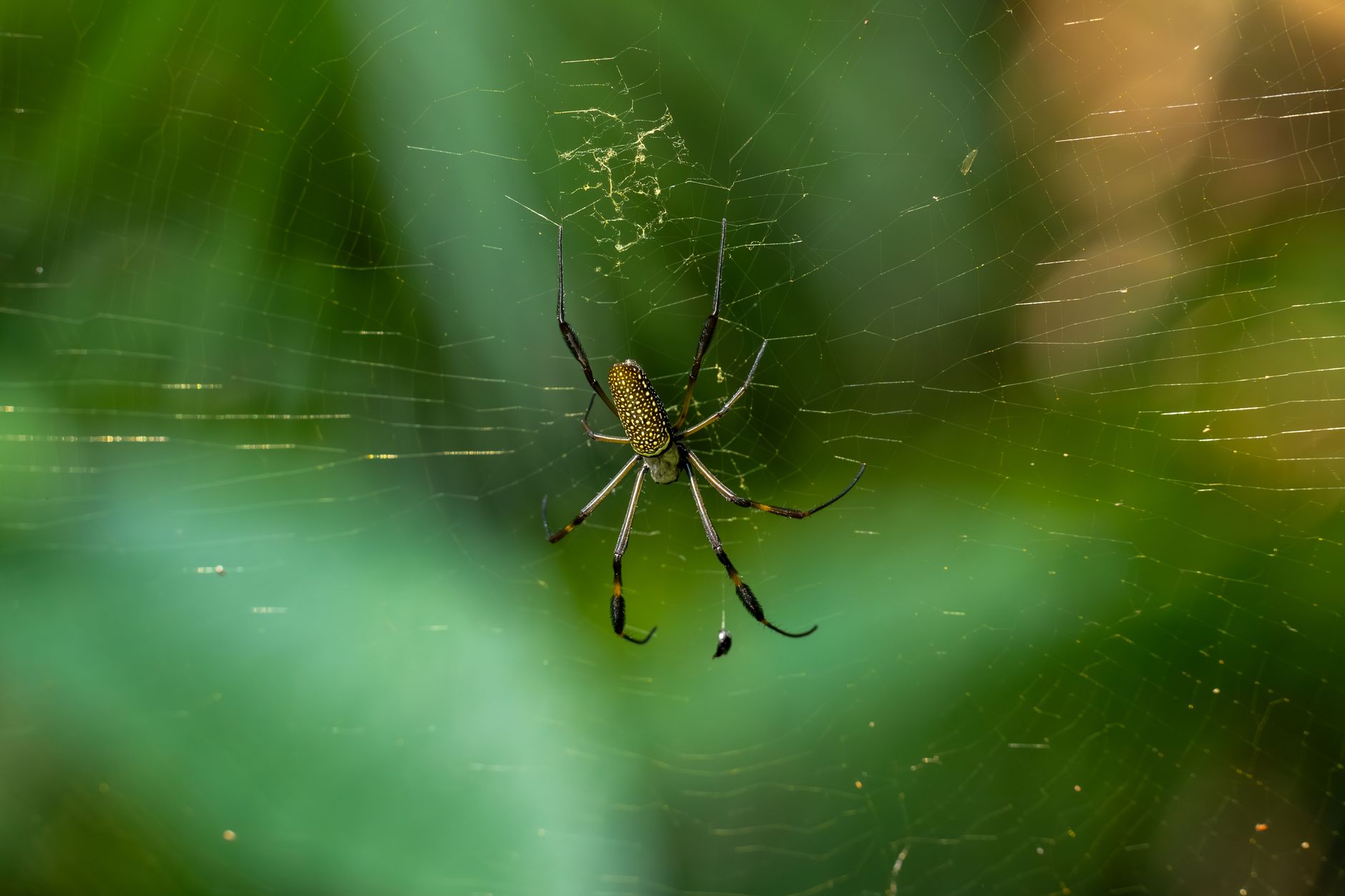
Photo by Matheus Bertelli
A spider this size can look alarming, but size alone does not mean danger. These are outdoor spiders doing what outdoor spiders do, building traps where food is easy to catch.
Why shrubs and pool screens attract them
Dense shrubs give a spider a hidden support line. Pool cages do the same. The frame is sturdy, the screen offers a wide surface, and the open space inside the cage gives the web room to work. If your hedges touch the screen, the spider gets a bridge from plant to panel.
Outdoor lighting adds another layer. Bright white lights pull in moths, gnats, beetles, and other small flying bugs. Then the spider follows the food. In other words, the light does not attract the spider first. It attracts the meal.
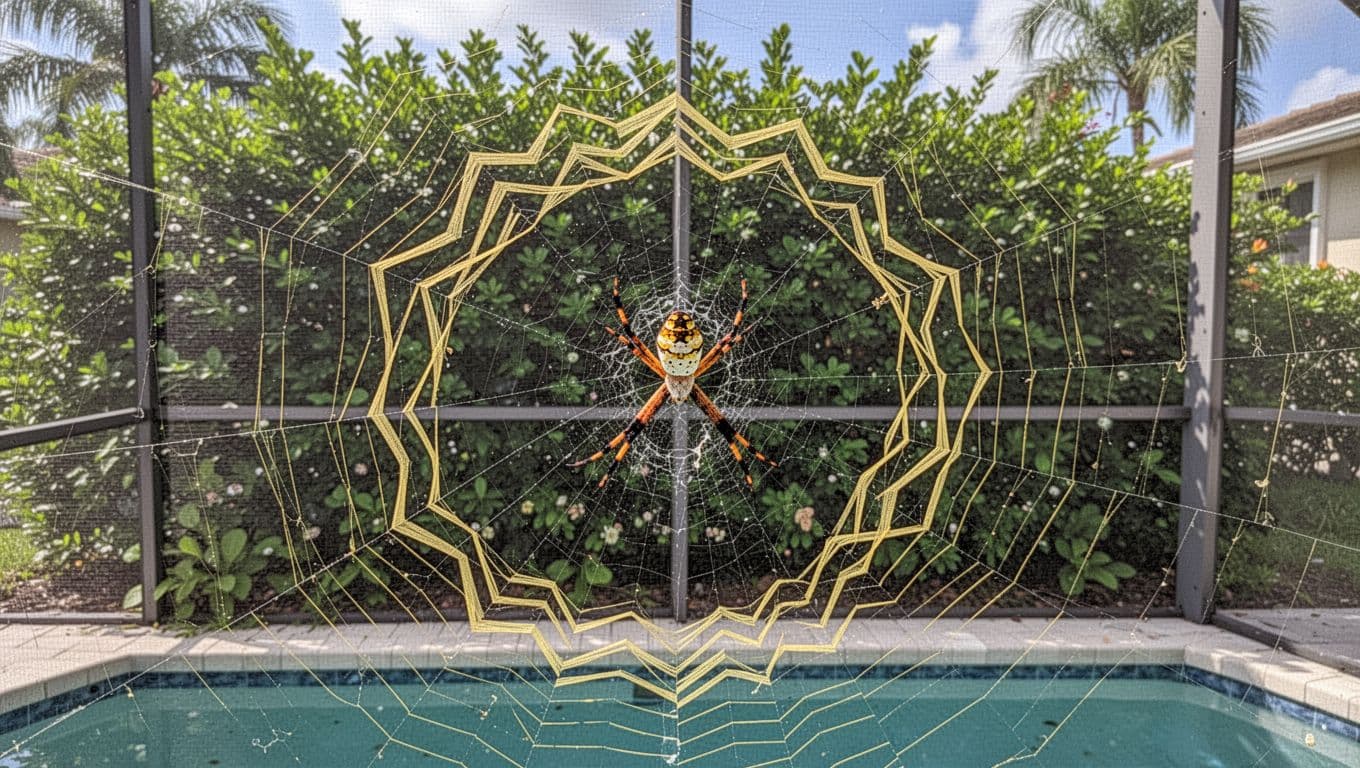
Humidity helps too. Cape Coral yards hold moisture, especially around irrigated beds and shaded corners. That does not create spiders by itself, but it helps flying insects stick around. More insects mean more web-building.
Shrubs near pool screens are a perfect example. The plant cover stays close to the structure, bugs move through the leaves, and the spider has both shelter and food in one spot. If you see repeated webs in the same hedge or corner, the yard is telling you where the pressure is.
Safe ways to reduce webs without making the yard harsh
A family-friendly approach works better than a heavy-handed one. Start with the places that give spiders support and food, then make the area less inviting.
- Trim shrubs so they do not touch the house or pool cage.
- Remove low branches that hang over walkways, screens, and patio doors.
- Sweep webs from screens, corners, and hedge tips every few days during peak season.
- Replace bright white bulbs with warmer lights, and aim fixtures away from the cage when you can.
- Repair torn screens, loose door sweeps, and gaps around frame edges.
- Move pots, hose reels, and yard clutter away from corners where webs hide.
A small gap between plants and the cage helps a lot. It gives you room to see webs early, and it makes it harder for a spider to string a line from shrub to screen. That one change can cut down on repeat webbing fast.
If you want a broader plan for sealing and cleanup, spider-proof your Cape Coral home has useful steps that fit well with yard work. The main idea is simple, reduce the food, remove the anchor points, and stay consistent.
For screens, use a broom, a soft brush, or a long-handled duster. Avoid rough scrubbing that can damage mesh. If the web is high, use a tool that lets you reach without climbing or stretching awkwardly. Safety matters more than speed.
What a bite means, and when to get help
Most banana spider encounters never lead to a bite. These spiders do not hunt people, and they usually stay put if left alone. If a bite does happen, the reaction is often mild, with local redness, a small welt, or short-term pain.
Wash the area with soap and water, then use a cool pack. Keep an eye on the skin for a day or two. That covers most simple cases.
Medical care makes sense if the person has trouble breathing, swelling beyond the bite area, dizziness, severe pain, or signs of an allergic reaction. The same goes for bites that get worse instead of better. If a child, older adult, or anyone with a known allergy is involved, call a doctor sooner rather than later.
A spider bite is also easier to handle when you know what bit you. If you can do so safely, take a photo from a distance. Do not grab the spider or crush it with your hand. If the spider was hiding in the screen corner or under dense shrubs, there may also be another species in the area, so proper identification matters.
Keeping banana spiders from coming back
The best long-term fix is routine yard care. Check the same places on a set schedule, especially after rain, windy weather, or a stretch of warm nights. Webs often return in the same locations because the structure and food source are still there.
A monthly walk-around helps. Look at pool cage corners, shrub edges, porch lights, and any place where branches touch the screen. Clear the web before it gets thick, and trim anything that gives the spider an easy bridge.
If webs keep showing up in hard-to-reach spots, or if you are dealing with the same problem every week, professional help is the smart move. A pest control technician can inspect the area, identify the spider, and look at the insect pressure that keeps feeding it. That is especially useful around tall shrubs, high screens, roof edges, and other places that are tough to reach safely.
Conclusion
Banana spiders in Cape Coral are usually more of a yard nuisance than a real threat. Once you know what they are, the pattern becomes easy to read, shrubs, pool screens, and bright lights all make good web spots.
Trim the plants, reduce the bugs, and clean the web before it spreads. If the same corners keep filling back up, that is your cue to bring in help and reset the yard on your terms.
Schedule a Free Inspection: