Stable Flies in Cape Coral Yards Near Docks and Canals
A Cape Coral yard can feel fine one day and turn miserable the next. If the bites show up around your ankles, dock steps, or canal edge, stable flies may be the real problem.
These flies are easy to mistake for mosquitoes, but they behave differently. They often thrive where damp organic debris sits near water, which makes waterfront yards a prime target. The fix usually starts with cleanup, not with chasing every flying insect you see.
Why waterfront yards draw stable flies
Stable flies are biting flies, not simple nuisance flies. They look a lot like house flies, but they bite people and pets for blood. In Cape Coral, they can show up around docks, seawalls, mulch beds, and shady edges where plant matter stays wet too long.
Mosquitoes get blamed a lot because the setting feels familiar, but the source is often different. If the problem keeps showing up in bright daylight and bites hit the lower legs first, stable flies move to the top of the list. If you also have bites on screened lanais, Florida no-see-um control tips can help rule out a second pest.
| Clue | Stable flies | Mosquitoes |
|---|---|---|
| Where bites land | Ankles, calves, lower legs | Any exposed skin |
| When they feed | Daytime | Dawn, dusk, and shaded hours |
| Common source | Wet grass, clippings, decaying plants | Standing water |
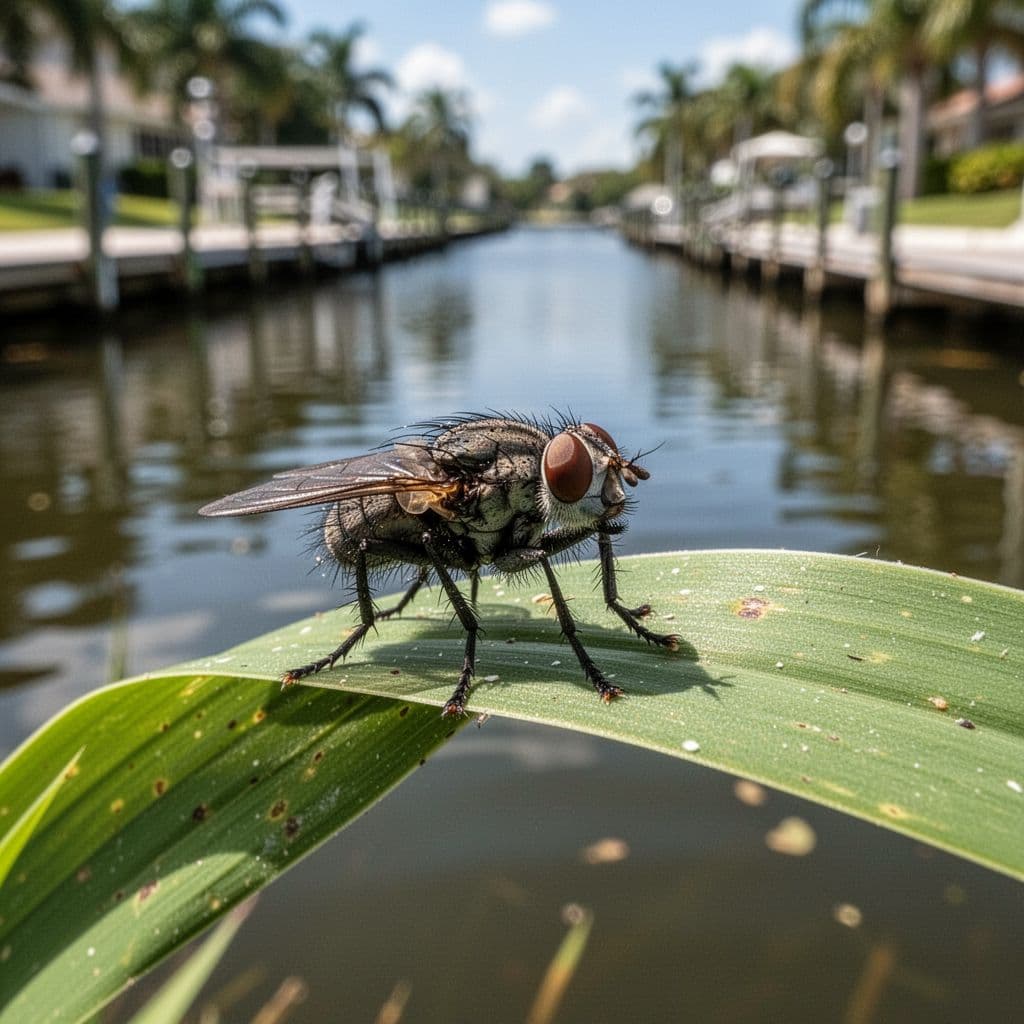
That pattern matters because the breeding site is often hiding in plain sight.
The damp spots that keep feeding the problem
Stable flies need wet organic material. In a Cape Coral yard, that can mean grass clippings left in a pile, mulch that stays soggy, decaying leaves, pet waste, or shoreline vegetation that keeps breaking down near the waterline.
They also like places that stay moist after watering or rain. That includes low spots by the dock, soil under planters, spots beneath stacked boards, and areas where runoff collects near the canal. UF/IFAS notes that stable flies breed in decaying grass clippings and similar organic debris, so the cleanup target is clear, as explained in this UF/IFAS stable fly control guide.
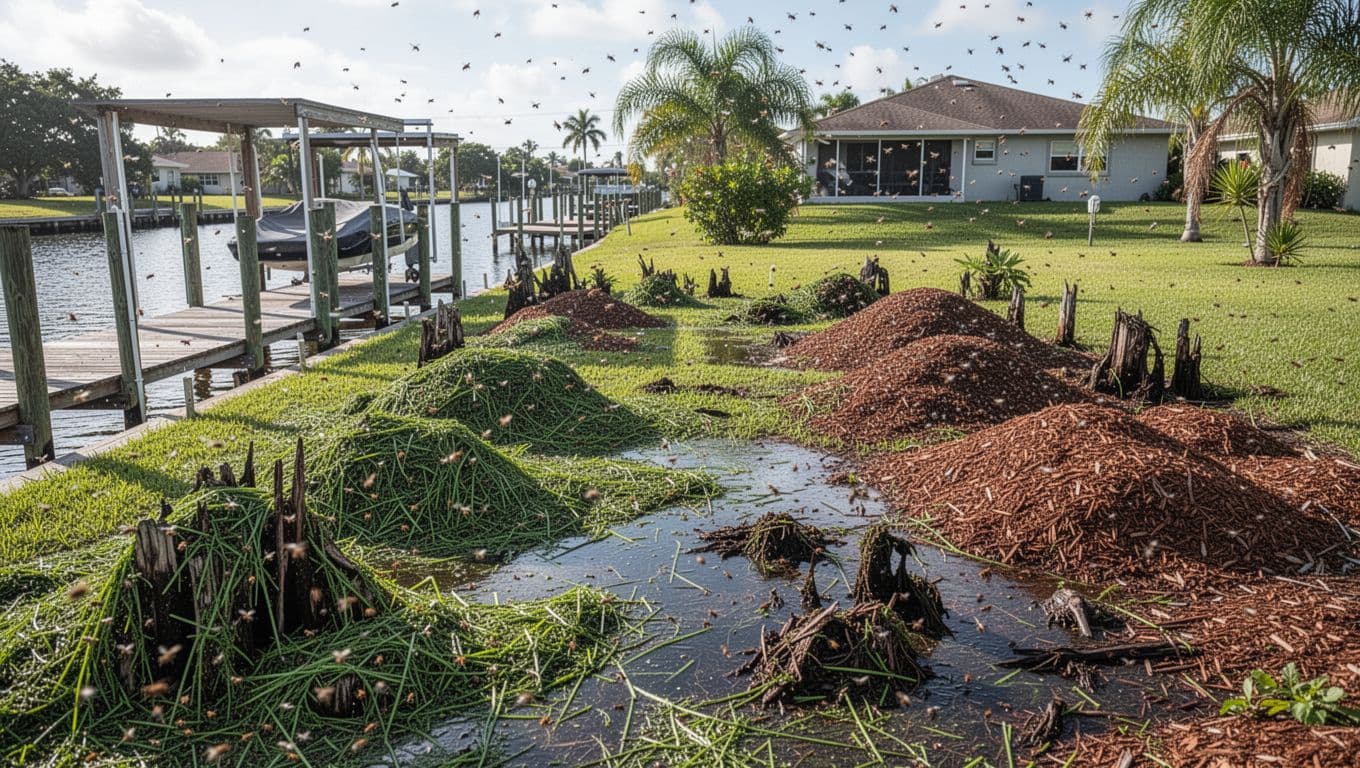
Wet clippings near a dock can turn into a fly source before they look dirty.
That is why the yard can keep producing flies even when the water itself looks fine.
Cleaning the dock and yard so the source dries out
The fastest gains come from removing what stays wet. Small chores matter here, because stable flies use the soggy stuff that gets ignored.
Start with the spots you walk past every day:
- Remove grass clippings after mowing, and don't leave them in a damp pile.
- Pick up pet waste often, especially near fences, mulch, and dock paths.
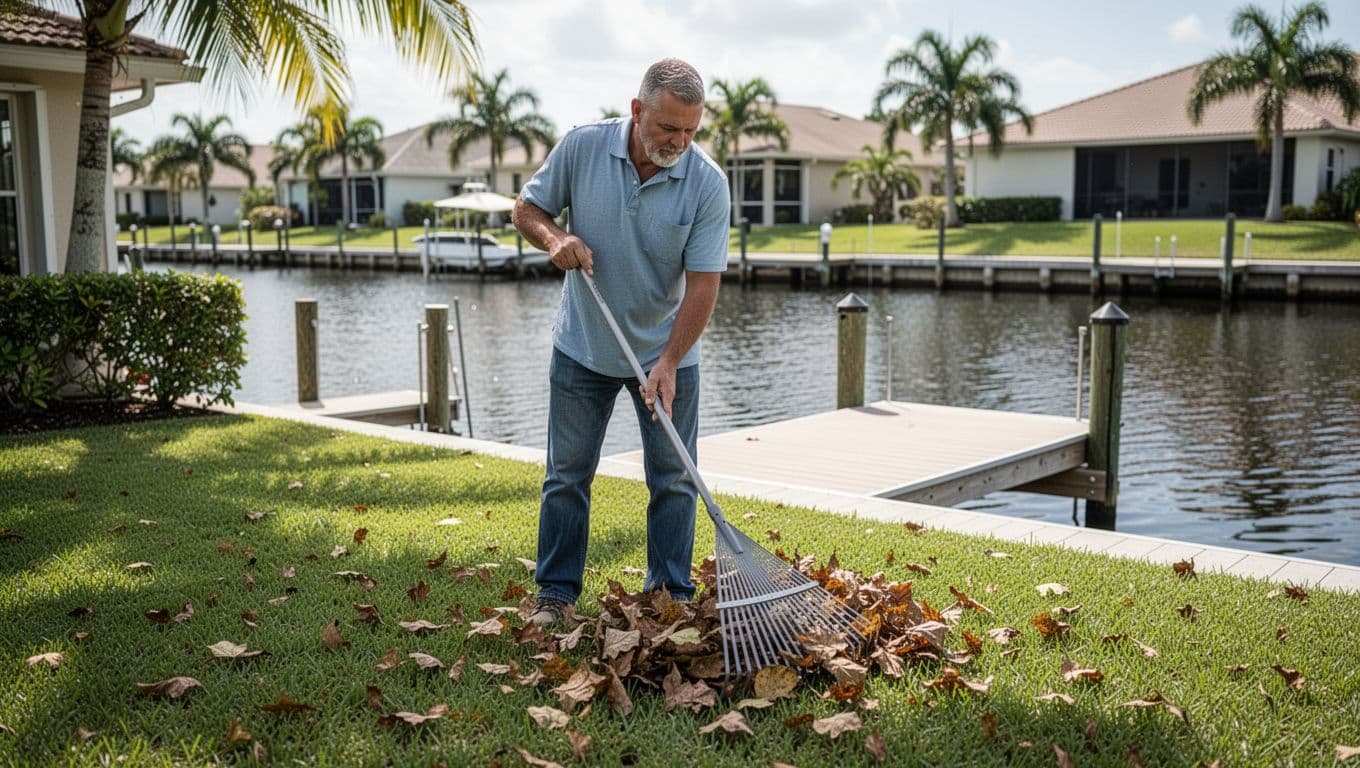
- Rake dead leaves and shoreline plant debris before it mats down.
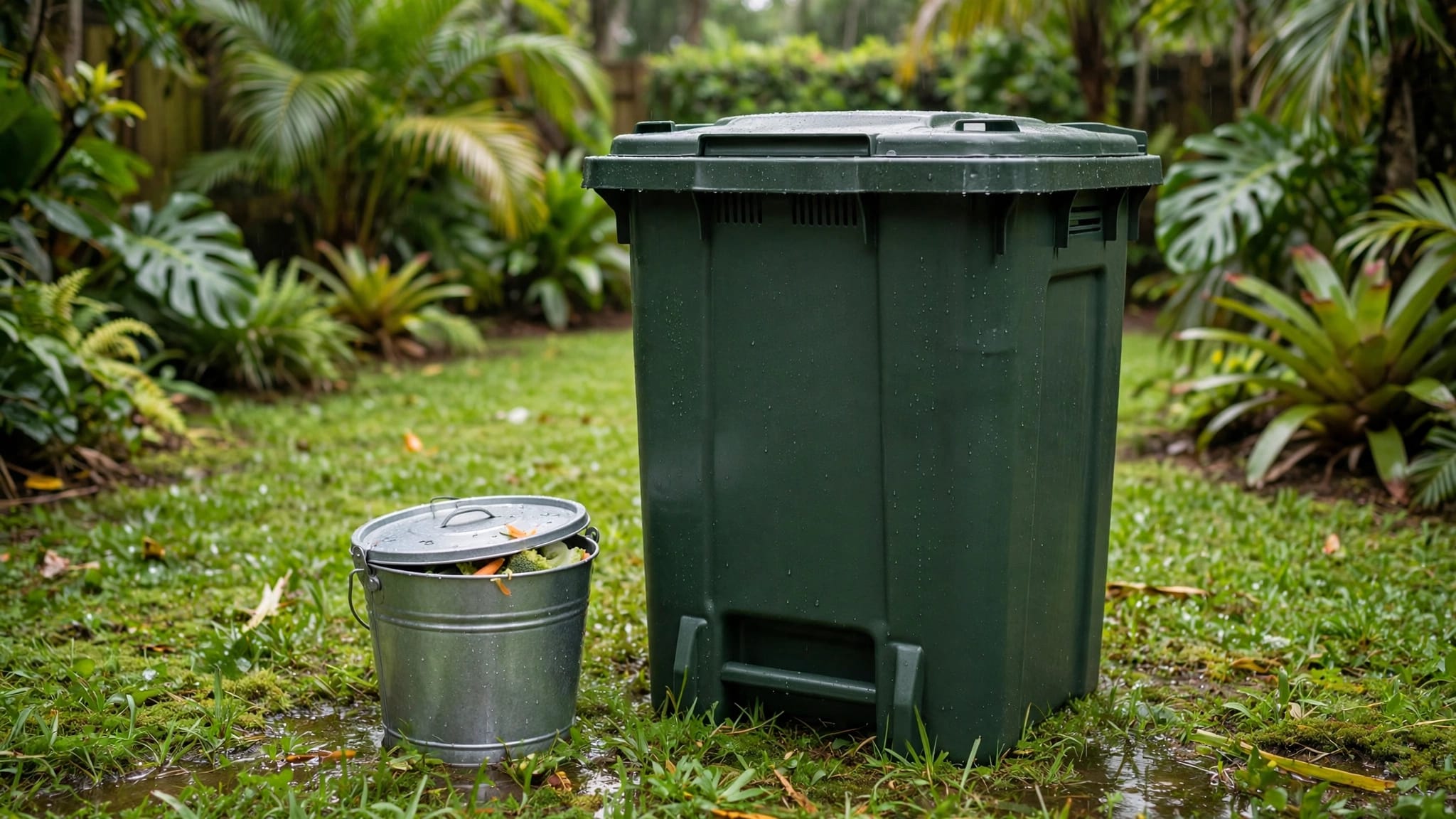
- Keep compost covered and dry, and move it away from seating areas.
- Sweep dock boards, corners, and storage spots where organic bits collect.
- Fix leaky hoses or irrigation heads that keep one patch of ground wet.
The UF/IFAS biting flies fact sheet makes the same point in plain terms, local cleanup matters more than spraying adult flies and hoping for the best. That advice fits Cape Coral yards well, because the breeding spot is usually close by.
A fan on the dock or patio can also help. Stable flies are strong fliers, but moving air makes landing harder. Keep it simple, keep it dry, and don't leave piles for them to use.
Landscaping fixes that help waterfront homes
A tidy yard still needs the right layout. If irrigation, mulch, and drainage stay wrong, flies can come back fast.
Trim grass often so clippings dry quickly. Use mulch in thinner layers, and replace any section that stays matted or slimy. If you have dense shoreline plants, prune back the growth that traps moisture near the canal edge.
Drainage matters just as much. Low spots, downspout splash zones, and packed soil around walkways all hold moisture longer than you think. If water pools after rain or a dock washdown, add grading, gravel, or another dry surface where it makes sense. For homes that also fight mosquitoes near the water, reducing mosquito sources around waterfront homes pairs well with fly cleanup.
Cape Coral homeowners often treat the symptom first. A spray may knock flies down for a day, but the damp source keeps producing more. That is why the yard, the dock, and the canal edge need to be handled together.
When a Cape Coral fly problem keeps coming back
If the bites keep returning after cleanup, the source may be farther out than it looks. Shared drainage, nearby shoreline debris, or organic buildup beyond your property line can keep feeding the problem.
That is when a closer inspection pays off. A good look at mulch beds, dock edges, drainage pockets, and hidden wet spots can save a lot of guesswork. It also helps separate stable flies from mosquitoes and other biting pests around the water.
Conclusion
Stable fly problems in Cape Coral often start with wet organic debris , not with open water alone. That is why grass clippings, decaying plant matter, pet waste, mulch, and soggy dock edges deserve so much attention.
If you dry out those problem spots, the biting usually drops with it. Around docks and canals, the cleanest yard is often the least attractive one for flies.
Schedule a Free Inspection: