White-Footed Ants In Cape Coral Homes Identification And Control
If you're seeing long, steady ant lines along baseboards, sinks, or soffits, you might be dealing with white-footed ants . In Cape Coral and across Lee County, these ants can show up fast, especially after warm rain or heavy watering.
The good news is they're mostly a nuisance, not a threat to your structure. The bad news is they don't quit easily if you only spray the ants you see. This guide covers how to identify them, why they keep coming back, and how to control them using an integrated pest management plan that fits Southwest Florida homes.
How to identify white-footed ants (and avoid misdiagnosis)
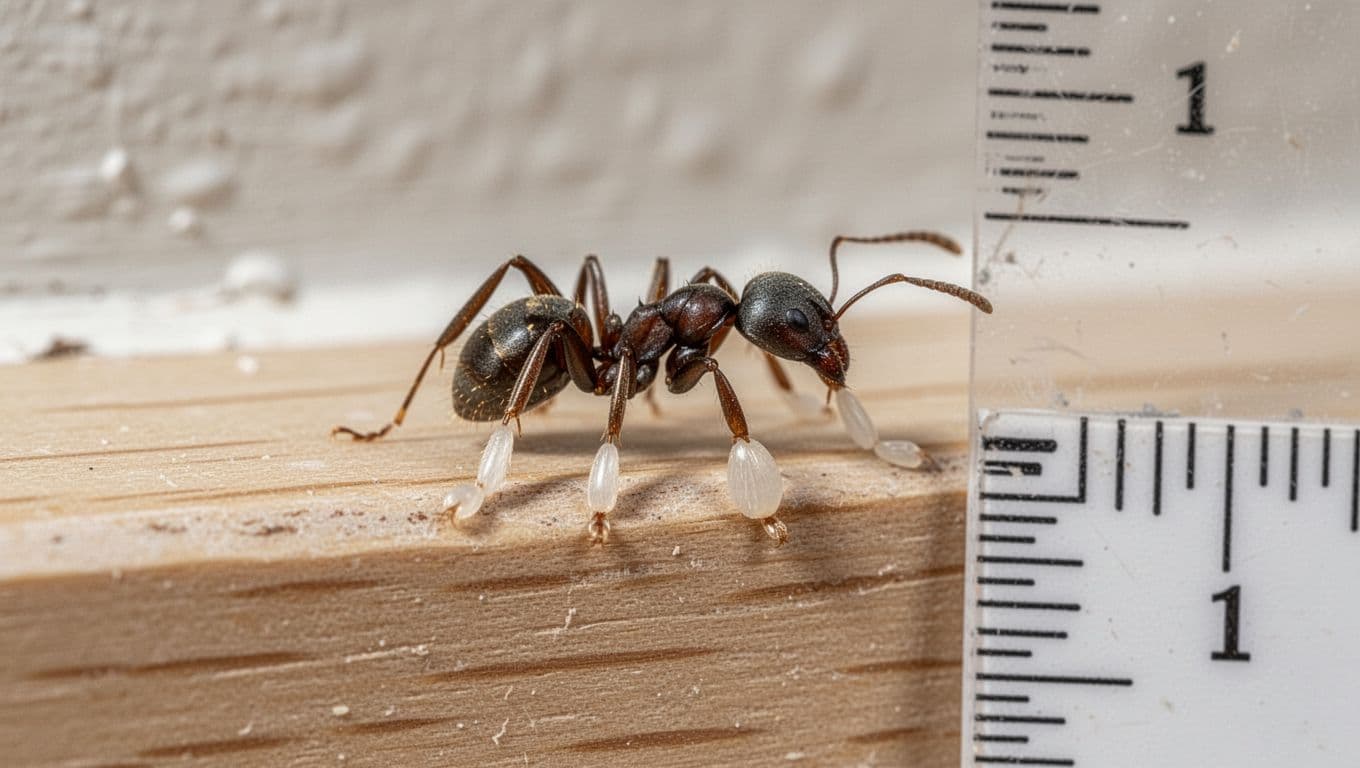 Close-up view of a white-footed ant on a baseboard, created with AI.
White-footed ants are small, dark ants with a telltale detail: pale, whitish feet (the tarsi). In normal indoor lighting, that contrast can look like tiny "white socks" at the ends of their legs.
You'll also notice their behavior. They often form thin, consistent trails , like a commuter line that doesn't stop. You might see them on:
- Kitchen counters and sink edges
- Bathroom vanities and tubs
- Baseboards and door trim
- Exterior soffits, eaves, and utility lines
In Florida, the species is commonly listed as Technomyrmex difficilis (previously lumped under Technomyrmex albipes in older sources). For deeper biology and habits, UF/IFAS has a detailed profile in their publication on the white-footed ant in Florida.
Here's a quick comparison so you don't treat the wrong ant:
| Ant type | Common look | Typical clue | Why it matters |
|---|---|---|---|
| White-footed ant | Dark body, pale feet | Long outdoor-to-indoor trails | Huge colonies, baiting needs patience |
| Ghost ant | Pale body, dark head | Looks "see-through" on counters | Often nests indoors, loves sweets |
| Argentine ant | Brown, similar size | No white feet, strong trails | Colonies spread across properties |
| Carpenter ant | Much larger | Moist wood areas, frass | Different risk profile, can damage wood |
If you're also worried about wood damage, review these carpenter ant signs in Cape Coral so you can separate a nuisance ant problem from a structural one.
Why Cape Coral homes get them: honeydew, humidity, and easy bridges
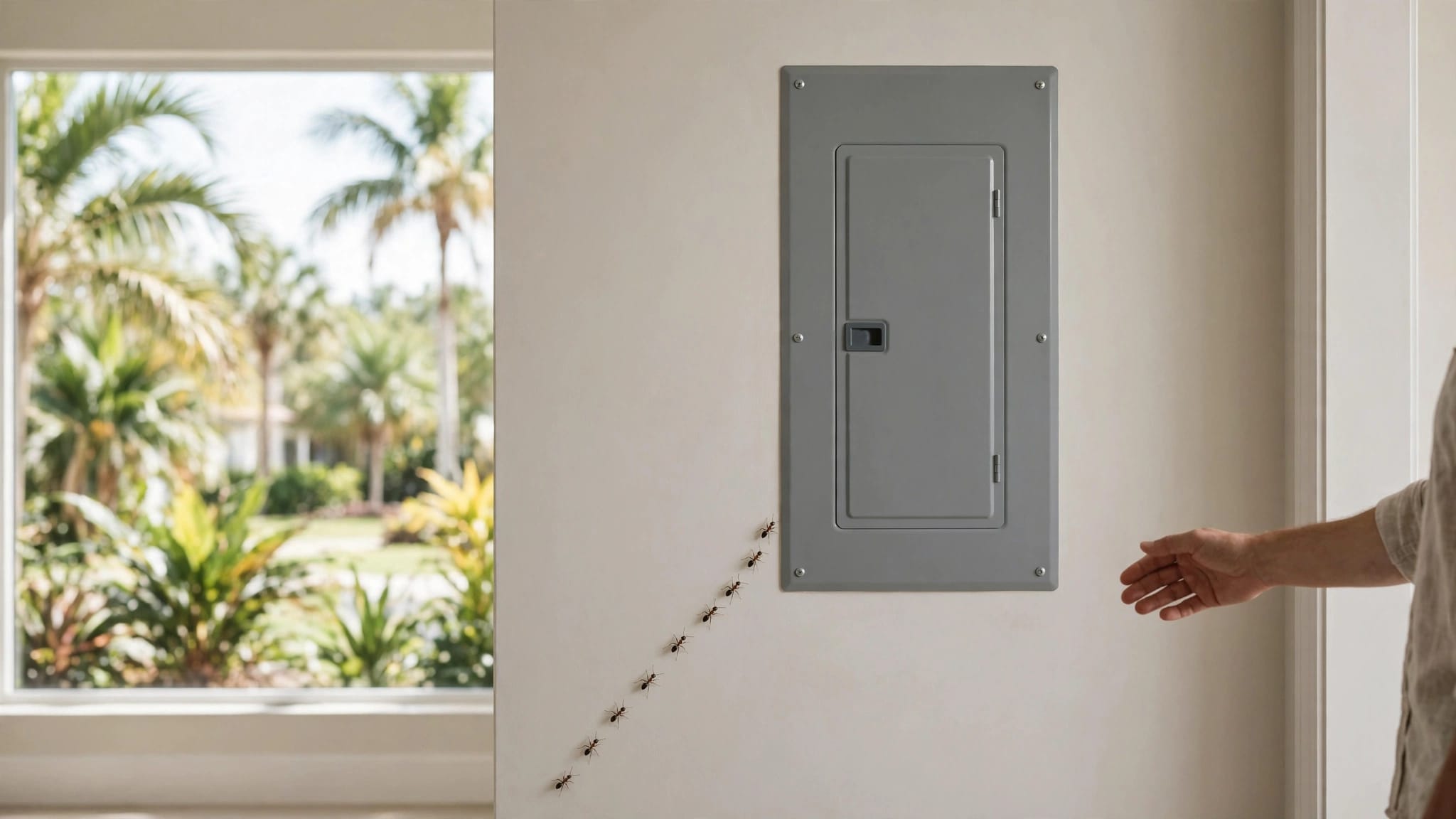
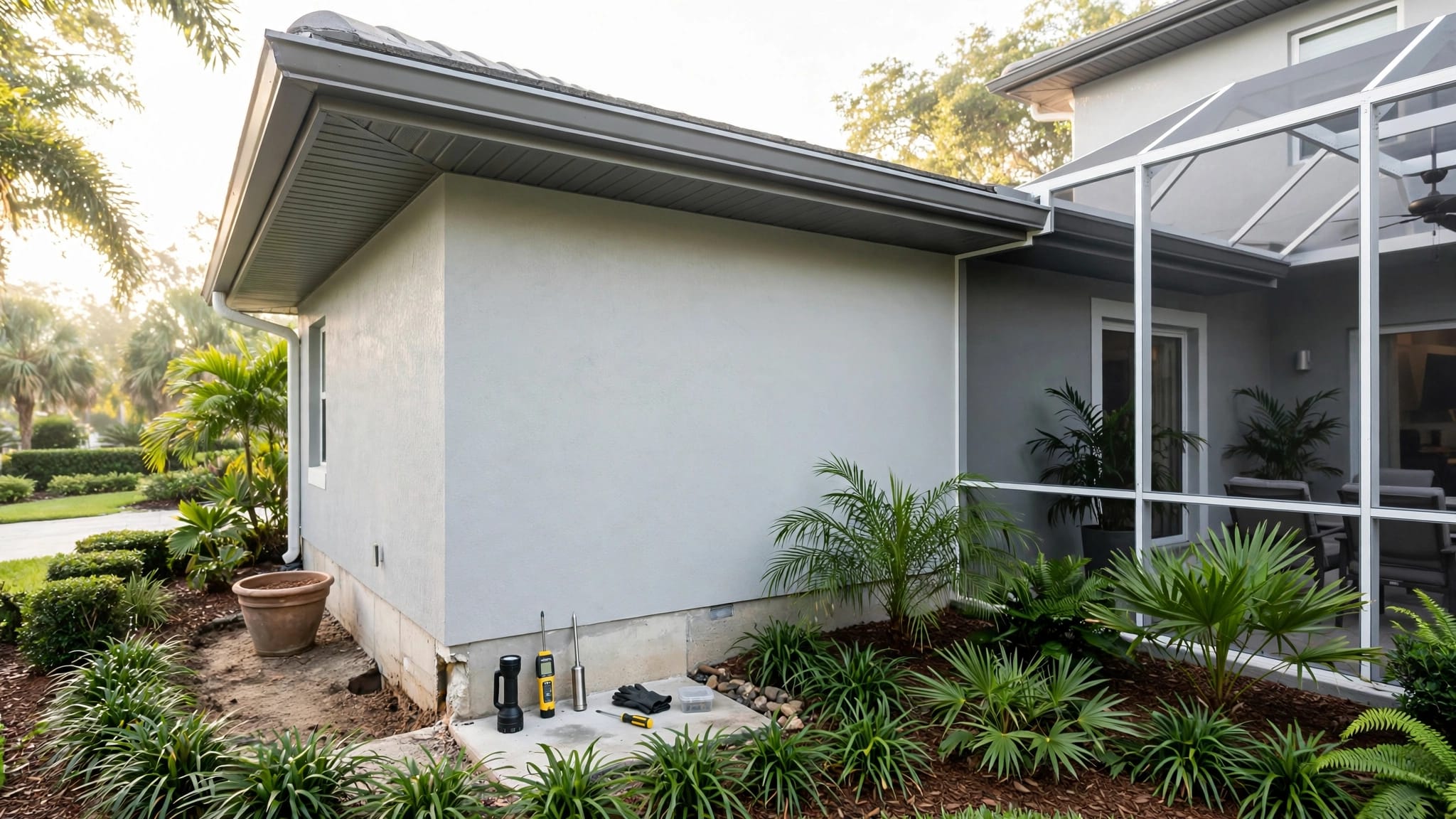
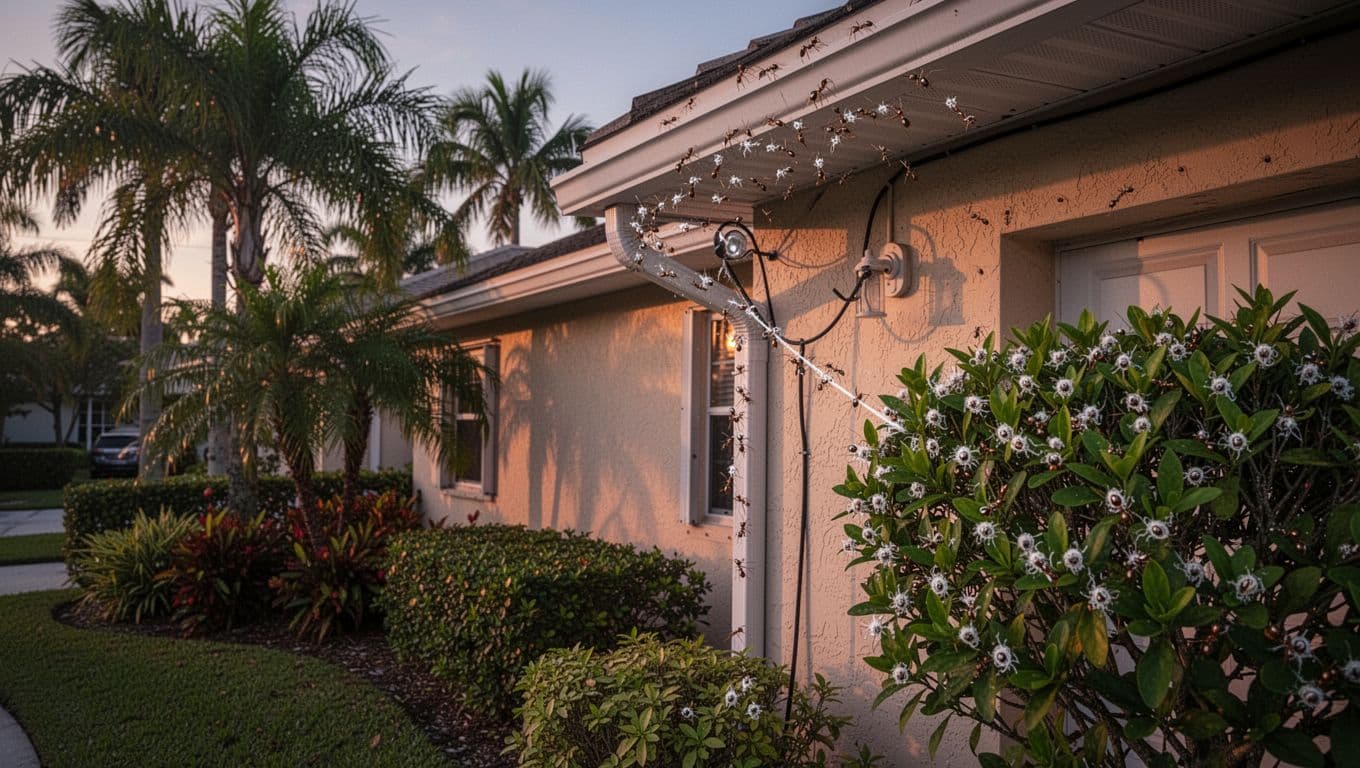 Exterior ant trail along a soffit and utility line, created with AI.
White-footed ants usually start outside. Cape Coral's irrigated lawns, canal-side humidity, and dense ornamentals make a comfortable staging area. Once they find food, they lay down trails and stick with them.
One of the biggest drivers is honeydew , the sticky liquid made by sap-feeding insects like aphids, mealybugs, and scale. Ants "farm" these insects like a soda fountain on leaves and stems. If you only treat the ants, but leave the honeydew source, the colony has a reason to keep sending workers.
A practical outdoor plan looks like this:
- Trim vegetation back : Keep shrubs and branches from touching walls, soffits, or roof edges. Plants can act like bridges.
- Rinse honeydew producers off plants : A firm water spray can knock down aphids and some scale on smaller plants. For heavier issues, consider a targeted landscape treatment plan (or a pro), because honeydew pressure often drives reinfestation.
- Reduce moisture near the foundation : Fix dripping spigots, aim sprinklers away from walls, and avoid soaking mulch against stucco.
- Clean up harborage : Leaf piles, palm fronds, and cluttered mulch beds can hide nesting sites.
UF/IFAS also covers general ant habits and why they trail in homes in their ants in and around the home guidance. The takeaway for Lee County yards is simple: outdoor conditions decide indoor pressure.
Control plan for white-footed ants: bait, don't "battle-spray"
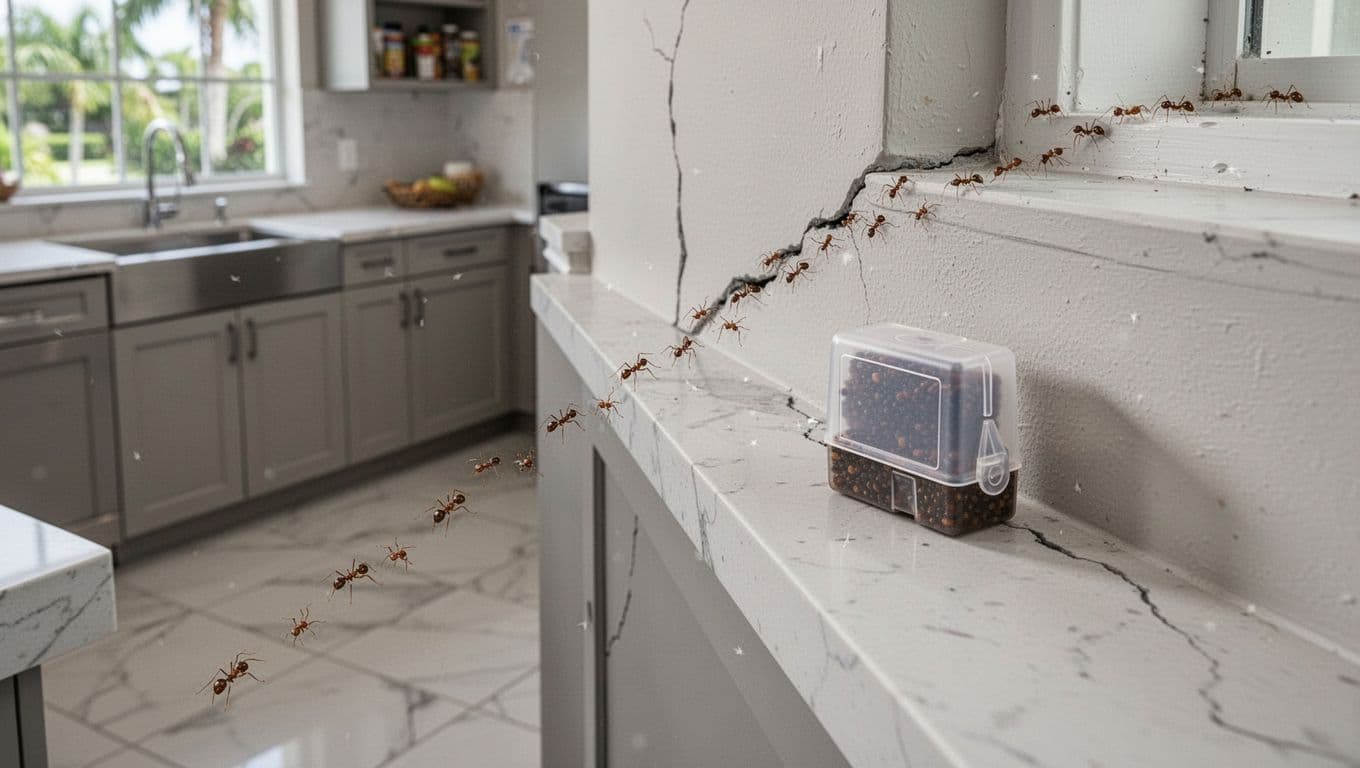 Indoor bait placement along an ant trail near a sink, created with AI.
If you've been spraying and the ants keep returning, it's not because you "didn't spray enough." It's because sprays often kill foragers only, while the colony keeps producing more.
For white-footed ants, slow-acting, non-repellent baits are usually the main tool. Workers carry bait back through the trail network, which is how you reach more of the colony.
If you spray over active trails, ants often reroute and split into more trails. Baiting works best when trails stay predictable.
A simple, homeowner-friendly checklist (with realistic timing)
1) Start with sanitation indoors (same day)
Wipe counters, rinse recyclables, and store sweets tight. Also dry sinks at night when you can.
2) Place bait correctly (day 1)
Put bait directly along trails
, not in the middle of open rooms. Avoid placing bait on wet surfaces or where cleaners will hit it.
3) Don't contaminate the bait (week 1)
Skip strong cleaners, scented sprays, or aerosol insecticides right around bait placements. Those can repel ants.
4) Seal entry points as activity drops (week 1 to week 2)
Caulk small gaps at baseboards, around plumbing penetrations, and at exterior utility lines. Wait until trails slow, otherwise you might push traffic to a new gap.
5) Expect a timeline, not a miracle (7 to 21 days)
You may see more
ants at first as bait recruits foragers. Improvement often shows in 1 to 2 weeks, with follow-up adjustments by week 3.
For broader, everyday ant prevention habits that support baiting, this post on effective ways to eliminate household ants pairs well with the steps above.
Troubleshooting common white-footed ant problems in Lee County
Some infestations behave like a leaky faucet: you tighten one spot and it drips somewhere else. Use these quick fixes before you give up.
Bait isn't being taken.
Try a different bait format or food base (sweet versus protein). Also check nearby plants for honeydew. If ants have a steady "sugar tap" outside, indoor bait may lose.
You're seeing multiple trails in different rooms.
That often means outdoor nesting is widespread or the colony is "budding" into satellite groups. Focus on outdoor vegetation bridges and place baits along the biggest highways first.
Ants return after rain or heavy irrigation.
Moisture shifts can move activity. After storms, re-check soffits, utility lines, and where shrubs touch the home. In Cape Coral, even one overgrown hedge can reconnect the problem.
You have kids or pets.
Use enclosed bait stations when possible, and place them where small hands and noses can't reach. Also store extra bait products locked up, even if they're labeled "low odor" or "indoor safe."
Finally, Florida pesticide labels are the law. Always follow the product label for placement and indoor use, and consider a licensed professional for persistent infestations or heavy exterior activity. If you want a broader, year-round approach that reduces repeat pest issues, these home pest prevention strategies can help you build a routine.
Conclusion
White-footed ants are frustrating because they act organized, and their colonies can be huge. Still, most Cape Coral homeowners can get control by combining sanitation , vegetation management, honeydew control, exclusion, and patient baiting along trails. If the trails keep splitting, or they surge after every rain, it's time for a professional inspection to map pressure points and stop the cycle. The goal isn't to chase ants around your home, it's to remove what's feeding them and block what's guiding them inside.
Schedule a Free Inspection: