Mole Crickets in Cape Coral Lawns, How to Spot Tunnels, Confirm the Pest, and Fix Dead Patches Fast
You step outside and see it again: a brown patch that wasn’t there last week, plus little “speed bumps” in the grass that feel spongy underfoot. In Cape Coral, that combo often points to mole crickets .
The tricky part is this damage can look like drought stress, chinch bugs, or even a mower problem. The good news is you can confirm mole crickets quickly, then start repairs without wasting time (or overwatering, which usually makes things worse).
Below is a homeowner-friendly way to spot tunnels, prove it’s mole crickets, and get your St. Augustinegrass growing back.
What mole cricket tunnel damage looks like in Cape Coral turf
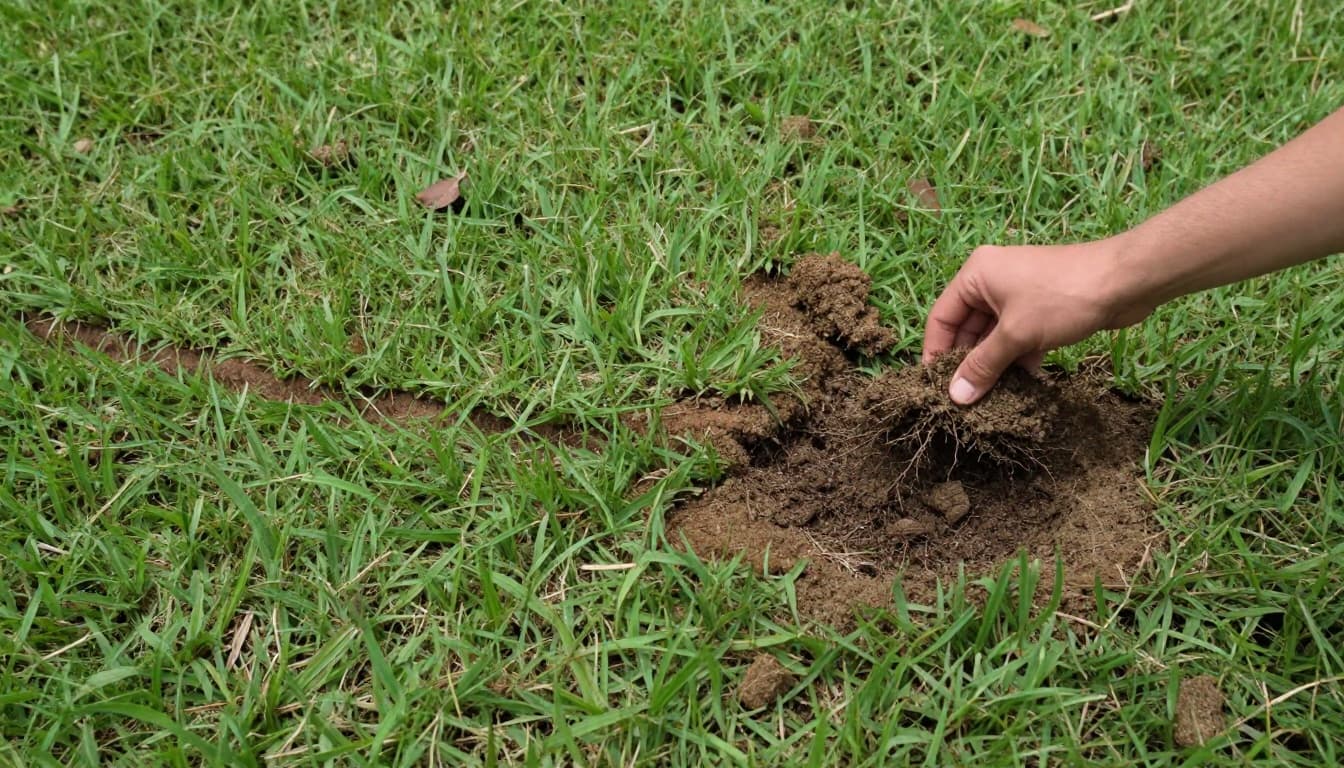 Overhead view of typical mole cricket damage patterns in St. Augustinegrass, created with AI.
Mole crickets don’t chew your grass like a goat. They act more like tiny rototillers. As they tunnel, they loosen soil and clip roots, so the turf can’t stay anchored or take up water well. That’s why the lawn can look dry even after you irrigate.
In Cape Coral’s sandy soils, the clues tend to be pretty visible:
- Surface ridges and small tunnels : Low, raised lines that zig-zag, especially in early morning or after irrigation.
- Spongy turf that lifts easily : Grab a thinning spot and tug. If it peels up like a loose rug, the soil may be tunneled underneath.
- Irregular brown patches : Not clean circles. More like “map shapes” that spread in uneven blobs.
- Birds and armadillos digging : They’re not helping your lawn, but they often show up when mole crickets are present.
- Grass that won’t respond to watering : The sprinklers run, yet the patch stays stressed because roots are damaged or the soil is too loose to hold moisture.
A quick reality check: if your grass blades are dying but the turf still feels firmly rooted, look harder at chinch bugs, fungus, mower scalping, or irrigation coverage. Mole cricket damage usually comes with that loosened, bumpy feel.
If you’re already thinking about bringing in a pro, keep a short list of vetting questions handy. This guide on hiring tips for lawn pest control in Cape Coral helps you compare providers without guessing.
Confirming mole crickets fast (the soap-flush test that works)
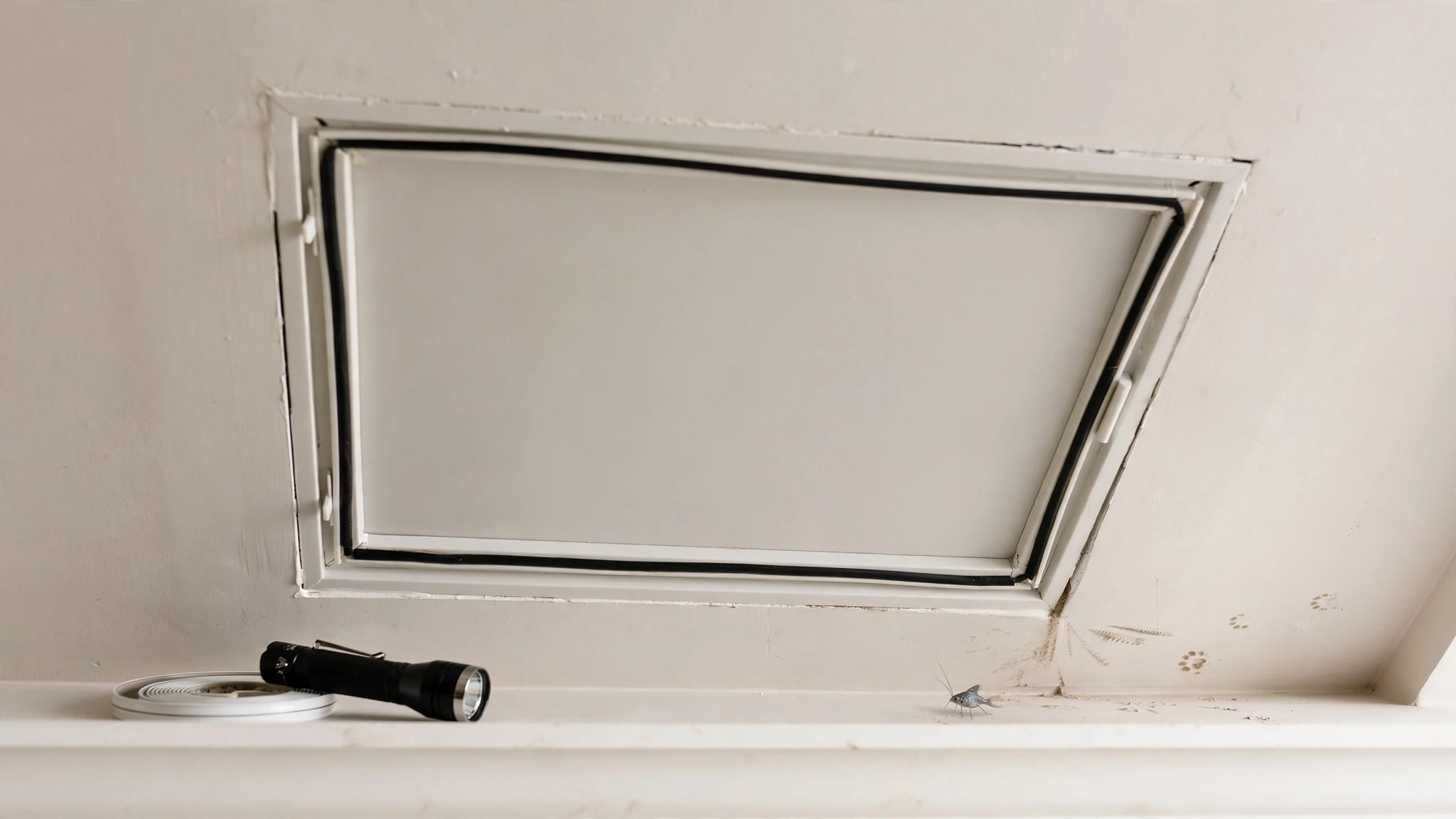
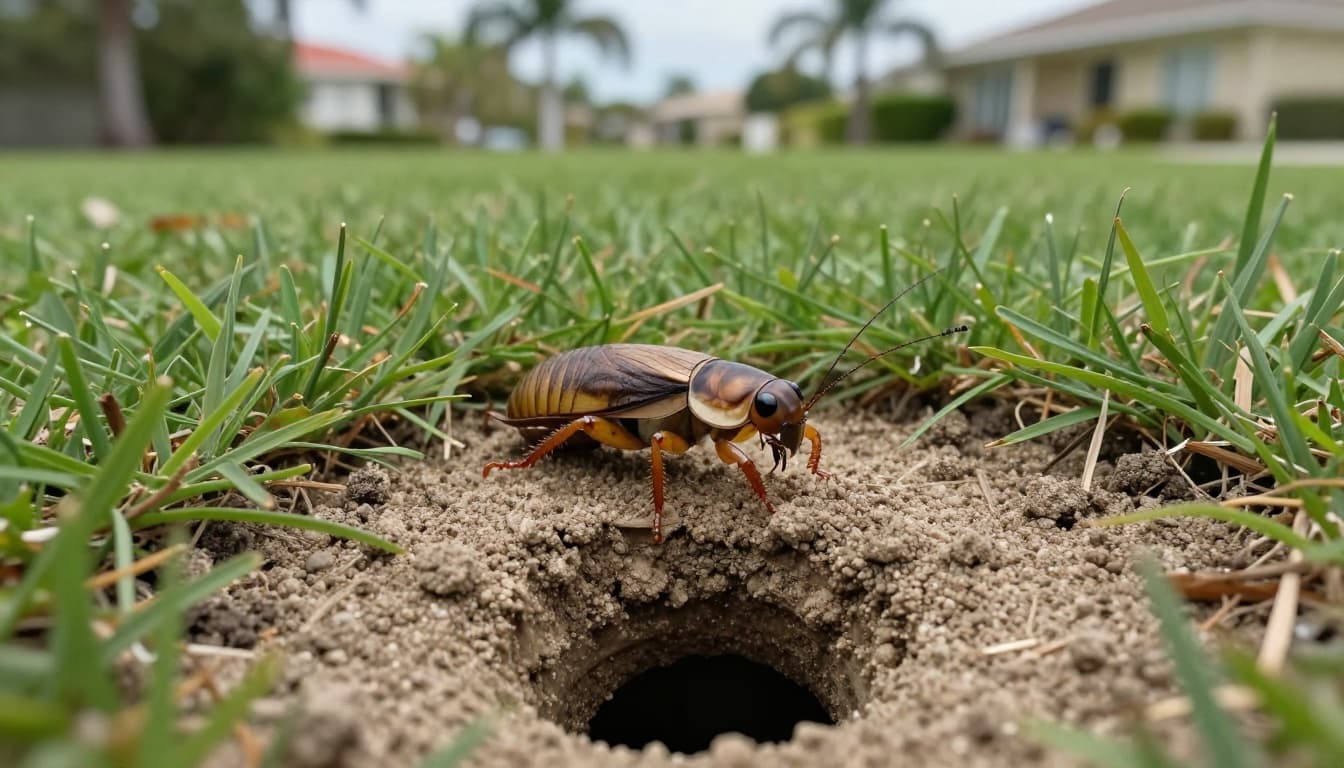 Close-up view of a mole cricket and a tunnel opening, created with AI.
If you want certainty, do a soap flush. It’s simple, cheap, and it doesn’t require special tools.
Soap-flush recipe (and where to do it)
Pick a spot right on the edge of fresh damage, not the center of a fully dead patch. Mark out roughly a 2-foot by 2-foot square.
Mix:
- 1 to 2 tablespoons of mild dish soap per gallon of water
- Make 2 gallons total for that 2x2 area
Pour the solution evenly over the square. Don’t dump it in one spot, you want it to soak down through the thatch and into the top inch of soil.
What counts as a positive ID
Watch the area for about 3 to 5 minutes .
- Positive : any mole cricket surfaces (often 1 to 2 in a small area).
- Strong sign you’ve got a lawn-level problem : two or more surface in that small test zone, especially if you can repeat the result in another nearby damaged spot.
Mole crickets are usually tan to brown, with shovel-like front legs made for digging. Adults can fly, but in lawns you’re usually dealing with nymphs and adults that tunnel.
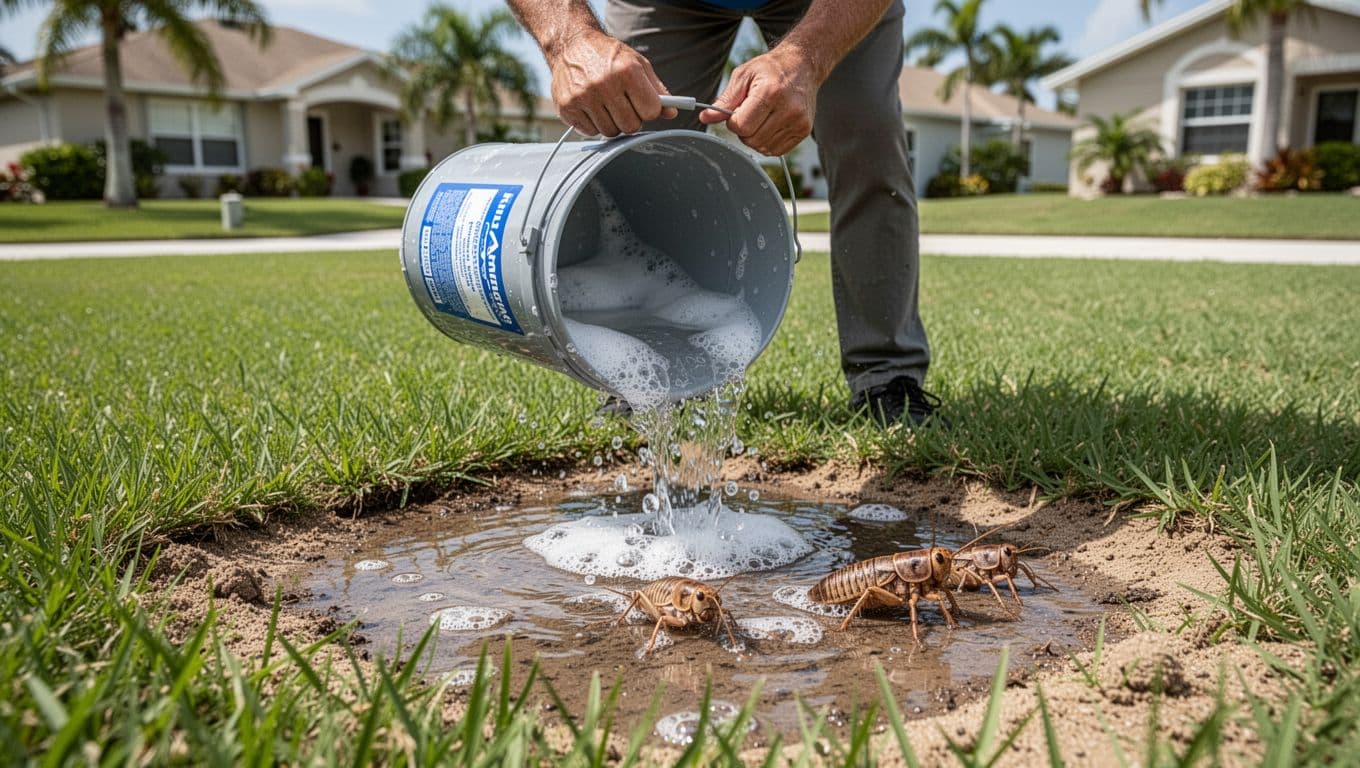 Soap-flush testing in a Florida lawn, created with AI.
If nothing shows up, test a second spot. If you still get nothing, the dead patch may be from drought, disease, chinch bugs, or fertilizer burn.
Fixing dead patches fast without making the problem worse
Once you’ve confirmed mole crickets in Cape Coral, the fastest win is to stop the turf from sliding downhill while you line up control and recovery. Think triage first, rehab second.
A simple “do this today / this week / this month” plan
- Do this today
- Reduce stress : Water early morning only. Skip evening watering that keeps turf wet overnight.
- Check mower height : For St. Augustine, aim for 3.5 to 4 inches and never scalp. A taller canopy shades soil and helps recovery.
- Flag the damage edges : It’s easier to see if the patch is expanding.
- Do this week
- Confirm with soap flush in 2 to 3 spots and note counts.
- Correct irrigation : In sandy Cape Coral lawns, deep and less often beats daily sprinkles. As a starting point, target about 0.5 inch per watering , then adjust for rain and sun. If the lawn feels squishy every day, you’re likely overwatering.
- Light topdressing : Rake gently to level raised ridges, then add a very light topdressing (about 1/8 to 1/4 inch) of clean sand or a sand and compost blend. This helps smooth the surface and supports new runners without smothering grass.
- Do this month
- Repair thin spots : If an area is truly dead, re-sod small patches once you’re confident tunneling activity is down. Keep pieces tight like puzzle parts.
- Hold off on heavy fertilizer : Don’t “blast” dead patches with nitrogen. Fertilizer won’t fix missing roots, and too much can invite disease. Wait until you see active regrowth, then feed lightly and follow local guidance for timing.
A helpful rule: if the turf lifts easily and you still see new tunneling, focus on control first. Otherwise you’re patching a boat while it’s still leaking.
Treatment and prevention options (safe, practical, and timed right)
Mole crickets are beatable, but timing matters. Treatments work best when nymphs are small , which in Southwest Florida is often late spring through summer after egg hatch. Adults are tougher and may require more effort.
Non-chemical options that still help
Cultural steps won’t wipe out a heavy infestation overnight, but they reduce how inviting your yard is:
- Avoid overwatering : Constantly wet soil is easier to tunnel and often keeps turf weak.
- Keep thatch under control : A thick thatch layer gives pests cover and makes treatments harder to reach the soil.
- Mow at the right height : St. Augustine likes to stay tall. Scalping exposes soil, increases heat stress, and makes damage show faster.
General insecticide guidance (without blanket spraying)
If you go the treatment route, pick products labeled for mole crickets and follow the label exactly. Common active ingredient categories used for lawn insects include pyrethroids (often used for surface activity) and systemic or ingestion-based options that target feeding stages. Many applications work better when watered in lightly so the product reaches the top layer of soil where tunneling happens.
Key safety points for Cape Coral yards:
- Avoid runoff toward canals and storm drains. Don’t treat right before heavy rain.
- Keep applications targeted. Treat confirmed areas and likely expansion zones, not the entire neighborhood.
- Protect pollinators. Keep products off blooming weeds and avoid drift onto ornamentals in bloom.
- Re-test after treatment with another soap flush to confirm activity is dropping.
If you’re seeing multiple active patches, or the lawn feels like it’s being “tilled” overnight, professional service can help you choose the right timing and product plan based on what’s actually present.
Conclusion
Mole crickets in Cape Coral lawns leave a clear trail once you know what to look for: raised tunnels, spongy turf, and dead patches that don’t improve with extra water. Confirm the problem with a soap flush, then focus on smart watering, correct St. Augustine mowing height, and steady recovery steps like light topdressing and careful re-sodding. With quick diagnosis and the right timing, mole crickets Cape Coral problems can go from spreading damage to a lawn that fills back in.
Schedule a Free Inspection: