Fall Armyworms in Cape Coral Lawns: Spot Them Early and Treat Fast
Picture this: you step outside to mow your lush St. Augustine lawn in Cape Coral, only to find large patches turned brown overnight. Fall armyworms in Cape Coral strike without warning. These pests devour grass blades from the top down, leaving bare spots that spread quickly in Florida's warm climate.
Homeowners here know the frustration. Your yard looks perfect one day, ruined the next. St. Augustine grass, common in our coastal yards, draws these invaders after rains or storms. Don't panic. You can identify them fast and stop the damage with proven steps.
This guide covers signs, confirmation, and quick treatments tailored for local lawns. Act now to save your turf.
What Fall Armyworms Do to Your Lawn
Fall armyworms are caterpillars from moths that migrate south each year. They target grasses like St. Augustine, Bermuda, and bahiagrass. In Cape Coral, they thrive year-round because of our mild winters.
Females lay hundreds of eggs on grass tips. Larvae hatch in two to three days and start feeding right away. They grow fast, up to an inch long, with dark heads and stripes. Full life cycle takes about a month in warm weather.
Damage starts small but explodes. Caterpillars march in groups, eating everything in sight. Your lawn turns skeletonized, then brown. Birds love them, but small outbreaks overwhelm natural controls.
Local reports show no major surges in April 2026. Still, check after heavy rain. Early detection keeps problems minor.
Why Cape Coral Yards Face Higher Risks
Our humid, subtropical setup invites fall armyworms. St. Augustine grass dominates here for its salt tolerance and look. However, it ranks moderate to high risk for these pests.
Rainy spells wash nutrients away and create moist soil. That boosts egg survival. Coastal winds carry adult moths from fields or neighboring states.
Thatch buildup in thick St. Augustine hides larvae. Over-fertilizing draws them too. City rules limit nitrogen in summer, so focus on balanced care.
Nearby crops like corn or peanuts serve as sources. Moths fly miles at night. Your yard becomes a stopover.
Pros handle this best. For example, residential pest control in Cape Coral targets local patterns.
Spot the Key Signs of Fall Armyworms
Look for irregular brown patches, two to ten feet wide. Grass blades show whiteheads or chew marks. Pull back damaged areas; you'll see silk webs and frass, like green-black pellets.
Caterpillars hide by day in soil or thatch. Scout early morning or dusk. They measure less than two inches, greenish-brown with dark spots.
St. Augustine wilts fast without blades. Confusion arises with drought or chinch bugs. Armyworms leave smoother edges.
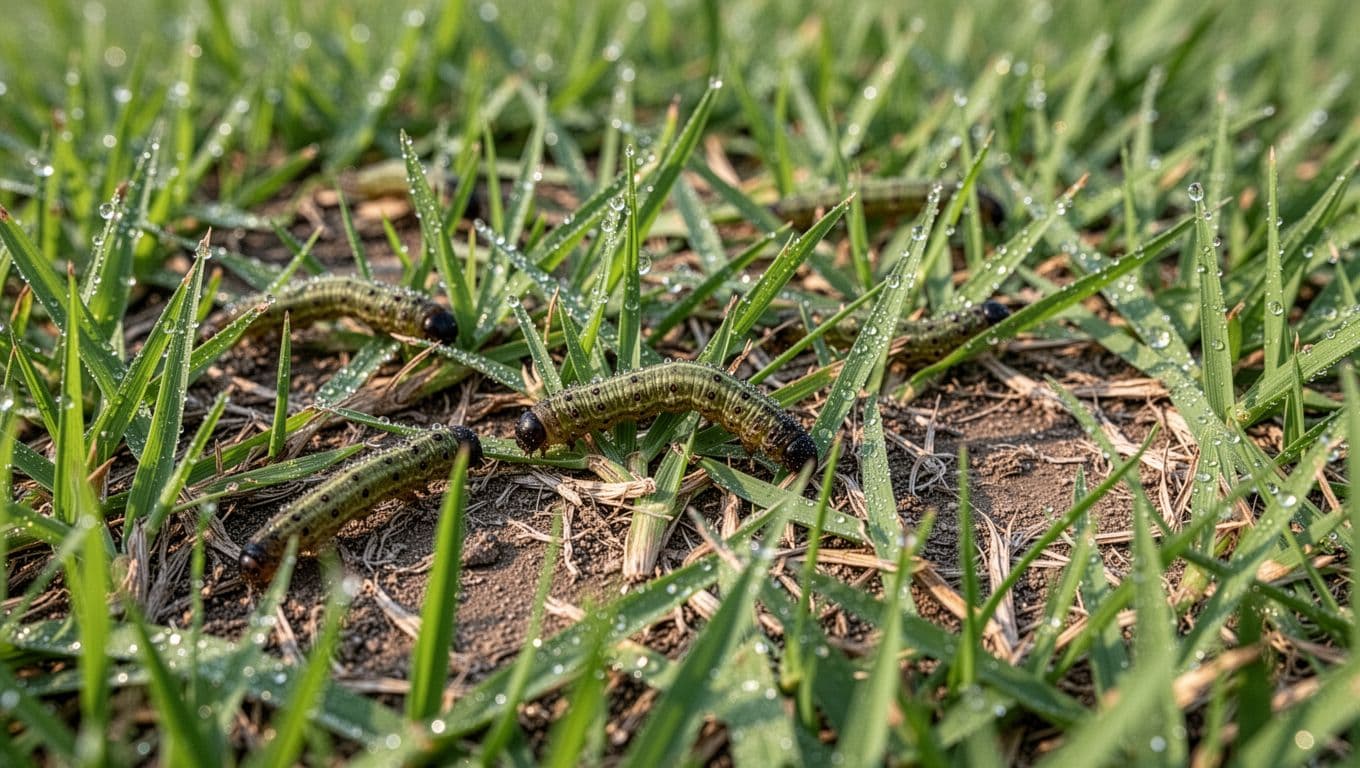
This photo shows classic damage: patchy dead spots amid green, with larvae visible. Check your lawn now.
How to Confirm It's Fall Armyworms
Shake a grass clump over white paper. Larvae drop out. Count ten or more per square yard? Treat immediately.
UF/IFAS extension in Lee County offers free ID. Snap photos of damage and bugs. They confirm via app or office.
Test soil moisture too. Drought mimics symptoms. Water deeply if dry.
Skip guesses. Wrong fixes waste time. Professionals use tools for accuracy, as in what to expect when hiring an exterminator in Cape Coral.
Fast Treatment Steps That Work on St. Augustine
Time matters. Larvae feed for two weeks max. Hit them young for best results.
First, mow the lawn short. This exposes hidden ones. Rake clippings to remove eggs.
Choose labeled products. Spinosad works organic-style; spray evenings. Bifenthrin kills on contact for broader pests. Imidacloprid soaks soil against grubs.
Here's a quick comparison:
| Treatment Type | Best For | Application Tips | Reapply After Rain? |
|---|---|---|---|
| Spinosad | Young larvae | Foliar spray at dusk | Yes, in 7 days |
| Bifenthrin | Active infestations | Granular or liquid broadcast | No, lasts 2-4 weeks |
| Imidacloprid | Soil stage | Soil drench | Once per season |
Follow labels exactly. Wear gloves; keep pets off for 24 hours.
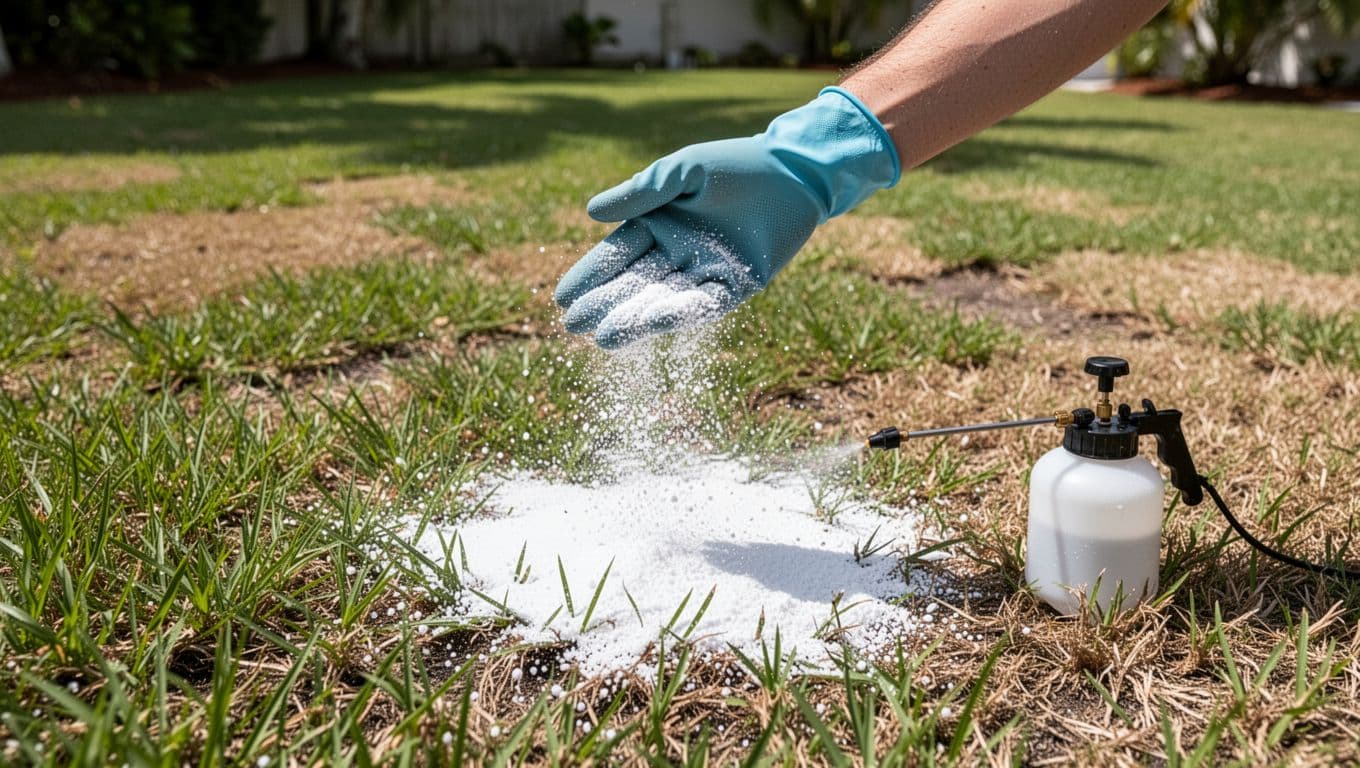
Granular apps like this cover evenly. Water lightly after to activate.
Expect green-up in 7-10 days. Overseed bare spots if needed. Costs vary; check pest control costs in Cape Coral for pro quotes.
Prevent Fall Armyworms from Returning
Mow St. Augustine at three inches. This shades soil and deters eggs.
Aerate yearly in spring. Reduces thatch where they hide.
Attract birds with feeders. They eat larvae naturally.
Water deeply, infrequently. Avoid evening irrigation.
Scout weekly in wet seasons. Early spots stay small.
Pros integrate these. Regular service prevents outbreaks.
Quick Recovery and Long-Term Lawn Health
Fall armyworms hit hard but heal fast with action. Your St. Augustine rebounds in weeks if you treat promptly.
Recap key moves: spot patches early, confirm larvae, apply targeted sprays, prevent with maintenance. Local experts speed results.
Storms may bring more. Stay vigilant. For free inspections, local teams like ours serve Cape Coral reliably.
Your yard deserves protection. Healthy grass boosts curb appeal and value. Act today for tomorrow's green.
(Word count: 978)
Schedule a Free Inspection: